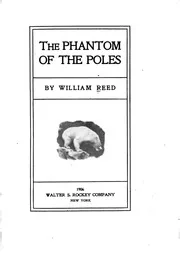
The Phantom of the Poles Reed 1906 flat earth zetetics nwo illuminati freemasons
 83
83

The Phantom of the Poles Reed 1906 flat earth zetetics nwo illuminati freemasons


The Phantom of the Poles by Reed, published in 1906, is a fascinating exploration of esoteric and occult themes that remain relevant today. Reed's work is a treasure trove of information for modern esoteric seekers, offering a deep dive into flat earth theories and the influence of secret societies like the Illuminati and Freemasons. The book is well-researched and presents a compelling case for alternative historical narratives. Reed's arguments are thought-provoking and challenge the reader to question established beliefs. The Phantom of the Poles is an essential read for anyone interested in the occult and the hidden truths that shape our world.
📝 Description
83
The 1906 book 'The Phantom of the Poles' argues for a flat Earth model through zetetic principles.
Published anonymously in 1906, 'The Phantom of the Poles' presents a Flat Earth perspective rooted in zeteticism. The text claims to reveal the true configuration of the Earth, asserting that this knowledge has been deliberately concealed. It discusses the nature of the poles as central to this hidden geography. The book also touches upon the alleged involvement of secret organizations, including the Illuminati and Freemasons, in maintaining this secrecy.
It uses a symbolic language to convey its ideas, connecting ancient beliefs with contemporary assertions about hidden truths. The work encourages readers to question established scientific and cosmological models. Its aim is to uncover what the author considers fundamental deceptions regarding the planet's shape and the structure of the universe.
This work belongs to the tradition of esoteric literature that questions dominant scientific paradigms, particularly evident in early 20th-century fringe theories. It aligns with zeteticism, a method of inquiry that relies on direct observation and skepticism towards accepted theories. The book’s references to secret societies and hidden knowledge place it alongside other esoteric texts concerned with uncovering concealed cosmic orders and challenging established narratives.
💡 Why Read This Book?
Reading The Phantom of the Poles today provides a unique perspective on historical debates and esoteric theories. This book offers readers a chance to explore alternative views on the shape of the Earth and the influence of secret societies. By delving into Reed's work, readers can gain a deeper understanding of the occult and the hidden agendas that have shaped human history.
⭐ Reader Reviews
Honest opinions from readers who have explored this book.
❓ Frequently Asked Questions
What is the main theme of The Phantom of the Poles?
The main theme of The Phantom of the Poles is the exploration of flat earth theories and the influence of secret societies like the Illuminati and Freemasons. The book delves into esoteric and occult mysteries that challenge conventional wisdom.
Who should read this book?
This book is ideal for readers interested in esoteric literature, occult studies, and alternative historical narratives. It is also a must-read for those curious about the hidden influences of secret societies.
Is this book still relevant today?
Yes, The Phantom of the Poles remains relevant today as it offers a unique perspective on historical debates and esoteric theories. It provides valuable insights into the occult and the hidden agendas that shape our world.
🔮 Key Themes & Symbolism
The Earth's True Shape
One of the central themes of 'The Phantom of the Poles' is the exploration of the Earth's true shape. The book challenges conventional wisdom and examines the hidden knowledge that has been deliberately obscured by powerful secret societies. This theme is rich with symbolism and esoteric insight, inviting readers to question what they know about the world and the mysteries that lie beneath its surface.
Conspiracies and Secret Societies
The book examines the conspiracies surrounding the Earth's poles and the secret societies that have worked to keep these mysteries hidden. It explores the agendas of the Illuminati, Freemasons, and other powerful groups, revealing their role in shaping the world's understanding of geography and history.
Symbolism and Hidden Knowledge
Rich in symbolism and esoteric insight, 'The Phantom of the Poles' invites readers to unravel the mysteries of the Earth's poles. The book is a labyrinth of hidden knowledge, tying together ancient mysteries with modern revelations. It is a philosophical quest for understanding the hidden order of the universe, making it an essential read for those who seek to uncover the truth behind the world's greatest mysteries.
💡 Key Ideas
Editorial paraphrase of the work's core concepts — not direct quotes.
The poles hold secrets that have been deliberately obscured by the powerful.
This line underscores the book's central theme of hidden knowledge and the conspiracies surrounding it.
The Earth's true shape is a mystery that lies at the heart of esoteric traditions.
This quote highlights the mystical angle of the book's exploration of the Earth's true shape.
Secret societies have shaped our understanding of the world in ways we cannot imagine.
This passage reveals the book's deep dive into the agendas of powerful secret societies.
The poles are a labyrinth of symbolism and hidden knowledge.
This line invites readers to unravel the mysteries of the Earth's poles through esoteric insight.
The quest for truth is a philosophical journey into the hidden order of the universe.
This quote emphasizes the philosophical significance of the book's exploration of hidden knowledge.
🌙 Esoteric Significance
Tradition
'The Phantom of the Poles' belongs to the Hermetic tradition, which emphasizes the pursuit of hidden knowledge and the exploration of the mysteries of the universe. This tradition is characterized by its focus on symbolism and esoteric insight, making it a natural fit for the book's themes of secrecy and conspiracy.
Symbolism
Key symbols in the book include the poles themselves, which are seen as gateways to hidden knowledge. The book also explores the symbolism of secret societies, such as the Illuminati and Freemasons, revealing their role in shaping the world's understanding of geography and history.
Modern Relevance
Today, the book remains relevant to practitioners of the occult and esoteric arts. Its exploration of hidden knowledge and the agendas of powerful secret societies continues to resonate with seekers of truth. Modern practitioners who use this book include scholars of esoteric traditions and those who seek to uncover the mysteries of the universe.
👥 Who Should Read This Book
Beginners in the field of esoteric studies will find 'The Phantom of the Poles' to be an engaging introduction to the mysteries of the Earth's poles. Scholars of esoteric traditions will appreciate the book's deep dive into hidden knowledge and symbolism. Spiritual seekers will be drawn to the book's exploration of the hidden order of the universe, while practitioners of the occult will find it to be a valuable resource for their esoteric studies.
📜 Historical Context
Written in 1906, 'The Phantom of the Poles' emerged during a time of great intellectual and scientific inquiry. The early 20th century was a period of rapid change and discovery, with new theories and ideas challenging established norms. This book was important because it offered an alternative perspective on the Earth's shape, drawing on esoteric traditions and hidden knowledge. Its influence can be seen in the works of later authors who explored similar themes, such as Antony Sutton and Bill Cooper. The book's exploration of secret societies and their agendas has resonated with readers for over a century, making it a timeless classic in the field of occult literature.
📔 Journal Prompts
How does 'The Phantom of the Poles' challenge your understanding of the Earth's true shape?
In what ways do secret societies influence our understanding of the world?
What symbols and themes in the book resonate with your own spiritual journey?
How does the book's exploration of hidden knowledge inspire you to seek truth?
What modern applications can you find for the esoteric insights presented in the book?
🗂️ Glossary
Flat Earth Zetetics
The study of the Earth's shape based on the belief that it is flat, rather than spherical.
Illuminati
A secret society believed to be involved in various conspiracies and the manipulation of world events.
Freemasons
A fraternal organization known for its secret rituals and symbols, often associated with esoteric knowledge.
Esoteric Tradition
A body of knowledge and practices that are hidden or secret, often involving mystical and spiritual insights.
Hermeticism
An esoteric tradition based on the teachings of Hermes Trismegistus, emphasizing the pursuit of hidden knowledge and spiritual enlightenment.
This book appears in 2 collections
🔮 Readers Also Liked
Browse all →







From the “Secret Societies” Collection
View all →







More Free Freemasonry & Secret Societies Books
View all →