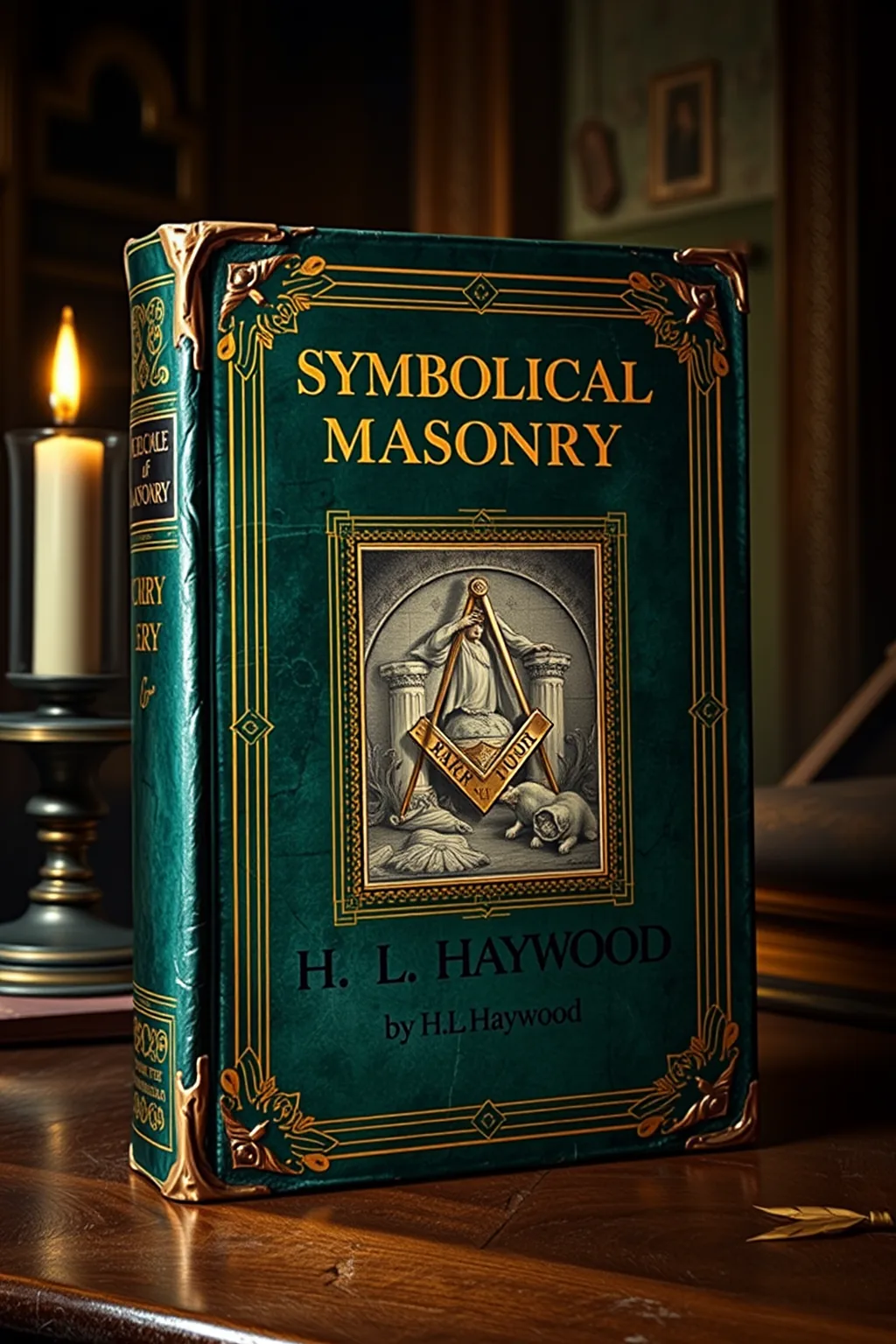
Symbolical Masonry
 83
83

Symbolical Masonry


Isolde Whitaker, Sacred Texts Editor: H.L. Haywood's 'Symbolical Masonry' stands as a beacon for those seeking genuine esoteric insight into the Masonic tradition. Eschewing superficial interpretations, Haywood masterfully dissects the symbolic language of the Craft, revealing layers of hidden meaning accessible to the diligent student. His meticulous approach, particularly in examining concepts like the Letter 'G' and the Hiramic legend, offers a profound connection to ancient philosophical streams. This work is indispensable for Masons aiming to elevate their understanding beyond rote memorization, and for any scholar of Western esotericism craving an authoritative guide to Freemasonry's spiritual architecture. A truly illuminating text.
📝 Description
83
H.L. Haywood's 1927 book 'Symbolical Masonry' examines the esoteric meaning of Freemasonry's first three degrees.
Published in 1927, H.L. Haywood's 'Symbolical Masonry' offers a detailed analysis of the symbolic language within the initial degrees of Freemasonry. Haywood moves beyond a simple description of rituals to interpret the deeper philosophical and allegorical significance embedded in Masonic practice. He addresses specific symbols such as the letter 'G,' the symbolism of the twin pillars, and the Hiram Abiff legend. The book aims to illuminate the intellectual and spiritual dimensions of these elements for the Freemason. Haywood's work is intended to aid in a more considered comprehension of Masonic teachings, encouraging thoughtful engagement with the tradition. It serves as an interpretive tool for those seeking to understand the symbolic framework of the Craft.
This work is situated within the broader tradition of esoteric interpretation applied to fraternal organizations. It follows a long history of seeking deeper, often Gnostic or Hermetic, meanings within the allegories and rituals of groups like Freemasonry. Such interpretations often connect the symbols and narratives of these orders to ancient mystery traditions, alchemical processes, and paths of personal spiritual development. Haywood's approach reflects a specific moment in the early 20th century when Masonic scholarship increasingly focused on the symbolic and philosophical dimensions, moving beyond purely historical or ritualistic accounts.
💡 Why Read This Book?
Embark on a transformative journey into the symbolic language of Freemasonry. 'Symbolical Masonry' offers profound insights into the veiled meanings of the Craft's core teachings, ideal for seekers of hidden knowledge, scholars of esoteric traditions, and Masons dedicated to deepening their practice. Uncover the philosophical richness and historical depth that fuels this ancient fraternity.
⭐ Reader Reviews
Honest opinions from readers who have explored this book.
❓ Frequently Asked Questions
What are the 'first three degrees' mentioned in the book?
The first three degrees in Freemasonry are typically known as Entered Apprentice, Fellow Craft, and Master Mason. Haywood's work focuses on the symbolic and philosophical teachings embedded within these foundational stages of Masonic progression.
Is this book suitable for non-Masons interested in esotericism?
Absolutely. While rooted in Masonic symbolism, Haywood's exploration of universal themes like wisdom, morality, and self-discovery makes it accessible and valuable for anyone interested in comparative mysticism and the pursuit of hidden knowledge.
What is the significance of the 'Letter G' in Masonic symbolism?
The Letter 'G' is a potent symbol within Freemasonry, often interpreted to represent Geometry, the divine Architect, or Gnosis (knowledge). Haywood explores its multifaceted meanings and its central role in Masonic contemplation.
How does Haywood approach the legend of Hiram Abiff?
Haywood delves into the allegorical significance of the Hiram Abiff legend, viewing it not as a historical account but as a profound drama symbolizing the death and resurrection of the soul, the pursuit of lost knowledge, and the ultimate triumph of virtue.
What makes 'Symbolical Masonry' a 'treasure-house of Masonic lore'?
The book is considered a treasure-house due to its comprehensive yet deeply insightful examination of Masonic principles, symbols, and rituals. It provides both a detailed study guide and a philosophical gateway to understanding the profound wisdom embedded within the Craft.
🔮 Key Themes & Symbolism
The Architectonic Universe
Haywood posits Freemasonry as a system of allegory and symbol, a 'Science of Morality' veiled in outward forms. He explores the concept of the Great Architect of the Universe, not merely as a deistic deity, but as the ultimate principle of order and design that underpins all existence. This theme examines how Masonic rituals and symbols are designed to instruct the aspirant in understanding their place within this cosmic architecture, and how to align their personal lives with its inherent principles of harmony and balance.
The Path of Illumination
Central to 'Symbolical Masonry' is the idea of a spiritual journey towards enlightenment. Haywood illustrates how the degrees of Freemasonry represent stages of personal growth and the acquisition of inner wisdom. The book examines the symbolic tools and allegories used to guide the neophyte through darkness towards the light of understanding, emphasizing the ongoing process of self-improvement and the pursuit of moral and intellectual perfection.
The Esoteric Language of Symbols
This theme focuses on Freemasonry's use of a rich, symbolic language to convey profound truths that transcend ordinary discourse. Haywood meticulously deciphers the meaning behind common Masonic imagery, such as the square, compasses, and the tracing boards. He reveals how these symbols act as conduits for ancient wisdom, designed to stimulate contemplation and unlock deeper levels of comprehension for those who engage with them thoughtfully and with an open mind.
💬 Memorable Quotes
Direct passages from the work, attributed to the author.
“Masonry is a system of morality.”
— This fundamental statement suggests that the Craft's rituals and symbols are not mere theatrical performances, but pedagogical tools designed to teach ethical principles and guide moral development.
“Wisdom is the chief of virtues.”
— This highlights the paramount importance placed on intellectual and spiritual insight within Freemasonry, positioning wisdom as the guiding force for all other virtuous actions and personal growth.
“The pillars stand for strength and establishment.”
— This interpretation links the symbolic pillars of the Masonic lodge to foundational virtues and the enduring nature of moral and spiritual principles upon which the Craft is built.
“The legend of Hiram Abiff is a drama of the soul.”
— This profound statement reframes the Hiramic legend from a historical narrative to an allegorical representation of the inner spiritual journey, involving loss, struggle, and eventual resurrection of the self.
💡 Key Ideas
Editorial paraphrase of the work's core concepts — not direct quotes.
The Letter G is the center of all.
This quote points to the complex significance of the Letter 'G,' implying it represents a core principle or a divine essence that connects all aspects of Masonic teaching and cosmic understanding.
🌙 Esoteric Significance
Tradition
The esoteric tradition most directly addressed by 'Symbolical Masonry' is Western Esotericism, with a particular focus on Hermeticism, Neoplatonism, and Kabbalistic thought as they have influenced Freemasonry. Haywood interprets Masonic symbolism through lenses that emphasize the divine spark within humanity, the interconnectedness of the cosmos, and the pursuit of Gnosis (spiritual knowledge) as a path to liberation and self-realization.
Symbolism
Key symbols explored include the twin pillars (Boaz and Jachin), representing duality, balance, and the divine presence; the Letter 'G,' signifying Geometry, God, or Gnosis; and the allegorical figure of Hiram Abiff, embodying the struggle for truth, the pursuit of lost knowledge, and the triumph of the spiritual over the material. These symbols are presented not as static icons but as dynamic keys to unlocking deeper philosophical and spiritual understanding.
Modern Relevance
In an age often characterized by secularism and superficiality, 'Symbolical Masonry' offers a profound counterpoint, advocating for introspection, ethical living, and the search for transcendent meaning. Its emphasis on critical thinking applied to ancient symbols speaks to contemporary seekers who desire to connect with timeless wisdom. The book's exploration of self-improvement and moral development remains profoundly relevant for anyone seeking personal growth and a deeper understanding of their place in the universe.
👥 Who Should Read This Book
This foundational text is essential for Freemasons of all ranks seeking to move beyond rote ritual and engage with the profound philosophical underpinnings of the Craft. Scholars of Western Esotericism will find it an invaluable resource for understanding the symbolic language and esoteric currents within Freemasonry. Spiritual seekers and students of comparative religion will appreciate its exploration of universal themes of morality, wisdom, and self-illumination. Practitioners of contemplative practices will find fertile ground for deepening their understanding of symbolism and its transformative power.
📜 Historical Context
Written during an era of burgeoning interest in esoteric traditions and spiritual philosophies, H.L. Haywood's 'Symbolical Masonry' emerged in the early 20th century, a period marked by intellectual curiosity about ancient mysteries and secret societies. Following the Victorian era's fascination with spiritualism and occultism, and preceding the widespread popularization of Eastern philosophies, Haywood's work tapped into a desire for deeper, more meaningful interpretations of established Western institutions. It sought to provide a rational yet mystical framework for understanding Freemasonry, appealing to a readership that valued both intellectual rigor and spiritual seeking. The book reflects a broader movement to systematize and explain esoteric knowledge, making it accessible beyond cloistered circles and solidifying its place within the literature of Western esotericism.
📔 Journal Prompts
Reflect on the meaning of the 'Great Architect of the Universe' in your own life and spiritual journey.
How does the concept of 'morality veiled in outward forms' apply to your understanding of everyday interactions?
Consider the symbolism of the twin pillars; what dualities do you encounter in your life, and how do you seek balance?
What does the legend of Hiram Abiff symbolize for your personal pursuit of knowledge and truth?
How can you actively apply the principles of 'Symbolical Masonry' to enhance your personal growth and understanding this week?
🗂️ Glossary
Allegory
A story, poem, or picture that can be interpreted to reveal a hidden meaning, typically a moral or political one. In 'Symbolical Masonry,' it refers to the symbolic narratives used to teach deeper truths.
Esotericism
Belief in or study of mystical or occult truths. It often involves secret knowledge or teachings accessible only to initiates or those with specialized understanding.
Gnosis
Direct spiritual knowledge or insight, often achieved through intuition or mystical experience. It is considered a fundamental aspect of many esoteric traditions.
Ritual
A set of actions or words performed in a prescribed order, often with symbolic meaning. In Freemasonry, rituals are used to impart lessons and foster a shared experience among members.
Symbolism
The use of symbols to represent ideas or qualities. In 'Symbolical Masonry,' symbols are crucial tools for conveying complex philosophical and spiritual concepts.
This book appears in 2 collections
🔮 Readers Also Liked
Browse all →









From the “Secret Societies” Collection
View all →



More Free Freemasonry & Secret Societies Books
View all →






![Gould R F History Of Freemasonry Throughout The World V 3 [ 1936 Ed][ 361p]](/img/thumb/gould-r-f-history-of-freemasonry-throughout-the-world-v-3-1936-ed-361p.webp)
