West: Tales of the Lost Lands
 82
82

West: Tales of the Lost Lands
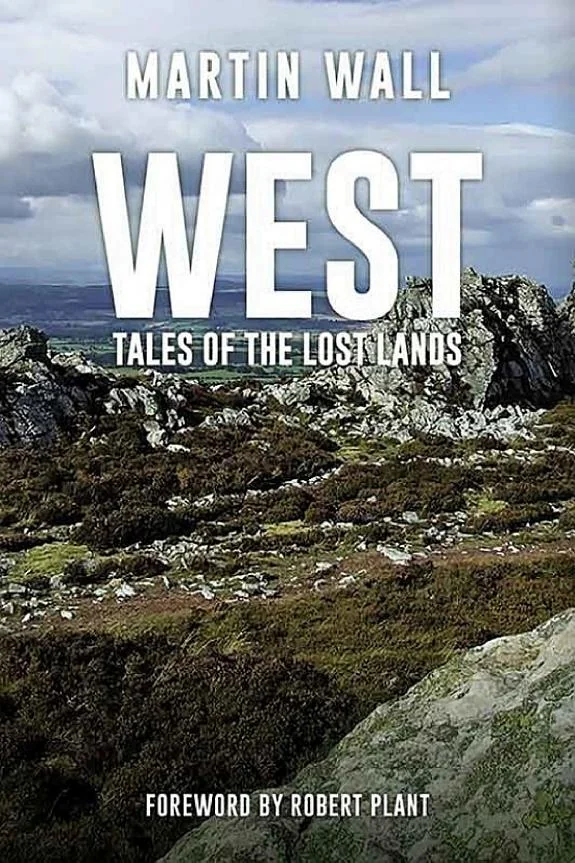
Martin Wall’s *West: Tales of the Lost Lands* is an ambitious attempt to map an esoteric topography onto the western seaboard of Britain. The book’s strength lies in its audacious premise: that this region acts as a crucible for creative and spiritual epiphany. Wall carefully marshals evidence, drawing parallels between figures as diverse as the medieval poet William Langland and the 20th-century novelist J.R.R. Tolkien, suggesting a shared experience. He posits 'The Lost Lands' as a specific geographical and psychic territory. However, the work occasionally strains under the weight of its own theory. While the connections drawn are intriguing, the leap from literary inspiration to a unified esoteric experience can feel speculative. The section discussing Sabine Baring-Gould’s work, for instance, highlights the author's ability to evoke landscape but perhaps overstates the shared 'epiphany' aspect. Despite this, Wall's exploration offers a fresh perspective on familiar literary figures, framing their engagement with the land in a new, mystical light. It is a commendable, if occasionally overreaching, contribution to landscape-inspired esoteric studies.
📝 Description
82
Martin Wall's 'West: Tales of the Lost Lands' (2022) examines a recurring spiritual awakening in western Britain.
Martin Wall's collection of essays, 'West: Tales of the Lost Lands,' investigates a pattern of spiritual and creative awakenings tied to the western regions of Britain. Wall terms these areas 'The Lost Lands,' suggesting a unique resonance that has inspired artists and writers across centuries. The book connects literature, folklore, and a specific sense of place, arguing for a deep, often unarticulated, spiritual connection within these western British Isles.
The work is for readers interested in the intersection of geography, literature, and esoteric thought, particularly those who consider the 'genius loci'—the spirit of a place—and its impact on creativity and spiritual experience. Scholars of British literature and folklore, especially those studying figures like William Langland or J.R.R. Tolkien, will find relevant connections. It also appeals to individuals drawn to liminal spaces and subtle energies within specific landscapes, aiming for a deeper understanding of the Western British tradition.
Wall's work connects to a long tradition of writers fascinated by the British landscape, a lineage evident from medieval chroniclers like Layamon to figures such as Walter Map and J.R.R. Tolkien. The book implicitly engages with Romantic and post-Romantic ideas about nature, national identity, and the perceived spiritual qualities of particular regions. By identifying a shared 'epiphany' within 'The Lost Lands,' Wall taps into a vein of thought that seeks a deeper, perhaps hidden, spiritual dimension in specific geographic locations, linking literary output to the subtle energies of place.
💡 Why Read This Book?
• Gain a new lens for appreciating western British literature by understanding 'The Lost Lands' as a site of recurring spiritual insight, as explored through figures like A.E. Housman. • Discover the concept of 'genius loci' in relation to creative awakening, connecting the land's spirit to its artistic output, as evidenced in the book's examination of William Shenstone. • Explore the idea of a shared, trans-historical 'epiphany' linked to specific landscapes, offering a unique perspective on how geography can influence consciousness, a central theme exemplified by the inclusion of J.R.R. Tolkien.
⭐ Reader Reviews
Honest opinions from readers who have explored this book.
❓ Frequently Asked Questions
What is the primary argument of Martin Wall's 'West: Tales of the Lost Lands'?
The book argues that western Britain, referred to as 'The Lost Lands,' has been a consistent source of spiritual and creative epiphany for numerous writers and thinkers throughout history, fostering a unique connection to the land's inherent energies.
Which historical figures are discussed in relation to 'The Lost Lands'?
The book references a wide array of figures including Walter Map, Layamon, William Langland, Michael Drayton, William Shenstone, Sabine Baring-Gould, A.E. Housman, J.R.R. Tolkien, Geoffrey Hill, Simon Evans, and Bruce Chatwin.
What does Martin Wall mean by 'The Lost Lands'?
'The Lost Lands' is Wall's term for the western regions of Britain, which he identifies as a specific geographical and psychic territory that consistently inspires profound creative and spiritual experiences in sensitive individuals.
How does 'West: Tales of the Lost Lands' relate to the concept of 'genius loci'?
The book explores 'genius loci,' the spirit of a place, suggesting that the unique character of western Britain actively influences the consciousness and creative output of those who engage with it.
What kind of reader would most appreciate this book?
Readers interested in esoteric geography, literary criticism with a mystical bent, the concept of genius loci, and the spiritual resonance of landscapes, particularly those familiar with British literature and folklore.
When was 'West: Tales of the Lost Lands' first published?
The book was first published on February 15, 2023.
🔮 Key Themes & Symbolism
The Lost Lands as a Sacred Geography
Wall posits western Britain not merely as a geographical location but as a 'sacred geography' or 'Lost Lands' that actively induces spiritual and creative awakenings. This concept draws on ancient ideas of landscape as a repository of psychic energy and a catalyst for visionary experience. Figures from medieval chroniclers to modern authors are presented as having tapped into this unique regional consciousness, suggesting a persistent, almost archetypal, influence emanating from these western territories, fostering a profound connection to the earth and its hidden currents.
Epiphany and the Spirit of Place
A central theme is the recurring 'epiphany' experienced by individuals within this specific landscape. This is linked to the concept of 'genius loci,' the intrinsic spirit of a place. Wall suggests that the western British landscape possesses a potent genius loci that can trigger moments of useful insights, revelation, and heightened creative faculty in sensitive souls. The book examines how this environmental influence manifests across different eras and individuals, proposing a shared, subtle phenomenology of place-based spiritual illumination.
Literary Lineage and Landscape Resonance
The work traces a literary lineage of writers who, consciously or unconsciously, responded to the unique character of western Britain. From Layamon's historical narratives to A.E. Housman's contemplative verse, Wall highlights how the land itself becomes a character and a source of inspiration. This theme explores the symbiotic relationship between landscape and literature, arguing that certain geographical areas hold an intrinsic resonance that shapes artistic expression and fosters a deep, often inarticulable, sense of belonging and revelation for its chroniclers.
The Archetypal West
Wall's concept of 'The Lost Lands' can be seen as an exploration of the 'West' as an archetypal direction, often associated with the setting sun, the underworld, the unknown, and places of transition or spiritual journey. By focusing on western Britain, the book taps into this symbolic resonance, suggesting that this particular region embodies a Western frontier of consciousness, a liminal space where the veil between the material and the spiritual is thin, inviting exploration and transformative encounters.
💬 Memorable Quotes
Direct passages from the work, attributed to the author.
“All experienced an epiphany in The Lost Lands of western Britain.”
— This core assertion frames the book's central thesis: that a specific region acts as a conduit for profound spiritual or creative revelation, shared by diverse historical figures.
“Walter Map, Layamon, William Langland, Michael Drayton, William Shenstone, Sabine Baring-Gould, A.E. Housman, J.R.R Tolkien, Geoffrey Hill, Simon Evans, Bruce Chatwin, all experienced an epiphany in The Lost Lands of western Britain.”
— This extensive list of names from various historical periods underscores the author's argument that the phenomenon is not isolated but a recurring pattern within a defined geographical and spiritual context.
“Martin Wall identifies 'The Lost Lands' as a source of useful insights.”
— This statement captures Wall's conceptualization of western Britain as a distinct territory that consistently offers deep understanding and revelation to those attuned to its energies.
“The narrative connects literary figures through a shared landscape experience.”
— This interpretation highlights the book's method of drawing parallels between disparate authors by emphasizing their common engagement with and inspiration from the specific environment of western Britain.
💡 Key Ideas
Editorial paraphrase of the work's core concepts — not direct quotes.
The book explores the genius loci of western Britain.
This paraphrase indicates the work's focus on the 'spirit of place,' suggesting that the land itself possesses an active, influential character that affects human consciousness and creativity.
🌙 Esoteric Significance
Tradition
The work aligns with the esoteric tradition of sacred geography and landscape spirituality, particularly resonant within Western Hermeticism and Neopaganism, which emphasize the inherent spiritual power of specific locations. It echoes concepts found in Celtic traditions concerning the Otherworld and land spirits. Wall's 'Lost Lands' can be viewed as a modern interpretation of a traditional locus amoenus or a place of power, distinct from, yet related to, established magical geography.
Symbolism
The primary symbol is 'The Lost Lands' itself, representing a liminal space, a threshold between the mundane and the numinous, and a repository of ancient wisdom. The recurring 'epiphany' symbolizes moments of spiritual breakthrough or heightened consciousness, triggered by the land's unique energies. The concept of the 'West' as a direction also carries symbolic weight, often associated with endings, the setting sun, and journeys into the unknown or the spiritual realm.
Modern Relevance
Contemporary thinkers and practitioners in fields like psychogeography, landscape magic, and animism find resonance in Wall's work. It speaks to a modern yearning for deeper connection with the natural world and the subtle energies of place, offering a framework for understanding how landscape can facilitate spiritual growth and creative inspiration, relevant to those exploring earth-based spirituality and place-based practices.
👥 Who Should Read This Book
• Students of British literature and folklore seeking an esoteric lens through which to re-examine canonical authors like William Langland and J.R.R. Tolkien. • Practitioners of landscape magic or psychogeography interested in the concept of 'genius loci' and how specific geographical locations can influence consciousness. • Readers drawn to metaphysical explorations of place, who are curious about how western Britain might function as a 'Lost Land' for spiritual and creative revelation.
📜 Historical Context
Published in 2023, Martin Wall's *West: Tales of the Lost Lands* emerges in an era increasingly interested in landscape, identity, and esoteric interpretations of place. It engages with a long tradition of British writers who have been captivated by their homeland’s geography, a lineage that includes Romantic poets and later figures like J.R.R. Tolkien, who infused his fiction with deeply felt landscapes. Wall's work implicitly builds upon the Romantics' concept of the sublime and the 'genius loci.' He situates his argument within the literary-historical context provided by figures like Layamon and William Langland, whose works are deeply embedded in British topography and mythology. While not engaging directly with a specific competing school of thought in its publication year, the book taps into contemporary currents of psychogeography and landscape studies, offering a more overtly spiritual and mystical perspective than secular approaches. Its reception within esoteric circles will likely focus on its contribution to the understanding of sacred geography within the Western tradition.
📔 Journal Prompts
The recurring 'epiphany' in The Lost Lands: What personal landscape has evoked a similar profound realization for you?
Reflect on the 'genius loci' of a place you feel deeply connected to. What qualities define its spirit?
Consider the literary lineage presented: how might a specific landscape influence your own creative expression?
The 'West' as a symbolic direction: explore its meaning in your personal mythology or spiritual journey.
How does the idea of 'Lost Lands' challenge or affirm your understanding of sacred geography?
🗂️ Glossary
The Lost Lands
Martin Wall's term for the regions of western Britain identified as a consistent source of spiritual and creative epiphany for writers and thinkers across history.
Epiphany
In the context of this book, a sudden, profound moment of spiritual realization, creative insight, or deep understanding, often triggered by engagement with the range of 'The Lost Lands'.
Genius Loci
Latin for 'spirit of place.' It refers to the unique, intrinsic character or atmosphere of a location that influences its inhabitants and visitors, a concept central to Wall's exploration.
Sacred Geography
The study and understanding of places that hold spiritual significance or are believed to possess inherent sacred power, often acting as conduits for divine or transcendent experiences.
Literary Lineage
A sequence or tradition of authors and their works, linked by shared themes, influences, or responses to specific cultural or geographical contexts, as explored by Wall in relation to western Britain.
Archetypal West
The symbolic representation of the West as a direction associated with endings, journeys into the unknown, spiritual thresholds, and the area of the subconscious or mystical.
Locus Amoenus
Latin for 'pleasant place.' Traditionally, an idealized, beautiful, and tranquil natural setting in literature, often associated with love or contemplation, which Wall's 'Lost Lands' concept expands upon.
This book appears in 1 collection
🔮 Readers Also Liked
Browse all →







From the “Folklore Magic” Collection
View all →





More Free Magic & Ritual Books
View all →