Clement d'Alexandrie, sa doctrine et sa polemique

 78
78

Clement d'Alexandrie, sa doctrine et sa polemique
Cognat's "Clement d'Alexandrie, sa doctrine et sa polemique" presents a thorough, if somewhat dense, dissection of Clement's theological architecture. The strength lies in its methodical approach to Clement's scriptural exegesis and his engagement with figures like Plato and the Stoics, clearly demonstrating how Clement adapted philosophical frameworks. A limitation, however, is the 1859 publication date, which means the scholarship is dated relative to modern critical approaches to early Christian texts and Hellenistic philosophy. The detailed analysis of Clement's concept of *theosis* (divinization) as a philosophical and spiritual goal, particularly as presented in Cognat's chapter on Clement's ethics, offers a compelling glimpse into the intellectual landscape. Ultimately, it serves as a valuable historical document of scholarship on Clement, rather than a contemporary critical assessment.
📝 Description
78
Joseph Cognat's 1859 study examines Clement of Alexandria's doctrine and polemic.
Published in 1859, Joseph Cognat's "Clement d'Alexandrie, sa doctrine et sa polemique" offers a detailed examination of the early Christian theologian Clement of Alexandria. Cognat meticulously analyzes Clement's philosophical underpinnings and his engagement with contemporary intellectual currents. The work traces the development of Clement's theological doctrines, particularly his synthesis of Platonic ideas with Christian scripture, and his arguments against various philosophical and religious schools of his time.
This volume is intended for scholars and advanced students of early Christian history, patristics, and comparative philosophy. It will appeal to those interested in the intellectual history of the Greco-Roman world and the foundational stages of Christian theology. Readers seeking to understand how pagan philosophical traditions were integrated into nascent Christian doctrines will find this work particularly valuable. Cognat's study emerges from a mid-19th century intellectual milieu fascinated by the origins of major religious and philosophical systems.
This study situates Clement of Alexandria within a tradition of philosophical theology that sought to reconcile classical thought with emerging Christian doctrines. Cognat's work, appearing in the mid-19th century, reflects a scholarly interest in the historical development of religious ideas, specifically how figures like Clement engaged with Hellenistic philosophy. It addresses the intellectual currents that bridged pagan traditions and early Christian thought, a key concern for those interested in the esoteric development of Western mysticism and contemplative traditions.
💡 Why Read This Book?
• Gain insight into Clement of Alexandria's philosophical synthesis, learning how he integrated Platonic concepts like the Forms into Christian doctrine to form a robust early Christian intellectual tradition. • Understand Clement's polemics, specifically his arguments against Marcionism and other early Christian sects, which reveals the theological debates shaping Christianity in the 2nd and 3rd centuries CE. • Explore the concept of Gnosis as understood by Clement, differentiating his mystical theology from the heterodox Gnostic systems he critiqued, offering a nuanced view of early Christian esotericism.
⭐ Reader Reviews
Honest opinions from readers who have explored this book.
❓ Frequently Asked Questions
When was Clement of Alexandria active as a theologian?
Clement of Alexandria was active as a theologian primarily in the late 2nd and early 3rd centuries CE, during a critical period of early Christian intellectual development.
What is the primary focus of Joseph Cognat's "Clement d'Alexandrie, sa doctrine et sa polemique"?
The book focuses on analyzing Clement of Alexandria's theological doctrines and his polemical engagements with contemporary philosophical and religious schools, particularly his synthesis of Platonic thought with Christianity.
Is this book suitable for beginners in Christian theology?
While foundational, the book is written with an academic rigor typical of 19th-century scholarship, making it more suitable for advanced students and scholars of patristics and early Christian history.
What philosophical tradition heavily influenced Clement of Alexandria?
Clement of Alexandria was significantly influenced by Platonic philosophy, a fact meticulously detailed in Cognat's work, which explores how he adapted these ideas for Christian theology.
What does 'polemique' mean in the context of this book?
In this context, 'polemique' refers to Clement's theological and philosophical debates and arguments against opposing viewpoints, such as Gnosticism and Marcionism.
Where can I find Joseph Cognat's study on Clement of Alexandria?
As a work first published in 1859, Joseph Cognat's study is likely in the public domain and may be available through academic libraries, digital archives, and specialized esoteric collections online.
🔮 Key Themes & Symbolism
Platonic Synthesis in Christianity
Cognat meticulously details how Clement of Alexandria, a key figure in early Christian thought, adopted and adapted Platonic philosophical concepts to articulate Christian doctrine. This involved reinterpreting ideas such as the Forms, the Demiurge, and the soul's journey within a Christian theological framework. The work illustrates Clement's effort to create an intellectual bridge between Hellenistic philosophy and nascent Christianity, aiming to make the faith intellectually respectable and coherent for educated individuals of the era.
Early Christian Gnosticism Debates
A significant portion of Cognat's study focuses on Clement's polemical engagement with various forms of Gnosticism prevalent in the 2nd and 3rd centuries CE. It distinguishes Clement's own mystical theology, often termed 'Christian Gnosis' by scholars, from the heterodox Gnostic systems he critiqued. The book examines Clement's refutations of figures and doctrines that he perceived as deviating from apostolic tradition, highlighting the intellectual battles that shaped orthodox Christian identity.
The Logos Doctrine
The work explores Clement's sophisticated interpretation of the Logos, the divine reason or Word, drawing parallels with Greek philosophical concepts of the *logos* while grounding it in Christian scripture. Cognat elucidates how Clement viewed the Logos as the principle of creation, revelation, and salvation, serving as the mediator between God and humanity. This theme is central to understanding Clement's Christology and his philosophical approach to divine revelation.
Allegorical Exegesis
Cognat examines Clement's method of biblical interpretation, particularly his extensive use of allegory. This approach allowed Clement to reconcile seemingly contradictory or mundane passages in scripture with higher philosophical and theological truths. The study illustrates how allegorical reading was a crucial tool for Clement in harmonizing Jewish scripture, Greek philosophy, and Christian revelation, forming a complex spiritual exegesis.
💬 Memorable Quotes
Direct passages from the work, attributed to the author.
“The Alexandrian theologian utilized Platonic ideas to explain Christian mysteries.”
— This points to Clement's syncretic method, showing his willingness to borrow philosophical vocabulary and concepts from Plato to articulate Christian doctrines, such as the nature of God or the soul's destiny.
“Cognat details Clement's arguments against the Marcionite heresy.”
— This indicates the book's focus on Clement's role in early Christian polemics, specifically his refutation of Marcion's dualistic theology, which posited a distinct creator god from the Old Testament and a higher, unknown God of the New Testament.
“Clement's work aimed to provide a 'true Gnosis' for believers.”
— This highlights Clement's unique position, offering a form of spiritual knowledge or enlightenment ('gnosis') within an orthodox Christian framework, distinct from the heretical Gnostic movements.
💡 Key Ideas
Editorial paraphrase of the work's core concepts — not direct quotes.
Clement sought to construct a Christian philosophy capable of engaging with the intellectual elites of his time.
This paraphrased concept highlights Clement's intellectual ambition: to present Christianity not just as a faith, but as a philosophically coherent system that could rival or supersede existing Hellenistic schools of thought.
The concept of the soul's purification and ascent is central to Clement's thought.
This paraphrased idea underscores Clement's emphasis on spiritual development and the soul's journey towards divine knowledge, influenced by both Platonic and Eastern mystical traditions.
🌙 Esoteric Significance
Tradition
Clement of Alexandria's thought, as analyzed by Cognat, sits at the intersection of Hellenistic philosophy (primarily Platonism and Stoicism) and early Christian theology, forming a foundational element for later esoteric traditions. While not strictly Gnostic in the heterodox sense, his emphasis on a higher, spiritual knowledge ('Gnosis') accessible through intellectual and spiritual discipline aligns with esoteric pursuits. His work represents an early attempt to systematize a mystical path within an orthodox Christian framework, influencing subsequent Christian mysticism and Hermetic traditions seeking esoteric interpretations of scripture.
Symbolism
Key symbols explored in relation to Clement include the Logos, representing divine reason and creative power, often linked to Christ. The Serpent, frequently encountered in Gnostic and Hermetic contexts, is also relevant, as Clement engaged with its symbolic meanings in both biblical and pagan traditions, often reinterpreting it allegorically. The ascent of the soul, a Platonic motif, is central to Clement's vision of spiritual progress, symbolizing the journey from material ignorance to divine illumination through disciplined study and contemplation.
Modern Relevance
Modern esoteric thinkers and comparative religion scholars continue to draw on Clement's work as a primary source for understanding the philosophical underpinnings of early Christianity. His approach to reconciling faith and reason, and his concept of a sophisticated, intellectually rigorous 'true Gnosis,' remain points of fascination for those exploring Western esotericism, Christian Kabbalah, and mystical theology. Contemporary schools of thought that seek to integrate philosophical inquiry with spiritual practice find precedent in Clement's intellectual legacy.
👥 Who Should Read This Book
• Students of Patristics and Early Church History: Those studying the formative centuries of Christianity will gain a detailed understanding of Clement's central role in shaping theological discourse and integrating philosophical ideas. • Scholars of Comparative Philosophy and Religion: Individuals researching the cross-pollination of Hellenistic philosophy and early religious movements will find value in Cognat's analysis of Clement's synthesis. • Practitioners of Esoteric Christianity: Readers interested in the historical roots of Christian mysticism and esoteric interpretations of scripture can explore Clement's intellectual framework for achieving spiritual knowledge.
📜 Historical Context
Published in 1859, Joseph Cognat's "Clement d'Alexandrie, sa doctrine et sa polemique" emerged during a period of intense scholarly interest in the origins of Christianity and the development of patristic thought. The mid-19th century saw influential figures like Ferdinand Christian Baur and the Tübingen School challenging traditional views of early church history, prompting detailed examinations of foundational figures like Clement. This era was marked by a critical engagement with classical antiquity and its influence on subsequent religious traditions. Clement, active in Alexandria around 200 CE, was a crucial bridge figure, and scholars sought to understand his synthesis of Hellenistic philosophy, particularly Platonism, with Christian scripture. Cognat's work contributes to this scholarly project by dissecting Clement's doctrines and his refutations of competing schools, such as Marcionism and various Gnostic systems. The reception of such works often reflected contemporary theological and philosophical debates, with scholars evaluating how early thinkers navigated the intellectual landscape, including engagement with pagan philosophers who offered alternative cosmologies and ethical systems.
📔 Journal Prompts
Clement's synthesis of Platonic Forms and Christian doctrine: How does this bridge shape your understanding of divine reality?
The Logos as interpreted by Clement: Reflect on its role as mediator between God and humanity.
Clement's polemics against Marcionism: Consider the theological stakes in defining orthodox doctrine.
The concept of 'true Gnosis' in Clement: How does it differ from heterodox Gnosticism, and what are its implications for spiritual attainment?
Allegorical interpretation of scripture: Explore Clement's method and its potential for uncovering deeper spiritual meanings.
🗂️ Glossary
Logos
In Clement's theology, the divine Word or Reason, identified with Christ, serving as the principle of creation, revelation, and salvation, bridging God and humanity.
Gnosis
Spiritual knowledge or insight. Clement distinguished between a 'true Gnosis' accessible through orthodox Christianity and the heterodox Gnostic systems he critiqued.
Polemics
Arguments or debates, particularly in theology and philosophy, aimed at refuting opposing doctrines or defending one's own position.
Patristics
The academic study of the early Church Fathers and their writings, concerning theology, doctrine, and history.
Marcionism
An early Christian dualistic doctrine, founded by Marcion, which rejected the Old Testament God and emphasized a distinct, benevolent God of the New Testament.
Theosis
A concept, central to Eastern Orthodox theology and present in Clement's thought, referring to the process of becoming like God or achieving divine likeness through spiritual transformation.
Alexandrian School
A major center of early Christian thought in Alexandria, Egypt, known for its allegorical interpretation of scripture and its philosophical approach to theology, with Clement as a key figure.
🔮 Readers Also Liked
Browse all →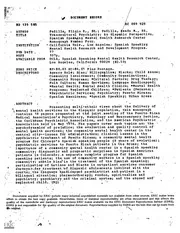







More Free Sacred Texts & Gnosticism Books
View all →