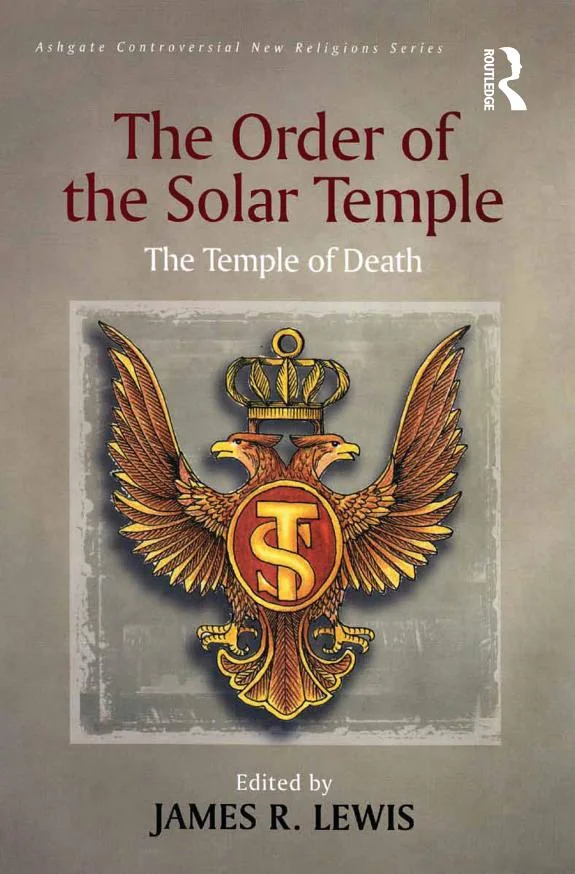
The Order of the Solar Temple
 81
81

The Order of the Solar Temple
James R. Lewis's "The Order of the Solar Temple" offers a much-needed academic dissection of a group that has too often been reduced to lurid headlines. The work excels in its meticulous cataloging of the Order's theological tenets and its systematic tracing of the events leading to the 1994 tragedies. Lewis rightly emphasizes the paucity of English-language scholarship on the subject, making this contribution particularly valuable for a wider readership. A notable strength is the detailed examination of the group's esoteric influences, moving beyond simplistic labels. However, the book's academic tone, while appropriate for its scholarly aims, occasionally renders complex sociological and psychological dynamics somewhat dry. The passage detailing the specific rituals and prophecies that preceded the final events in Cheiry and Salvan offers a chilling, fact-based account that underscores the gravity of the situation. While comprehensive in its historical and sociological scope, a deeper exploration of the internal dissent or alternative paths within the Order, if any existed, might have provided further nuance. Nevertheless, Lewis provides an essential, sober analysis for understanding the Order of the Solar Temple.
📝 Description
81
James R. Lewis's 2000 book examines the Order of the Solar Temple's origins and tragic events.
James R. Lewis's study investigates the Order of the Solar Temple, a New Religious Movement that gained notoriety in the 1990s. The book details the group's history, its core beliefs, and the trajectory that led to the mass deaths in Switzerland and Quebec in October 1994. Lewis moves past sensationalism to provide a measured analysis of the Order's internal workings and the external pressures it faced.
The Order's emergence coincided with a period of increased scrutiny of New Religious Movements in Europe and North America. Its dramatic actions in 1994 became a focal point, influencing legislative efforts and public discussion about groups perceived as dangerous. Lewis places the Order within this climate of fear and regulation, considering how media coverage and political reactions affected public perception and treatment of such organizations.
This work is valuable for students of religious studies and sociology, as well as anyone interested in the history of cults and new religious movements. It is also relevant for researchers looking at the connections between religion, media, and public policy, particularly concerning responses to minority faiths.
The Order of the Solar Temple blended elements of Rosicrucianism, Freemasonry, and various esoteric traditions, positioning itself as a continuation of ancient spiritual lineages. Its apocalyptic worldview and emphasis on spiritual transition resonated with certain esoteric currents active in the late 20th century, particularly those focused on societal transformation and the dawning of a new age. Lewis's analysis situates these beliefs within the broader context of Western esotericism, examining how they manifested in a modern religious movement.
💡 Why Read This Book?
• Gain an understanding of the specific syncretic belief system of the Order of the Solar Temple, detailing its fusion of Rosicrucian, Templar, and New Age ideologies, a perspective rarely found in general cult studies. • Learn about the critical period of 1994 and its aftermath, understanding how the group's actions in Switzerland and Québec influenced European legislation and public opinion regarding New Religious Movements. • Discover the scholarly methodology employed by James R. Lewis in dissecting a complex group, offering a model for analyzing the intersection of religious belief, social dynamics, and tragic outcomes, distinct from sensationalist accounts.
⭐ Reader Reviews
Honest opinions from readers who have explored this book.
❓ Frequently Asked Questions
What were the main beliefs of the Order of the Solar Temple?
The Order of the Solar Temple blended Christian, Gnostic, Templar, and New Age ideologies, believing in a cyclical universe and the imminent return of a messianic figure. They anticipated a spiritual transition and purification, which tragically informed their actions.
When and where did the most significant tragic events involving the Order of the Solar Temple occur?
The most prominent tragic events took place in October 1994, with simultaneous incidents in Switzerland (Cheiry and Salvan) and Québec, Canada, resulting in the deaths of 53 members.
How did the Order of the Solar Temple influence public perception of New Religious Movements?
The group's violent and dramatic actions in the 1990s significantly inflamed the 'cult controversy' in Europe, leading to increased public support for stricter governmental actions against non-traditional religious groups.
What is the academic approach of James R. Lewis's book?
James R. Lewis employs a rigorous sociological and historical analytical framework, examining primary sources and scholarly literature to provide an objective and detailed account of the Order's structure, beliefs, and demise.
Are there many English-language studies on the Order of the Solar Temple?
Prior to Lewis's work, there were relatively few comprehensive studies published in English. This book aims to fill that gap by synthesizing existing knowledge and offering new research.
What specific esoteric traditions did the Order of the Solar Temple draw upon?
The Order synthesized elements from various esoteric traditions, including Christian esotericism, Gnosticism, Rosicrucianism, Freemasonry (particularly Templar lore), and contemporary New Age spirituality.
🔮 Key Themes & Symbolism
Apocalyptic Beliefs and Eschatology
The work examines the Order's specific apocalyptic worldview, which posited a coming global transition and a need for spiritual purification. Lewis meticulously traces how this eschatological framework, drawing from various esoteric traditions, directly informed the group's ultimate actions and their perception of a divine mission. The belief in a necessary 'transition' or 'transitus' played an important role in justifying extreme measures, framing them not as suicide or murder, but as a necessary passage to a higher spiritual plane.
Syncretism and Esoteric Synthesis
A core theme is the Order's unique syncretism, blending disparate esoteric traditions into a cohesive, albeit extreme, belief system. Lewis details the fusion of Christian mysticism, Gnosticism, Templar legends, and New Age concepts. This synthesis wasn't merely superficial; it provided a complex ideological foundation that offered adherents a sense of historical continuity and spiritual purpose, distinguishing it from simpler cultic formations and contributing to its internal logic.
Charismatic Leadership and Group Dynamics
The book examines the role of charismatic leadership, particularly figures like Luc Jouret and Joseph Di Mambro, in shaping the Order's trajectory. It analyzes how their authority, combined with specific group psychological dynamics, fostered intense loyalty and adherence to doctrine, even as the group faced increasing external scrutiny and internal pressures. The study explores how such leadership can guide followers toward extreme collective actions based on shared ideological commitments.
Societal Reaction and Media Influence
Lewis critically assesses the societal and media response to the Order of the Solar Temple, particularly following the 1994 events. The work highlights how sensationalized reporting and public fear contributed to a climate where stricter governmental controls on New Religious Movements gained traction. This theme explores the complex interplay between group actions, media representation, and policy-making, demonstrating how perceived threats can shape public discourse and legal frameworks.
💬 Memorable Quotes
Direct passages from the work, attributed to the author.
“The Order of the Solar Temple... played an important role in inflaming the cult controversy in Europe.”
— This highlights the significant impact the group's actions had on public discourse and policy regarding New Religious Movements. It suggests the events were a watershed moment, intensifying debates and leading to calls for more stringent measures against such organizations.
“There are relatively few studies published in English.”
— This statement underscores the academic need this book addresses. It points to a gap in accessible scholarship for English-speaking researchers and students interested in this specific, yet influential, controversial group.
“The group's ideology synthesized elements from Christian esotericism, Gnosticism, Templar traditions, and New Age thought.”
— This concisely describes the complex doctrinal foundation of the Order. It indicates that understanding the group requires appreciating its mix of diverse, often ancient, esoteric and religious streams.
“The events of October 1994 involved fifty-three members murdered or committing suicide in Switzerland and Québec.”
— This stark factual statement grounds the reader in the scale and nature of the tragedy. It emphasizes the lethal culmination of the group's beliefs and practices, setting a somber tone for the subsequent analysis.
“The book brings together the best scholarly research on the Order.”
— This indicates the book's aim to be a comprehensive and authoritative resource. It suggests that the author has curated and synthesized significant academic contributions, offering a consolidated understanding of the subject.
🌙 Esoteric Significance
Tradition
The Order of the Solar Temple draws heavily from Western Esotericism, specifically synthesizing elements of Christian Gnosticism, Templar mythology, Rosicrucianism, and contemporary New Age spirituality. It represents a modern attempt to create a salvific path through the reinterpretation of ancient traditions, positing a cyclical view of history and a coming spiritual transformation. Unlike more philosophical esoteric schools, the OST developed a highly organized, hierarchical structure with a pronounced apocalyptic mission, distinguishing it within the broader esoteric landscape.
Symbolism
Central symbols include the 'Solar Temple' itself, evoking a purified spiritual order and a connection to divine light and cosmic cycles. The Templar cross, representing a warrior-like spiritual path and a return to ancient purity, was also significant. The concept of 'transitus' or transition, often symbolized by a star or celestial event, represented the anticipated spiritual rebirth or ascension for the Order's chosen members, a motif deeply embedded in their apocalyptic narrative.
Modern Relevance
Contemporary interest in the Order of the Solar Temple is found within studies of religious extremism, apocalyptic movements, and the sociology of cults. Thinkers and researchers examining the dynamics of high-demand groups, the role of charisma in radicalization, and the intersection of belief systems with collective action continue to reference the OST as a critical case study. Its legacy prompts ongoing discussions about religious freedom versus societal protection, particularly relevant in an era where online radicalization mirrors some of the ideological pressures seen within the Order.
👥 Who Should Read This Book
• Researchers of New Religious Movements and cult phenomena seeking detailed case studies of extreme group behavior and belief systems. • Students of comparative religion and esotericism interested in how disparate traditions can be synthesized into new spiritual ideologies. • Journalists, policymakers, and sociologists analyzing the societal impact of religious controversies and the dynamics of media representation of minority faiths.
📜 Historical Context
The mid-1990s marked a period of intense scrutiny and fear surrounding New Religious Movements (NRMs), often labeled 'cults.' In this climate, the Order of the Solar Temple's dramatic and violent events in October 1994, involving mass deaths in Switzerland and Québec, became a focal point for public anxiety and governmental concern across Europe. These incidents contributed significantly to a broader 'cult panic,' influencing public opinion and bolstering support for more restrictive policies against minority religious groups. The book situates the OST within this context, examining how media portrayals and political discourse amplified fears, leading to legislative actions and increased surveillance of NRMs. Contemporaries like the Heaven's Gate cult, whose mass suicide occurred in 1997, shared a similar trajectory of public notoriety and societal alarm, though the OST's actions preceded it and arguably set a precedent for the heightened public sensitivity. The reception of the OST's story was largely one of shock and condemnation, fueling a desire for control rather than nuanced understanding.
📔 Journal Prompts
Analyze the concept of 'transitus' as presented within the Order's belief system and its connection to the 1994 events.
Reflect on the fusion of Christian, Templar, and New Age elements in the Order's syncretism.
Consider the role of charismatic leadership in the trajectory of the Order of the Solar Temple.
Examine the societal and media reactions described in the book and their influence on public perception of NRMs.
How did the Order's apocalyptic worldview shape its members' understanding of reality and their place within it?
🗂️ Glossary
Transitus
A Latin term meaning 'transition' or 'passage,' central to the Order of the Solar Temple's belief system. It referred to an anticipated spiritual and cosmic transition, often interpreted as a purification or ascension, which justified extreme actions.
NRM
Acronym for New Religious Movement. A term used in academic study to describe religious or spiritual groups that arose in modern times, often distinct from established, traditional religions.
Apocalypticism
Belief systems that emphasize an imminent, dramatic, and transformative end to the current world order, often involving divine intervention and the establishment of a new, purified era.
Syncretism
The blending or fusion of different, often contrasting, religious or philosophical beliefs, symbols, and practices into a new, cohesive system.
Charismatic Leadership
A form of leadership based on the personal appeal, perceived extraordinary qualities, or divine inspiration of the leader, which inspires devotion and obedience from followers.
Cult Controversy
A period of heightened public and media attention, often accompanied by moral panic and calls for governmental intervention, surrounding groups perceived as deviant or dangerous due to their beliefs and practices.
Esotericism
A broad category of religious and spiritual traditions characterized by their esoteric or 'inner' teachings, often accessible only to initiated individuals or those with specialized knowledge.
This book appears in 1 collection
🔮 Readers Also Liked
Browse all →








From the “Western Esotericism” Collection
View all →







More Free Sacred Texts & Gnosticism Books
View all →