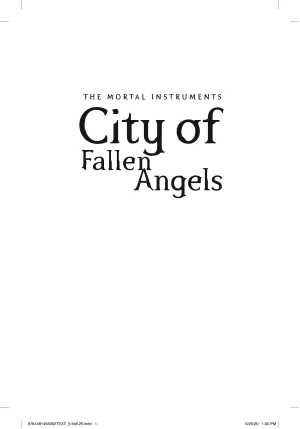
City of Fallen Angels
 72
72

City of Fallen Angels
Cassandra Clare's *City of Fallen Angels* plunges its characters into a maelstrom of suspicion and violence that threatens the hard-won peace between Shadowhunters and Downworlders. The novel excels in portraying the psychological toll this renewed conflict takes, particularly on Simon Lewis, whose unique status as a Daylighter vampire forces him into a pivotal, if unenviable, role. Clare masterfully depicts the fragility of interspecies alliances, showing how easily old prejudices resurface under pressure. However, the plot occasionally feels overstuffed with subplots, sometimes distracting from the central mystery of the murders. A particularly effective passage involves the uneasy council meetings where each faction’s distrust is palpable. The narrative’s strength lies in its exploration of how external threats can exacerbate internal divisions, forcing characters to confront their own biases. Ultimately, *City of Fallen Angels* is a compelling, albeit occasionally convoluted, examination of maintaining peace in a world rife with ancient animosities.
📝 Description
72
Cassandra Clare's 2015 novel, City of Fallen Angels, tests the peace between Shadowhunters and Downworlders.
In City of Fallen Angels, published in 2015, the uneasy peace between the Nephilim and the various Downworlder factions is shaken by a string of violent murders. The novel picks up after major events that established a tense truce, forcing characters to confront the repercussions of their past actions. Trust has eroded, making the task of maintaining order exceedingly difficult.
This installment delves into the complexities of solidifying alliances when an unseen enemy exploits internal divisions. Simon Lewis, now a Daylighter vampire, becomes a key figure in bridging the gap between supernatural groups. The narrative examines themes of sacrifice, loyalty, and the burdens of leadership in the face of external threats.
This novel operates within the urban fantasy tradition, which often draws on occult lore and demonology to create its supernatural societies. The Shadowhunters, a group of angel-blooded warriors, police a hidden world of demons, vampires, faeries, and werewolves. The book explores the inherent tensions and moral gray areas that arise when these disparate groups, each with their own hierarchies and magical systems, must coexist and interact, particularly under duress.
💡 Why Read This Book?
• Gain insight into the precarious balance of power between Shadowhunters and Downworlders, particularly the challenges faced by Simon Lewis as a Daylighter vampire navigating these tensions after the events of *The Mortal Instruments*. • Experience the narrative's exploration of how fractured trust impacts supernatural diplomacy, showcasing the difficulty of maintaining alliances when old prejudices resurface. • Understand the consequences of past actions on present-day peace treaties, as the book delves into the specific threats that emerge in the wake of established accords.
⭐ Reader Reviews
Honest opinions from readers who have explored this book.
❓ Frequently Asked Questions
What is the primary conflict in City of Fallen Angels?
The primary conflict involves mysterious murders that threaten the fragile peace established between the Shadowhunters and Downworlders, forcing characters like Simon Lewis to act as a bridge between the factions.
Who is Simon Lewis in Cassandra Clare's Shadowhunter world?
Simon Lewis is a central character who becomes a Daylighter vampire, granting him unique abilities and a complex position within both the human and supernatural communities.
When was City of Fallen Angels first published?
City of Fallen Angels was first published in September 2015, continuing the sprawling narrative of Cassandra Clare's Shadowhunter Chronicles.
What are the main supernatural groups involved in the conflict?
The main groups are the Shadowhunters (Nephilim), who police the demon-filled world, and the Downworlders, which include vampires, werewolves, faeries, and warlocks.
Does this book require knowledge of previous Shadowhunter series?
While not strictly mandatory, prior knowledge of *The Mortal Instruments* series is highly recommended for a full understanding of the characters' histories and the established peace.
What is a Daylighter vampire?
A Daylighter vampire is a rare type of vampire that can withstand sunlight, a characteristic that sets Simon Lewis apart and influences his interactions within the Shadowhunter world.
🔮 Key Themes & Symbolism
Fragile Peace and Its Erosion
The narrative intensely examines the precarious truce between Shadowhunters and Downworlders, a peace established after significant conflict. The book explores how easily this accord can be undermined by external provocations and lingering distrust. The mysterious murders serve as a catalyst, exposing the deep-seated prejudices and suspicions that threaten to plunge the supernatural world back into chaos. This theme highlights the constant effort required to maintain harmony, even when overt warfare ceases. Simon's role is crucial in this aspect, as he embodies the bridge between these divided societies.
The Burden of Leadership and Sacrifice
Characters in *City of Fallen Angels* grapple with the immense responsibilities that come with their positions. Simon Lewis, thrust into a position of influence due to his unique vampiric nature, faces difficult choices that impact multiple factions. The narrative explores the personal sacrifices required to protect a community or uphold an ideal. This includes the emotional toll of leadership, the weight of expectation, and the often-painful necessity of making decisions that benefit the greater good, even at personal cost.
Identity and Belonging in a Divided World
The novel studies the complexities of identity, particularly for characters like Simon who exist between different worlds. As a vampire who was once human, Simon constantly navigates his place within both human and supernatural societies. This theme is amplified by the overarching conflict, which forces individuals to choose sides or find ways to reconcile their dual allegiances. The struggle for acceptance and understanding within a world that often demands rigid categorization is a central thread.
Consequences of Past Actions
The events in *City of Fallen Angels* are deeply rooted in the history and prior conflicts of the Shadowhunter universe. The book demonstrates how past decisions, battles, and betrayals continue to ripple through the present, affecting relationships and political stability. The resurgence of violence is presented not as a random occurrence but as a consequence of unresolved issues and the lingering impact of previous wars. This underscores the idea that peace is an ongoing process, not a final state.
💬 Memorable Quotes
Direct passages from the work, attributed to the author.
“As mysterious murders threaten the new peace...”
— This opening premise sets the stage for the central conflict. It immediately establishes that the established order is under attack, creating suspense and indicating that the fragile alliance between supernatural groups is the primary target.
“The fragile peace between Shadowhunters and Downworlders...”
— This phrase underscores the central tension of the novel. It emphasizes that the accord is not robust but precarious, suggesting that any disturbance could easily shatter the hard-won stability and reignite ancient hostilities.
“Simon, the Daylighter vampire, can help...”
— This interpretation focuses on Simon's agency and unique capabilities. His ability to exist in daylight, a trait uncommon among vampires, makes him an indispensable figure in bridging the divide and fostering understanding.
“Mysterious murders threaten the new peace...”
— This interpretation points to the inciting incident. The unexplained nature of the killings creates an atmosphere of paranoia and suspicion, suggesting a deliberate attempt to destabilize the existing order and sow discord.
💡 Key Ideas
Editorial paraphrase of the work's core concepts — not direct quotes.
Simon, the Daylighter vampire, must help bring both groups together.
This paraphrased concept highlights Simon's important role. His unique status as a vampire who can tolerate sunlight places him in a singular position to mediate between the Shadowhunters and the various Downworlder factions.
🌙 Esoteric Significance
Tradition
While not rooted in a specific historical esoteric tradition like Hermeticism or Kabbalah, *City of Fallen Angels* draws from the modern archetype of the urban fantasy genre, which often functions as a secularized or allegorical exploration of hidden spiritual realities. It presents a world operating under unseen laws, with distinct hierarchies and power structures analogous to spiritual or magical orders. The Shadowhunters, in particular, embody a warrior-priest archetype tasked with policing a boundary between realms, a concept echoing older magical guard traditions.
Symbolism
The primary symbolism revolves around the concept of the 'Shadowhunter' itself – beings who operate in the liminal spaces between the mundane and the supernatural, wielding angelic power. The 'Downworlders' represent the diverse, often chaotic, forces of the subconscious or the primal energies that exist beneath the surface of civilization. The 'City of Bones' (New York, in this context) symbolizes the hidden spiritual landscape within the mundane world, accessible only to those initiated into its secrets. The Daylighter vampire, Simon, symbolizes the integration of opposing forces, light and dark, life and undeath.
Modern Relevance
Contemporary urban fantasy, including works like *City of Fallen Angels*, continues to resonate by providing accessible narratives that explore complex themes of otherness, belonging, and the search for meaning in a seemingly chaotic world. Readers engage with these stories as modern myth-making, offering allegorical frameworks for understanding social dynamics, personal struggles, and the allure of hidden power. Thinkers and practitioners interested in modern folklore, the psychology of archetypes, and the evolution of spiritual narratives find value in how these stories reflect and shape contemporary cultural understandings of the mystical.
👥 Who Should Read This Book
• Devoted fans of Cassandra Clare's Shadowhunter Chronicles seeking continuity and further character development within the established universe. • Readers of urban fantasy who appreciate intricate world-building, complex interpersonal dynamics, and a blend of action, mystery, and romance. • Young adults and older readers interested in exploring themes of identity, loyalty, and the challenges of maintaining peace between diverse, often antagonistic, groups.
📜 Historical Context
Published in 2015, *City of Fallen Angels* emerged within a landscape already saturated with urban fantasy and paranormal romance. Cassandra Clare had already established a significant readership with *The Mortal Instruments* series, which concluded in 2014. This book, part of the subsequent *The Dark Artifices* series, was released alongside other works by authors like Sarah J. Maas, who also explored complex supernatural societies and young adult protagonists facing immense challenges. The year 2015 saw continued exploration of themes prevalent in YA literature: identity, found family, and the struggle against oppressive systems, often framed through magical or otherworldly conflicts. While not directly engaging with established esoteric traditions in the way older occult literature might, Clare's work taps into a modern fascination with hidden worlds and the inherent moral ambiguities within them, reflecting a broader cultural interest in the 'hidden city' trope popularised in earlier decades by authors like Neil Gaiman.
📔 Journal Prompts
The precarious peace between Shadowhunters and Downworlders after the events of *The Mortal Instruments*.
Simon Lewis's unique position as a Daylighter vampire mediating factional disputes.
The impact of mysterious murders on established supernatural accords.
Character choices made under duress to protect the broader community.
Simon's internal conflict regarding his identity and place between worlds.
🗂️ Glossary
Shadowhunters
Also known as Nephilim, these are a quasi-angelic human race who protect the human world from demons and other supernatural entities using a combination of ancient runes and weaponry.
Downworlders
A broad category encompassing non-human supernatural beings who live alongside humans, including vampires, werewolves, faeries, warlocks, and demons.
Daylighter
A rare type of vampire, like Simon Lewis, who possesses the ability to withstand sunlight, unlike traditional vampires who are harmed or killed by it.
Runes
Magical symbols tattooed onto the skin of Shadowhunters, which grant them supernatural abilities or are used to perform various magical functions.
Mundane
A term used by supernatural beings to refer to ordinary human beings who are unaware of the existence of the supernatural world.
Clave
The governing body of the Shadowhunters, responsible for establishing laws, traditions, and maintaining order within their society.
Circle
A group of Shadowhunters who once rebelled against the Clave, often associated with darker practices and controversial ideologies within the Shadowhunter community.
This book appears in 1 collection
🔮 Readers Also Liked
Browse all →








From the “Demonology” Collection
View all →


More Free Occult Philosophy Books
View all →