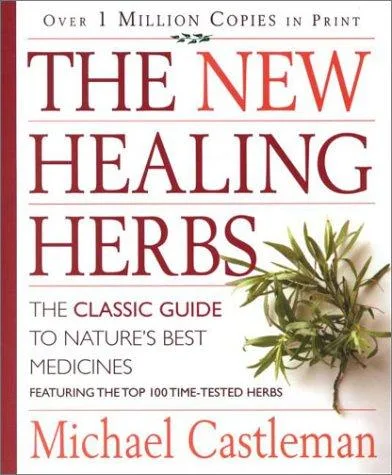
The New Healing Herbs
 71
71

The New Healing Herbs
Michael Castleman's 'The New Healing Herbs' is a commendable effort to ground herbal medicine in contemporary science. Unlike many texts that rely on folk wisdom alone, Castleman cites studies and identifies active compounds, such as the isoflavones in soy or the curcuminoids in turmeric, giving readers concrete biochemical anchors. A particular strength is its systematic approach to cataloging herbs, detailing their specific uses, from treating migraines with feverfew to improving cardiovascular health with hawthorn. However, the book sometimes feels more like a scientific compendium than a guide for intuitive practice. While the 2009 publication date means some newer research might be absent, its foundational scientific approach remains solid. It provides a valuable bridge for those wary of pseudoscience, offering a clear, evidence-informed perspective on plant-based healing.
📝 Description
71
Michael Castleman's 2009 book, The New Healing Herbs, examines herbs through a scientific lens.
Published in 2009, The New Healing Herbs by Michael Castleman serves as a detailed guide to plant-based remedies. The book moves past simple tradition, presenting research that supports the use of specific herbs for various health issues. Castleman describes the active compounds in these plants and how they work, giving readers a basis for understanding their healing properties.
This work is for anyone interested in natural health and herbalism, particularly those who want to understand the scientific evidence behind these practices. It provides specific details on dosages, potential side effects, and the studies that back herbal medicine. Readers will find practical information for using herbs safely and effectively.
The New Healing Herbs participates in a modern esoteric interest in plant-based healing, connecting ancient herbal traditions with contemporary scientific inquiry. While not overtly mystical, its focus on the precise chemical actions and therapeutic potential of plants echoes older alchemical and medicinal philosophies that sought to understand the hidden virtues within nature. The book's emphasis on evidence-based phytotherapy can be seen as a contemporary expression of the perennial quest for natural remedies, aligning with esoteric traditions that value direct experience and natural forces for well-being.
💡 Why Read This Book?
• Gain an evidence-based understanding of how specific herbs like Ginkgo Biloba interact with the body, moving beyond folklore to scientific mechanisms. • Learn about the historical context of herbalism, including how practices evolved and gained scientific validation in the late 20th and early 21st centuries. • Discover practical applications for common ailments, supported by research discussed in the book, enabling informed choices about natural remedies.
⭐ Reader Reviews
Honest opinions from readers who have explored this book.
❓ Frequently Asked Questions
When was 'The New Healing Herbs' first published and by whom?
The book 'The New Healing Herbs' was first published in 2009 by Michael Castleman, offering a contemporary, science-backed look at medicinal plants.
What is the primary focus of 'The New Healing Herbs'?
The book focuses on presenting research-backed information about the medicinal properties and applications of various herbs, detailing active compounds and their effects.
Does the book discuss scientific studies related to herbs?
Yes, a key aspect of 'The New Healing Herbs' is its inclusion of scientific studies and research to validate the traditional uses of herbs.
Who would benefit most from reading 'The New Healing Herbs'?
Individuals interested in natural health, herbalism, phytotherapy, and those seeking evidence-based information on plant-based remedies would find this book highly beneficial.
Does the book cover specific active compounds in herbs?
Absolutely. Castleman details specific active compounds, such as isoflavones in soy or curcuminoids in turmeric, explaining their role in the herb's therapeutic action.
Is 'The New Healing Herbs' suitable for beginners in herbalism?
Yes, it serves as an excellent resource for beginners seeking a scientifically grounded introduction to herbal medicine, clarifying traditional uses with modern research.
🔮 Key Themes & Symbolism
Phytochemistry and Active Compounds
The book emphasizes understanding herbs through their chemical constituents. It looks at active compounds like flavonoids, alkaloids, and terpenoids, explaining how these molecules interact within the human body. For instance, the book might discuss the specific isoflavones found in soy and their potential impact on hormonal balance, moving beyond a general notion of 'plant power' to precise biochemical actions. This focus highlights the scientific underpinnings of herbal medicine, presenting it as a field with verifiable mechanisms.
Evidence-Based Herbalism
Castleman champions an approach to herbalism that is supported by scientific research and clinical studies. This theme contrasts with purely anecdotal or traditional methods. The work explores how modern science validates, refines, or sometimes questions age-old uses of plants. By referencing studies and clinical trials, the book aims to provide readers with reliable information for making informed decisions about using herbs for health, distinguishing between well-researched remedies and those lacking empirical support.
Standardization and Safety
A crucial aspect of 'The New Healing Herbs' is its focus on the importance of standardization and safety in herbal preparations. The book discusses how variations in growing conditions, harvesting, and processing can affect the potency of medicinal herbs. It stresses the need for standardized extracts to ensure consistent dosage and therapeutic effect. Furthermore, it addresses potential contraindications, drug interactions, and side effects, advocating for a responsible and informed approach to self-treatment with botanical medicines.
Bridging Traditional and Modern Medicine
This theme explores the intersection of ancient herbal traditions and contemporary medical science. Castleman's work seeks to integrate the wisdom accumulated over centuries of plant use with the rigorous methodologies of modern research. It highlights how scientific investigation can confirm, explain, and sometimes improve upon traditional practices. The book serves as a bridge, making complex scientific data accessible to a general audience interested in natural healing, and showing how these two seemingly disparate fields can inform each other.
💬 Memorable Quotes
Direct passages from the work, attributed to the author.
“Scientific studies are crucial for validating traditional herbal uses.”
— This statement reflects the author's commitment to evidence-based practice, suggesting that anecdotal evidence alone is insufficient and that rigorous research is necessary to confirm the efficacy and safety of medicinal herbs.
“Standardized herbal extracts ensure consistent dosage and predictable results.”
— This highlights the practical importance of quality control in herbal medicine, emphasizing that consistent potency is key to reliable therapeutic outcomes and patient safety.
“Understanding contraindications prevents potential harm from herb-drug interactions.”
— This cautionary principle points to the need for careful consideration of individual health conditions and concurrent medications when using herbal remedies, promoting a risk-aware approach.
“Herbal medicine offers valuable alternatives and complements to conventional treatments.”
— This perspective frames herbalism not as a replacement for, but as a valuable addition to, mainstream medicine, encouraging a holistic view of healthcare that integrates various therapeutic modalities.
💡 Key Ideas
Editorial paraphrase of the work's core concepts — not direct quotes.
The active compounds in herbs are responsible for their medicinal effects.
This paraphrased concept underscores the book's core scientific approach, asserting that the therapeutic benefits of plants can be attributed to specific biochemicals within them, rather than vague energetic properties.
🌙 Esoteric Significance
Tradition
While not explicitly aligned with a single esoteric tradition like Hermeticism or Kabbalah, 'The New Healing Herbs' engages with the perennial interest in plant consciousness and healing found across many mystical paths. It bridges these traditions with modern scientific inquiry, offering a framework that speaks to those who see plants not just as chemical compounds but as living entities with profound energetic and medicinal properties. Its empirical approach can be seen as a modern manifestation of the alchemical pursuit of understanding nature's secrets.
Symbolism
The book implicitly engages with the symbolism of plants as conduits of life force and natural wisdom. While focusing on scientific compounds, it touches upon the broader symbolism of herbs as representing Earth's generative power and restorative capabilities. For instance, mentioning specific herbs used for 'cleansing' or 'vitality' taps into ancient symbolic associations of plants with purification and renewal, offering a scientifically validated perspective on these enduring archetypes.
Modern Relevance
Contemporary practitioners of integrative medicine, functional medicine, and evidence-based herbalism draw heavily on works like Castleman's. Thinkers and clinicians who seek to blend rigorous scientific understanding with a holistic view of health often cite such research-focused guides. Its influence can be seen in the growing number of reputable online databases and educational programs that prioritize scientific validation for herbal therapies, making it a foundational text for modern, scientifically informed natural healing.
👥 Who Should Read This Book
• Health-conscious individuals seeking to understand the scientific basis behind popular herbal remedies and make informed choices about natural health supplements. • Students and practitioners of herbalism or naturopathy looking for a reliable reference that bridges traditional knowledge with contemporary research findings and safety guidelines. • Anyone interested in phytochemistry and pharmacognosy who wants to learn about the specific active compounds in plants and how they exert therapeutic effects.
📜 Historical Context
Published in 2009, 'The New Healing Herbs' arrived during a period of significant public interest in natural health and complementary medicine. The early 21st century saw a growing number of people seeking alternatives to conventional pharmaceuticals, driven by concerns about side effects and a desire for more holistic approaches. This era was marked by increasing scientific scrutiny of herbal remedies, with researchers actively investigating traditional claims. Castleman's work emerged in dialogue with this scientific turn, aiming to provide a reliable, evidence-based compendium. It appeared amidst a burgeoning field of pharmacognosy and ethnobotany, where scholars like ethnobotanist Mark Plotkin were also documenting and studying medicinal plants. The book helped to legitimize herbalism by grounding its practices in scientific research, contrasting with the more mystical or purely traditional texts that had previously dominated the genre.
📔 Journal Prompts
Reflect on the concept of 'evidence-based herbalism' as presented in the book.
Consider the active compounds discussed for a specific herb and their potential impact on your well-being.
Analyze the importance of standardization and safety protocols for medicinal plants.
Explore the historical evolution of herbal remedies mentioned, linking past practices to current scientific understanding.
Examine how the book's approach to phytochemistry aligns with or challenges your existing views on natural healing.
🗂️ Glossary
Phytochemistry
The study of chemicals derived from plants. It explores the vast array of secondary metabolites produced by plants, many of which have medicinal properties.
Pharmacognosy
The branch of pharmacology dealing with medicinal drugs obtained from plants or other natural sources. It involves the study of the physical, chemical, and biological properties of such drugs.
Standardized Extract
A herbal extract in which the concentration of a specific active compound or group of compounds is guaranteed to be within a specific range, ensuring consistent potency.
Adaptogen
A natural substance, typically derived from herbs, that is believed to help the body adapt to stress and exert a normalizing effect on bodily processes.
Nervine
A substance that is thought to have a beneficial effect on the nervous system. Herbs classified as nervines are often used to calm, stimulate, or tonify nerves.
Contraindication
A condition or factor that serves as a reason not to use a particular medical treatment or medication, including herbal remedies, due to potential harm.
Isoflavones
A class of plant-derived compounds, particularly abundant in soy, that exhibit estrogen-like activity and are studied for their potential health benefits.
🔮 Readers Also Liked
Browse all →






More by Michael Castleman
All books →
More Free Occult Philosophy Books
View all →