The Devil Within
 83
83

The Devil Within
Brian Levack’s "The Devil Within" avoids sensationalism, opting instead for a rigorous historical dissection of possession and exorcism. Its strength lies in its exhaustive cataloging of evidence, tracing beliefs from antiquity through the fervent persecutions of the early modern period. Levack meticulously details how theological doctrine and social anxieties intertwined, particularly during the witch-hunt era, citing numerous cases from across Europe. A notable limitation, however, is the sheer density of information, which at times can make the narrative feel more like an encyclopedic survey than a flowing historical account. The section detailing the 15th-century Malleus Maleficarum's influence on demonological thought, while crucial, exemplifies this scholarly thoroughness that might overwhelm a casual reader. Despite this, the book provides an unparalleled resource for understanding a persistent and often terrifying aspect of human history and belief.
This is a foundational scholarly work for anyone seeking to understand the historical roots of demonology.
📝 Description
83
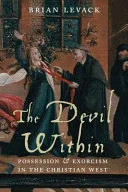
Brian Levack's 2006 book, The Devil Within, examines centuries of belief in demonic possession.
Brian Levack's "The Devil Within" provides a detailed historical account of demonic possession and exorcism. The book traces how these concepts changed from antiquity through the medieval era, the witch hunts, and into modern times. Levack carefully lays out the theological, social, and psychological factors that shaped beliefs about possession and the methods used to counter perceived demonic influence.
This work situates the discussion of possession within larger historical movements. It moves from early Christian fears of pagan practices to the intense climate of the European witch trials. Levack points out how societal changes, religious debates, and new scientific ideas affected the interpretation of demonic actions. The book notes the shift in understanding from spiritual illness to psychological issues, a change particularly clear by the 1700s. The book also looks at how the very meaning of 'possession' evolved, distinguishing between spiritual events, mental illnesses, and social fears projected onto individuals. It covers the creation of exorcism rituals, the involvement of religious leaders, and the harsh practices involved in driving out demons. Levack also discusses 'false possession' and how accusations could serve as tools for social control or personal revenge.
While not strictly an esoteric text itself, "The Devil Within" historicizes beliefs and practices often found within esoteric traditions. It examines how societies have historically grappled with perceived supernatural forces, the role of ritual in confronting them, and the shifting boundaries between the sacred and the profane. The book details the historical development of demonology, a subject that has long been of interest to occultists and those studying hidden knowledge, showing how formal religious and medical frameworks intersected with popular beliefs about the demonic.
💡 Why Read This Book?
• Gain a nuanced understanding of how the concept of demonic possession evolved from early Christian demonology to the anxieties of the witch trials, specifically examining the theological shifts described between the 15th and 17th centuries. • Analyze the practical application and ritualistic development of exorcism, learning about specific historical figures like Jean Bodin and his influential writings on witchcraft and possession. • Appreciate the interplay between religious doctrine, societal fears, and the medical or psychological interpretations of perceived demonic influence, as evidenced in the changing approaches to 'possession' documented from the medieval period onwards.
⭐ Reader Reviews
Honest opinions from readers who have explored this book.
❓ Frequently Asked Questions
What historical periods does Brian Levack's "The Devil Within" cover regarding possession and exorcism?
The book provides a sweeping historical survey, beginning with ancient roots and extending through the medieval era, the intense period of European witch-hunts, and into the early modern and modern periods, tracing the evolution of these beliefs.
How does "The Devil Within" differentiate between spiritual possession and psychological conditions?
Levack meticulously examines historical texts and cases to show how the line between perceived demonic affliction and what we now recognize as psychological maladies was blurred and debated throughout history, often depending on prevailing theological and scientific frameworks.
What role does the Catholic Church play in the history of exorcism as presented in the book?
The book details the Catholic Church's significant role in developing official rites for exorcism and its theological stances on demonic influence. It explores how Church doctrine shaped the understanding and treatment of possession across centuries.
Does "The Devil Within" discuss the witch trials in relation to possession?
Yes, a substantial portion of the book is dedicated to the European witch trials, exploring how beliefs about demonic possession fueled accusations, trials, and persecutions, and how concepts like the Malleus Maleficarum influenced these events.
Who would benefit most from reading Brian Levack's "The Devil Within"?
Scholars of religious history, demonology, cultural studies, and the history of medicine, as well as general readers fascinated by the historical study of belief, the occult, and the darker aspects of human experience, will find this book invaluable.
What is the primary focus of Levack's historical survey in "The Devil Within"?
The primary focus is a wide-ranging examination of the history of demonic possession and exorcism. It looks at how these phenomena were understood, documented, and treated across different cultures and eras, emphasizing the socio-historical context.
🔮 Key Themes & Symbolism
The Shifting Nature of Possession
Levack demonstrates how the very definition of 'possession' transformed across historical periods. Initially viewed through a purely spiritual lens, particularly in early Christian discourse, it later became entangled with psychological interpretations and societal anxieties. The book highlights instances where what was once deemed demonic influence might now be understood as mental illness, revealing how cultural frameworks dictate the interpretation of unusual human experiences and afflictions.
Ritual and Authority in Exorcism
The practice of exorcism is examined not merely as a ritual but as a site of religious and social authority. Levack details the development of formal rites, particularly within the Catholic Church, and the specific roles assigned to priests and other authorities. The book explores the power dynamics involved, how exorcism could be used to assert control, and the varied efficacy and brutality associated with these ceremonies throughout history.
Possession as Social Mirror
Beyond theological explanations, "The Devil Within" posits possession and exorcism as reflections of societal fears and anxieties. During periods like the witch trials, accusations of possession became a potent tool for social control, scapegoating, and the persecution of marginalized groups. Levack illustrates how the perceived 'devil within' often mirrored the darker impulses and insecurities present within the wider community.
From Spiritual Affliction to Psychological Discourse
A crucial theme is the historical transition in understanding afflictions attributed to demonic forces. The work charts the gradual shift from viewing such phenomena solely as spiritual battles to recognizing them as potential manifestations of psychological distress. This evolution, particularly evident from the Enlightenment onward, underscores changing paradigms in both religion and nascent scientific thought.
💬 Memorable Quotes
Direct passages from the work, attributed to the author.
“The history of possession is not merely a history of belief, but also a history of the social anxieties and political pressures that shaped those beliefs.”
— This interpretation highlights Levack's argument that demonic possession was not solely a theological concern but was deeply intertwined with the social and political climate of different eras, serving as a lens through which societal fears were expressed and managed.
“The line between genuine demonic possession and psychological disorder was frequently blurred in historical records.”
— This captures the book's exploration of diagnostic ambiguity. It points to the difficulty historical actors and later scholars faced in distinguishing between supernatural affliction and mental illness, a challenge Levack meticulously documents through case studies.
“Accusations of possession often served social and political functions, targeting individuals or groups deemed problematic.”
— This interpretation underscores the book's examination of possession as a tool for social control. It suggests that claims of demonic infestation were frequently employed to legitimize persecution, ostracism, or the assertion of power over specific individuals or communities.
“The Malleus Maleficarum, though controversial, significantly influenced demonological thought and practice during the witch-hunt era.”
— This statement highlights the impact of a specific historical text. It points to the Malleus Maleficarum as a key document shaping the perception and prosecution of witchcraft and possession, demonstrating the book's engagement with primary source material and its historical context.
💡 Key Ideas
Editorial paraphrase of the work's core concepts — not direct quotes.
Exorcism rites evolved significantly, reflecting changing theological understandings and the perceived nature of demonic intrusion.
This paraphrased concept emphasizes the dynamic nature of exorcism practices. It suggests that the rituals performed to expel demons were not static but adapted over time, mirroring shifts in how religious authorities and communities conceptualized demonic influence.
🌙 Esoteric Significance
Tradition
While "The Devil Within" is primarily a work of secular historical scholarship rather than an esoteric text itself, it provides crucial historical grounding for numerous esoteric traditions. Many occult lineages, particularly those focused on demonology, spiritism, or ceremonial magic, engage with historical notions of possession and exorcism. Levack's work offers a critical, evidence-based counterpoint to purely speculative or ritualistic interpretations, contextualizing these practices within their historical development and societal impact, which is vital for understanding their origins.
Symbolism
The book implicitly engages with symbols of the demonic, such as the possessed individual as a vessel or the exorcist as a warrior against spiritual darkness. These are not analyzed as occult symbols per se, but their historical manifestation is explored. The figure of the Devil himself, as conceived in various historical periods – from a primal force of chaos to a cunning tempter – serves as a central symbolic representation of perceived evil that society grappled with.
Modern Relevance
Contemporary occultists and scholars of esotericism, particularly those interested in demonology, shadow work, or comparative religion, draw upon the historical understanding presented by Levack. His work informs modern discussions on the nature of the psyche, the persistence of dualistic thinking (good vs. evil), and the socio-cultural construction of 'otherness.' It provides a necessary historical corrective for those who might uncritically adopt or adapt historical demonological concepts into modern magical practices or spiritual beliefs.
👥 Who Should Read This Book
• Academic researchers in religious history, cultural studies, and the history of medicine seeking a comprehensive overview of demonological beliefs and practices. • Students of the occult and esoteric traditions interested in the historical roots of concepts like possession and exorcism, providing a factual counterpoint to speculative lore. • General readers fascinated by the history of belief, the psychology of fear, and the societal impact of religious phenomena, offering a scholarly yet accessible exploration of a dark historical subject.
📜 Historical Context
Published in 2013, Brian Levack's "The Devil Within" emerged within a robust academic field of demonological and early modern European history. It built upon decades of scholarship that had moved beyond simplistic interpretations of the witch trials, such as those prevalent in the mid-20th century. Levack's work engages directly with the intellectual currents of the time, particularly the ongoing debate regarding the psychological versus the socio-political drivers of witchcraft accusations. Key contemporaries like H.C. Erik Midelfort and Robin Briggs had already established foundational research on German and French witchcraft, respectively. Levack’s contribution lies in its synthesis and broad scope, connecting disparate regions and time periods more explicitly than many predecessors. The book benefited from a scholarly environment increasingly receptive to nuanced analyses of belief systems, moving past earlier religious apologetics or purely rationalist dismissals. While no major censorship events are noted for this specific work, its reception by scholars affirmed its place in the ongoing conversation about the historical understanding of the demonic.
📔 Journal Prompts
The historical perception of demonic possession and its societal functions.
Comparing medieval exorcism rites with their early modern iterations.
Analyzing the influence of theological doctrine on historical understandings of the Devil.
Reflecting on the concept of 'false possession' and its implications.
Investigating the transition from spiritual explanations to psychological ones for perceived demonic influence.
🗂️ Glossary
Demonic Possession
The belief that an individual's body is controlled or inhabited by a malevolent supernatural entity, often attributed to the Devil or his agents.
Exorcism
A religious ritual performed to expel demons or evil spirits from a person or place, typically involving prayers, incantations, and sacred objects.
Witch-hunts
Periods of intense persecution and execution of individuals accused of witchcraft, often fueled by religious fervor, social anxieties, and legal frameworks that linked witchcraft to demonic pacts.
Malleus Maleficarum
A notorious 15th-century treatise on witches, widely used by witch hunters, which detailed the perceived nature of witches and provided guidance on their prosecution.
Demonology
The study of demons or beliefs about demons, often within a religious or theological context, exploring their nature, hierarchy, and influence.
The Enlightenment
An 18th-century intellectual and cultural movement emphasizing reason, individualism, and skepticism towards traditional authority, which influenced views on superstition and the supernatural.
Supernatural Affliction
A state of suffering or distress attributed to forces beyond the natural world, commonly interpreted as demonic influence in historical contexts.