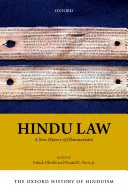
The Oxford History of Hinduism: Hindu Law
 75
75

The Oxford History of Hinduism: Hindu Law
Patrick Olivelle and Donald R. Davis Jr. present a rigorous examination of Hindu law, arguing compellingly that the history of Hinduism is incomplete without understanding its legal traditions. The book excels in its clear delineation of the Dharmaśāstra literary genres and their chronological development, particularly in Part One. A notable strength is the detailed exploration of how classical texts transitioned into later commentarial traditions. However, the sheer density of textual analysis, while academically rigorous, might pose a challenge for readers less familiar with Sanskrit legal terminology. The discussion on the evolution of *ācāra* (customary law) and its interaction with *śruta* (scriptural law) offers particularly sharp insights into the normative tensions within the tradition. This work is an essential, albeit demanding, resource for serious students of Indian legal and religious history.
📝 Description
75
Patrick Olivelle and Donald R. Davis's "Hindu Law" traces the Dharmaśāstra literature from its Vedic roots to the early modern era.
This volume offers a detailed examination of the Dharmaśāstra literature, a core component of Hindu legal and ethical thought. The authors trace the literary development and historical progression of these texts, showing their deep connection to the wider history of Hinduism. The book is organized to follow the formation of classical legal principles and the later appearance of different textual forms.
Scholars of South Asian religions, legal history, and comparative law will find this work particularly useful. It speaks directly to those interested in India's intellectual past and the normative structures that have shaped its culture over centuries. The close textual analysis will also benefit advanced students of Sanskrit and Indology who engage with these primary sources.
The Dharmaśāstras represent a significant tradition within Hinduism, concerned with establishing and maintaining social order through codified law and ethical principles. This literature, spanning over two millennia, is not merely a legal system but a reflection of evolving societal ideals and philosophical understandings of duty (*dharma*). Olivelle and Davis place this vast body of texts within its historical and literary context, illuminating how these normative frameworks were constructed, debated, and applied.
💡 Why Read This Book?
• Gain a nuanced understanding of *dharma* beyond its common translation as 'religion,' by exploring its legal and ethical codifications within the Dharmaśāstras, as detailed in Part One. • Grasp the chronological evolution of Hindu legal thought, from the formation of classical texts to later commentarial periods, a critical development first fully articulated by scholars like P.V. Kane and further illuminated here. • Understand the historical interplay between scriptural injunctions (*śruta*) and customary practices (*ācāra*), a foundational tension in Hindu jurisprudence analyzed throughout the text.
⭐ Reader Reviews
Honest opinions from readers who have explored this book.
❓ Frequently Asked Questions
What is Dharmaśāstra literature?
Dharmaśāstra literature comprises ancient Indian texts that codify *dharma*, encompassing law, ethics, and duty. These works, like the Manusmṛti, have shaped Hindu legal and social norms for centuries, providing a framework for governance and personal conduct.
When were the classical Hindu law texts composed?
The classical Dharmaśāstra texts, considered foundational, were primarily composed between approximately 600 BCE and 300 CE. This period saw the establishment of the core legal principles and literary forms discussed in the book.
How does Hindu law relate to the history of Hinduism?
The book argues that Hindu law, codified in Dharmaśāstras, is inseparable from Hindu history. These legal texts reveal evolving social structures, religious beliefs, and philosophical ideas, making their study essential for a comprehensive understanding of the tradition.
Who are the primary authors of this study?
The authors are Patrick Olivelle and Donald R. Davis Jr., both distinguished scholars in the field of South Asian studies and legal history. Their combined expertise provides a comprehensive analysis of Hindu legal traditions.
What is the significance of *ardhaśāstra* in Hindu legal thought?
While the book focuses on Dharmaśāstra, it implicitly addresses *arthaśāstra* (science of material gain and polity), exploring how legal and ethical frameworks in Dharmaśāstras interacted with pragmatic concerns of statecraft and economics.
Does this book cover modern Hindu law?
This volume primarily focuses on the historical development and classical texts of Hindu law up to the pre-colonial era. It lays the groundwork for understanding the historical roots of contemporary legal systems but does not extensively cover post-19th century jurisprudence.
🔮 Key Themes & Symbolism
Dharmaśāstra Literary Evolution
This theme traces the development of Dharmaśāstra texts from their earliest forms to later commentarial traditions. It highlights how literary genres evolved to address changing societal needs and intellectual currents, demonstrating that the history of Hindu law is intrinsically linked to the history of Hinduism itself. The work meticulously maps the transition from sutra literature to prose treatises and commentaries, showcasing a dynamic intellectual tradition.
Codification of Dharma
The study examines how *dharma*—encompassing law, ethics, duty, and custom—was systematically codified within the Dharmaśāstra literature. It explores the principles used to define social order, individual responsibilities, and justice across different stages of life (*āśrama*) and social classes (*varṇa*). This theme reveals the normative structures that guided Hindu society for millennia.
Jurisprudence and Social Order
This theme explores the legal reasoning and philosophical underpinnings of Hindu jurisprudence as presented in the Dharmaśāstras. It analyzes how these texts sought to balance scriptural authority (*śruta*) with prevailing customs (*ācāra*), and how legal pronouncements influenced and reflected the prevailing social and political structures of ancient and medieval India.
Historical Development of Hindu Law
Focusing on the period from ancient origins to later genres, this theme reconstructs the historical trajectory of Hindu legal thought. It emphasizes that understanding this legal history is crucial for a complete picture of Hinduism's development, illustrating how legal adaptations and innovations mirrored broader cultural and religious shifts.
💬 Memorable Quotes
Direct passages from the work, attributed to the author.
“The history of Hinduism cannot be written without the history of Hindu law.”
— This central thesis underscores the integral role of legal texts and principles in shaping Hindu civilization. It suggests that religious practices, philosophical ideas, and social structures are deeply intertwined with and often defined by the legal frameworks established over centuries.
“Part One provides a concise overview of the literary genres in which Dharmasastra was written.”
— This highlights the book's methodological approach, emphasizing the importance of understanding the form and context of legal texts before examining their content. It signals a scholarly focus on textual history and evolution.
“The tradition is divided into its two major historical periods—the origins and formation of the classical texts and the later genres of comm...”
— This statement outlines the book's chronological structure, indicating a scholarly division of the Dharmaśāstra tradition into distinct developmental phases. It prepares the reader for an analysis of both foundational legal works and subsequent interpretative literature.
“Dharmaśāstra literature spans over two millennia.”
— This fact emphasizes the enduring and pervasive influence of Hindu legal texts. It points to a continuous tradition of legal and ethical thought that adapted and evolved across vast historical epochs.
“The study examines important aspects and topics of dharma in Dharmaśāstra.”
— This indicates the book's thematic focus on the many-sided concept of *dharma*, exploring its legal, ethical, and social dimensions as understood and articulated within the specific corpus of Dharmaśāstra literature.
🌙 Esoteric Significance
Tradition
While primarily an academic historical study, the Dharmaśāstra literature itself forms a central to the Indic spiritual and philosophical traditions. It represents a systematic attempt to codify the principles of righteous living and cosmic order, which are central concerns in many esoteric paths seeking alignment with universal laws. This work illuminates the structured worldview underpinning much of Indic mysticism and yogic practice.
Symbolism
The concept of *dharma* itself functions as a potent symbol, representing the inherent order of the universe and one's place within it. The division of life into *āśramas* (student, householder, forest-dweller, renunciate) symbolizes the progressive journey of the soul. Social classifications (*varṇa*) also carry symbolic weight, representing functional archetypes within the cosmic body.
Modern Relevance
Contemporary thinkers and practitioners in fields ranging from comparative law and ethics to mindfulness and conscious living draw upon the principles articulated in Dharmaśāstras. The emphasis on duty, ethical conduct, and understanding one's role within a larger order continues to inform discussions on social responsibility and personal development in modern spiritual and philosophical circles.
👥 Who Should Read This Book
• Scholars and advanced students of South Asian Religions and Legal History seeking a detailed, text-based analysis of the Dharmaśāstra tradition. • Researchers in comparative jurisprudence interested in understanding the historical roots and philosophical underpinnings of non-Western legal systems. • Individuals deeply engaged with Indic philosophies and practices who wish to comprehend the foundational legal and ethical frameworks that have shaped Hindu thought and society.
📜 Historical Context
The Dharmaśāstra tradition, central to this study, emerged in ancient India, with foundational texts like the Manusmṛti dating to around the 2nd century BCE. This period was characterized by the Brahmanical consolidation of Vedic knowledge and the systematic organization of social and religious life. The intellectual currents involved the development of systematic Sanskrit literature, including philosophical schools (darśanas) and epic poetry. Olivelle and Davis place their analysis within this milieu, highlighting the evolution from early Vedic injunctions to the sophisticated legal reasoning found in later commentaries. A key scholarly debate contemporary to the study's subject involves the precise dating and regional variations of Dharmaśāstra texts, a field significantly advanced by scholars like P.V. Kane, whose multi-volume 'History of Dharmaśāstra' remains a monumental reference.
📔 Journal Prompts
The formation of classical texts and later genres: How did the Dharmaśāstra tradition adapt its literary forms?
Dharmaśāstra's relationship to the history of Hinduism: What specific historical developments are illuminated by legal texts?
The concept of *dharma* as explored in the Dharmaśāstras: How does its codification differ from modern ethical systems?
The division of the tradition into historical periods: What are the key characteristics of the 'origins and formation' period?
The interplay between *śruta* and *ācāra*: Reflect on the challenges of reconciling scriptural authority with custom in any normative system.
🗂️ Glossary
Dharmaśāstra
A genre of Sanskrit literature dealing with *dharma*, encompassing law, ethics, custom, and duty. These texts served as the primary legal and social codes in traditional India.
Dharma
A complex concept signifying righteousness, duty, law, virtue, and the inherent order of the universe. In legal contexts, it refers to the principles and rules governing conduct.
Āśrama
The four stages of life in traditional Hindu society: student (*brahmacārin*), householder (*gṛhastha*), forest-dweller (*vānaprastha*), and renunciate (*sannyāsin*).
Varṇa
The four primary social classes or Varna system in ancient India: Brāhmaṇa (priests/scholars), Kṣatriya (warriors/rulers), Vaiśya (merchants/farmers), and Śūdra (laborers/servants).
Śruta
Literally 'that which is heard'; refers to Vedic scripture and its injunctions, considered the highest authority in matters of dharma.
Ācāra
Customary practice or usage; refers to the traditions and social norms that are followed by a particular community or region, often considered a secondary source of dharma.
Sūtra
A type of aphoristic literary composition in Sanskrit, characterized by extreme brevity, often requiring extensive commentary for understanding. Early Dharmaśāstra texts were often in this form.