Believing in Magic
 78
78

Believing in Magic
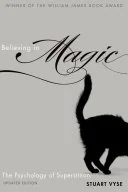
Stuart Vyse’s *Believing in Magic* compels a re-evaluation of our rational faculties. He doesn’t shy away from the awkward persistence of superstition, even in highly educated circles. Vyse excels at detailing the cognitive biases that fuel these beliefs, particularly the 'illusion of control,' where individuals perceive agency over uncontrollable events. This is vividly illustrated by his discussion of gambler's fallacies and ritualistic behaviors surrounding games of chance. A slight limitation is the book’s occasional tendency to focus more on the 'why' of belief than on the lived experience of those holding them, though this is a minor point in an otherwise meticulously researched work. The exploration of how seemingly minor superstitions, like avoiding black cats, can become deeply ingrained is particularly striking. Vyse’s analysis provides a sober, evidence-based perspective on an often-ignored aspect of human psychology.
📝 Description
78
Stuart A. Vyse's 2014 book examines why humans persist in believing the improbable.
First published in 2014, Stuart A. Vyse's *Believing in Magic* offers a detailed look at the psychological and social reasons behind supernatural beliefs. Instead of dismissing these ideas, the book investigates the cognitive processes and social factors that make people drawn to the unlikely. Vyse, who is known for his work on superstition, discusses the human desire for certainty and control, noting how this often appears in non-rational belief systems.
The updated edition considers how modern elements, such as the internet and popular culture, affect how non-rational ideas spread and are accepted. It shows that these beliefs continue to hold sway across different times. The book places the study of superstition within a larger historical and cultural setting, tracing how ideas about magic and the supernatural have changed but not vanished, even with scientific progress.
Vyse looks at concepts like the illusion of control, confirmation bias, and the use of personal stories to strengthen beliefs. He also considers how different cultural settings influence superstitions, from old rituals to current lucky charms. The goal is to explain these beliefs as natural results of cognitive processes interacting with the environment, rather than as personal failings.
While not strictly an esoteric text itself, *Believing in Magic* analyzes the psychological mechanisms that drive belief in the unseen and the improbable, phenomena often central to esoteric traditions. It approaches topics like magic, luck, and fate from a cognitive science perspective, seeking rational explanations for adherence to non-rational systems. The book’s examination of how these beliefs adapt and persist alongside scientific advancement provides context for understanding their enduring presence in human culture, a presence that has historically fueled many esoteric practices and worldviews.
💡 Why Read This Book?
• Understand the cognitive architecture of belief in magic by examining concepts like the illusion of control, which explains our drive to influence random outcomes. • Gain historical perspective on superstition's evolution by learning how beliefs like those surrounding luck charms persisted from ancient times to the 21st century. • Analyze the social mechanisms of belief transmission, understanding how cultural narratives and confirmation bias perpetuate non-rational ideas in modern society.
⭐ Reader Reviews
Honest opinions from readers who have explored this book.
❓ Frequently Asked Questions
What is the primary focus of Stuart A. Vyse's research on superstition?
Stuart A. Vyse's primary focus is understanding the psychological and social mechanisms that drive and perpetuate superstitious beliefs in individuals and societies, even in the face of scientific rationality.
When was the first edition of 'Believing in Magic' published?
The first edition of 'Believing in Magic' by Stuart A. Vyse was published in 2014, with subsequent updated editions available.
Does the book explain why people believe in things like luck?
Yes, the book explains the psychological underpinnings of believing in luck, attributing it to cognitive biases like the illusion of control and the human need for predictability.
How does 'Believing in Magic' relate to modern phenomena?
The updated edition of 'Believing in Magic' connects historical superstitions to modern phenomena, exploring how the internet and media influence the spread and acceptance of non-rational beliefs.
What is the 'illusion of control' as discussed by Vyse?
The 'illusion of control' is a cognitive bias where individuals overestimate their ability to influence events that are actually determined by chance, often leading to ritualistic behaviors.
Is this book about specific magical practices or general superstition?
The book focuses on the general phenomenon of superstition and the psychological reasons for belief in magic, rather than detailing specific magical practices or rituals.
🔮 Key Themes & Symbolism
Cognitive Biases Fueling Belief
Vyse meticulously details how cognitive shortcuts and biases, such as confirmation bias and the illusion of control, enable superstitious beliefs to take root and persist. The work highlights how our brains are wired to find patterns, even where none exist, and to seek agency in random events. This is not presented as a failing, but as a fundamental aspect of human cognition that makes us susceptible to magical thinking. The book illustrates this with examples ranging from gambling behavior to everyday rituals designed to ward off bad luck.
The Social Construction of Superstition
Beyond individual psychology, the book examines how social and cultural environments shape and reinforce superstitious beliefs. Vyse discusses how shared narratives, cultural traditions, and community practices can legitimize non-rational ideas. The updated edition considers the role of mass media and the internet in disseminating superstitions, demonstrating that these beliefs are not isolated phenomena but are often embedded within social structures and cultural dialogues. This aspect underscores that what is considered 'magical' can vary significantly across cultures and time periods.
The Enduring Appeal of the Irrational
A central theme is the persistent human attraction to the irrational, even in an age of scientific enlightenment. Vyse argues that superstitions often fulfill deep-seated psychological needs, such as a desire for certainty, comfort, and a sense of order in a chaotic world. The book explores how belief in magic can offer a perceived sense of control or provide explanations for inexplicable events, serving as a coping mechanism. This enduring appeal is examined through historical examples and contemporary observations.
Rationality vs. Non-Rationality
The work navigates the complex relationship between rational thought and non-rational belief systems. Vyse does not condemn superstition but seeks to explain its prevalence by contrasting it with scientific reasoning. He investigates why, despite evidence to the contrary, magical thinking often holds sway. The book provides a framework for understanding this dichotomy, suggesting that the human mind operates on multiple levels, where emotional needs and cognitive predispositions can override logical assessment.
💬 Memorable Quotes
Direct passages from the work, attributed to the author.
“The modern world is not free of superstition; it is saturated with it.”
— This statement captures Vyse's central argument that despite technological and scientific progress, magical thinking remains deeply embedded in contemporary society, influencing behavior and belief across various strata.
“Superstitions are not necessarily errors of logic but often adaptations to uncertainty.”
— This interpretation suggests that beliefs in magic or luck are not simply mistakes in reasoning, but rather functional responses developed by humans to cope with ambiguity and the lack of complete information.
“Confirmation bias helps to solidify beliefs by making us notice evidence that supports them.”
— This illustrates a key cognitive mechanism discussed in the book, where individuals tend to favor information that confirms their existing beliefs, thereby reinforcing superstitious thinking.
“The updated edition considers the internet's role in spreading irrational beliefs.”
— This points to the book's relevance in the digital age, acknowledging how new technologies can accelerate the dissemination of superstitions and magical thinking, a significant update from earlier analyses.
💡 Key Ideas
Editorial paraphrase of the work's core concepts — not direct quotes.
We seek order and control in a world that often seems chaotic and unpredictable.
This paraphrased concept highlights the fundamental psychological drive for predictability and agency that Vyse identifies as a primary engine behind the development and maintenance of superstitious beliefs.
🌙 Esoteric Significance
Tradition
While not strictly within a single esoteric lineage, *Believing in Magic* engages with the psychological underpinnings of beliefs that often form the bedrock of various esoteric traditions. It examines the human propensity for belief in unseen forces, fate, and ritual efficacy, elements central to Hermeticism, Kabbalah, and folk magic. Vyse's work provides a secular, scientific counterpoint or complement to these traditions, analyzing the very human needs they often seek to address, such as providing order, meaning, and control.
Symbolism
The book indirectly touches upon the power of symbols by discussing how seemingly arbitrary objects or actions (like lucky charms or specific rituals) acquire potent meaning and efficacy for believers. While Vyse doesn't examine specific esoteric symbolism, his analysis of the 'illusion of control' explains the psychological function of symbolic acts. These symbols become focal points for the believer's intent and perceived agency, acting as tangible anchors for abstract desires or fears within their belief system.
Modern Relevance
Vyse's work remains highly relevant for contemporary thinkers in fields like cognitive science, parapsychology, and even modern paganism or witchcraft studies. It offers a foundational understanding of the psychological mechanisms that allow for belief in supernatural or magical phenomena to persist. Thinkers exploring the sociology of belief, the impact of misinformation, or the psychological appeal of conspiracy theories can draw heavily on Vyse's insights into cognitive biases and social reinforcement of non-rational ideas.
👥 Who Should Read This Book
• Cognitive psychologists and researchers studying decision-making and bias will find detailed analyses of heuristics and the illusion of control. • Anthropologists and sociologists interested in the persistence of cultural beliefs will gain insights into the social construction and transmission of superstition. • General readers curious about the psychology of belief, luck, and irrational behaviors will find a clear, evidence-based explanation for why we believe what we do.
📜 Historical Context
Published in the wake of increasing academic interest in cognitive psychology and cultural studies, Stuart A. Vyse's *Believing in Magic* (first published 2014) arrived at a time when superstition was often viewed through a lens of evolutionary psychology and anthropology. The work engaged with prevailing theories that sought to explain the persistence of non-rational beliefs, building upon earlier studies of magic and religion. Vyse's approach, however, placed a strong emphasis on contemporary cognitive biases, distinguishing it from purely historical or anthropological accounts. The book implicitly responded to a cultural milieu where skepticism was often assumed to be the default intellectual position, yet irrational beliefs continued to flourish. While not facing overt censorship, its reception among psychologists and sociologists was marked by its empirical approach to a subject often relegated to folklore studies. Vyse's research implicitly engaged with the work of scholars like B.F. Skinner, who explored conditioning, and later cognitive scientists examining heuristics and biases, offering a nuanced perspective on why humans continue to embrace beliefs that defy empirical validation.
📔 Journal Prompts
The persistence of superstition in the modern world: analyze its perceived functions.
Confirmation bias in personal belief systems: identify examples related to luck.
The illusion of control: reflect on instances where perceived agency influenced behavior.
Rituals and their psychological impact: examine their role in managing uncertainty.
Cultural narratives and belief: how do stories shape acceptance of the irrational?
🗂️ Glossary
Illusion of Control
A cognitive bias where individuals overestimate their ability to influence events that are actually determined by chance or external factors, often leading to ritualistic behavior.
Confirmation Bias
The tendency to search for, interpret, favor, and recall information in a way that confirms one's pre-existing beliefs or hypotheses.
Superstition
A belief or practice resulting from ignorance, fear of the unknown, trust in magic or chance, or a false conception of causation.
Cognitive Heuristics
Mental shortcuts that allow people to make decisions and solve problems quickly and efficiently, which can sometimes lead to systematic errors in judgment (biases).
Magical Thinking
A type of thinking where individuals assume that their thoughts, words, or actions can influence the outcome of events in the physical world in ways that defy the laws of causality.
Rationality
The quality of being based on or in accordance with reason or logic; the quality of having or showing clear and sound judgment.
Causation
The relationship between cause and effect; the principle that everything has a cause.
This book appears in 1 collection
🔮 Readers Also Liked
Browse all →








From the “Superstition” Collection
View all →







More Free Occult Philosophy Books
View all →