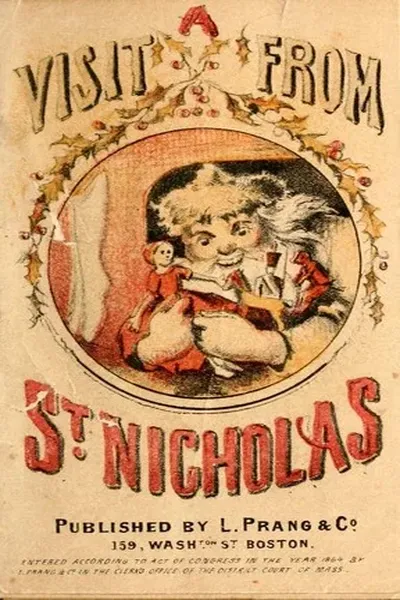
The history and origins of Druidism
 82
82

The history and origins of Druidism
Spence’s "The History and Origins of Druidism" is a solid, if somewhat dated, survey of its subject. Its primary strength lies in its diligent compilation of source material, offering a broad historical sweep from classical references to early modern interpretations. The section detailing the various classical accounts of Druidic practices, particularly those concerning their philosophical schools, is commendable. However, the book occasionally suffers from a lack of critical distance, sometimes presenting speculative theories as established fact. For instance, the extensive discussion on the potential influence of Druidism on Pythagoreanism, while intriguing, lacks definitive proof. A more robust engagement with post-1995 archaeological and linguistic scholarship would have further strengthened its standing. Despite these limitations, it remains a valuable reference for its thoroughness.
📝 Description
82
Lewis Spence's 1995 book examines the ancient Celtic priesthood, Druidism.
First published in 1995, Lewis Spence's "The History and Origins of Druidism" offers a scholarly yet approachable look at the ancient Celtic priesthood. Spence compiles historical accounts and archaeological evidence to trace the evolution of Druidic practices and beliefs. The book moves from their earliest appearances through their eventual decline and later resurgence in modern esoteric circles. It provides an overview of this mysterious spiritual tradition for readers interested in ancient European religions.
This work is suited for those intrigued by comparative mythology and the history of Western esotericism. It appeals to students of Celtic cultures, amateur historians, and anyone wanting to understand the background of modern Druidic revivals. Readers will benefit from a curiosity about early historical sources and a willingness to consider scholarly interpretations of limited evidence. Spence addresses the difficulties in distinguishing historical fact from folklore surrounding these ancient figures.
Spence's study of Druidism is placed within a scholarly tradition attempting to reconstruct ancient beliefs from limited classical texts like those by Caesar and Strabo, alongside archaeological finds. The book's 1995 publication date falls within a period of renewed interest in paganism and indigenous European spiritualities, following earlier revivals in the 18th and 19th centuries. The study of Druidism itself has a complex history, often influenced by Romantic nationalism and speculative theories, making Spence's careful compilation of historical and archaeological data particularly relevant.
💡 Why Read This Book?
• Learn about the classical accounts of Druidic roles, such as their judicial functions as described by Roman historians, providing a concrete understanding of their societal impact. • Gain insight into the concept of metempsychosis as a core Druidic belief, as explored through Spence's analysis of historical texts and early interpretations. • Understand the historical challenges in reconstructing Druidic practices, evidenced by the sparse archaeological findings and reliance on often biased classical sources.
⭐ Reader Reviews
Honest opinions from readers who have explored this book.
❓ Frequently Asked Questions
When was "The History and Origins of Druidism" by Lewis Spence first published?
Lewis Spence's "The History and Origins of Druidism" was first published in 1995, offering a comprehensive look at the subject matter for modern readers.
What are some primary sources Lewis Spence uses to discuss Druidism?
Spence draws upon classical sources like the writings of Julius Caesar and Strabo, alongside archaeological findings, to reconstruct the history and practices of Druidism.
Does the book cover modern Druidic revivals?
Yes, the work traces the evolution of Druidic practices from antiquity through their subsequent revival in modern esoteric thought, providing historical context.
What is metempsychosis in the context of Druidism as discussed by Spence?
Spence discusses metempsychosis, or the transmigration of souls, as a central tenet of Druidic belief, exploring its philosophical implications as documented in historical accounts.
Is "The History and Origins of Druidism" suitable for beginners?
The book is suitable for those with a curiosity for ancient religions and esoteric history, offering a scholarly yet accessible overview of Druidism's origins.
Where does Spence discuss the symbolic importance of mistletoe?
Spence examines the significance of sacred groves and symbolic plants like mistletoe within Druidic rituals and beliefs, offering interpretations based on historical evidence.
🔮 Key Themes & Symbolism
Classical Accounts of Druids
Spence meticulously gathers and analyzes descriptions of Druids provided by ancient Greek and Roman authors, such as Julius Caesar's "Commentarii de Bello Gallico." He critically examines their accounts of Druidic roles as priests, judges, and scholars, highlighting both the information they offer and their inherent biases. This theme focuses on how external observers shaped the early understanding of this Celtic priesthood, providing foundational, albeit filtered, data for historical reconstruction.
Druidic Philosophy and Beliefs
Central to Spence's exploration is the philosophical and spiritual field of Druidism. The work examines concepts like metempsychosis (the transmigration of souls), which served as a core part of their worldview, offering a unique perspective on life, death, and the afterlife. It also examines their cosmology, their reverence for nature, and the role of sacred sites like groves and islands in their spiritual practices.
Archaeological Evidence
Recognizing the scarcity of written records from the Druids themselves, Spence integrates archaeological discoveries into his narrative. He discusses findings from burial sites, ritualistic objects, and ancient settlements that shed light on Celtic culture and potential Druidic influence. This theme underscores the importance of material culture in supplementing textual evidence for understanding the material and ritualistic aspects of Druidism.
Modern Druidic Revivals
The book does not solely focus on antiquity but also addresses the resurgence of interest in Druidism from the 18th century onwards. Spence charts the development of modern Druidic orders and their attempts to reconstruct ancient traditions, often blending historical scholarship with neopagan ideals. This aspect highlights the enduring appeal of Druidism and its adaptation through different historical periods.
💬 Memorable Quotes
Direct passages from the work, attributed to the author.
“Caesar speaks of the Druids as judges of the gravest importance.”
— This highlights the significant societal authority Druids wielded, extending beyond purely spiritual matters into legal and judicial systems, as documented by a primary classical observer.
“The Druids were reputed to believe in the transmigration of souls.”
— This interpretation points to a core philosophical tenet, metempsychosis, which profoundly shaped the Druidic understanding of existence and the afterlife, distinguishing it from many contemporary beliefs.
“Mistletoe held a sacred character in Druidic rites.”
— This emphasizes the symbolic importance of specific natural elements, like mistletoe, within Druidic ritual practices, suggesting a deep connection to and veneration of the natural world.
“The scarcity of native Druidic texts presents a challenge to historians.”
— This acknowledges a critical methodological issue in studying Druidism: the lack of firsthand written accounts, forcing reliance on external, often biased, sources and archaeological interpretation.
“Later ages saw a romantic revival of Druidic ideals.”
— This points to the enduring legacy and cyclical interest in Druidism, noting how its mystique has resurfaced and been reinterpreted across different historical eras, particularly during periods of cultural romanticism.
🌙 Esoteric Significance
Tradition
This work fits within the broader Western Esoteric tradition, particularly its interest in ancient mystery religions and indigenous spiritualities. While not strictly Hermetic or Kabbalistic, it aligns with the esoteric impulse to uncover hidden or lost wisdom from antiquity. Its focus on nature, philosophy, and ritual places it adjacent to traditions like Celtic Reconstructionism and modern Druidry, which draw inspiration from historical sources to create contemporary spiritual paths.
Symbolism
Key symbols explored include the sacred grove, representing a place of worship and natural power central to Druidic practice. Mistletoe is another significant symbol, often associated with healing and potent magical properties, as described in classical accounts. The Ogham alphabet, while its direct connection to pre-Roman Druidism is debated, also features as a symbolic system representing a form of ancient Celtic wisdom and communication.
Modern Relevance
Contemporary Druidic orders and practitioners, such as those within OBOD (Order of Bards, Ovates and Druids), often reference historical scholarship like Spence's as foundational, albeit needing critical evaluation. Thinkers exploring animism, ecological spirituality, and indigenous European traditions may find Spence's compilation of historical data useful for understanding the roots of these concepts in Western culture, even as modern interpretations diverge.
👥 Who Should Read This Book
['• Students of ancient European history and comparative mythology seeking a foundational text on Celtic religious practices and philosophical outlooks.', '• Researchers into Western Esotericism interested in the historical antecedents and modern revivals of pre-Christian spiritual traditions.', '• Aspiring or practicing Druids looking to understand the historical scholarship surrounding their tradition, including its limitations and interpretations.']
📜 Historical Context
Published in 1995, Lewis Spence's "The History and Origins of Druidism" arrived during a period of significant scholarly and popular engagement with Neo-Paganism and Celtic revivalism. The late 20th century saw a growing academic interest in reconstructing pre-Christian European religions, moving beyond earlier Romantic and nationalist interpretations. Spence's work engaged with a scholarly lineage that included figures like Edward Herbert, 1st Baron Herbert of Cherbury, who wrote extensively on Druidism in the 17th century, and the extensive, though often speculative, works of 19th-century antiquarians. It sought to synthesize available classical accounts, such as those by Strabo and Pliny the Elder, with emerging archaeological evidence. While not directly engaging with a specific named contemporary scholar in its core thesis, the book participated in a broader academic discourse that also saw the rise of comparative religious studies and anthropological approaches to ancient belief systems, contrasting with earlier, more purely historical or philological methods.
📔 Journal Prompts
The classical accounts of Druidic judicial authority.
The concept of metempsychosis within Druidic philosophy.
The role and symbolism of mistletoe in ancient rites.
Reconstructing Druidic practices from archaeological findings.
The influence of Druidism on modern esoteric movements.
🗂️ Glossary
Druid
An member of the learned class among the ancient Celts, believed to have functioned as priests, judges, poets, and philosophers, with a significant role in spiritual and social life.
Metempsychosis
The doctrine of the transmigration of souls, or the passage of the soul after death into another body, believed by some ancient cultures, including potentially the Druids, to be a cycle of rebirth.
Ogham
An ancient Celtic alphabet, primarily consisting of lines and notches, used for inscriptions on stone monuments, particularly in Ireland and parts of Britain. Its direct connection to pre-Roman Druidic practices is a subject of scholarly debate.
Sacred Grove
A natural woodland area considered holy by ancient peoples, often used for religious rituals and ceremonies. Groves were central to Druidic worship and held deep spiritual significance.
Celtic
Pertaining to the peoples who inhabited ancient Europe and parts of Asia Minor, speaking Celtic languages and sharing a common cultural heritage, particularly prominent in regions like Gaul, Britain, and Ireland.
Classical Sources
Writings produced by ancient Greek and Roman authors that provide historical, cultural, and social information about other peoples, including the Celts and Druids, though often from an external and biased perspective.
Esotericism
A broad category of spiritual or philosophical traditions characterized by their hidden meanings, esoteric knowledge, and often complex symbolic systems, typically accessible only to initiates or those with specialized understanding.
🔮 Readers Also Liked
Browse all →









More by Lewis Spence
All books →





More Free Occult Philosophy Books
View all →