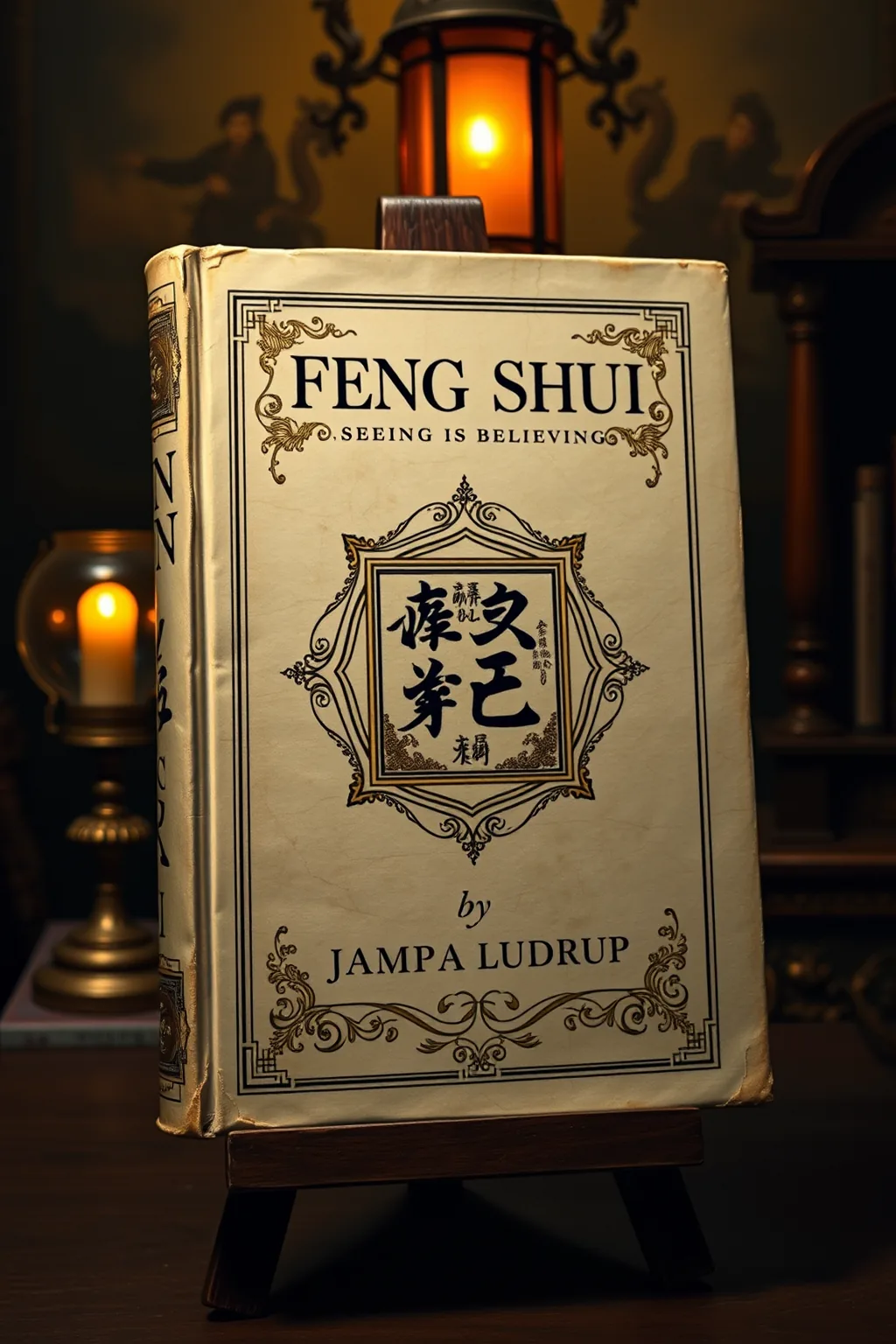
Feng Shui: Seeing Is Believing
 73
73

Feng Shui: Seeing Is Believing
Ven. Jampa Ludrup’s "Feng Shui: Seeing Is Believing" arrives with the admirable intention of stripping away the ornate mystique that often encumbers discussions of this ancient art. The author’s stated aim—to foster happiness through environmental adjustment—is laudable. Ludrup succeeds admirably in presenting core tenets with clarity, particularly in his use of diagrams to illustrate the practical implications of spatial arrangements. One strength is the direct, unpretentious prose; it feels like receiving advice from a knowledgeable friend rather than a guru. However, the book’s very practicality, while its greatest asset, can sometimes feel reductive. For instance, the chapter on enhancing romance, while clear, lacks the nuanced exploration of energetic dynamics that some practitioners might seek. Ultimately, it serves as an excellent primer for the uninitiated, offering a solid foundation before one ventures into more complex texts.
📝 Description
73
Published in February 2013, Jampa Ludrup's Feng Shui: Seeing Is Believing aims to simplify the practice for a wider audience.
This handbook demystifies feng shui, focusing on practical advice for improving living spaces. Ludrup's core idea is that straightforward adjustments to home layout can lead to noticeable benefits in various life areas, such as romance, prosperity, or health. The book uses diagrams and photographs to illustrate its points, making the application of principles clear. It avoids overly complex jargon, instead offering actionable steps for creating harmonious environments that support personal goals. The work is intended for those seeking clear guidance, particularly if they have found other feng shui literature too dense or difficult to grasp.
Readers interested in the practical applications of environmental psychology and energy flow within a home will find this accessible. It appeals to those who desire tangible improvements without extensive theoretical study. The book's approach emphasizes clarity and grounded application, contrasting with more commercialized or spiritually dense interpretations of feng shui that have sometimes emerged.
Feng shui, with ancient roots in Chinese geomancy, traditionally concerns the arrangement of space to promote harmony and prosperity. Its popularization in the West in the late 20th century saw varied interpretations. Ludrup's 2013 publication arrives during a period of renewed interest in Eastern philosophies. This work distinguishes itself by emphasizing clarity and practical, grounded applications over more esoteric or commercialized treatments, seeking to make its principles understandable and usable.
💡 Why Read This Book?
• Learn how to identify and modify common household layouts that may hinder prosperity, using Ludrup's clear diagrams and photographic examples, a method detailed in the book's practical sections. • Discover actionable techniques for improving specific life areas like health or relationships by understanding the energetic flow (Qi) within your home, as explained by Ludrup's accessible approach. • Gain confidence in applying feng shui principles without relying on obscure terminology, thanks to the book's 2013 publication date and focus on practical, observable results.
⭐ Reader Reviews
Honest opinions from readers who have explored this book.
❓ Frequently Asked Questions
What is the primary goal of Jampa Ludrup's book on feng shui?
The primary goal, as stated by Ven. Jampa Ludrup in his 2013 publication, is to help readers achieve more happiness in their lives by understanding and applying fundamental feng shui principles in a practical, non-mystical way.
How does 'Feng Shui: Seeing Is Believing' differ from other feng shui guides?
This handbook distinguishes itself by offering clear instructions, diagrams, and photos, avoiding opaque mysticism. It focuses on simple, actionable alterations to home layouts for tangible improvements in areas like romance or prosperity.
Who would benefit most from reading this book?
Individuals new to feng shui or those who find other texts overly complex would benefit. It's ideal for people seeking practical advice to enhance specific aspects of their lives through home arrangement, as outlined by Ludrup.
Does the book provide specific examples of feng shui adjustments?
Yes, the book provides easy-to-understand instructions, diagrams, and photos illustrating how simple changes to a home's layout can impact areas such as romance, prosperity, and health.
When was 'Feng Shui: Seeing Is Believing' first published?
The book 'Feng Shui: Seeing Is Believing' by Ven. Jampa Ludrup was first published on February 18, 2013.
What is the author's approach to the practice of feng shui?
Ven. Jampa Ludrup approaches feng shui with a focus on practicality and clarity, aiming to make the fundamentals accessible without the 'opaque mysticism' sometimes associated with the practice, as noted in the original blurb.
🔮 Key Themes & Symbolism
Environmental Harmony
The core theme revolves around the principle that the physical environment directly influences well-being and life outcomes. Ludrup argues that by understanding the flow of energy (Qi) within a home, individuals can create spaces that actively support their aspirations. This involves practical considerations like furniture placement, room orientation, and the use of color and light, all explained through accessible language and visual aids. The book emphasizes that 'seeing is believing' – tangible changes in the home lead to observable improvements in life.
Accessible Application
A significant theme is the demystification of feng shui. Ludrup actively works to remove the 'opaque mysticism' often associated with the practice, presenting it as a logical and practical system. The book focuses on actionable steps rather than abstract theories. This approach aims to empower readers, demonstrating that profound benefits can be achieved through straightforward adjustments, making the ancient art relevant and usable for contemporary life without requiring deep prior knowledge.
Life Area Enhancement
The book directly links environmental configuration to specific life domains such as romance, prosperity, and health. It posits that by applying feng shui principles correctly, one can intentionally improve these crucial areas. This focus on tangible results provides a clear motivation for readers to engage with the material. Each suggested alteration is framed not just as aesthetic improvement, but as a strategic move towards achieving personal goals and greater overall happiness.
Clarity Through Visuals
Central to Ludrup's method is the use of visual aids. The book's reliance on diagrams and photographs serves the theme of 'seeing is believing' by making abstract concepts concrete. These visuals are not mere illustrations but integral tools for understanding how to implement feng shui principles. They bridge the gap between theory and practice, allowing readers to visualize the desired outcomes and execute the necessary changes with confidence, reinforcing the book's commitment to accessibility.
💬 Memorable Quotes
Direct passages from the work, attributed to the author.
“The aim of this book is to help you have more happiness in your life.”
— This direct statement from the author sets the practical, user-focused tone of the entire work. It frames feng shui not as an arcane spiritual discipline, but as a tool for tangible well-being and life improvement.
“simple alterations to the layout of your home can vastly improve specific areas of your life”
— This captures the book's core promise: significant positive change is achievable through manageable adjustments. It highlights the direct correlation the author draws between the physical environment and personal success or contentment.
“without any of the opaque mysticism that sometimes clouds the practice”
— This phrase reveals the author's intent to present feng shui in a clear, rational manner. It positions the book as a corrective to more complex or esoteric interpretations, prioritizing practicality and ease of understanding.
“easy-to-understand instructions, diagrams, and photos”
— This highlights the pedagogical approach of the book. The emphasis on visual and straightforward textual guidance underscores the commitment to making feng shui accessible to beginners and skeptics alike.
“whatever is troubling you”
— This broad phrasing suggests the comprehensive applicability of the feng shui principles discussed. It implies that the techniques offered can address a wide range of personal challenges, from romance to health and beyond.
🌙 Esoteric Significance
Tradition
While feng shui has ancient roots in Taoist cosmology and geomancy, Ludrup's approach leans away from strict adherence to traditional Taoist frameworks or complex astrological calculations. His focus on practical, observable results and happiness aligns more with modern Western interpretations that seek to integrate environmental psychology with spiritual principles, aiming for holistic well-being without necessarily subscribing to a specific esoteric lineage like Hermeticism or Kabbalah.
Symbolism
The book’s primary symbolism lies not in specific esoteric icons but in the energetic representation of space itself. The concept of 'Qi' (energy flow) is central, acting as a symbolic representation of vitality and well-being. The arrangement of furniture, the placement of doors and windows, and the use of colors function symbolically to either encourage or obstruct the smooth passage of this vital energy, directly impacting the symbolic representation of life areas like wealth (often associated with the 'wealth corner').
Modern Relevance
Ludrup's work appeals to contemporary fields such as environmental psychology and minimalist design, which also explore the impact of surroundings on mental state and productivity. Thinkers and practitioners focused on creating intentional living spaces, decluttering gurus, and those interested in the intersection of mindfulness and home environment design can find practical value in his clear, actionable advice, even if they do not identify with traditional esoteric practices.
👥 Who Should Read This Book
• Individuals new to feng shui seeking a clear, jargon-free introduction to its core principles and practical applications. • Homeowners or renters interested in making tangible improvements to their living space to enhance specific life areas like career, relationships, or health. • Skeptics of esoteric practices who are nonetheless curious about how environmental design might influence well-being and are looking for a grounded, evidence-based approach.
📜 Historical Context
Published in 2013, Ven. Jampa Ludrup's "Feng Shui: Seeing Is Believing" entered a landscape where feng shui had been popularized in the West for decades, notably by figures like Thomas Lin Yun, founder of the Black Sect Tantric Buddhist approach. While Lin Yun's methods often focused on a simplified form of feng shui applied to Western homes, Ludrup's work emerged during a period of continued interest in practical applications of Eastern philosophies. It positioned itself against what the author terms 'opaque mysticism,' suggesting a desire to align with a more grounded, perhaps even psychologically-informed, understanding of environmental influence, contrasting with more spiritually-oriented or purely symbolic interpretations prevalent in some circles.
📔 Journal Prompts
The central aim of increasing happiness through environmental adjustment.
Specific alterations to home layout and their potential impact on romance or prosperity.
The concept of avoiding 'opaque mysticism' in practical application.
Visual elements like diagrams and photos in understanding feng shui principles.
Identifying areas of the home that may be 'troubling' and require adjustment.
🗂️ Glossary
Qi (Chi)
The fundamental concept of vital life force or energy that flows through all things. In feng shui, the goal is to ensure Qi flows smoothly and harmoniously within a space to promote well-being.
Layout
Refers to the physical arrangement and configuration of rooms, furniture, and architectural features within a dwelling. The book emphasizes how this arrangement impacts energy flow.
Prosperity
In the context of the book, this refers to financial well-being and abundance. Ludrup suggests specific environmental adjustments can positively influence one's financial circumstances.
Romance
Relates to relationships, love, and partnership. The book explores how the feng shui of a home can be adjusted to foster or improve romantic connections.
Health
Encompasses physical and mental well-being. The book implies that a balanced and harmonious living environment, achieved through feng shui, contributes to better health.
Mysticism
Refers to spiritual or philosophical beliefs, experiences, or practices that are beyond ordinary human understanding. Ludrup aims to present feng shui without this element.
Practical Handbook
A guide focused on providing actionable advice and step-by-step instructions for a specific subject, rather than theoretical exploration. This book is characterized as such.