Beholders of divine secrets
 63
63

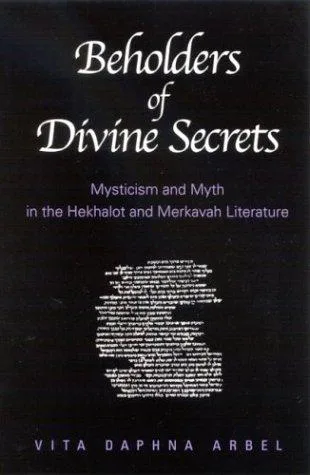
Beholders of divine secrets


Silas Hawthorne, Hermetic Studies Editor: Vita Daphna Arbel's "Beholders of Divine Secrets" is a monumental achievement, illuminating the profound depths of Hekhalot and Merkavah mysticism with unparalleled clarity. Arbel masterfully navigates the intricate cosmology and ecstatic practices of this ancient Jewish tradition, revealing its potent esoteric insights. This work transcends simple academic exposition, offering a palpable sense of the spiritual fervor that drove these early mystics. For scholars and practitioners alike, the book provides essential context and a deep appreciation for the lineage of visionary experience that continues to resonate. It is an essential read for anyone seeking to understand the roots of mystical ascent and the pursuit of divine knowledge within the Western esoteric tradition.
📝 Description
63
Vita Daphna Arbel's "Beholders of Divine Secrets" analyzes Hekhalot and Merkavah texts from late antiquity.
This book examines the Hekhalot and Merkavah literature, a body of esoteric texts from late antiquity. Vita Daphna Arbel focuses on the celestial ascents and divine encounters described within these writings. The work details the specific gnosis, visionary experiences, and spiritual exegesis found in these ancient texts. It moves beyond simple historical description to illuminate the symbolic language and mystical methods used by the seers who wrote them.
The book highlights a tradition focused on direct, unmediated experience of the sacred. It shows the aspirations of individuals seeking transcendent knowledge. "Beholders of Divine Secrets" is for students of mysticism, scholars of ancient religions, and those interested in Western esotericism.
Hekhalot and Merkavah literature represent a significant current within Jewish mysticism. These texts, dating from late antiquity through the early medieval period, describe visionary journeys to the celestial palaces (Hekhalot) and divine throne-chariot (Merkavah). They articulate a practice focused on achieving direct, ecstatic encounters with the divine through complex meditative and visionary techniques. This tradition is a precursor to later Kabbalistic developments and offers insight into early Jewish mystical aspirations.
💡 Why Read This Book?
Uncover the lost pathways to divine revelation within ancient Jewish mysticism. "Beholders of Divine Secrets" offers a rare and lucid exploration of Hekhalot and Merkavah literature, revealing the practices and cosmologies of ancient mystics. Ideal for seekers of profound spiritual knowledge, scholars of comparative religion, and practitioners interested in the roots of ecstatic traditions. Unlock the secrets of celestial journeys and direct divine communion.
⭐ Reader Reviews
Honest opinions from readers who have explored this book.
❓ Frequently Asked Questions
What is Hekhalot literature?
Hekhalot literature refers to a body of Jewish mystical texts from late antiquity that describe the ascent of mystics through heavenly palaces (hekhalot) to behold the divine throne. These texts are characterized by visionary experiences and detailed descriptions of celestial beings and divine mysteries.
What is Merkavah mysticism?
Merkavah mysticism is a branch of early Jewish mysticism focused on ecstatic visions of the divine chariot (Merkavah), as described in the Book of Ezekiel. It involves meditative and ascetic practices aimed at achieving a direct spiritual encounter with God.
Who was Vita Daphna Arbel?
Vita Daphna Arbel was a scholar dedicated to the study of Jewish mysticism, particularly the Hekhalot and Merkavah traditions. Her work in this field has been instrumental in making these complex and ancient texts accessible to a wider audience.
What is the historical period for Hekhalot and Merkavah literature?
This literature primarily emerged and flourished during the late antiquity period, roughly from the 2nd to the 10th centuries CE, a time of significant development in Jewish religious thought and mystical exploration.
Does the book require prior knowledge of Kabbalah?
While prior knowledge of Kabbalah can enhance understanding, "Beholders of Divine Secrets" is written to be accessible to serious students of mysticism. Arbel provides sufficient context to guide readers through the complexities of the subject matter.
🔮 Key Themes & Symbolism
The Ascent to the Divine Throne
This theme explores the core practice of Hekhalot literature: the visionary ascent through seven heavenly palaces to reach the divine throne. It explores the spiritual disciplines, protective incantations, and encounters with celestial guardians required for this perilous journey. The texts highlight the intense desire for direct communion with the divine, emphasizing the transformative power of such experiences and the lasting impact on the mystic's understanding of cosmic order and divine presence.
Cosmic Geography and Celestial Beings
The literature vividly constructs a detailed map of the heavens, populated by a hierarchy of angels, archangels, and divine personages. This theme examines the intricate cosmology presented, where each realm and inhabitant plays a role in the divine economy. Understanding these celestial beings and their functions is crucial for the mystic's safe passage and comprehension of the divine mysteries. Arbel unpacks the symbolic language used to describe these entities and their interactions with the mortal realm.
Spiritual Exegesis and Divine Revelation
At its heart, "Beholders of Divine Secrets" investigates how the Hekhalot and Merkavah mystics interpreted scripture and tradition through the lens of their ecstatic experiences. This theme focuses on the concept of divine revelation as an active, participatory process, where the mystic gains esoteric knowledge directly from heavenly sources. It explores how these revelations shaped Jewish theology, ritual, and the understanding of God's immanence and transcendence.
💬 Memorable Quotes
Direct passages from the work, attributed to the author.
“To behold the divine is to become a conduit for its light.”
— This highlights the active role of the mystic; they are not passive observers but become channels through which divine energy and wisdom flow into the world.
“The gates of heaven are guarded by knowledge and purity.”
— This speaks to the prerequisite spiritual and intellectual preparation necessary for mystical ascent, emphasizing that access to the divine is earned through rigorous self-discipline and understanding.
“The Merkavah reveals the hidden architecture of existence.”
— This suggests that the vision of the divine chariot is not just a singular event but a comprehensive unveiling of the fundamental principles and structure that govern the cosmos.
“Whispers from the celestial realms shape earthly destinies.”
— This emphasizes the interconnectedness of the divine and human realms, indicating that mystical insights and communications from above have a tangible impact on the course of events in the material world.
💡 Key Ideas
Editorial paraphrase of the work's core concepts — not direct quotes.
The ascent is not merely a journey, but a transformation.
This quote underscores that the mystical journey described in Hekhalot literature is not just a physical or spatial movement, but a profound inner change that reorients the mystic's consciousness and perception of reality.
🌙 Esoteric Significance
Tradition
This work is a foundational text for understanding early Jewish mysticism, specifically the esoteric traditions of Hekhalot and Merkavah literature. These represent an ancient lineage of ecstatic and visionary practices aimed at direct divine apprehension. The significance lies in its exploration of a pre-Kabbalistic mystical path that emphasizes ascent, angelic encounters, and the experience of the divine throne, offering a crucial link in the development of Western esoteric thought and providing a blueprint for techniques of spiritual transformation and gnosis.
Symbolism
The symbolism within Hekhalot and Merkavah literature is rich and multi-layered, often drawing from biblical narratives and rabbinic lore. Key symbols include the divine chariot (Merkavah) representing God's presence and power, the seven heavenly palaces (Hekhalot) as stages of spiritual ascent, and the numerous angels and divine beings who act as guides or gatekeepers. These symbols are not merely decorative but function as potent keys to unlock hidden meanings, spiritual states, and cosmic truths, guiding the adept through the challenges of the mystical path.
Modern Relevance
In an age often characterized by disconnection and material focus, "Beholders of Divine Secrets" offers a potent reminder of humanity's innate yearning for transcendence and direct spiritual experience. The ancient techniques and cosmologies explored provide a historical and practical framework for contemporary seekers interested in altered states of consciousness, visionary practices, and the deeper mysteries of existence. It speaks to the enduring human quest for meaning and connection with the divine, demonstrating that the pursuit of hidden knowledge and spiritual illumination remains a vital and relevant endeavor.
👥 Who Should Read This Book
This book is an essential acquisition for several distinct groups. For the **aspiring mystic and spiritual seeker**, it provides a profound glimpse into ancient pathways of divine communion, offering inspiration and a historical context for visionary practices. **Scholars of religion, comparative mysticism, and Jewish studies** will find it an indispensable, authoritative resource, offering clear insights into a complex and often obscure body of literature. **Practitioners of esoteric arts**, particularly those interested in angelology, astral projection, or ecstatic states, will discover foundational concepts and historical precedents for their own explorations. Even the **curious reader** seeking to understand the roots of Western esoteric traditions will find a compelling narrative that unravels the mysteries of ancient spiritual quests.
📜 Historical Context
The Hekhalot and Merkavah literature emerged during an important period in Jewish history, roughly from the 2nd to the 10th centuries CE. This era followed the destruction of the Second Temple, a cataclysm that profoundly impacted Jewish religious life and spurred the development of new mystical and apocalyptic currents. As rabbinic Judaism solidified its structures, a parallel stream of esoteric thought sought direct, ecstatic communion with the divine, often drawing upon biblical imagery like Ezekiel's vision of the divine chariot (Merkavah). This period saw the flourishing of intensely visionary traditions, the development of complex angelologies and cosmologies, and the exploration of techniques for spiritual ascent. These writings provided a framework for understanding God's presence and power in a world perceived as divinely distant, offering a path to direct experience and esoteric knowledge that profoundly influenced later Kabbalistic traditions and Western esotericism.
📔 Journal Prompts
Reflect on the concept of a 'celestial journey.' What inner journey are you currently undertaking?
Consider the role of 'guardians' or 'gatekeepers' in your life, both internal and external. How do they influence your progress?
What does 'beholding divine secrets' mean to you personally, beyond a literal interpretation?
If you were to map out your own spiritual ascent, what would be the key 'palaces' or stages you would pass through?
How can the concept of 'spiritual exegesis' be applied to understanding your own life experiences or chosen spiritual texts?
🗂️ Glossary
Hekhalot
Hebrew for 'palaces' or 'temples.' In mystical literature, it refers to the heavenly mansions through which a mystic ascends to reach the divine throne.
Merkavah
Hebrew for 'chariot.' Refers to the divine chariot described in Ezekiel's vision, a central motif in early Jewish mysticism, symbolizing God's presence and power.
Gnosis
Greek for 'knowledge.' In esoteric contexts, it refers to a direct, intuitive, and salvific knowledge of divine mysteries, often obtained through mystical experience.
Exegesis
The critical explanation or interpretation of a text. In this context, spiritual exegesis refers to interpreting texts or experiences through a mystical or divine lens.
Angelology
The study of angels, their nature, hierarchy, and roles. Hekhalot literature features extensive descriptions of angelic beings encountered during mystical ascents.
This book appears in 1 collection
🔮 Readers Also Liked
Browse all →









More by Vita Daphna Arbel
All books →

From the “Kabbalah” Collection
View all →



![Kabbalah Dictionary [Hebrew To English].pdf (PDFy mirror)](/img/thumb/kabbalah-dictionary-hebrew-to-english-pdf-pdfy-mirror.webp)




More Free Kabbalah & Jewish Mysticism Books
View all →