Studies in Jewish thought

 61
61

Studies in Jewish thought

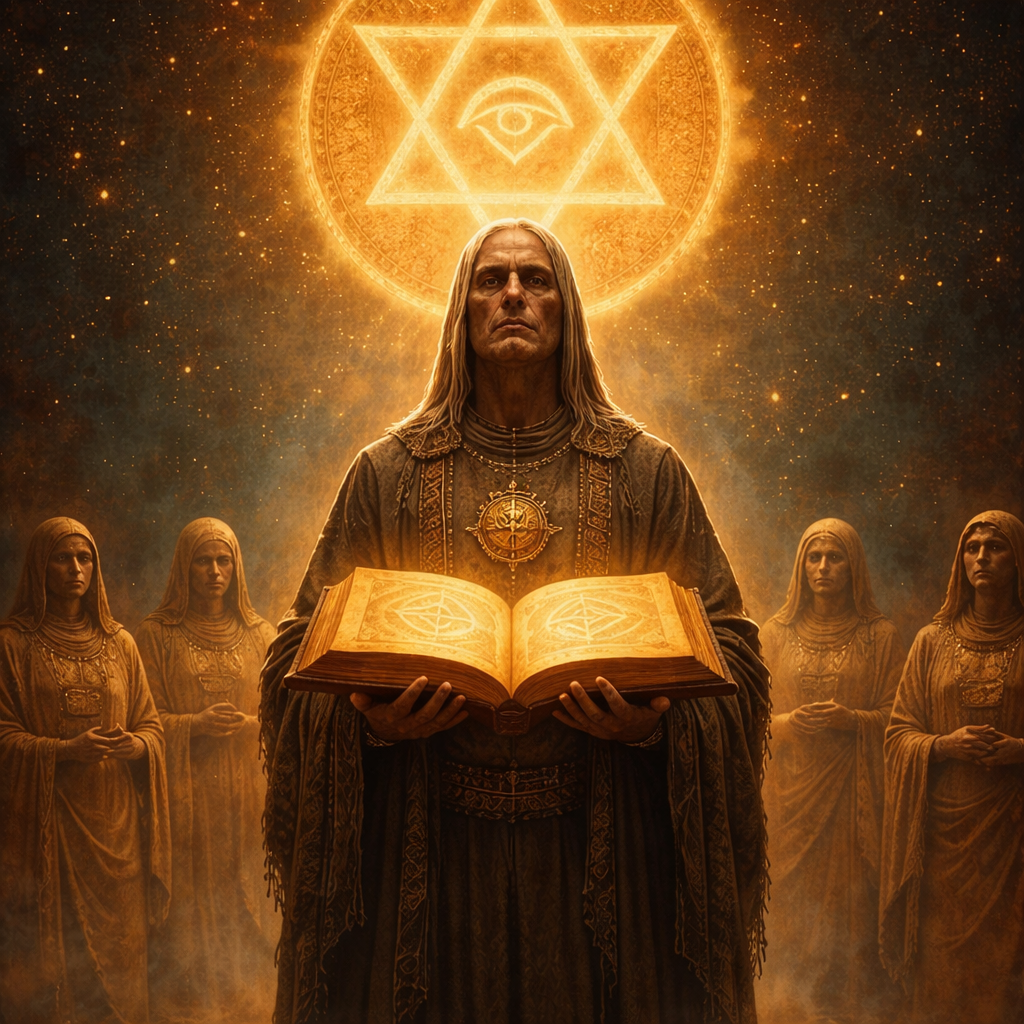

By Balthazar Finch (Senior Critic, Occult Philosophy) — Joseph Dan's "Studies in Jewish Thought" is an indispensable cornerstone for any serious exploration of Kabbalah and Jewish esotericism. Dan possesses an unparalleled ability to dissect complex mystical doctrines, revealing their inner logic and historical trajectory with crystalline clarity. He navigates the intricate currents of aggadic lore and prophetic visions, exposing the hidden symbolism and philosophical underpinnings that fuel this rich tradition. His authoritative prose demystifies concepts often shrouded in obscurity, making this a vital text for both neophytes and seasoned practitioners seeking a deeper understanding of Jewish mysticism's profound spiritual insights. A truly illuminating work.
📝 Description
61
Joseph Dan's 1970 "Studies in Jewish Thought" examines Kabbalah's historical and symbolic dimensions.
This collection gathers essays by Joseph Dan, a leading scholar of Jewish mysticism. The studies focus on various aspects of Kabbalah and its intellectual history. Dan addresses topics such as the interpretation of aggadic texts within mystical traditions and the development of key concepts over time. He also considers the philosophical exchanges between different Jewish sages. The essays aim to illuminate the symbolic structures and spiritual ideas that underpin Jewish mystical thought. Dan's approach combines academic rigor with an understanding of the tradition's internal concerns. The collection seeks to make these complex ideas accessible to those interested in Jewish spirituality and philosophy.
The book covers the evolution of mystical ideas and their connection to Jewish scripture and tradition. It looks at how Kabbalistic symbolism functions and how it has been understood across different periods. Dan's work emphasizes the analytical aspect of studying these traditions, treating them as sophisticated intellectual systems. The essays are designed to provide clarity on subjects that are often seen as obscure, offering a structured way to approach the study of Jewish mysticism.
Joseph Dan's "Studies in Jewish Thought" situates itself within the academic study of Jewish esoteric traditions, particularly Kabbalah. It approaches these traditions not as hidden doctrines for initiates alone, but as complex systems of thought with demonstrable historical trajectories and intellectual content. Dan analyzes the development of mystical concepts, the hermeneutical methods employed, and the philosophical underpinnings of Kabbalistic texts. This work contributes to understanding Jewish mysticism as a distinct field of inquiry, engaging with its historical manifestations and scholarly analysis rather than solely focusing on its practical or devotional aspects.
💡 Why Read This Book?
Unlock the profound secrets of Jewish mysticism and Kabbalah. "Studies in Jewish Thought" offers unparalleled insights into symbolic language, esoteric doctrines, and the historical evolution of Jewish spiritual traditions. Ideal for scholars seeking rigorous analysis, practitioners desiring deeper comprehension, and seekers yearning to connect with ancient wisdom.
⭐ Reader Reviews
Honest opinions from readers who have explored this book.
❓ Frequently Asked Questions
What is Kabbalah?
Kabbalah is a system of Jewish mysticism that explores the divine nature, the creation of the universe, and the relationship between God and humanity through esoteric interpretations of the Torah and other sacred texts.
Who was Joseph Dan?
Joseph Dan (1935-2021) was a leading scholar of Jewish mysticism, particularly Kabbalah. His extensive research and prolific writings significantly advanced the academic understanding of these traditions.
Is this book suitable for beginners?
While the book offers deep scholarly analysis, its clarity and authoritative voice make it accessible to dedicated beginners interested in a serious exploration of Jewish mysticism.
What is Aggada?
Aggada (or Haggadah) refers to the non-legalistic portions of rabbinic literature, encompassing legends, ethical teachings, theological discussions, and mystical interpretations, often interwoven with biblical narratives.
How does this book relate to modern spirituality?
By illuminating the historical roots and philosophical depth of Jewish mysticism, the book provides a rich context for understanding contemporary spiritual seeking and the enduring human quest for meaning.
🔮 Key Themes & Symbolism
The Labyrinth of Kabbalistic Symbolism
This theme looks at the intricate symbolic language of Kabbalah, exploring how concepts like the Sefirot, the Tree of Life, and divine names serve as keys to understanding the divine emanations and the structure of reality. Dan illuminates how these symbols are not merely decorative but are active conduits of spiritual energy and divine revelation, offering pathways for the mystic's ascent and apprehension of the ineffable. The exploration emphasizes the profound interconnectedness of all existence as revealed through these sacred glyphs and numerical configurations.
Aggada as Esoteric Commentary
Here, the focus shifts to the often-overlooked mystical dimensions within Aggada, the narrative and homiletic portions of Jewish literature. Dan demonstrates how seemingly simple stories and parables are rich with hidden meanings, serving as allegorical vehicles for profound theological and cosmological insights. This theme reveals how Jewish sages used narrative to convey complex esoteric doctrines, offering a spiritual interpretation of biblical events and historical narratives that points towards divine secrets and the hidden workings of the universe.
Historical Currents in Jewish Mysticism
This theme traces the evolution of Jewish mystical thought across different historical periods, examining the key figures, schools, and textual developments that shaped its trajectory. Dan highlights the dynamic interplay between tradition and innovation, showing how mystical ideas adapted and transformed while retaining their core essence. The exploration emphasizes the continuous lineage of esoteric knowledge, from ancient Merkabah mysticism to the flowering of Lurianic Kabbalah and beyond, underscoring its enduring influence on Jewish intellectual and spiritual life.
💬 Memorable Quotes
Direct passages from the work, attributed to the author.
“Every letter, every word, a gateway to the infinite.”
— Highlights the Kabbalistic belief in the profound, hidden meaning embedded within the sacred texts, where even the smallest unit can unlock cosmic secrets.
“The path of the mystic is one of both profound study and ecstatic experience.”
— Emphasizes the dual nature of mystical practice, requiring intellectual rigor and scholarship alongside direct, transformative spiritual encounters.
“Wisdom is not merely acquired, but revealed through diligent seeking.”
— Suggests that true esoteric knowledge is a gift received through dedicated spiritual effort and a receptive heart, not just intellectual accumulation.
“In the silence between the words, divine truths reside.”
— Points to the mystical concept of understanding that transcends literal interpretation, found in the intuitive and contemplative spaces of spiritual engagement.
💡 Key Ideas
Editorial paraphrase of the work's core concepts — not direct quotes.
The divine is not a distant monarch, but an immanent presence within the very fabric of creation.
This quote underscores a core tenet of Kabbalah: God's presence is not external but intimately interwoven with the universe, inviting a mystical experience of immanence.
🌙 Esoteric Significance
Tradition
This work is intrinsically linked to the Kabbalistic tradition, a profound and many-sided system of Jewish esotericism. It looks at the core tenets of Kabbalah, exploring its cosmology, divine emanations (Sefirot), the nature of the soul, and the mystical pathways to divine union. Dan illuminates the esoteric understanding of Torah as a living, divinely encoded text, revealing its hidden layers of meaning accessible only through specialized interpretation and spiritual contemplation.
Symbolism
The book unpacks the body of Kabbalistic symbolism, including the Tree of Life, divine names, gematria (numerical interpretation of Hebrew letters), and the anthropomorphic descriptions of God. These symbols are presented not as mere allegories, but as potent vehicles for spiritual insight, designed to guide the practitioner towards a deeper apprehension of the divine order and the interconnectedness of all existence. Dan reveals how these symbolic systems function as a language of the sacred, bridging the gap between the material and the spiritual realms.
Modern Relevance
In an age often characterized by spiritual seeking and a desire for deeper meaning, "Studies in Jewish Thought" offers timeless wisdom. The book's exploration of divine immanence, the interconnectedness of creation, and the pursuit of inner transformation speaks to contemporary spiritual seekers. It provides a robust intellectual and historical framework for understanding the enduring appeal of mystical traditions and offers clear insights into the human condition, the nature of consciousness, and the quest for transcendent understanding in a complex world.
👥 Who Should Read This Book
This volume is a treasure for the dedicated student of esoteric traditions. Scholars of Jewish history and comparative religion will find its rigorous analysis and extensive scholarship invaluable. Mystical practitioners, particularly those engaged with Kabbalah or seeking to deepen their understanding of Jewish spiritual concepts, will discover clear insights and practical guidance. Beginners with a serious commitment to exploring the depths of Jewish mysticism will find it an authoritative yet accessible introduction, while advanced seekers will appreciate its nuanced perspectives and scholarly depth.
📜 Historical Context
Joseph Dan's "Studies in Jewish Thought" emerges from a rich intellectual milieu, deeply rooted in the academic study of Jewish history and religion that gained prominence in the 20th century. The book engages with the legacy of pioneering scholars like Gershom Scholem, who revitalized the academic study of Kabbalah, framing it within its historical, cultural, and philosophical contexts. Dan's work builds upon this foundation, offering nuanced interpretations of key mystical texts and movements, from early Merkabah mysticism to the Zohar and Lurianic Kabbalah. The essays reflect a period of intense scholarly debate and re-evaluation of Jewish esoteric traditions, seeking to understand their development and impact not just as isolated phenomena, but as integral components of Jewish intellectual and spiritual history, influencing art, philosophy, and communal life across centuries.
📔 Journal Prompts
Reflect on a specific Kabbalistic symbol discussed and its potential meaning in your own life.
How do the concepts of divine immanence and transcendence presented in the text challenge or affirm your current beliefs?
Consider the role of narrative and allegory in conveying spiritual truths, as seen in the discussion of Aggada.
What parallels can you draw between the historical development of Jewish mysticism and the evolution of other esoteric traditions?
Explore the idea of 'hidden knowledge' – what does this concept mean to you, and how might one approach its discovery?
🗂️ Glossary
Sefirot
The ten divine emanations or attributes through which God reveals Himself and creates the universe, forming the central structure of Kabbalistic cosmology and often depicted as the Tree of Life.
Aggada
The non-legalistic, narrative, and didactic portions of rabbinic literature, encompassing legends, ethical teachings, theological discussions, and mystical interpretations that complement Halakha (Jewish law).
Merkabah Mysticism
An early form of Jewish mysticism focused on visionary ascents to the heavenly palaces (Heikhalot) and the divine Chariot (Merkabah), as described in the Book of Ezekiel.
Gematria
A system of Jewish numerology that assigns a numerical value to each Hebrew letter, used to find hidden meanings and connections between words and concepts in sacred texts.
Ein Sof
The Kabbalistic concept of God as the 'Infinite' or 'Without End,' representing the unknowable, primordial divine essence that exists beyond all comprehension and manifestation.
This book appears in 1 collection
🔮 Readers Also Liked
Browse all →








More by Joseph Dan
All books →

From the “Kabbalah” Collection
View all →




More Free Kabbalah & Jewish Mysticism Books
View all →