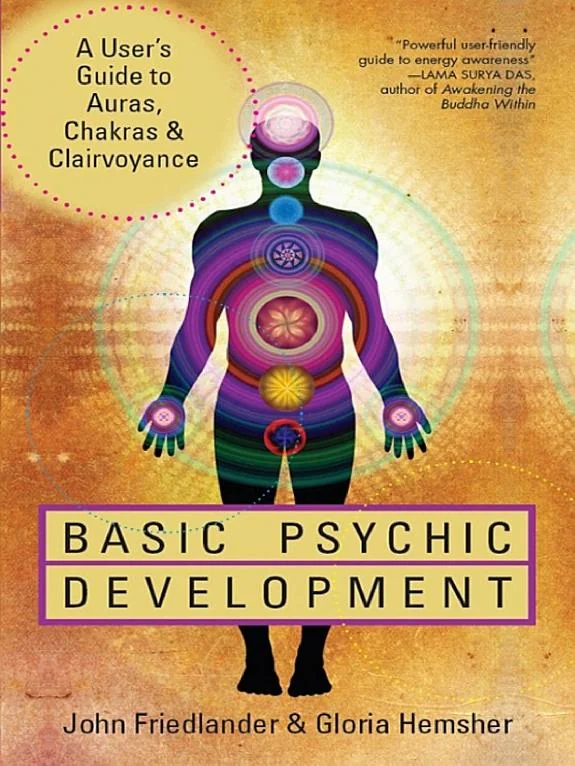
Basic psychic development
 75
75

Basic psychic development
Friedlander's *Basic Psychic Development* is notable for its systematic, almost academic, approach to a subject often shrouded in vagueness. The strength lies in its structured exercises, which encourage a disciplined, rather than haphazard, engagement with psychic phenomena. The 1999 publication date places it within a wave of accessible esoteric guides. However, the prose can sometimes feel dry, lacking the evocative language that might fully capture the subjective experience of psychic development. A particularly effective section details techniques for energy shielding, presented with a clarity that is both practical and reassuring. While it may not satisfy those seeking purely spiritual or philosophical explorations, its methodical nature makes it a solid choice for the earnest student. It is a practical manual for the aspiring psychic.
📝 Description
75
John Friedlander's 1999 book demystifies psychic abilities as trainable human potentials.
John Friedlander's *Basic Psychic Development* presents a structured curriculum for cultivating innate psychic abilities. It moves beyond anecdotal accounts to offer a systematic progression of exercises and concepts designed to awaken and control extrasensory perception. The book argues that these capacities are not rare gifts but inherent human potentials that require disciplined practice to refine.
This work is for individuals serious about developing their psychic faculties through a methodical, step-by-step process. It suits those who seek to understand the mechanics of psychic phenomena and are ready to commit to consistent practice and self-observation. Friedlander provides a practical guide for self-study, distinct from purely experiential or theoretical approaches.
Published in 1999, *Basic Psychic Development* arrived during a resurgence of public interest in parapsychology and New Age thought. While academic parapsychology had earlier institutional backing, Friedlander's book offered a distinct, accessible approach focused on self-study and practical training. It served as a counterpoint to more theoretical or purely experiential methods, contributing to a literature that aimed to demystify psychic development for a wider audience.
💡 Why Read This Book?
• Learn a structured method for developing psychic awareness, distinct from intuitive or purely spiritual approaches, by engaging with Friedlander's exercises for establishing a psychic baseline. • Understand the mechanics of psychic energy and its manipulation, as explained through concepts like visualization and concentration techniques detailed in the text. • Gain practical tools for psychic self-protection and grounding, crucial for consistent practice, as outlined in the specific chapters on energy management.
⭐ Reader Reviews
Honest opinions from readers who have explored this book.
❓ Frequently Asked Questions
When was John Friedlander's Basic Psychic Development first published?
John Friedlander's *Basic Psychic Development* was first published in 1999, placing it within a period of significant interest in accessible guides to esoteric practices.
What are the main psychic abilities discussed in the book?
The book primarily discusses clairvoyance, clairaudience, and clairsentience, presenting them as trainable faculties rather than innate gifts.
Does the book require prior psychic experience?
No, *Basic Psychic Development* is designed for beginners, offering a step-by-step curriculum to cultivate psychic abilities from a foundational level.
What is the role of mental discipline in psychic development according to Friedlander?
Friedlander emphasizes that mental discipline, including concentration and visualization, is the essential foundation for reliable and controlled psychic work.
Can this book be used for self-study?
Yes, the book is structured as a self-study guide, providing exercises and explanations that allow individuals to progress at their own pace.
What distinguishes Friedlander's approach from other psychic development books?
Friedlander's approach is distinguished by its systematic, curriculum-like structure, focusing on practical exercises and a methodical progression through concepts.
🔮 Key Themes & Symbolism
Systematic Training
The core of Friedlander's work is its emphasis on a structured, curriculum-based approach to psychic development. It moves beyond vague notions of intuition to offer concrete exercises for cultivating specific abilities like clairvoyance and clairaudience. This method aims to explain psychic phenomena, presenting them as trainable human potentials rather than rare gifts. The book provides a clear path for those seeking to develop these capacities through consistent practice and self-observation, akin to learning any other skill.
Mental Discipline
Friedlander posits that strong mental discipline is the bedrock of reliable psychic functioning. Concepts like concentration, focus, and visualization are not merely tools but essential disciplines to be cultivated. The book provides exercises designed to strengthen these faculties, arguing that a controlled and focused mind is necessary to accurately perceive and interpret psychic impressions, thereby avoiding misinterpretation or psychic 'noise'.
Energy Management
A significant theme is the understanding and management of psychic energy. This includes exercises for sensing, directing, and protecting one's own energy field. Friedlander addresses the importance of grounding to maintain stability and avoid being overwhelmed. This focus on energetic hygiene is presented as crucial for sustained and safe psychic practice, ensuring the practitioner remains balanced and centered.
Perceptual Expansion
The book guides readers in expanding their awareness beyond the ordinary five senses. It details methods for developing and differentiating various forms of extrasensory perception, such as 'seeing' (clairvoyance) and 'hearing' (clairaudience) psychic information. The aim is to train the mind to receive and process these subtle impressions with clarity and discernment, thereby broadening one's perceptual landscape.
💬 Memorable Quotes
Direct passages from the work, attributed to the author.
“The ability to psychically perceive is latent in everyone.”
— This statement underscores Friedlander's core premise: psychic capacity is an inherent human trait, not exclusive to a gifted few, and therefore accessible through training.
“Concentration is the key to unlocking psychic potential.”
— This highlights the book's emphasis on mental discipline, positioning focused attention as the primary tool for accessing and controlling extrasensory perception.
“Learn to control your psychic energy before attempting complex feats.”
— This pragmatic advice stresses the importance of foundational skills, particularly energy management and grounding, for safe and effective psychic development.
“Distinguish between imagination and genuine psychic impressions.”
— This addresses a common challenge in psychic work, advocating for discernment and self-awareness to differentiate subjective mental activity from objective psychic input.
“Psychic development requires consistent practice and patience.”
— This reinforces the book's methodical approach, framing psychic ability as a skill developed through diligent effort over time, rather than instant attainment.
🌙 Esoteric Significance
Tradition
Friedlander's work aligns broadly with modern esoteric pedagogy, focusing on the cultivation of latent human faculties through disciplined practice. While not strictly tied to a single lineage like Hermeticism or Kabbalah, it shares the Hermetic principle of 'As Above, So Below' by treating psychic abilities as natural extensions of consciousness that can be understood and worked with systematically. It departs from traditions that might emphasize divine inspiration or karmic destiny, instead advocating for self-directed development through applied psychology and focused intention.
Symbolism
The book frequently employs the concept of the 'energy body' or 'aura' as a symbolic representation of the subtle energetic field surrounding and interpenetrating the physical. Visualization is a key symbolic practice, where mental imagery serves as a conduit for directing psychic energy and perception. The 'psychic center' or 'third eye' also functions symbolically, representing a focal point for expanded awareness and clairvoyant perception, often visualized as a point of light or an opening within the forehead.
Modern Relevance
Contemporary practices in mindfulness, energy healing, and even certain branches of consciousness studies echo Friedlander's emphasis on focused attention and energy awareness. Modern meditation techniques often incorporate elements of concentration and visualization that align with his foundational exercises. Practitioners in fields like Reiki or Therapeutic Touch may find resonance with his discussions on energy management and intuitive sensing, even if their specific methodologies differ.
👥 Who Should Read This Book
['• Beginning students of psychic phenomena seeking a clear, step-by-step guide to developing their abilities.', '• Individuals interested in parapsychology who prefer a structured, exercise-based approach over theoretical exploration.', '• Those looking to understand and cultivate extrasensory perception (clairvoyance, clairaudience, clairsentience) through practical application.']
📜 Historical Context
Published in 1999, *Basic Psychic Development* arrived as the New Age movement continued to mature, offering a structured counterpoint to more nebulous spiritual teachings. The preceding decades had seen varied approaches to psychic training, from the formalized studies at institutions like the American Society for Psychical Research (founded in 1885) to the more experiential methods promoted by figures in the counterculture. Friedlander's work distinguished itself by presenting a pedagogical framework, akin to a course syllabus, emphasizing practical exercises and systematic progression. This contrasted with the often less structured or purely intuitive methods found in many contemporary esoteric texts. It addressed a growing audience seeking tangible skills rather than just philosophical concepts, reflecting a broader trend towards practical application within esoteric studies.
📔 Journal Prompts
The concept of psychic baseline: How does your ordinary state of awareness differ from your intentionally focused state?
Your experience with visualization exercises: What mental imagery proved most effective for concentration?
The role of mental discipline: How can you apply the principles of focus discussed to daily non-psychic tasks?
Energy awareness: Describe your sensations when intentionally directing or sensing psychic energy.
Discernment practice: Reflect on a time you questioned whether an impression was imagination or genuine psychic input.
🗂️ Glossary
Psychic Baseline
The standard, neutral state of consciousness and energetic awareness against which psychic impressions are measured and identified.
Clairvoyance
The ability to perceive objects, people, or events through extrasensory means, often described as 'psychic sight'.
Clairaudience
The ability to perceive sounds or voices psychically, beyond the range of normal hearing.
Clairsentience
The ability to perceive psychic information through feelings or direct knowing, often experienced as intuitive insights or empathic sensations.
Visualization
The mental practice of creating vivid images in the mind's eye, used as a tool for concentration and directing psychic energy.
Grounding
A technique used to stabilize one's energy field, typically by connecting with the Earth's energy, to prevent overwhelm or dissipation.
Psychic Energy
The subtle energy believed to be the medium for psychic phenomena, which can be perceived, directed, and manipulated.
🔮 Readers Also Liked
Browse all →








More by John Friedlander
All books →

More Free Occult Philosophy Books
View all →