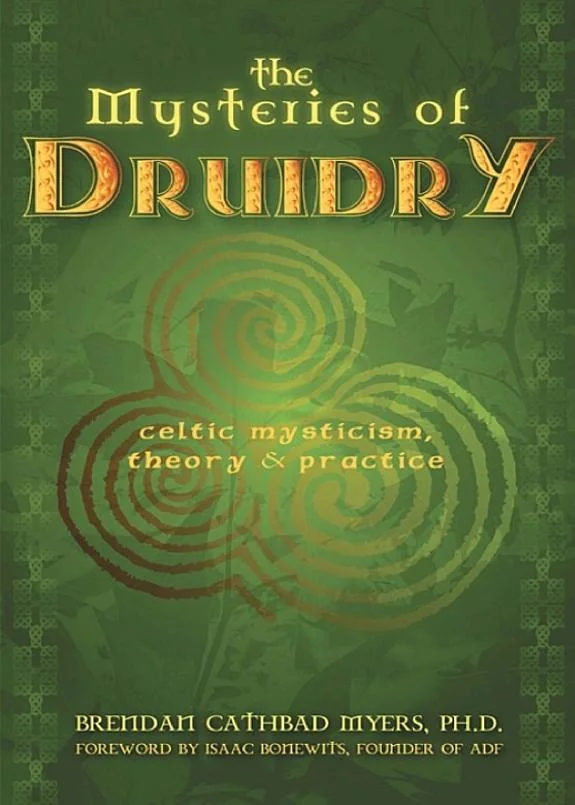
The mysteries of Druidry
 82
82

The mysteries of Druidry
Myers’s "The Mysteries of Druidry" bypasses the romanticized notions often attached to this ancient path. Rather than offering a simplistic guide, the book presents a careful dissection of historical evidence and modern interpretations. A particular strength lies in its detailed examination of the philosophical underpinnings, such as the concept of *Anamchara* (soul-friend) and its implications for spiritual community, a theme explored with commendable depth. However, the work occasionally suffers from its academic rigor, which, while precise, can sometimes feel dense for the uninitiated reader seeking immediate practical application. The discussion on the symbolism of the Ogham alphabet, though informative, could benefit from more visual aids for clarity. Despite this, Myers’s measured approach provides a valuable corrective to sensationalist accounts of Druidry. It is a solid foundation for understanding the tradition's complexities.
📝 Description
82
Brendan Cathbad Myers's 2006 book clarifies Druidry beyond common misconceptions.
First published in 2006, Brendan Cathbad Myers's "The Mysteries of Druidry" examines the historical roots and evolving practices of this ancient Celtic spiritual tradition. The work moves beyond popular misunderstandings to present a detailed view of Druidry's philosophy and rituals. It serves as an introduction for those new to the subject and a reference for readers seeking a deeper grasp of its core beliefs.
Meyers places modern Druidry within its historical lineage, tracing connections from ancient Gaul and Britain through the Bardic revivals of the 18th century and the formation of organized Druidic orders in the 19th and 20th centuries. He acknowledges the difficulty in reconstructing ancient practices due to sparse historical evidence, clearly distinguishing between historical Druidry and its later forms.
The text explains central concepts like nature veneration, cyclical views of time and life, the importance of sacred groves and trees, and the function of bards in preserving wisdom. It also discusses the philosophical basis of Druidic ethics, emphasizing respect for life, community, and the pursuit of understanding.
This book situates Druidry within the broader currents of pre-Christian European spirituality and nature-based religions. It contrasts historical reconstructions with modern interpretations, a common concern in contemporary Pagan studies. The author addresses the challenges of recovering lost traditions, a recurring theme in the study of Western esotericism, where evidence is often fragmented and subject to later revivals and reinterpretations.
💡 Why Read This Book?
• Gain a foundational understanding of historical Druidry's philosophical tenets, moving beyond modern romanticism, as detailed in the exploration of ancient Celtic beliefs. • Appreciate the evolution of Druidic practice from its earliest historical mentions to its 21st-century revival, offering a unique perspective not found in generalized spiritual texts. • Understand the significance of specific natural elements and symbols within the Druidic worldview, as discussed in relation to sacred groves and trees.
⭐ Reader Reviews
Honest opinions from readers who have explored this book.
❓ Frequently Asked Questions
What is the historical basis for modern Druid practices discussed in 'The Mysteries of Druidry'?
Myers traces modern practices back to fragmented historical accounts from Roman writers concerning ancient Gaulish and British Druids, and later to 18th-century revivals, acknowledging the scholarly debate surrounding direct lineage.
Does the book offer practical rituals for beginners?
While 'The Mysteries of Druidry' focuses primarily on historical and philosophical aspects, it lays the groundwork for understanding the ethos behind Druidic practices, allowing readers to develop their own informed rituals.
How does Brendan Cathbad Myers differentiate historical Druidry from Neo-Druidry?
Myers distinguishes between the scant, often biased, historical records of ancient Druids and the various modern movements that draw inspiration from them, emphasizing the speculative nature of some Neo-Druidic elements.
What role does nature play in the Druidic philosophy presented?
Nature is central, viewed not just as a resource but as a sacred manifestation of the divine. The book explores the reverence for trees, the land, and the cycles of the natural world within Druidic thought.
Is 'The Mysteries of Druidry' suitable for academic study?
Yes, the book's scholarly approach, engagement with historical sources, and nuanced presentation make it valuable for academic study in fields like religious studies, Celtic studies, and the history of esotericism.
What is the significance of the Ogham script in Druidry, according to the book?
Myers discusses the Ogham alphabet as potentially more than just an early Irish script, exploring theories of its use in divination and as a system of symbolic meaning connected to trees and natural forces.
🔮 Key Themes & Symbolism
Historical Druidic Roots
The work meticulously examines the scarce historical evidence for the ancient Druids, primarily from Roman and Greek accounts, differentiating between what can be factually ascertained and what has been inferred or reconstructed. It discusses the societal role of Druids as priests, judges, and scholars in pre-Christian Celtic societies, particularly in regions like Gaul and Britain, before their decline under Roman influence and later Christianization.
Nature Reverence and Sacred Landscapes
A core theme is the profound connection Druidry fosters with the natural world. Myers explores the veneration of trees, forests (especially oak groves), rivers, and mountains as sacred spaces imbued with spiritual energy. This perspective emphasizes an ecological spirituality where humanity is an integral part of nature, not separate from it, reflecting an animistic worldview prevalent in early Celtic cultures.
Philosophy of Life and Death
The book explores the Druidic understanding of life, death, and rebirth, often linked to concepts of reincarnation or transmigration of souls. This cyclical view shapes their ethical framework, promoting balance, respect for all life, and an understanding of continuity beyond physical demise. It contrasts with linear Western conceptions of time and existence.
Modern Druidry's Evolution
Myers provides context for the resurgence and diversification of Druidry from the 18th century onwards. He acknowledges the contributions of figures and organizations like the Ancient Order of Druids and later movements, discussing how contemporary Druids interpret and adapt ancient principles to modern life, often focusing on ecological activism and personal spiritual development.
💬 Memorable Quotes
Direct passages from the work, attributed to the author.
“Druidry is not a static relic but a living tradition that has adapted through centuries.”
— This highlights the dynamic nature of the spiritual path, emphasizing its evolution from ancient practices to contemporary expressions, countering the idea of it being solely an archaeological subject.
“The sacred grove was more than a place of worship; it was a nexus of cosmic energy.”
— This interpretation underscores the deep spiritual significance attributed to natural sites in Druidry, viewing them as potent centers connecting the earthly and the divine, central to ritual and contemplation.
“Understanding the Ogham requires more than memorizing letters; it involves grasping their symbolic resonance.”
— This points to the layered meaning within the Ogham script, suggesting its use extends beyond mere writing to encompass divination, magic, and a profound connection to arboreal symbolism.
“Anamchara, the soul-friend, represents a profound spiritual kinship central to community.”
— This concept emphasizes the importance of deep, spiritual relationships within Druidism, where individuals act as guides and companions on each other's life path, fostering mutual growth and support.
“Reconstructing ancient Druidry involves careful scholarship, acknowledging the gaps in our knowledge.”
— This reflects a scholarly caution, urging readers and practitioners to be mindful of the speculative elements in reconstructing the past, promoting critical thinking over unsubstantiated claims.
🌙 Esoteric Significance
Tradition
This work sits within the broader context of Western Esotericism, specifically concerning nature-based spiritualities and the revival of pre-Christian European traditions. While not strictly Hermetic or Kabbalistic, it shares with these traditions an emphasis on symbolic interpretation, sacred cosmology, and the pursuit of hidden knowledge. It contributes to the lineage of Druidic revivalism, which seeks to reconnect with perceived ancient wisdom rooted in the land and its cycles.
Symbolism
Key symbols explored include the sacred grove, representing a liminal space between worlds and a locus of divine presence; the Ogham alphabet, interpreted not just as script but as a system of arboreal and divinatory symbolism; and the concept of *Anamchara* (soul-friend), signifying deep spiritual connection and mutual guidance within a community. These symbols are presented as vital conduits for understanding the Druidic worldview.
Modern Relevance
Contemporary practitioners of ecological spirituality, earth-centered religions, and various Neo-Pagan paths draw upon the historical and philosophical foundations outlined by Myers. Thinkers and groups focused on nature-based activism, Celtic Reconstructionism, and modern Druidic orders often reference or build upon the kind of nuanced understanding of Druidry that this book provides, seeking to integrate ancient wisdom with modern ecological and social challenges.
👥 Who Should Read This Book
• Students of comparative religion and European pre-Christian traditions seeking a scholarly yet accessible overview of Druidry's historical and philosophical underpinnings. • Individuals interested in nature-based spiritualities and ecological ethics who wish to explore the roots of reverence for the natural world in Celtic cultures. • Practitioners of modern Druidry or related paths looking for a grounded text that critically examines the relationship between historical evidence and contemporary practice.
📜 Historical Context
Published in 2006, Brendan Cathbad Myers's "The Mysteries of Druidry" emerged during a period of significant growth and academic interest in Neo-Paganism and alternative spiritualities. The work engages with a landscape shaped by earlier scholarship, such as that of scholars like Nora Chadwick, who meticulously analyzed early sources on Celtic peoples. Myers's approach situates itself within the ongoing discourse on historical reconstruction versus modern interpretation, a debate active since the Bardic revivals of the 18th century, which sought to reclaim a perceived ancient Celtic heritage. While not explicitly engaging with a specific contemporary rival school of thought in its blurb, the book implicitly addresses the spectrum from highly speculative modern interpretations to more grounded historical approaches. Its publication contributed to a more nuanced understanding of Druidry, moving it beyond the romanticized imagery often perpetuated in popular culture and offering a more scholarly perspective for practitioners and academics alike.
📔 Journal Prompts
The concept of Anamchara and its application in modern community building.
Reflections on the symbolism of sacred groves and their significance today.
Connecting the cyclical understanding of time presented in Druidry with personal life experiences.
Exploring the ethical implications of nature reverence as discussed in the text.
Personal interpretation of Ogham symbols based on the book's insights.
🗂️ Glossary
Anamchara
An Old Irish term often translated as 'soul-friend,' referring to a deep spiritual companion or guide who aids in personal and spiritual growth through mutual understanding and support.
Ogham
An early medieval alphabet used primarily for Irish and Scottish Gaelic. In Druidic contexts, it is often viewed as a system holding deeper symbolic and divinatory meanings, particularly related to trees.
Sacred Grove
A natural wooded area, often associated with specific trees like oak, considered holy or imbued with spiritual power in ancient Celtic and Druidic traditions, serving as a site for rituals and contemplation.
Bard
In ancient Celtic societies, a poet, storyteller, and musician, often holding a respected position within the social structure, responsible for preserving history, mythology, and performing ceremonial functions.
Celtic Reconstructionism
A modern movement focused on reconstructing the beliefs and practices of pre-Christian Celtic religions based on historical and archaeological evidence, as opposed to more syncretic or modernized forms of Neo-Paganism.
Transmigration of Souls
The belief that a soul passes into a new body after death, either human or animal, a concept often attributed to ancient Druidic views on the afterlife and the continuity of consciousness.
Liminal Space
A transitional or in-between state or place, often associated with thresholds, borders, or sacred sites like groves, where ordinary rules may be suspended and spiritual encounters are facilitated.
🔮 Readers Also Liked
Browse all →






More by Brendan Cathbad Myers
All books →
More Free Occult Philosophy Books
View all →