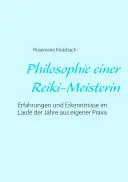
Philosophie einer Reiki-Meisterin
 75
75

Philosophie einer Reiki-Meisterin
Rosemarie Klotzbach’s "Philosophie einer Reiki-Meisterin" presents a candid distillation of life lessons, centered on the axiom that "Leben heißt Bewegung" (Life means movement). Klotzbach’s strength lies in her unvarnished approach; she doesn't shy away from discussing the spectrum of human interaction, drawing lessons from both "good and bad" experiences to aid in healing. This grounded perspective is refreshing in a field often saturated with abstract theory. The book’s structure, divided into 22 chapters, allows for a methodical exploration of this core concept. However, the directness of the original blurb, while honest, could benefit from more specific examples of how these experiences translate into actionable advice for the reader. The passage discussing the importance of observing energy flow in daily life, while conceptually sound, would be more impactful with a concrete anecdote. Ultimately, Klotzbach offers a pragmatic philosophy rooted in lived experience, advocating for movement as the essence of vitality.
📝 Description
75
Rosemarie Klotzbach's 2016 book argues life inherently involves motion.
Published in 2016, "Philosophie einer Reiki-Meisterin" presents Rosemarie Klotzbach's personal philosophy on the connection between life, movement, and health. The book is divided into 22 chapters, each developing the core idea that motion is fundamental to existence. Klotzbach shares insights drawn from her own experiences and observations of others, offering practical wisdom gained from both positive and negative encounters.
This work is for anyone interested in the relationship between vitality and physical or energetic movement. It speaks to those who value holistic well-being and seek practical applications of life philosophy based on personal experience. Readers looking for ways to improve their health by understanding life's inherent dynamism will find its approach valuable. It resonates with the belief that to live is to move, broadly interpreted.
Klotzbach's work emerged in 2016 amidst growing global interest in alternative healing and personal development. While Reiki, established by Mikao Usui, was already known, Klotzbach offers a unique personal philosophical take. Her central theme, "Leben heißt Bewegung" (Life means movement), echoes ancient Greek thought, notably Heraclitus, but is firmly grounded in contemporary spiritual practice. The book connects these ideas to personal experience within the broader context of spiritual and self-help literature of the late 20th and early 21st centuries.
💡 Why Read This Book?
• Gain practical wisdom on health and vitality directly from Rosemarie Klotzbach's 22 chapters exploring the concept "Life means movement," offering a unique perspective on overcoming stagnation. • Understand how to derive healing insights from diverse human interactions, a core principle Klotzbach shares from her own experiences, fostering personal growth. • Discover a philosophical framework that equates life with motion, encouraging a more dynamic approach to well-being by connecting physical and energetic movement.
⭐ Reader Reviews
Honest opinions from readers who have explored this book.
❓ Frequently Asked Questions
What is the central philosophy presented in "Philosophie einer Reiki-Meisterin"?
The book's core philosophy, articulated by Rosemarie Klotzbach, is "Leben heißt Bewegung" (Life means movement). It posits that vitality and health are intrinsically linked to motion, encouraging readers to embrace dynamism in all aspects of their lives.
How does Rosemarie Klotzbach suggest readers can improve their health?
Klotzbach suggests readers can improve their health by learning from all human experiences, both positive and negative, and by understanding that life itself is movement. The 22 chapters offer guidance on applying this principle.
What is the significance of the 22 chapters in the book?
The 22 chapters provide a structured exploration of Klotzbach's central theme: the connection between life and movement. Each chapter likely delves into different facets of this concept, offering practical insights derived from her personal experiences.
Who is the author, Rosemarie Klotzbach?
Rosemarie Klotzbach is a Reiki Master who shares her accumulated knowledge and personal experiences in "Philosophie einer Reiki-Meisterin." Her background as a Reiki practitioner informs her perspective on healing and life philosophy.
When was "Philosophie einer Reiki-Meisterin" first published?
The book "Philosophie einer Reiki-Meisterin" by Rosemarie Klotzbach was first published on November 15, 2016.
What kind of experiences does Klotzbach draw upon for her book?
Klotzbach draws upon her direct, personal experiences with people, encompassing both positive and negative encounters. She aims to use this collected human insight to help others achieve better health and well-being.
🔮 Key Themes & Symbolism
Life as Motion
The foundational concept "Leben heißt Bewegung" (Life means movement) permeates the entire work. Klotzbach argues that existence is synonymous with dynamism and that any form of stagnation is contrary to true vitality. This theme is explored across 22 chapters, suggesting that embracing physical, emotional, and energetic movement is essential for holistic well-being and healing. The book encourages readers to view life not as a static state but as an ongoing process of change and flux, drawing parallels between internal states and external expressions of motion.
Experiential Wisdom
Klotzbach emphasizes the value of direct, personal experience in understanding oneself and others. She highlights learning from both positive and negative human interactions as a crucial pathway to developing wisdom and fostering healing. This theme underscores a practical, grounded approach to personal philosophy, suggesting that true insight comes not from abstract study alone but from lived encounters and the lessons derived from them. The book aims to share these hard-won insights to assist others on their own paths to wellness.
Reiki Master's Perspective
As a Reiki Master, Klotzbach brings a unique perspective informed by her practice and understanding of energy work. While the book focuses on the broader philosophy of life and movement, the underlying principles of healing, balance, and energetic flow inherent in Reiki are implicitly present. This background informs her insights into how individuals can cultivate health by aligning their inner state with outward expression, suggesting that a deeper awareness of life's inherent motion can lead to profound personal transformation.
Holistic Health and Healing
The ultimate aim of sharing these experiences and philosophies is to help others become healthier. Klotzbach connects the principle of movement to the concept of healing, implying that a dynamic, engaged approach to life is conducive to recovery and sustained well-being. The book offers a perspective where understanding the interplay between life, motion, and personal experience is key to achieving a state of holistic health, addressing the physical, emotional, and spiritual dimensions of an individual.
💬 Memorable Quotes
Direct passages from the work, attributed to the author.
“Life means movement.”
— This concise statement expresses the book's central thesis, suggesting that vitality, existence, and progress are all fundamentally tied to the principle of motion.
“I have gained human insight from my own experience – good and bad.”
— This highlights the author's commitment to learning from the full spectrum of life's interactions, valuing both positive and negative encounters as sources of wisdom for aiding others.
“I want to help people become healthy.”
— This clearly states the author's benevolent intention, grounding her philosophical exploration in a practical desire to contribute to the well-being and healing of her readers.
“22 chapters on life and movement.”
— This structural detail emphasizes the book's focused approach, dedicating a specific segment to dissecting the intricate relationship between existence and the concept of motion.
“Because life means movement.”
— This reiterates the core belief, serving as the justification for the book's exploration of life and movement, framing motion as an intrinsic characteristic of being alive.
🌙 Esoteric Significance
Tradition
While not explicitly aligned with a single Western esoteric lineage like Hermeticism or Kabbalah, Klotzbach's work draws from the broader spiritual milieu influenced by Eastern philosophies, particularly those underpinning practices like Reiki. The emphasis on life force, energy, and holistic well-being connects it to universal spiritual principles. It departs from strictly codified traditions by prioritizing personal experience and a direct, almost phenomenological, exploration of life's essence, making it accessible beyond established esoteric circles.
Symbolism
The primary symbolic concept is 'movement' itself, representing vitality, change, growth, and the flow of life force (often termed 'Ki' or 'Prana' in related traditions). 'Stagnation,' conversely, symbolizes decay, illness, and disconnection. The number 22, structuring the book, could symbolically relate to various numerological systems, though Klotzbach uses it more as a framework for exposition. The author's own experiences, both 'good and bad,' act as symbolic representations of the challenges and lessons inherent in the human journey.
Modern Relevance
Klotzbach's work remains relevant to contemporary practitioners of Reiki and other energy healing modalities seeking a philosophical grounding for their practice. It also speaks to the growing interest in somatic experiencing and body-mind connection in psychology and wellness. Thinkers and practitioners exploring the intersection of spirituality, personal narrative, and practical health advice will find resonance in her approach. Her emphasis on learning from lived experience aligns with modern trends in qualitative research and personal storytelling within self-help literature.
👥 Who Should Read This Book
• Practitioners of Reiki and similar energy healing arts seeking a philosophical companion to their practice, offering insights into the connection between life force and motion. • Individuals interested in personal development who value wisdom derived from direct life experience, particularly those who resonate with the idea that "life means movement." • Readers exploring holistic health and well-being who are looking for practical guidance on fostering vitality by understanding the dynamic nature of existence.
📜 Historical Context
Published in 2016, "Philosophie einer Reiki-Meisterin" arrived during a period of sustained interest in holistic health and personal development, building upon trends established in the late 20th century. While Mikao Usui developed Reiki in Japan in the early 1900s, Klotzbach’s work offers a personal, philosophical interpretation grounded in her own life experiences as a Reiki Master. This book can be seen in dialogue with a broader Western engagement with Eastern spiritual practices, often filtered through individual experience. Its central theme, "Leben heißt Bewegung" (Life means movement), echoes ancient philosophical currents, notably the ideas of Heraclitus who similarly emphasized flux and change as fundamental to existence. In the self-help and esoteric field of the 2010s, Klotzbach’s approach stood out for its directness and emphasis on practical, lived wisdom rather than purely theoretical discourse, differentiating it from more academic or dogmatic spiritual texts.
📔 Journal Prompts
Reflection on the 22 chapters' exploration of "Life means movement."
Analyze personal experiences, both positive and negative, for their contribution to your own human insight.
Consider how your current state of "movement" reflects your overall sense of vitality.
Identify areas of perceived stagnation in your life and brainstorm ways to introduce dynamic change.
Explore the concept of "healing" through the lens of embracing life's inherent motion.
🗂️ Glossary
Reiki Master
An individual who has completed advanced training in the Usui system of Reiki, enabling them to teach Reiki and attune others to its energy, often possessing a deep understanding of its principles.
Leben heißt Bewegung
A German phrase meaning "Life means movement." It is the central philosophical tenet of the book, asserting that dynamism and motion are intrinsic to existence and vitality.
Human Insight
Wisdom or understanding gained through direct experience and observation of human behavior and interactions, particularly valuable for fostering empathy and practical solutions.
Health
A state of physical, mental, and spiritual well-being, understood in the context of the book as being intrinsically linked to embracing the natural dynamism and movement of life.
Movement
Encompasses not only physical motion but also energetic flow, emotional expression, and psychological growth; understood as the fundamental principle of life and vitality.
Stagnation
The opposite of movement; a state of being stuck, inactive, or unchanging, which the book suggests is contrary to life and well-being.
22 Chapters
The specific structural division of the book, indicating a methodical exploration of the core themes of life and movement across distinct sections.