Basic psychic development
 72
72

Basic psychic development
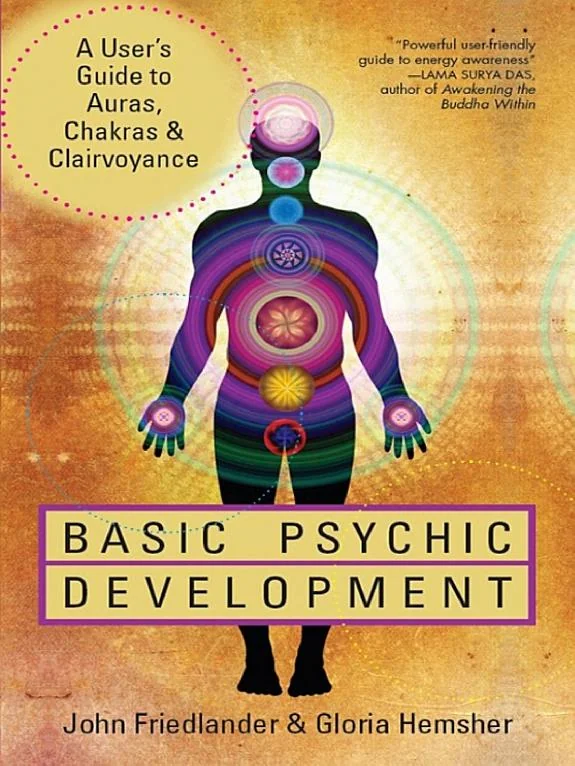
John Friedlander's Basic Psychic Development presents a refreshingly straightforward manual for cultivating extrasensory perception. Unlike many esoteric texts that obscure simple ideas in elaborate jargon, Friedlander focuses on clear, actionable steps. The section on "Mental Shielding" is particularly well-articulated, providing a practical technique for managing energetic boundaries—a concept often vaguely defined elsewhere. However, the book's primary limitation lies in its brevity; while comprehensive for an introduction, it occasionally feels like a primer that could benefit from deeper exploration of the psychological implications of psychic development. The 2012 publication date means it doesn't engage with contemporary neuroscience discussions on consciousness, which could offer an interesting counterpoint. Nevertheless, for a dedicated beginner, it offers a solid, no-nonsense foundation.
📝 Description
72
John Friedlander's 2012 book, Basic Psychic Development, offers practical exercises for cultivating latent psychic abilities.
This book provides a structured method for developing psychic skills. Friedlander moves past theory, giving readers concrete exercises and essential knowledge to unlock their inner potential. It is designed as an accessible guide for newcomers to the subject, whether they are complete beginners or have some familiarity with metaphysical ideas. The work appeals to those who prefer a systematic, step-by-step approach and seek practical techniques for enhancing intuition, clairvoyance, or telepathy. It is aimed at earnest students, not those looking for sensationalism.
Friedlander's approach emphasizes core principles like energy manipulation and mental focus. Key concepts include the importance of grounding, visualization, and activating the 'third eye' for psychic perception. The author presents these elements as fundamental for safely expanding one's psychic capacities. The book avoids overly complex jargon, making it suitable for individuals interested in a clear path to psychic development.
Published in 2012, Basic Psychic Development appeared during a period of renewed interest in personal development and esoteric studies, echoing earlier movements like Theosophy and New Age spirituality. It follows a tradition of psychic training manuals dating back to the late 19th century, a time when figures like Helena Blavatsky explored concepts of unseen energies and consciousness.
💡 Why Read This Book?
• You will learn specific techniques for mental focus and visualization, crucial for developing your intuitive faculties, as detailed in the early chapters on concentration exercises. • You will gain practical methods for energetic protection, understanding how to safeguard your personal energy field, directly addressed in the "Mental Shielding" section. • You will grasp the foundational principles of psychic perception, moving beyond abstract notions to concrete practices for interpreting subtle energies and impressions.
⭐ Reader Reviews
Honest opinions from readers who have explored this book.
❓ Frequently Asked Questions
What is the main goal of John Friedlander's Basic Psychic Development?
The primary goal is to provide readers with a practical, step-by-step guide to developing their innate psychic abilities, focusing on foundational techniques and principles for safe and effective exploration of consciousness.
Is this book suitable for absolute beginners in psychic development?
Yes, the book is specifically designed for beginners. It avoids overly complex jargon and presents concepts and exercises in a clear, accessible manner, making it ideal for those starting their journey.
What kind of exercises are included in Basic Psychic Development?
The book includes exercises focused on concentration, visualization, meditation, and energy awareness. These are designed to strengthen mental focus and attunement to subtle energies, laying the groundwork for more advanced psychic skills.
When was Basic Psychic Development first published?
Basic Psychic Development was first published in 2012, reflecting a contemporary approach to esoteric studies while building on established principles.
Does the book discuss ethical considerations for psychic development?
While not its primary focus, the book implicitly addresses ethical considerations through its emphasis on grounding and mental shielding, promoting responsible energetic practices and self-awareness.
What is the significance of the 'third eye' concept in this book?
The book discusses the 'third eye' as a focal point for developing inner vision and intuition, presenting methods to attune and activate this energetic center for enhanced psychic perception.
🔮 Key Themes & Symbolism
Concentration and Focus
The book emphasizes that developing psychic abilities hinges on the capacity for sustained mental focus. Friedlander outlines specific exercises designed to train the mind to remain centered, free from distraction. This discipline is presented not merely as a preliminary step but as an ongoing practice essential for clear perception and control over subtle energies. Without a trained mind, the book suggests, psychic impressions can be muddled or misinterpreted, hindering genuine development.
Energy Awareness and Manipulation
A core theme is the understanding and conscious interaction with subtle energies, both internal and external. Friedlander introduces concepts of personal energy fields and methods for sensing and influencing them. This includes techniques for grounding oneself to maintain stability and for developing a form of mental shielding to protect against unwanted energetic influences. The work posits that psychic phenomena are fundamentally energetic exchanges.
Intuition and Inner Vision
The book guides readers toward recognizing and trusting their intuitive insights and developing inner vision, often associated with the 'third eye'. It provides practical methods for distinguishing genuine intuitive guidance from mere imagination or wishful thinking. The goal is to cultivate a reliable inner knowing that can be applied to various aspects of life, fostering a deeper connection to one's own inner wisdom.
Practical Application of Psychic Skills
Beyond theoretical understanding, Friedlander stresses the importance of applying developed psychic skills in practical ways. This involves learning to interpret subtle impressions, potentially developing clairvoyant or telepathic abilities, and using these faculties responsibly. The work aims to explain psychic development, presenting it as an accessible and integrated aspect of personal growth rather than an arcane pursuit.
💬 Memorable Quotes
Direct passages from the work, attributed to the author.
“The mind must be disciplined before it can be used for psychic exploration.”
— This statement highlights the book's foundational approach, suggesting that mental training, such as concentration exercises, is a prerequisite for effective development of psychic faculties.
“Learn to feel the energy that surrounds you and within you.”
— This encourages readers to cultivate a sensitivity to subtle energies, a key aspect of psychic perception according to the author's methodology. It implies that energy is a tangible force to be experienced.
“Visualization is the architecture of inner reality.”
— This emphasizes the power of imagination and mental imagery in shaping psychic experiences and capabilities, positioning visualization as a constructive tool for inner work.
“Distinguish between true intuition and mental chatter.”
— This points to a critical skill taught in the book: discerning authentic inner guidance from ordinary thought processes or emotional noise.
💡 Key Ideas
Editorial paraphrase of the work's core concepts — not direct quotes.
Grounding provides stability against energetic disturbances.
This paraphrased concept underscores the importance of maintaining energetic balance and protection, a practical technique discussed for navigating potentially overwhelming psychic energies.
🌙 Esoteric Significance
Tradition
This work fits within the broad spectrum of Western Esotericism, specifically drawing from traditions that focus on the cultivation of individual consciousness and latent human potential. While not explicitly tied to a single lineage like Kabbalah or Hermeticism, it reflects the practical, experiential emphasis found in many schools that aim to develop inner faculties through disciplined practice, akin to Neoplatonic or Gnostic ideas of inner knowing.
Symbolism
The concept of the 'third eye' is central, symbolizing inner vision, intuition, and spiritual insight. It's often depicted as a gateway to higher consciousness. Another motif is 'energy' itself, understood not just physically but as a subtle, pervasive force that can be perceived and manipulated, forming the basis for psychic phenomena. The idea of 'grounding' acts as a symbolic anchor, representing stability and connection to the material plane, essential for managing spiritual or psychic energies.
Modern Relevance
Basic Psychic Development speaks to contemporary practices in mindfulness, energy healing modalities like Reiki, and intuitive development coaching. Thinkers and practitioners exploring consciousness studies, parapsychology, and the integration of spiritual practices into daily life often reference or engage with the foundational principles outlined in such accessible manuals. It serves as a stepping stone for those interested in exploring the energetic and intuitive dimensions of human experience.
👥 Who Should Read This Book
• Aspiring psychics and intuitives seeking a structured, step-by-step introduction to developing their abilities, focusing on foundational exercises. • Individuals interested in meditation and mindfulness who wish to deepen their practice by exploring energetic awareness and inner vision. • Students of comparative spirituality looking for practical techniques rooted in the exploration of consciousness and subtle energies, distinct from purely philosophical or religious studies.
📜 Historical Context
John Friedlander's Basic Psychic Development, first published in 2012, arrived during a period of significant popular engagement with spirituality and self-help, a trend that gained momentum throughout the late 20th and early 21st centuries. The book draws upon a lineage of psychic training manuals that emerged prominently in the late 19th and early 20th centuries, influenced by figures like Helena Blavatsky and the Theosophical Society, which sought to integrate Eastern spiritual concepts with Western esoteric traditions. Friedlander's work, however, offers a more streamlined and less overtly dogmatic approach compared to some of its predecessors. While not directly engaging with contemporaries like Doreen Virtue or James Van Praagh, whose works also popularized psychic phenomena, Friedlander's 2012 publication positions itself as a direct, practical guide, eschewing the more elaborate philosophical frameworks that characterized earlier esoteric literature. Its reception likely aligned with a broader audience interested in accessible methods for personal growth and exploring consciousness.
📔 Journal Prompts
The practice of mental shielding: how does it apply to daily interactions?
Developing concentration: identify one daily activity to practice sustained focus.
Interpreting subtle impressions: document a recent intuitive 'hit' and its outcome.
The concept of energy fields: how can you sense them more consciously?
Visualizing inner reality: sketch or describe a scene you create with focused visualization.
🗂️ Glossary
Psychic Development
The process of consciously cultivating and enhancing innate extrasensory abilities, such as intuition, clairvoyance, and telepathy, through focused practice and understanding.
Concentration
The ability to direct and sustain mental focus on a specific object, thought, or sensation, considered fundamental for controlling and directing psychic energy.
Visualization
The mental act of creating vivid images or scenes in the mind's eye, used as a tool to influence energy, manifest intentions, or explore inner realms.
Grounding
A technique to stabilize one's energy field by connecting with the Earth's energy, essential for maintaining balance and preventing overwhelm during psychic work.
Third Eye
An energetic center often associated with the pineal gland, believed to be the seat of intuition, inner vision, and higher consciousness.
Energy Field
The subtle energetic aura or matrix surrounding and permeating living beings, believed to be responsive to thought, emotion, and external influences.
Mental Shielding
A protective technique used to create a barrier around one's energy field, preventing unwanted psychic intrusions or energetic contamination.
🔮 Readers Also Liked
Browse all →









More by John Friedlander
All books →

More Free Occult Philosophy Books
View all →