What happens when we die

 72
72

What happens when we die
Sam Parnia's "What Happens When We Die" attempts a rigorous examination of a topic that has historically been confined to theology and speculative philosophy. Parnia’s strength lies in his physician's perspective, meticulously detailing the physiological states of clinical death and juxtaposing them with the often elaborate accounts of near-death experiences. The book offers a compelling case for considering consciousness as something more than a mere byproduct of brain function, particularly in the section detailing verifiable perceptions during NDEs. However, the work occasionally leans into speculative interpretation where the evidence remains ambiguous, a common pitfall in this field. While Parnia is adept at presenting the data, the leap from reported phenomena to definitive conclusions about post-mortem existence is, understandably, a significant one. A passage describing the sense of ego dissolution, conveying a profound unity, stands out as particularly potent in its descriptive power. Ultimately, Parnia’s contribution is valuable for its earnest attempt to apply scientific scrutiny to an enduring mystery, though definitive answers remain elusive.
📝 Description
72
Sam Parnia's 2008 book examines consciousness and life beyond physical death.
Sam Parnia's "What Happens When We Die," published in 2008, investigates consciousness and the possibility of existence after physical death. Parnia, a physician, combines scientific methods with accounts from near-death experiences (NDEs). He analyzes the biological and neurological aspects of dying while also gathering testimonies from individuals who reported extraordinary events during clinical death. The book attempts to connect scientific observation with the personal realities of these NDEs. It is for readers interested in mortality, consciousness, and the transition from life to death. The work also appeals to those seeking rational explanations for phenomena often placed outside scientific study and to individuals who have experienced NDEs or grieved loved ones. Researchers in consciousness studies, parapsychology, and comparative religion will find value in Parnia's data-driven approach.
This book is situated within the broader esoteric interest in survival of consciousness after death, a topic explored across many traditions. It engages with phenomena like NDEs, which have been interpreted through spiritual, mystical, and occult lenses for centuries. Parnia's work, however, attempts to ground these discussions in empirical observation and medical science, differentiating it from purely faith-based or metaphysical accounts. It bridges a gap between the scientific study of death and the enduring human inquiry into what, if anything, persists beyond it, echoing themes found in spiritualism and historical investigations of the afterlife.
💡 Why Read This Book?
• Gain an understanding of the physiological markers of clinical death as detailed by Sam Parnia, differentiating it from biological death, which offers a concrete biological anchor. • Explore the concept of consciousness potentially existing independently of the brain, as Parnia argues through documented near-death experiences, providing a unique philosophical perspective. • Examine specific phenomena reported during near-death experiences, such as verifiable out-of-body perceptions, which offer tangible, albeit extraordinary, examples of consciousness beyond the physical body.
⭐ Reader Reviews
Honest opinions from readers who have explored this book.
❓ Frequently Asked Questions
What is the primary difference between clinical death and biological death according to Sam Parnia?
Sam Parnia defines clinical death as the cessation of heartbeat and breathing, a state where the brain is still potentially recoverable. Biological death, conversely, refers to the irreversible cessation of all brain function, marking the absolute end of physical life.
What are near-death experiences (NDEs) discussed in Sam Parnia's book?
NDEs are profound subjective experiences reported by individuals who have been close to death. Parnia's book details common elements of NDEs, including out-of-body sensations, encounters with light or beings, and a sense of peace.
Does Sam Parnia claim to prove life after death?
While Sam Parnia presents evidence suggesting consciousness may persist beyond physical death, the book aims to explore the possibility and present scientific and anecdotal data rather than offering definitive proof. He encourages open-minded scientific inquiry.
What role does science play in Parnia's exploration of death?
Parnia integrates scientific research, particularly in neurology and critical care, with qualitative data from NDE accounts. He seeks to find rational explanations for NDE phenomena and challenge purely materialistic views of consciousness.
When was 'What Happens When We Die' by Sam Parnia first published?
Sam Parnia's book, "What Happens When We Die," was first published in 2008, contributing to the scientific discourse on consciousness and mortality during that period.
What is the concept of 'consciousness as fundamental' as presented by Parnia?
Parnia explores the idea that consciousness might be a fundamental aspect of reality, not solely a product of the physical brain. This concept is central to understanding how awareness could potentially continue after bodily death.
🔮 Key Themes & Symbolism
Consciousness Beyond the Brain
This theme posits that awareness is not merely an epiphenomenon of neural activity but may possess an independent existence. Parnia meticulously gathers accounts of individuals experiencing vivid awareness and perception during periods of clinical death, where brain function as conventionally understood is severely compromised or absent. The work explores how these experiences challenge materialistic explanations of consciousness, suggesting that the 'self' might be capable of existing or operating separately from the physical body, even if only temporarily.
The Nature of Clinical Death
Parnia differentiates between clinical death – the cessation of heartbeat and respiration – and biological death, the irreversible end of all bodily functions. He details the medical procedures and physiological states involved in resuscitation and the recovery of individuals from clinical death. This distinction is crucial, as it provides the temporal window during which near-death experiences are reported. The book examines the neurological and physiological events occurring during this critical phase, seeking to correlate them with the subjective reports.
Verifiable Perceptions During NDEs
A significant focus is placed on instances where individuals undergoing near-death experiences report perceiving events or information that they could not have known through normal sensory channels. Parnia discusses cases where patients accurately describe surgical procedures, conversations in the room, or even events happening elsewhere while they were clinically dead. This theme aims to provide empirical support for the idea that consciousness can operate beyond the confines of the physical body during profound physiological crisis.
Spiritual and Existential Transformation
Beyond the scientific and experiential aspects, the book looks at the profound psychological and spiritual transformations reported by NDE survivors. Many describe encounters with a loving presence, a life review, or a deep sense of interconnectedness. Parnia explores how these experiences often lead to lasting changes in perspective, values, and a reduced fear of death. This aspect highlights the potential for NDEs to offer comfort, meaning, and a reorientation of one's life purpose.
💬 Memorable Quotes
Direct passages from the work, attributed to the author.
“The boundaries of the physical body are transcended.”
— This reflects the out-of-body experiences reported by many near-death survivors, indicating a subjective sensation of the self separating from the physical form during critical medical events.
“Life review offers profound self-understanding.”
— This interpretation refers to the common NDE phenomenon where individuals reportedly review their entire lives, gaining new perspectives on their actions and their impact on others.
“Clinical death is a potentially reversible state.”
— This highlights Parnia's emphasis on the medical distinction between clinical death, where resuscitation is possible, and irreversible biological death, underscoring the significance of the window for NDEs.
“Encounters with light signify a transition.”
— This interpretation describes the frequent reports of meeting a luminous, benevolent presence during NDEs, often perceived as a being of love or a guide.
💡 Key Ideas
Editorial paraphrase of the work's core concepts — not direct quotes.
Consciousness may be more fundamental than matter.
This paraphrased concept captures Parnia's central thesis, suggesting that awareness isn't simply a product of the physical brain but potentially a primary aspect of reality, capable of existing independently.
🌙 Esoteric Significance
Tradition
While not strictly adhering to a single esoteric lineage, Parnia's work engages with perennial philosophical questions found across Hermeticism, Gnosticism, and Theosophy concerning the soul's independence from the body and the nature of consciousness. It echoes concepts of astral projection and soul travel found in Western esotericism and Eastern contemplative traditions. Parnia's scientific methodology, however, attempts to ground these ancient ideas in empirical observation, positioning the book as a bridge between esoteric thought and modern scientific inquiry, rather than a direct exposition of a specific tradition.
Symbolism
Key symbols explored include the 'light' encountered during NDEs, often representing divine consciousness or unconditional love, a motif present in various mystical traditions. The 'life review' symbolizes karmic understanding and the holistic perception of one's existence, echoing concepts of divine judgment or soul integration. The experience of 'ego dissolution' represents the transcendence of the individual self, aligning with mystical union or non-dualistic philosophies where the perceived separation between self and the absolute is dissolved.
Modern Relevance
Parnia's research continues to influence contemporary discussions on consciousness, artificial intelligence, and the philosophy of mind. His work is cited by researchers exploring non-local consciousness and the potential for subjective experience beyond the brain. It provides a foundation for modern contemplative practices that explore altered states of awareness and the nature of self. Thinkers in fields ranging from neuroscience to transpersonal psychology find value in his persistent efforts to reconcile subjective spiritual experiences with objective scientific investigation.
👥 Who Should Read This Book
• Individuals interested in the scientific study of consciousness and its potential persistence after death, who seek a physician's evidence-based perspective. • Skeptics and the scientifically minded who are open to exploring extraordinary claims about life after death through rigorous investigation and case studies. • Those who have experienced or know someone who has experienced a near-death event and are seeking a deeper understanding of its potential implications and commonalities.
📜 Historical Context
Sam Parnia's "What Happens When We Die," released in 2008, emerged during a dynamic period for consciousness research. The early 21st century saw a growing, though often contentious, scientific engagement with near-death experiences (NDEs), moving beyond earlier skepticism. Parnia’s work built upon foundational research by figures like Dr. Raymond Moody Jr., who popularized the study of NDEs in the 1970s, and contemporary researchers such as Dr. Pim van Lommel, whose extensive Dutch NDE study was published in 2001. The book entered a discourse where the medical establishment was increasingly forced to confront subjective reports that challenged purely materialistic explanations of consciousness. While Parnia’s empirical approach was noted, the field still faced significant debate, with critics often attributing NDEs to residual brain activity or psychological responses to trauma. The book’s publication provided a physician-led perspective that aimed to bridge the gap between clinical observation and philosophical inquiry into the nature of existence.
📔 Journal Prompts
The concept of consciousness as fundamental: how does this idea challenge your current understanding of reality?
Reflect on the reported life review during NDEs: what would be the most impactful aspect of reviewing your own life?
Consider the distinction between clinical death and biological death: what are the philosophical implications of a potentially reversible state of non-consciousness?
The symbolism of encountering 'light' in near-death experiences: what personal associations or interpretations do you have with this motif?
Analyze the reports of ego dissolution: how might transcending the individual self alter one's perception of existence?
🗂️ Glossary
Clinical Death
The cessation of heartbeat and breathing. Parnia emphasizes this state is potentially reversible through medical intervention, distinguishing it from irreversible biological death.
Biological Death
The irreversible cessation of all brain function and bodily processes. This marks the absolute end of physical life, distinct from the temporary state of clinical death.
Near-Death Experience (NDE)
A profound subjective experience reported by individuals who have been close to death, often involving out-of-body sensations, encounters with light, and a sense of peace.
Out-of-Body Experience (OBE)
A sensation where an individual feels their consciousness has separated from their physical body, often observing their surroundings from a different vantage point.
Consciousness as Fundamental
The philosophical idea that consciousness is a primary aspect of reality, not merely a product of brain activity, suggesting it may exist independently of the physical body.
Life Review
A common component of NDEs where individuals reportedly perceive their entire life, often with an enhanced understanding of their actions and their consequences.
Ego Dissolution
A state reported during some NDEs where the sense of individual self dissolves into a feeling of unity or oneness with the universe or a higher power.
🔮 Readers Also Liked
Browse all →









More by Sam Parnia
All books →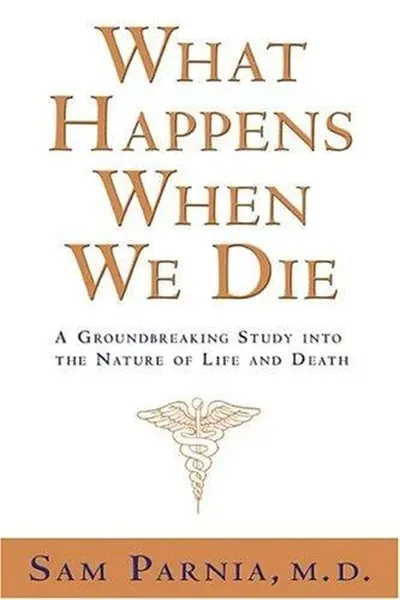

More Free Occult Philosophy Books
View all →