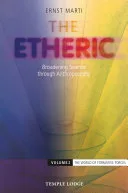
The Etheric
 78
78

The Etheric
Ernst Marti’s "The Etheric" offers a rigorous, almost forensic, examination of Rudolf Steiner’s conceptualization of the etheric realm. The strength of the book lies in Marti’s meticulous sourcing and his ability to trace Steiner’s ideas through disparate fields like biology, music, and color theory. His detailed analysis of how etheric forces might operate in areas such as plant growth or musical harmony provides specific, tangible anchors for an otherwise abstract subject. However, the text’s academic density, while a virtue for scholars, may present a significant barrier for the casual reader. The section exploring the etheric in medicine, for instance, is particularly dense, requiring a sustained focus. Marti’s work, while deeply respectful of Steiner, rarely ventures into speculative territory, preferring to elucidate the existing framework. It’s a scholarly testament to a complex spiritual scientific concept.
📝 Description
78
Ernst Marti's 1936 book, 'The Etheric,' examines a reality between the physical and spiritual.
Ernst Marti's 'The Etheric' investigates a subtle dimension of existence, situated between the purely physical and the entirely spiritual. The work thoroughly examines the concept of the etheric, drawing heavily on Rudolf Steiner's writings. Marti's goal is to build a complete picture of this realm, showing its presence and impact on various aspects of human experience and natural events.
This book is for dedicated students and researchers of esoteric philosophy, anthroposophy, and related spiritual science traditions. It will interest those who want to understand the core ideas Rudolf Steiner developed and how they apply to the material world and human awareness. Marti's method offers a way to connect historical spiritual views with modern science and art.
Marti's study of the etheric stems from the early 20th-century spiritual science movement, particularly Rudolf Steiner's theories on subtle bodies and forces. The book engages with ideas central to the Theosophical Society and its later offshoot, the Anthroposophical Society. Marti aims to situate these concepts within historical cosmologies, medieval thought, and modern perspectives.
💡 Why Read This Book?
• Gain a structured understanding of the etheric realm as conceptualized by Rudolf Steiner, moving beyond vague notions to specific applications in fields like color and music, as detailed in Marti's analysis. • Explore how concepts from ancient and medieval worldviews, specifically their understanding of subtle forces, can be seen as precursors to modern etheric theories, providing historical depth. • Discover potential connections between the etheric and contemporary scientific and artistic disciplines, such as eurythmy and specific medical approaches, offering novel perspectives.
⭐ Reader Reviews
Honest opinions from readers who have explored this book.
❓ Frequently Asked Questions
What is the etheric realm according to Ernst Marti's research?
Ernst Marti's "The Etheric" describes the etheric realm as a subtle energetic layer existing between the physical and spiritual dimensions. It is understood as the realm of life forces and formative energies that underpin physical existence and consciousness.
What is the primary source material for Marti's study of the etheric?
The primary source material for Ernst Marti's exploration of the etheric is the extensive body of work by Rudolf Steiner, particularly his lectures and writings on spiritual science.
In which areas does Marti apply his research on the etheric?
Marti applies his research on the etheric to various fields, including the theory of knowledge, natural sciences, music, color, eurythmy, and medicine, demonstrating the pervasive influence of these subtle forces.
What is the historical context of the etheric concept discussed in the book?
The book places the etheric concept within the context of spiritual science movements, particularly those influenced by Rudolf Steiner in the early 20th century, and traces its lineage through older philosophical and cosmological ideas.
Who would benefit most from reading 'The Etheric'?
Students and researchers of anthroposophy, spiritual science, and esoteric philosophy, as well as those interested in Rudolf Steiner's work and its application to understanding the natural world and human development, would benefit most.
What distinguishes Marti's approach to the etheric?
Marti's approach is distinguished by its scholarly rigor and its effort to bridge ancient, medieval, and modern understandings of the etheric, grounding Steiner's concepts in a broad historical and disciplinary context.
🔮 Key Themes & Symbolism
The Etheric as Life Force
Marti posits the etheric realm as the seat of life forces, distinct from purely physical matter. This concept, heavily influenced by Rudolf Steiner, suggests that these formative energies are responsible for growth, vitality, and the dynamic processes in living organisms. The book details how these forces manifest, influencing everything from the structure of plants to the health of the human body, offering a framework for understanding life beyond mere chemical and physical interactions.
Etheric in Arts and Perception
A significant focus is placed on how the etheric realm interacts with human perception and creativity, particularly in the arts. Marti explores its role in the experience of color and the impact of specific harmonic structures in music. He examines disciplines like eurythmy, which seek to express these subtle forces through movement, suggesting that art forms can act as direct conduits for experiencing and understanding the etheric dimension.
Bridging Ancient and Modern Views
The work strives to connect the modern spiritual scientific understanding of the etheric with historical cosmologies. Marti draws parallels between Steiner's concepts and earlier philosophical and spiritual traditions that posited subtle energies or formative principles governing the cosmos. This historical perspective aims to demonstrate the enduring nature of these ideas and their continuous relevance across different epochs of human thought.
Etheric and Human Knowledge
Marti investigates how an understanding of the etheric influences the theory of knowledge itself. He suggests that purely materialistic epistemologies are incomplete, failing to account for the energetic and formative aspects of reality. By considering the etheric, he proposes a more holistic approach to cognition, where direct experience of these subtle realms can inform our understanding of the world and ourselves.
💬 Memorable Quotes
Direct passages from the work, attributed to the author.
“The etheric realm, a subtle area between the physical and spiritual.”
— This foundational statement defines the book's subject matter: a reality layer that is not material but not entirely non-material, acting as an intermediary.
“References and statements by Rudolf Steiner as starting point.”
— This highlights the methodological approach, indicating that the book builds directly upon the specific conceptual framework laid out by Steiner, rather than introducing entirely novel speculation.
“Developing understanding of the etheric world in various fields.”
— This signifies the interdisciplinary nature of Marti's research, showing an intent to demonstrate the etheric's relevance across science, art, and philosophy.
“Proposing bridges from ancient and medieval worldview to the present.”
— This emphasizes the book's aim to connect historical spiritual thought with contemporary understanding, suggesting a continuity of certain metaphysical concepts.
“Etheric influences music, color, eurythmy, and medicine.”
— This provides concrete examples of the book's application, pointing to specific domains where the etheric is explored as a tangible (though subtle) force.
🌙 Esoteric Significance
Tradition
The work is firmly situated within the lineage of Rudolf Steiner's spiritual science, often categorized under Anthroposophy. This tradition seeks to apply a spiritual understanding to the natural world and human development, moving beyond purely materialistic explanations. Marti's exploration of the etheric aligns with Steiner's view of it as a fundamental life-force medium, distinct from physical matter and spiritual intention, acting as a bridge between the two.
Symbolism
While not heavily reliant on overt symbolic language in a traditional sense, the book implicitly engages with the symbolism of life, growth, and formative processes. The 'etheric' itself functions as a symbol for the unseen energies that animate and shape the visible world. Concepts like the formative forces in plants or the harmonic structures in music serve as manifestations or symbolic expressions of this underlying etheric reality that Marti seeks to elucidate.
Modern Relevance
Contemporary thinkers in fields influenced by Steiner, such as practitioners of biodynamic agriculture, Waldorf education, and anthroposophical medicine, continue to draw upon the concepts of the etheric. Marti's work provides a scholarly foundation for understanding these applications, offering a resource for those seeking to integrate spiritual scientific principles into modern practices and to develop a more holistic view of life, consciousness, and the cosmos.
👥 Who Should Read This Book
• Students of Anthroposophy and Rudolf Steiner's work: Those seeking a detailed, scholarly exposition of Steiner's concepts regarding the etheric realm, its properties, and its influence on various aspects of existence. • Researchers in esoteric philosophy: Individuals interested in understanding the historical development and systematic application of spiritual science concepts, particularly those bridging ancient metaphysics with modern inquiry. • Practitioners of Steiner-inspired disciplines: Those involved in fields like anthroposophical medicine, eurythmy, or biodynamic agriculture who wish to deepen their theoretical understanding of the energetic foundations of their practices.
📜 Historical Context
Ernst Marti's "The Etheric," first published in December 2020, emerges from a rich tradition of spiritual science heavily influenced by Rudolf Steiner. The early 20th century, when Steiner was most active, saw a surge of interest in esoteric philosophies, partly as a reaction against materialism and partly as an expansion of consciousness studies. Movements like Theosophy, and later Anthroposophy, sought to articulate a spiritual understanding of the cosmos and humanity. Marti's work directly engages with Steiner's detailed cosmology, which posited the etheric as a fundamental plane of existence responsible for life processes. While Steiner's ideas were controversial, they found a dedicated following, particularly in Europe, influencing fields like alternative education (Waldorf schools) and biodynamic agriculture. "The Etheric" stands as a contemporary scholarly effort to systematize and contextualize these specific concepts, drawing bridges to historical worldviews and contemporary disciplines, rather than engaging with purely materialistic scientific paradigms that dominated much of the 20th century.
📔 Journal Prompts
The etheric realm's connection to knowledge theory.
Marti's application of etheric concepts in music and color.
Bridging ancient worldviews with the etheric.
The role of etheric forces in biological processes.
Rudolf Steiner's foundational statements on the etheric.
🗂️ Glossary
Etheric Realm
A subtle dimension of reality, conceptualized as existing between the physical and spiritual planes. It is considered the field of life forces and formative energies that animate living organisms and phenomena.
Rudolf Steiner
Austrian philosopher, social reformer, and esotericist who founded anthroposophy. His extensive lectures and writings form the basis for much of modern spiritual science, including the concept of the etheric.
Spiritual Science
A term coined by Rudolf Steiner to describe a methodology for investigating the spiritual or non-physical aspects of existence through clairvoyant perception and rigorous, systematic thought.
Anthroposophy
A spiritual philosophy founded by Rudolf Steiner, seeking to understand the spiritual nature of the human being and the cosmos through a synthesis of science, art, and philosophy.
Theory of Knowledge
In the context of Marti's work, this refers to how one acquires knowledge, with a focus on whether purely materialistic methods are sufficient or if access to subtle realms like the etheric is necessary.
Eurythmy
An expressive art form created by Rudolf Steiner and Ita Wegman, which makes speech and music visible through movement. It is seen as a way to embody etheric forces.
Formative Forces
Energetic principles or influences that shape the structure and development of living organisms, often associated with the etheric realm in spiritual science.