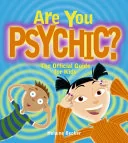
Are You Psychic?
 77
77

Are You Psychic?
Becker’s "Are You Psychic?" tackles the intriguing subject of ESP with a directness that belies its 2005 publication date. The author skillfully uses relatable scenarios, like the book's opening anecdote about a friend’s unexpected call, to ground abstract concepts in everyday life. This approach is the work's primary strength, making phenomena like telepathy feel less like fringe topics and more like extensions of common human experience. However, the book's simplification, while necessary for its target audience, means it doesn't deeply explore the theoretical underpinnings or the scientific skepticism surrounding ESP research, a limitation for older readers seeking more rigorous analysis. The interactive nature, prompting readers to consider their own "psychic" moments, is particularly effective. Ultimately, "Are You Psychic?" serves as a commendable gateway, sparking curiosity without overpromising definitive answers.
📝 Description
77
Helaine Becker's 2005 book, 'Are You Psychic?', introduces young readers to ESP.
Published in 2005, Helaine Becker's 'Are You Psychic?' acts as an introduction to Extra-Sensory Perception (ESP) and related topics. The book avoids complex jargon to explain concepts like telepathy and clairvoyance in a way that young people can understand. Becker structures the text with questions and interactive elements, prompting readers to think about their own intuitive experiences and perceptions of reality.
This book is designed for curious minds, roughly aged 8 to 14. It is suitable for students interested in psychology or the human mind. Educators and parents can also use it to help foster critical thinking about personal experiences and anecdotal evidence. Becker's work aims to be a simplified, age-appropriate counterpoint to more complex adult literature on psychic phenomena. It seeks to explain these ideas without the sensationalism often seen in media.
Published in 2005, 'Are You Psychic?' tapped into a continuing cultural interest in paranormal phenomena. While it does not engage directly with academic parapsychology, it offers an accessible entry point for younger audiences. The book simplifies concepts like ESP and psychic abilities, encouraging readers to consider their own perceptions and the potential of the human mind. It provides a framework for observing personal experiences, differentiating intuition from coincidence, and appreciating the mind's capabilities, even if definitive proof of psychic powers remains elusive.
💡 Why Read This Book?
• You will learn to distinguish between coincidence and potential precognitive events, a skill honed by analyzing the book's examples of unexpected phone calls and dream recalls. • You will gain an understanding of core ESP terms like telepathy and clairvoyance, directly referencing the book's chapter on defining these abilities. • You will be prompted to consider your own intuitive experiences through interactive exercises, encouraging personal reflection on the mind's subtler workings as presented in the 2005 publication.
⭐ Reader Reviews
Honest opinions from readers who have explored this book.
❓ Frequently Asked Questions
What is ESP as explained in Helaine Becker's "Are You Psychic?"
ESP, or Extra-Sensory Perception, refers to abilities to gain information not through the recognized senses but through means like telepathy (mind-to-mind communication), clairvoyance (seeing distant events), or precognition (knowing the future), as explored in the 2005 book.
Can children really be psychic?
The book "Are You Psychic?" suggests that while children may be more open to intuitive experiences, psychic abilities are not exclusive to any age group. It encourages readers of all ages to explore their own potential for ESP.
How does "Are You Psychic?" explain psychic phenomena?
Helaine Becker's 2005 book explains psychic phenomena by presenting them as extensions of human consciousness, encouraging readers to observe and question their own experiences rather than dismissing them solely as coincidence.
What is the difference between coincidence and psychic ability?
The book "Are You Psychic?" prompts readers to consider that while many coincidences are random, some might represent genuine psychic events like premonitions or telepathic connections, urging careful observation.
Is "Are You Psychic?" suitable for adults?
While written for younger readers, the book's clear explanations of ESP concepts like telepathy and clairvoyance make it a useful starting point for adults seeking a simple introduction to the topic, first published in 2005.
What are some examples of ESP discussed in the book?
The book "Are You Psychic?" discusses examples such as knowing who is calling before looking at the phone, having dreams that later come true (precognition), or experiencing a strong sense of a friend's presence (telepathy).
🔮 Key Themes & Symbolism
Extra-Sensory Perception Defined
The book meticulously breaks down the concept of ESP, moving beyond a vague notion to define specific categories like telepathy, clairvoyance, and precognition. Becker uses relatable scenarios, such as the immediate recognition of a caller's identity, to illustrate how these phenomena might manifest in everyday life. The 2005 publication date places it within a continuing cultural dialogue about the mind's potential, offering accessible definitions that empower young readers to identify and question their own intuitive experiences.
The Role of Intuition
Becker positions intuition not as a magical gift but as a potentially measurable aspect of human perception. The work encourages readers to pay attention to gut feelings, sudden insights, or uncanny knowledge, prompting them to consider if these are mere chance occurrences or indicators of deeper psychic sensitivity. This perspective invites a more mindful approach to subjective experiences, fostering an environment where the subtle whispers of intuition are acknowledged and explored.
Distinguishing Phenomena
A core theme is the critical task of differentiating between genuine psychic events and simple coincidence. The book provides a framework for readers to analyze their own experiences, asking them to consider frequency, context, and emotional impact. By posing questions rather than offering absolute answers, Becker cultivates a spirit of inquiry, encouraging critical thinking about anecdotal evidence related to ESP and other unexplained occurrences.
Exploring the Mind's Potential
Ultimately, "Are You Psychic?" serves as an invitation to explore the vast, often uncharted territory of the human mind. It suggests that awareness of potential psychic abilities can lead to a richer understanding of oneself and the world. The interactive nature of the book encourages a personal journey of discovery, empowering readers with the tools to investigate the mysteries of consciousness and perception.
💬 Memorable Quotes
Direct passages from the work, attributed to the author.
“Imagine that you are sitting at your desk, doing your homework. All of a sudden, the image of a friend who you haven't seen in a very long time pops into your mind.”
— This opening sets an immediate, relatable scene, drawing the reader into the possibility of psychic connection by grounding it in a common, everyday experience before introducing the concept of ESP.
“What is Extra Sensory Perception (ESP)?”
— This direct question frames the central inquiry of the book, signaling its purpose to explain and explain the concept of abilities beyond the five traditional senses.
“Do psychic powers really exist, or can they be explained?”
— This question highlights the book's balanced approach, acknowledging the debate surrounding psychic powers and encouraging readers to consider both their potential existence and alternative explanations.
“A few minutes later, the phone rings. Surprise! It's that very same friend calling!”
— This narrative turn immediately follows the imagined scenario, presenting a potential instance of precognition or telepathy as a direct consequence, blurring the line between imagination and perceived reality.
“Author Helaine Becker pairs mysteries of the mind with the natural curiosity of savvy young readers in this interactive guide.”
— This description emphasizes the book's target audience and its pedagogical method, highlighting its role as an engaging, interactive tool for exploring complex psychological and potentially paranormal topics.
🌙 Esoteric Significance
Tradition
While not explicitly tied to a single esoteric lineage like Hermeticism or Theosophy, "Are You Psychic?" functions as an entry point into broader metaphysical discussions about consciousness and perception. It aligns with the general esoteric interest in phenomena beyond the materialist worldview, encouraging an exploration of subjective experience and potential non-physical influences. Its approach is more akin to philosophical inquiry into the mind's capabilities than adherence to a specific ritualistic or doctrinal tradition.
Symbolism
The book primarily utilizes the 'phone call' as a symbol for unexpected connection and potential precognition or telepathy, representing a bridge between minds or an awareness of future events. The 'image of a friend' serves as a visual symbol for a thought or premonition manifesting. These symbols are employed not within a complex symbolic system but as straightforward illustrations of ESP concepts for young readers.
Modern Relevance
Contemporary interest in mindfulness, intuition, and the potential of the subconscious mind carries the exploratory spirit of "Are You Psychic?". While the book predates the widespread digital exploration of these topics, its core message—encouraging curiosity about one's inner experiences—speaks to modern wellness and self-discovery movements. Thinkers and practitioners focusing on intuition development or subjective consciousness studies might see this work as a foundational text for initiating such discussions.
👥 Who Should Read This Book
• Young readers aged 8-14 who are beginning to question the nature of reality and possess a natural curiosity about unexplained phenomena like telepathy. • Educators and parents seeking age-appropriate resources to introduce concepts of psychology, intuition, and critical thinking about anecdotal evidence. • Individuals interested in a gentle, non-intimidating introduction to the basics of ESP, such as clairvoyance and precognition, without looking at complex theories.
📜 Historical Context
Published in 2005, Helaine Becker's "Are You Psychic?" arrived amidst a sustained public interest in paranormal topics, often fueled by popular culture. While academic parapsychology had seen peaks and valleys since the mid-20th century, with figures like J.B. Rhine conducting extensive research on ESP, books like Becker's aimed to democratize these concepts for a younger demographic. It offered a simplified, accessible introduction, distinct from the more academic or esoteric texts available. The work did not engage directly with contemporary academic debates or specific critical receptions from scholars like Martin Gardner, who famously debunked many psychic claims. Instead, it tapped into a prevailing curiosity about the mind's potential, presenting concepts like telepathy and precognition in an age-appropriate, non-sensationalist manner.
📔 Journal Prompts
The sudden image of a friend, followed by their call: document a similar personal experience of uncanny timing.
Analyzing telepathy: describe a situation where you felt you knew what someone else was thinking.
Precognition in dreams: record a dream that seemed to foretell a real-life event.
Observing intuition: note down instances where a gut feeling proved accurate or inaccurate.
ESP explanations: consider if a specific event was coincidence or something more, using the book's prompts.
🗂️ Glossary
Extra-Sensory Perception (ESP)
The supposed ability to acquire information by means not involving the known five senses; includes phenomena like telepathy, clairvoyance, and precognition.
Telepathy
The direct communication of thoughts or feelings between minds without using the normal senses.
Clairvoyance
The ability to perceive events or objects beyond the normal range of sight, often involving distant locations or hidden information.
Precognition
The ability to perceive or know future events before they happen, often experienced as a premonition or a prophetic dream.
Psychic
Relating to or denoting supposed psychic phenomena or powers; possessing or exhibiting such powers.
Coincidence
A remarkable concurrence of events or circumstances that have no apparent causal connection.
Intuition
The ability to understand something immediately, without the need for conscious reasoning; a 'gut feeling'.
This book appears in 2 collections
🔮 Readers Also Liked
Browse all →








From the “Scrying” Collection
View all →







More Free Occult Philosophy Books
View all →