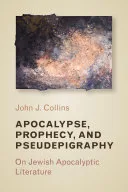
Apocalypse, Prophecy, and Pseudepigraphy
 76
76

Apocalypse, Prophecy, and Pseudepigraphy
John J. Collins’s Apocalypse, Prophecy, and Pseudepigraphy offers a dense, scholarly examination of ancient Jewish apocalyptic thought. The strength of this collection lies in its meticulous analysis and the synthesis of Collins’s extensive research over a decade and a half. For instance, his discussion of the relationship between the prophet Daniel and the broader apocalyptic movement provides crucial historical grounding. A potential limitation for some readers may be the sheer academic density; this is not an entry-level text. Collins’s chapter on the pseudepigraphic nature of many apocalyptic texts, however, is essential for understanding how authority was constructed in antiquity. The work ultimately serves as a vital resource for specialists in the field.
📝 Description
76
John J. Collins' 2015 collection synthesizes fifteen years of scholarship on Jewish apocalyptic texts.
This volume gathers nineteen essays by John J. Collins, a prominent scholar of the Jewish apocalyptic tradition. The essays, written over fifteen years, focus on texts dealing with eschatological themes and divine revelation. Collins examines the historical and literary contexts of these writings, particularly from the Second Temple period through early Christianity. He analyzes how prophecies and visions served as responses to persecution, exile, and messianic expectations during times of intense religious and political upheaval. The scholarship acknowledges critical methodologies from figures like Albert Schweitzer and later scholars who studied the social and political roles of apocalyptic thought.
The book dissects key components of apocalyptic literature. These include the function of divine inspiration, the character of prophetic oracles, and the practice of pseudepigraphy, where revered ancient figures are credited as authors. Collins investigates the connection between prophecy and apocalypticism, showing how these genres expressed ideas about cosmic conflict and eventual salvation. The collection is intended for scholars of ancient Judaism and early Christianity, theologians, and advanced students interested in the origins and development of apocalyptic literature, especially texts like Daniel and Revelation.
The study of apocalyptic literature, as presented in this collection, engages with traditions that envision divine intervention in human history and the revelation of future events. These texts often emerge during periods of crisis, offering a framework for understanding suffering and hope through visions and prophecies attributed to ancient figures. The concept of pseudepigraphy, central to many of these works, highlights a method of conveying authoritative messages through revered historical personalities, a practice found in various esoteric and religious traditions seeking to imbue their teachings with antiquity and legitimacy.
💡 Why Read This Book?
• Gain a nuanced understanding of the historical development of apocalyptic literature, as explored through Collins's analysis of texts emerging from the Second Temple period. • Grasp the function of pseudepigraphy in ancient Israelite society, specifically how it lent authority to prophetic messages, a concept detailed in the essays. • Differentiate between prophecy and apocalypticism by examining their respective literary features and historical contexts, as presented in the sections on 'Prophecy' and 'Apocalypse'.
⭐ Reader Reviews
Honest opinions from readers who have explored this book.
❓ Frequently Asked Questions
What is the primary focus of John J. Collins's work in Apocalypse, Prophecy, and Pseudepigraphy?
The book focuses on the Jewish apocalyptic tradition, exploring the historical, literary, and theological dimensions of texts that contain visions of the end times, divine judgment, and future salvation.
When was Apocalypse, Prophecy, and Pseudepigraphy first published?
The collection was first published on October 3, 2015, bringing together essays written over the preceding fifteen years.
How does this book relate to Collins's previous work, The Apocalyptic Imagination?
This volume complements and enriches The Apocalyptic Imagination by presenting more recent scholarship and previously unpublished contributions, further developing themes Collins is known for.
What does the term 'pseudepigraphy' mean in the context of this book?
Pseudepigraphy refers to the practice of attributing writings to an ancient, revered author (e.g., Enoch or Moses) to lend them authority, a common feature in apocalyptic literature discussed extensively.
Who would benefit most from reading this collection of essays?
Scholars of ancient religion, biblical studies, theology, and students of the Jewish apocalyptic tradition will find this collection invaluable for its in-depth analysis and comprehensive scope.
What historical periods are primarily covered by the essays?
The essays primarily cover the Second Temple period and early Christianity, a critical era for the development of apocalyptic thought and literature.
🔮 Key Themes & Symbolism
The Nature of Apocalyptic Vision
This theme examines the characteristic visions, dreams, and symbolic language found in apocalyptic texts. Collins analyzes how these literary devices conveyed messages of divine revelation, cosmic conflict, and future vindication. The work explores the psychological and social conditions that might foster such visionary experiences, connecting them to periods of crisis and persecution within ancient Israelite society.
Prophecy and Apocalypticism
Collins differentiates and relates the genres of prophecy and apocalypticism. While prophecy often addresses immediate historical concerns, apocalyptic literature tends to present a more cosmic, dualistic worldview with elaborate visions of the end times. The essays investigate how apocalyptic writers built upon and sometimes transformed earlier prophetic traditions, using them to interpret contemporary suffering and offer hope for a divinely ordained future.
The Function of Pseudepigraphy
A significant focus is placed on pseudepigraphy, the practice of falsely attributing authorship to ancient figures. Collins explains how this technique served to imbue texts with authority and legitimacy, especially during times when new religious ideas were emerging. The collection analyzes specific instances of pseudepigraphy within canonical and non-canonical apocalyptic works.
Messianic Expectations
The volume examines the diverse messianic expectations present in ancient Judaism, particularly as articulated through apocalyptic literature. It examines how visions of a future deliverer, divine intervention, and the establishment of a new kingdom shaped the eschatological outlook of various groups. Collins traces the evolution of these ideas and their impact on subsequent religious developments.
💬 Memorable Quotes
Direct passages from the work, attributed to the author.
“The apocalyptic imagination is not a monolithic phenomenon.”
— This interpretation highlights that apocalyptic thought and literature were not uniform but diverse, evolving, and context-dependent, reflecting various historical experiences and theological perspectives.
“Pseudepigraphy was a common literary convention.”
— This suggests that attributing works to famous ancient figures was a widespread and accepted practice in antiquity, used to enhance credibility and connect new ideas to established traditions.
“Apocalyptic literature often arises in times of crisis.”
— This observation points to a strong correlation between periods of social, political, or religious upheaval and the production of texts that offer visions of divine intervention and future hope.
“The boundary between prophecy and apocalypticism is fluid.”
— This indicates that while distinct, the genres of prophecy and apocalypticism share common roots and influence, often overlapping in their concerns, themes, and literary strategies.
“Visions served as a vehicle for divine communication.”
— This interpretation underscores the role of visionary experiences in apocalyptic texts as a primary means by which divine messages, judgments, and future plans were understood to be revealed to humanity.
🌙 Esoteric Significance
Tradition
This work primarily engages with the esoteric dimensions of ancient Judaism, specifically the development of apocalyptic literature. While not strictly within a later formalized esoteric lineage like Hermeticism or Kabbalah, it explores the roots of visionary traditions, divine revelation, and eschatological expectation that would later influence these streams. Collins examines how sacred texts were interpreted and reinterpreted to convey hidden knowledge and divine plans, a core concern in many esoteric traditions.
Symbolism
Key symbols analyzed include angelic mediators, cosmic journeys through heavenly realms, and elaborate eschatological timelines. These symbols function not merely as narrative devices but as conduits for conveying divine secrets about the cosmos, history, and the ultimate fate of humanity. The imagery of divine judgment and the establishment of a new, perfected world order are central motifs, reflecting a deep-seated yearning for transcendent justice.
Modern Relevance
Contemporary scholars and esoteric practitioners interested in the origins of Western esotericism, Gnosticism, and Kabbalistic thought find Collins's work indispensable. His meticulous analysis of apocalyptic texts provides foundational context for understanding the development of mystical interpretations of scripture and the concept of hidden knowledge. Thinkers concerned with the social and psychological underpinnings of prophetic and visionary movements also draw upon his research.
👥 Who Should Read This Book
• Scholars of Second Temple Judaism and early Christianity seeking rigorous textual analysis and historical context for apocalyptic literature. • Theologians and religious historians interested in the development of eschatological thought and its impact on Western religious traditions. • Advanced students of comparative religion or biblical studies requiring a comprehensive overview of key concepts like prophecy and pseudepigraphy.
📜 Historical Context
Apocalypse, Prophecy, and Pseudepigraphy engages with the intellectual range of the Second Temple period (c. 516 BCE – 70 CE) and early Christianity, a time characterized by significant political subjugation, religious diversity, and the flourishing of esoteric traditions. The collection situates itself within ongoing scholarly debates, building upon the foundational work of scholars like Albert Schweitzer and engaging with contemporary analyses of apocalypticism's social and political functions. Collins's essays reflect the shift in scholarship towards understanding these texts not merely as speculative prophecies but as responses to historical pressures and expressions of group identity. The work implicitly contrasts with earlier, more literalistic interpretations of biblical prophecy, emphasizing the literary and historical complexities involved. The period saw the rise of various Jewish sects and the development of distinct theological systems, many of which found expression in the apocalyptic genre.
📔 Journal Prompts
The function of pseudepigraphy in ancient texts.
Visions as a vehicle for divine communication.
The relationship between historical crisis and apocalyptic writing.
The symbolic meaning of angelic mediation in revelations.
The concept of the 'apocalyptic imagination' as a framework.
🗂️ Glossary
Apocalyptic Literature
A genre of Jewish and early Christian writings characterized by visions, symbolic language, and revelations about the end of times, divine judgment, and the establishment of a new cosmic order.
Pseudepigraphy
The practice of attributing authorship of a work to a revered figure from the past (e.g., Enoch, Moses) to lend it authority and legitimacy, common in ancient religious literature.
Second Temple Period
The era of Jewish history from the rebuilding of the Temple in Jerusalem (c. 516 BCE) to its destruction by the Romans (70 CE), a period of significant theological and literary development.
Eschatology
The branch of theology concerned with death, judgment, and the final destiny of the soul and of humankind; the study of end-times events.
Prophecy
The utterance or delivery of utterances purporting to be of divine origin; a prediction of future events, often delivered by a prophet.
Visions
In apocalyptic literature, divinely inspired or supernatural experiences perceived by a seer, often conveying symbolic messages about cosmic events or future occurrences.
Messianism
Belief in a messiah, a divinely appointed figure who will restore a kingdom, bring salvation, or usher in a new era of peace and justice.