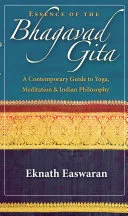
Essence of the Bhagavad Gita
 83
83

Essence of the Bhagavad Gita
Eknath Easwaran's distillation of the Bhagavad Gita offers a remarkably clear lens through which to view this complex scripture. His strength lies in translating the Gita's ancient dialogues between Krishna and Arjuna into accessible, actionable principles for contemporary life. The focus on resolving conflict and finding unity, particularly as explored in the concept of 'yoga' as a path of action, is handled with sensitivity. However, the work sometimes simplifies the profound philosophical nuances of the original text; for instance, the intricate metaphysics of karma yoga could benefit from deeper explication beyond its immediate practical application. Easwaran's interpretation of Arjuna's crisis on the battlefield of Kurukshetra as a metaphor for inner struggle is compelling, but readers seeking a scholarly dissection of the text's historical layers might find it wanting. It is a valuable primer for the spiritually inclined, offering a serene path to understanding.
📝 Description
83
Eknath Easwaran's 2011 book distills the Bhagavad Gita's core teachings for contemporary life.
Essence of the Bhagavad Gita presents Eknath Easwaran's interpretation of the ancient Indian scripture's primary philosophical and spiritual messages. Easwaran aimed to make the Gita's complex ideas understandable and applicable to a modern audience. The book focuses on how the text's wisdom can help individuals address everyday challenges and find greater harmony.
This work is for those interested in Eastern spirituality and major religious texts who might find the original Bhagavad Gita overwhelming. It offers insights into the scripture's teachings on self-understanding, dealing with conflict, and achieving a balanced life. Readers exploring yoga or comparative religion will also find value in its accessible approach.
The Bhagavad Gita, composed between the 5th and 2nd centuries BCE, is a central text in Hinduism, embedded within the epic Mahabharata. Easwaran's interpretation, appearing in 2011, tapped into a global interest in Eastern philosophies. His approach often secularizes or universalizes spiritual concepts, aligning with a trend to connect ancient wisdom with modern psychological and existential questions.
💡 Why Read This Book?
• Gain practical strategies for resolving inner and outer conflicts by understanding the Gita's principles of action and detachment, as presented in Easwaran's interpretation of Krishna's teachings. • Explore the concept of 'maya' and the illusion of separateness, learning how to perceive the underlying unity of life, a core theme Easwaran highlights from the scripture's 2nd century BCE origins. • Discover the multifaceted meaning of 'yoga' beyond physical exercise, recognizing it as a path to self-identity and harmony, directly linked to the Bhagavad Gita's central message.
⭐ Reader Reviews
Honest opinions from readers who have explored this book.
❓ Frequently Asked Questions
What is the primary message of the Bhagavad Gita according to Eknath Easwaran?
According to Easwaran's Essence of the Bhagavad Gita, the primary message is how to resolve personal conflicts and live in harmony with the deeper unity of life through the practice of yoga and understanding its principles.
When was Eknath Easwaran's Essence of the Bhagavad Gita first published?
Eknath Easwaran's Essence of the Bhagavad Gita was first published on December 13, 2011, serving as a companion to his earlier translation of the Bhagavad Gita.
How does Easwaran explain the concept of yoga in this book?
Easwaran explains yoga not just as physical discipline, but as a path to union and inner peace, emphasizing its role in living harmoniously and resolving conflicts by connecting with the fundamental unity of existence.
What does the book say about the nature of reality?
The book explores the nature of reality by discussing the concept of 'maya' (illusion) and the feeling of separateness it creates, encouraging readers to look beyond superficial distinctions to perceive a deeper unity.
Is this book a direct translation of the Bhagavad Gita?
No, Essence of the Bhagavad Gita is not a direct translation. It is an exploration of the essential themes and principles of the Bhagavad Gita, presented in a modern context by Eknath Easwaran.
Who was Eknath Easwaran?
Eknath Easwaran (1910-1999) was a spiritual teacher and author who presented Indian philosophy and meditation techniques to Western audiences, known for his best-selling translations and commentaries on texts like the Bhagavad Gita.
🔮 Key Themes & Symbolism
Unity and Separateness
The work dissects the illusion of separateness ('maya') that clouds our perception of reality. Easwaran posits that the Bhagavad Gita's profound teachings, originating from ancient India, guide individuals towards recognizing the underlying unity of all existence. This realization is presented as the antidote to conflict and suffering, fostering a sense of interconnectedness that transcends individual ego.
The Search for Identity
Easwaran interprets the Gita as a profound exploration of self-discovery. The book guides readers in understanding that true identity is not found in transient external factors but in the stable, inner self. This pursuit involves looking beyond the ego and societal roles to connect with a deeper, more authentic sense of being, a concept central to the scripture's philosophical underpinnings.
Yoga as Harmony
Essence of the Bhagavad Gita redefines yoga beyond mere physical postures, presenting it as a comprehensive path to inner peace and harmonious living. Easwaran emphasizes the Gita's message of 'karma yoga'—performing actions without attachment to results—as a means to resolve internal conflicts and align oneself with the natural order of the universe.
Conflict Resolution
A central tenet explored is how the Bhagavad Gita offers a framework for resolving both internal psychological conflicts and external disputes. By understanding the nature of the self and the interconnectedness of all beings, as elucidated in this 2011 publication, individuals can approach life's challenges with greater equanimity and wisdom.
💬 Memorable Quotes
Direct passages from the work, attributed to the author.
“The Bhagavad Gita shows how to live in harmony with the deep unity of life.”
— This statement captures the book's core aim: to translate the ancient scripture's wisdom into practical guidance for achieving inner peace and outward accord by recognizing universal interconnectedness.
“True identity is found not in the ego, but in the deep self.”
— This concept emphasizes the Gita's teachings on self-realization. It suggests that a stable and authentic sense of self lies beyond transient personality traits and societal roles.
“Yoga is the path to resolving our conflicts.”
— This interpretation frames yoga as more than physical exercise, presenting it as a spiritual discipline that brings internal balance and aids in navigating life's challenges effectively.
“The Gita places its teachings in a modern context.”
— This reflects Easwaran's approach in the book, aiming to make the ancient wisdom of the Bhagavad Gita relevant and applicable to contemporary readers' lives and concerns.
💡 Key Ideas
Editorial paraphrase of the work's core concepts — not direct quotes.
The illusion of separateness prevents us from seeing reality.
Easwaran highlights a fundamental obstacle to spiritual understanding presented in the Gita. This quote points to the ego's tendency to create divisions, obscuring the truth of a unified existence.
🌙 Esoteric Significance
Tradition
While the Bhagavad Gita is a foundational text of Hinduism, Easwaran's interpretation often appeals to perennialist and universalist philosophies that find common ground across diverse spiritual traditions. His emphasis on inner unity, detachment, and self-realization aligns with broader mystical and esoteric currents, including elements found in Neoplatonism and certain interpretations of Gnosticism, which also explore the illusory nature of the material world and the search for a higher truth.
Symbolism
The narrative itself is rich with symbolism. Krishna, the divine charioteer, represents the indwelling divine or higher consciousness guiding the individual soul (Arjuna) through the battlefield of life. The battlefield of Kurukshetra symbolizes the inner struggle between duty and desire, between spiritual aspiration and worldly entanglement. The chariot and its horses can represent the body, mind, senses, and intellect, all needing to be controlled by the driver (reason or self).
Modern Relevance
Easwaran's work on the Gita continues to influence contemporary mindfulness practices, secular ethics, and personal development. Thinkers and practitioners interested in non-dual philosophies, conscious living, and the application of ancient wisdom to modern stress find his accessible interpretations valuable. His emphasis on practical application connects with modern psychological approaches to well-being and conflict resolution, bridging ancient spiritual insights with contemporary needs.
👥 Who Should Read This Book
• Individuals new to the Bhagavad Gita seeking a clear, concise overview of its core philosophical and spiritual messages, presented without excessive academic jargon. • Seekers of practical wisdom interested in applying Eastern concepts of self-identity, detachment, and inner harmony to their daily lives and personal challenges. • Students of comparative religion and philosophy looking to understand a popular modern interpretation of a key Hindu scripture, particularly its themes of unity and conflict resolution.
📜 Historical Context
The Bhagavad Gita, the source text for Easwaran's Essence, emerged within the vast Sanskrit literary tradition of ancient India, likely between the 5th and 2nd centuries BCE. Its integration into the epic Mahabharata positioned it within a complex philosophical and narrative landscape, influencing schools of thought like Vedanta. Easwaran's interpretation, published in 2011, arrived at a time of significant global interest in Eastern spirituality, paralleling movements that sought to universalize or secularize these traditions for Western audiences. This period saw many scholars and spiritual leaders engaging with texts like the Gita, often juxtaposing them with Western philosophical traditions or psychological theories. While Easwaran's approach is accessible, it stands apart from more critical academic analyses that might focus on the historical development or textual variants of the Gita, such as those explored by scholars like Jan Gonda. Easwaran's work aims for spiritual upliftment rather than strict historical or philological scholarship.
📔 Journal Prompts
Arjuna's dilemma on the battlefield: how does it mirror your own internal conflicts?
The concept of 'maya' and the illusion of separateness: identify one instance where you acted from a sense of division.
Krishna's guidance on karma yoga: how can action without attachment be practiced in your daily tasks?
The search for identity: what external roles do you identify with, and how might they differ from your deeper self?
The principle of unity: reflect on a moment you felt truly connected to something larger than yourself.
🗂️ Glossary
Bhagavad Gita
A foundational scripture of Hinduism, forming a dialogue between Prince Arjuna and Lord Krishna, embedded within the epic Mahabharata. It explores duty, dharma, and the path to spiritual liberation.
Maya
A Sanskrit term referring to illusion, delusion, or the phenomenal world that conceals the true nature of reality. It is often understood as the cosmic power that creates the appearance of multiplicity and separateness.
Yoga
In the context of the Bhagavad Gita, yoga signifies a path or discipline leading to union, typically with the divine or the ultimate reality. It encompasses various forms, including karma yoga (action), bhakti yoga (devotion), and jnana yoga (knowledge).
Karma Yoga
The yoga of action. It is a path described in the Bhagavad Gita where one performs their duties and actions without attachment to the results, dedicating the fruits of their labor to a higher purpose.
Dharma
A complex concept in Indian religions, often translated as duty, righteousness, law, or one's essential nature. In the Bhagavad Gita, it relates to fulfilling one's role and responsibilities in accordance with cosmic order.
Eknath Easwaran
The author and interpreter of this work, a spiritual teacher (1910-1999) known for presenting Indian philosophical and meditative traditions to a Western audience through accessible writings and lectures.
Arjuna
The central human protagonist in the Bhagavad Gita. A warrior prince who faces a moral and existential crisis before the climactic battle of the Mahabharata, receiving spiritual instruction from Krishna.