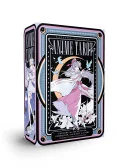
Anime Tarot Deck and Guidebook
 71
71

Anime Tarot Deck and Guidebook
Natasha Yglesias's Anime Tarot Deck and Guidebook attempts a bold fusion, and for the most part, it succeeds in presenting Tarot through a distinctly modern, pop-culture lens. The strength lies in its ability to leverage the visual language and archetypes of anime to illuminate traditional Tarot meanings, making them feel fresh and accessible. For instance, the pairing of The Empress with a nurturing anime protagonist effectively conveys the card's themes of abundance and creative power. However, the deck’s reliance on specific anime tropes might, at times, overshadow the deeper, more nuanced interpretations found in older decks, potentially limiting its appeal to those unfamiliar with the chosen series. The guidebook, while informative, occasionally leans more towards fan commentary than rigorous esoteric explication. Nevertheless, it offers a vibrant and engaging entry point into Tarot for a new generation.
This deck is a playful yet insightful bridge between fandom and esoteric practice.
📝 Description
71
Natasha Yglesias published the Anime Tarot Deck and Guidebook in 2022, recasting the 78-card system.
This 2022 deck and guidebook by Natasha Yglesias reinterprets the traditional 78-card Tarot. It blends classic Tarot imagery and meanings with the visual styles and storytelling common in modern anime. The goal is to make Tarot approachable for a new audience by connecting cards to familiar anime characters and themes.
The deck appeals to those who enjoy both Tarot and anime culture. It is suitable for Tarot readers seeking new interpretations, anime fans interested in esoteric ideas, and people wanting to combine intuitive practices with popular culture. It can serve as an introduction for Tarot beginners, using relatable anime figures to explain the cards. Experienced practitioners might use it as a tool to explore different symbolic systems.
While the fusion of popular culture with esoteric traditions has historical precedent, Yglesias's 2022 work arrives in an era shaped by digital media and fandom. Unlike early 20th-century occultists who drew on then-current esoteric thought for their decks, such as Aleister Crowley's *Thoth Tarot*, Yglesias taps into the global appreciation for anime. This demonstrates how archetypal narratives continue to resonate across different media forms.
💡 Why Read This Book?
• Gain a fresh perspective on traditional Tarot archetypes by seeing them reflected in beloved anime characters and narrative structures, as exemplified by the interpretations of cards like The Empress. • Explore how the visual storytelling conventions of modern anime, a medium that gained significant global traction throughout the late 20th and early 21st centuries, can offer unique insights into Tarot symbolism. • Discover practical applications for divination and self-reflection through a deck designed for contemporary audiences, making the 78-card system more approachable than traditional decks.
⭐ Reader Reviews
Honest opinions from readers who have explored this book.
❓ Frequently Asked Questions
What is the Anime Tarot Deck and Guidebook?
It is a 78-card Tarot deck and accompanying guidebook published in 2022 by Natasha Yglesias. It reimagines traditional Tarot imagery and meanings using characters and themes from modern anime.
Who is the author of the Anime Tarot Deck and Guidebook?
The author is Natasha Yglesias. The deck was first published on July 12, 2022.
Does the deck follow traditional Tarot meanings?
Yes, the deck adheres to the core meanings of the 78 Tarot cards but interprets them through the lens of anime archetypes and symbolism, offering a contemporary perspective.
Is this deck suitable for beginners?
Absolutely. The use of familiar anime characters and a clear guidebook makes it an accessible entry point for those new to Tarot who are also fans of anime culture.
What kind of anime is represented in the deck?
The deck draws inspiration from various popular anime series and common character archetypes found within the genre, aiming for broad recognition among fans.
What is the publication date of the Anime Tarot Deck and Guidebook?
The book was first published on July 12, 2022.
🔮 Key Themes & Symbolism
Archetypal Resonance
The deck explores how classic Tarot archetypes, such as The Magician or The Hermit, find modern expression in the diverse cast of anime characters. It posits that the narrative functions and symbolic roles of these characters mirror the wisdom embedded in the Tarot's Major and Minor Arcana. By aligning figures like a resourceful protagonist with The Magician, the work highlights themes of skill, will, and manifestation, offering a contemporary interpretation of these foundational esoteric concepts.
Pop Culture Divination
This theme centers on the adaptation of esoteric tools for contemporary audiences. The Anime Tarot Deck leverages the widespread popularity and visual vocabulary of anime, a medium that has seen exponential growth since the late 20th century, to make Tarot divination more accessible. It suggests that spiritual and intuitive practices can be effectively communicated through modern cultural touchstones, bridging the gap between ancient wisdom and present-day interests.
Narrative and Symbolism
The work examines the interplay between narrative structures in anime and the symbolic language of Tarot. Each card pairing aims to tell a micro-story or highlight a character dynamic that embodies the card's essence. For example, a conflict-driven narrative might be linked to The Tower, emphasizing sudden change and upheaval. This approach underscores how both Tarot and anime rely on potent symbols and compelling stories to convey deeper truths about the human condition.
Modern Spirituality
The deck and its accompanying guide represent a facet of modern spirituality that integrates personal interests and cultural affiliations with traditional esoteric practices. It caters to individuals seeking spiritual tools that reflect their lived experiences and aesthetic preferences, moving beyond purely historical or Western European frameworks. This reflects a broader trend toward personalized spirituality in the 21st century.
💬 Memorable Quotes
Direct passages from the work, attributed to the author.
“The power of the 78 cards of the Tarot is that they can nurture our spirituality in increasingly creative and modern ways.”
— This statement frames the Tarot not as a static system, but as a dynamic tool capable of evolving alongside cultural and technological advancements, highlighting its potential for ongoing relevance.
“And what better way to do that than by combining the classic symbolism of tarot with the fun and consistently appearing archetypes in anime?”
— This rhetorical question posits anime's archetypes as an ideal vehicle for reinterpreting Tarot, suggesting a natural synergy between the two forms of symbolic storytelling.
“In this creative deck, you’ll discover pairings like The Empress, a card representing femininity, beauty, nurturing, and abundance.”
— This highlights the deck's core mechanism: pairing specific Tarot cards with illustrative anime examples, using The Empress as a concrete instance of this interpretive strategy.
“Embrace the spiritual and intuitive power of tarot cards with your favorite modern anime characters and symbols.”
— This opening statement serves as an invitation, encouraging users to engage with Tarot's spiritual aspects through the familiar and enjoyable medium of anime.
“The Tarot is a mirror reflecting our inner world, and anime provides a vibrant canvas upon which to view those reflections.”
— This metaphorical interpretation positions the Tarot as a tool for introspection and anime as a visually rich medium that enhances self-discovery through relatable imagery.
🌙 Esoteric Significance
Tradition
This work does not strictly adhere to a single established esoteric tradition like Hermeticism or Kabbalah. Instead, it functions as a syncretic approach, drawing upon the universal archetypes present in Tarot, which have roots in various historical esoteric systems, and reinterpreting them through the lens of contemporary popular culture. It represents a modern manifestation of adapting ancient wisdom for new contexts, emphasizing accessibility and personal resonance over adherence to specific doctrinal lineages.
Symbolism
The deck translates core Tarot symbolism into anime aesthetics. For instance, the archetypal journey of The Fool, representing new beginnings and leaps of faith, might be depicted through an optimistic young protagonist starting an adventure. The Lovers card, traditionally symbolizing union and choice, could be represented by a key relationship or partnership within an anime narrative, highlighting themes of connection and significant decisions in a visually engaging format.
Modern Relevance
Contemporary practitioners of intuitive arts and those interested in cultural studies of spirituality are increasingly looking at how popular media can serve as conduits for esoteric knowledge. Thinkers and creators exploring the intersection of fandom, spirituality, and digital culture find value in works like this. It speaks to practices that emphasize personalization and the integration of all aspects of one's life, including entertainment preferences, into their spiritual toolkit.
👥 Who Should Read This Book
• Fans of anime seeking an accessible entry point into Tarot divination, who will appreciate seeing familiar characters and narrative tropes mapped onto the 78-card system. • Tarot enthusiasts looking for novel interpretations and creative approaches to the cards, moving beyond traditional imagery to engage with modern cultural expressions. • Individuals interested in the intersection of popular culture and esoteric symbolism, exploring how archetypes manifest across different media, from ancient traditions to 21st-century entertainment.
📜 Historical Context
Natasha Yglesias's Anime Tarot Deck and Guidebook, published in 2022, emerges within a cultural milieu vastly different from that of earlier Tarot revivals. While the late 19th and early 20th centuries saw figures like Arthur Edward Waite and Pamela Colman Smith collaborate on the Rider-Waite-Smith deck (1909), drawing heavily on Hermeticism and Rosicrucianism, Yglesias taps into the global phenomenon of Japanese anime. This period is characterized by the widespread accessibility of digital media and a fandom culture that actively reinterprets and remixes existing content. Unlike the more esoteric circles that might have engaged with Crowley's *Book of Thoth* (published posthumously in 1969), Yglesias's work finds its audience among millions of anime fans worldwide. This approach reflects a broader cultural trend of integrating popular entertainment with spiritual or self-exploratory practices, a stark contrast to the more academically or religiously focused esoteric movements of the past.
📔 Journal Prompts
The Fool's journey as depicted through an anime protagonist's initial leap of faith.
Reflecting on The Empress archetype within your favorite nurturing anime character.
Interpreting a difficult situation through the symbolism of The Tower in an anime context.
How does the concept of The Magician resonate with a skilled anime character's abilities?
Mapping the archetype of The Hermit onto a solitary, wise figure in anime.
🗂️ Glossary
Archetype
A universal, symbolic pattern or model of behavior and imagery found in the collective unconscious, as described by Carl Jung. In Tarot, archetypes represent fundamental human experiences and psychological states.
Major Arcana
The 22 Trump cards in a Tarot deck, representing significant life events, spiritual lessons, and major themes. They often depict archetypal figures and situations.
Minor Arcana
The 56 cards in a Tarot deck, divided into four suits (Wands, Cups, Swords, Pentacles/Coins). They typically represent day-to-day events, challenges, and circumstances.
Divination
The practice of seeking knowledge of the future or the unknown by supernatural means. Tarot cards are a common tool used for divination and self-reflection.
Anime
A style of Japanese animation characterized by colorful graphics, vibrant characters, and often fantastical themes, widely popular globally.
Tropes
Commonly recurring literary or dramatic devices, themes, or characters within a genre. Anime utilizes many distinct tropes that can be recognized by fans.
Esoteric
Intended for or likely to be understood by only a small number of people with a specialized knowledge or interest. Refers to hidden or secret knowledge, often spiritual or mystical.
This book appears in 1 collection
🔮 Readers Also Liked
Browse all →
From the “Archetypes” Collection
View all →
More Free Occult Philosophy Books
View all →