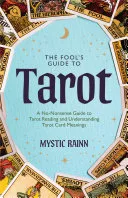
The Fools Guide to Tarot
 79
79

The Fools Guide to Tarot
Mystic Rainn’s *The Fool’s Guide to Tarot* arrives with a refreshing lack of pretension, immediately distinguishing itself from the often dense and overly spiritualized literature that dominates the subject. The author’s commitment to a "no-nonsense" approach is evident from the outset, framing Tarot reading as an accessible skill rather than an arcane mystery. The book’s strength lies in its directness and its grounding of the card meanings in relatable life experiences, particularly through the central metaphor of the Fool’s Journey. However, this very directness occasionally skirts the edges of oversimplification. For instance, while the 2024 publication date signifies a modern take, the detailed breakdown of the Major Arcana, while clear, sometimes lacks the nuanced historical or mythological depth that scholars like Gertrude Moakley explored in her work on the Tarot. Nevertheless, for the intended audience—those seeking clarity without spiritual dogma—this guide offers a practical and engaging entry point. It’s a functional toolkit for demystifying the cards.
📝 Description
79
Mystic Rainn’s 2024 Fool's Guide to Tarot strips away jargon for practical self-reflection.
This book approaches Tarot directly, focusing on using the 78 cards as tools for everyday self-reflection rather than relying on complex esoteric language. Author Mystic Rainn structures the learning process around the archetypal "Fool's Journey," presenting each reader as a figure embarking on a path of discovery through the cards. The guide aims to make Tarot reading understandable and less intimidating for a contemporary audience, incorporating honesty and humor.
It is written for individuals who find traditional Tarot texts too complicated or formal. The book suits beginners who need a clear, step-by-step method. It also appeals to those with some Tarot experience who want to return to the fundamental principles of card interpretation without getting caught up in elaborate rituals. Readers seeking a straightforward guide that acknowledges life's imperfections will appreciate this direct style.
Published in 2024, this guide reflects a shift in Tarot interpretation seen since the late 20th century. This period moved interpretations from purely predictive or occult matters toward psychological and archetypal perspectives, influenced by thinkers like Carl Jung. Mystic Rainn’s work follows this tradition, aiming to make Tarot accessible beyond specialized circles. It connects to earlier efforts in the 20th century to simplify and broaden Tarot's appeal.
💡 Why Read This Book?
• Gain a practical framework for interpreting Tarot without esoteric jargon, directly referencing the "Fool's Journey" concept to understand the Major Arcana’s progression through life stages. • Develop a grounded approach to card reading by learning how to connect Tarot meanings to your personal experiences, a method encouraged throughout the guide’s straightforward explanations. • Master the core meanings of the 78 cards through clear, accessible language, moving beyond traditional spiritual interpretations to a more direct, honest engagement with the cards as tools for self-reflection.
⭐ Reader Reviews
Honest opinions from readers who have explored this book.
❓ Frequently Asked Questions
What is the primary philosophy behind The Fool's Guide to Tarot?
The book champions a no-nonsense, honest approach to Tarot reading, emphasizing practical application and self-reflection over complex spiritual dogma. It frames the learning process as a personal journey, much like the archetypal "Fool's Journey".
Is this book suitable for complete beginners with no prior Tarot knowledge?
Yes, it is specifically designed for beginners. It avoids arcane terminology and provides a clear, step-by-step method for understanding the 78 cards and their meanings.
How does The Fool's Guide to Tarot differ from other Tarot books published around 2024?
It distinguishes itself by focusing on relatable, straightforward explanations and humor, aiming to demystify Tarot rather than add layers of spiritual complexity. It prioritizes practical use in everyday life.
Does the book cover both the Major and Minor Arcana?
Yes, the guide covers all 78 cards of the Tarot deck, offering interpretations and guidance for both the Major and Minor Arcana.
What is the significance of 'The Fool' in this book?
The Fool represents the reader embarking on their Tarot journey. The book uses the 'Fool's Journey' narrative arc, particularly through the Major Arcana, as a central metaphor for personal growth and life experiences.
🔮 Key Themes & Symbolism
The Fool's Journey Archetype
This central theme positions the reader as 'The Fool,' starting a path of self-discovery through the Tarot deck. The Major Arcana are presented as stages of this journey, mirroring universal life experiences and personal growth. This narrative structure provides a relatable framework for understanding complex card symbolism, encouraging readers to see their own lives reflected in the archetypal progression from innocence to wisdom.
No-Nonsense Practicality
A core tenet of the guide is its rejection of overly spiritualized or obscure language often found in Tarot literature. The focus is on delivering clear, actionable advice for reading the cards in a practical, honest manner. This theme emphasizes the Tarot as a tool for everyday insight and decision-making, explaining the practice for newcomers and skeptics alike.
Humor and Relatability
Mystic Rainn injects humor and a down-to-earth tone throughout the book, acknowledging the messiness and unpredictability of life. This approach aims to make Tarot reading less intimidating and more accessible. By embracing a relatable voice, the guide encourages readers to engage with the cards and their own life path with honesty and a sense of perspective.
Personal Growth Through Insight
The book frames Tarot reading as a vehicle for personal development. Rather than solely focusing on prediction, it encourages readers to use card interpretations as prompts for introspection and understanding their current circumstances. The goal is to foster self-awareness and empower individuals to navigate their life journeys with greater clarity and confidence.
💬 Memorable Quotes
Direct passages from the work, attributed to the author.
“Tarot isn't magic; it's a mirror.”
— This concise statement reframes Tarot from a mystical oracle into a psychological tool. It suggests that the cards reflect the querent's own inner world and current situation, emphasizing self-awareness over external pronouncements.
“Embrace the Fool's leap into the unknown.”
— This highlights the book's central metaphor, encouraging readers to approach life's uncertainties with courage and openness, much like the archetypal Fool begins their journey.
“Your life journey is the ultimate Tarot spread.”
— This interpretation emphasizes the connection between the cards and lived experience, suggesting that Tarot reading is most meaningful when integrated with personal growth and daily life.
💡 Key Ideas
Editorial paraphrase of the work's core concepts — not direct quotes.
Forget the fluff; get to the real meaning.
This quote directly addresses the book's anti-jargon stance, promising readers straightforward interpretations that cut through esoteric complexities to reveal practical insights.
Honesty, humor, and the Hermetic principles.
This paraphrased concept points to the book's blend of practical advice (honesty, humor) with underlying esoteric wisdom (Hermetic principles), suggesting a balanced approach to Tarot study.
🌙 Esoteric Significance
Tradition
This work departs from strict adherence to any single esoteric lineage, instead drawing broadly from the archetypal interpretations popularized in the 20th century, influenced by Jungian psychology. It eschews detailed Kabbalistic or Hermetic correspondences in favor of a more universally accessible 'Fool's Journey' narrative. Its tradition is one of modern popularization, making esoteric concepts palatable and practical for a wider audience.
Symbolism
The primary symbol is 'The Fool' himself, representing innocence, new beginnings, and the potential for growth through experience. The number '0' assigned to The Fool is significant, denoting both the beginning and the cyclical nature of the journey. Another key motif is the 'journey' itself, symbolizing the progression through life's challenges and lessons as depicted in the Major Arcana sequence.
Modern Relevance
Contemporary practices focusing on self-help, mindfulness, and personal development often draw on the archetypal framework presented here. Thinkers and practitioners who emphasize accessible spirituality and psychological insight, rather than rigid dogma, find resonance in this approach. It aligns with modern wellness trends that integrate introspection and self-discovery tools into daily life.
👥 Who Should Read This Book
• Beginners intimidated by dense esoteric texts who seek a clear, practical introduction to reading Tarot cards without complex rituals or jargon. • Individuals interested in self-reflection and personal growth who want to use Tarot as a tool for understanding their life experiences and making grounded decisions. • Those who appreciate a straightforward, honest, and humorous approach to spiritual or metaphysical subjects, preferring relatable content over abstract theories.
📜 Historical Context
Published in 2024, *The Fool's Guide to Tarot* arrives in an era saturated with accessible, often digitally-driven, esoteric content. Its direct, no-nonsense approach echoes a lineage of Tarot popularizers seeking to explain the cards, moving away from the occultist traditions of the early 20th century, exemplified by figures like Aleister Crowley and his Thoth Tarot. While the book doesn't explicitly engage with academic debates, its emphasis on psychological interpretation aligns with trends following the mid-20th century work of Carl Jung, who viewed archetypes in Tarot as reflections of the collective unconscious. The guide’s accessible language and focus on relatable life journeys distinguish it from more scholarly works like Gertrude Moakley's *The Tarot*, which meticulously traces the cards' historical evolution. In a landscape where Tarot apps and social media interpretations abound, Mystic Rainn's work offers a grounded, textual alternative, prioritizing practical application over fleeting digital trends.
📔 Journal Prompts
The Fool's initial leap: What current life situation feels like stepping into the unknown?
Reflecting on The Magician's tools: How can you better utilize your personal resources?
The High Priestess's intuition: What inner wisdom have you been overlooking?
The Emperor's structure: How can you bring more order to a chaotic aspect of your life?
The Wheel of Fortune's cycles: Identify a recent shift and your response to it.
🗂️ Glossary
The Fool's Journey
The archetypal narrative arc represented by the Major Arcana, symbolizing the path of personal growth, life experiences, and spiritual development from innocence to wisdom.
Major Arcana
The 22 trump cards of the Tarot deck, typically representing significant life lessons, archetypal figures, and major turning points in the 'Fool's Journey'.
Minor Arcana
The 56 cards of the Tarot deck divided into four suits (Wands, Cups, Swords, Pentacles), representing everyday events, challenges, and circumstances.
Spread
A specific arrangement of Tarot cards laid out for interpretation, designed to address particular questions or themes.
Querent
The person for whom a Tarot reading is performed; the individual seeking insight or guidance from the cards.
Archetype
A universally understood symbol, character, or pattern of behavior that recurs in mythology and literature, representing fundamental human experiences.