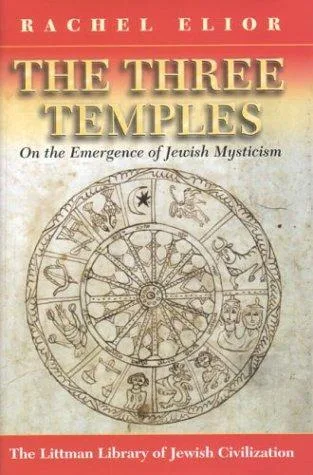
The Three Temples

 82
82

The Three Temples
Rachel Elior's The Three Temples presents a formidable scholarly argument regarding the symbolic architecture of divine ascent in early Jewish mysticism. Her strength lies in her meticulous engagement with Hekhalot literature and her ability to reconstruct the conceptual landscape of Merkavah mystics. The work meticulously traces the evolution of visionary experience, moving beyond simplistic interpretations to reveal the sophisticated symbolic language employed. A particular passage detailing the visionary ascent through the seven heavenly halls, and the associated dangers and divine names required for passage, stands out for its clarity and depth. However, the book's dense academic prose and reliance on specialized Aramaic and Hebrew texts can present a significant barrier to entry for those not already well-versed in the field. While invaluable for specialists, its accessibility is limited. Elior’s work remains a crucial, albeit challenging, contribution to understanding the roots of Jewish mystical traditions.
📝 Description
82
Rachel Elior's 2004 book examines early Jewish mysticism through the lens of visionary experience and divine ascent.
The Three Temples analyzes early Jewish mystical traditions, focusing on visionary experiences and the symbolic architecture of divine ascent. Rachel Elior reconstructs the conceptual frameworks ancient mystics used to describe encounters with the divine, drawing on extensive textual evidence. This work is deeply engaged with primary sources, providing a scholarly examination of how mystical traditions developed.
Intended for serious students and scholars of Jewish mysticism, Kabbalah, and esoteric religious history, this volume will appeal to those interested in the historical development of religious experience and the evolution of symbolic language in these traditions. Elior's study is an academic, text-based exploration of visionary states and sacred geography, rather than a general introduction.
Published in 2004, The Three Temples situates itself within ongoing academic debates about early mystical texts. It engages with the intellectual milieu that sought to understand the transition from prophetic visions to merkavah mysticism, contrasting this with later Kabbalistic systems. Elior's contribution builds upon earlier scholarship, offering new interpretations of these foundational texts.
This book situates itself within the study of merkavah mysticism, a significant branch of early Jewish mysticism focused on ecstatic ascent to the divine throne. It engages with the historical development of these traditions, tracing a lineage from prophetic visions to the later emergence of Kabbalah. Elior's work examines the symbolic language and conceptual frameworks used by mystics to articulate their experiences of transcendence.
💡 Why Read This Book?
• Gain a precise understanding of the symbolic 'Three Temples' as conceptualized in early Jewish mysticism, moving beyond literal interpretations of sacred architecture. • Explore the phenomenology of visionary ascent as described in the Hekhalot literature, learning the specific symbolic hurdles mystics navigated. • Appreciate the historical development of Merkavah mysticism and its relationship to later Kabbalistic thought, as analyzed through Elior's scholarly lens.
⭐ Reader Reviews
Honest opinions from readers who have explored this book.
❓ Frequently Asked Questions
What is the primary focus of Rachel Elior's The Three Temples?
The book primarily focuses on early Jewish mysticism, specifically the development of visionary experiences and the symbolic architecture of divine ascent, as explored through Hekhalot and Merkavah traditions.
When was The Three Temples first published?
The Three Temples by Rachel Elior was first published in 2004, placing it within a period of significant academic scholarship on Jewish mysticism.
What is the 'Merkavah' tradition mentioned in the book?
The Merkavah tradition is a branch of early Jewish mysticism centered on ecstatic visions of the divine throne, often described as a heavenly chariot, and the ascent through celestial realms.
Does the book discuss Kabbalah directly?
While The Three Temples focuses on pre-Kabbalistic traditions like Merkavah mysticism, it provides essential context for understanding the historical roots and conceptual precursors of later Kabbalistic thought.
Is The Three Temples suitable for beginners in mysticism?
The book is written for a scholarly audience and assumes familiarity with Hebrew and Aramaic texts, making it more appropriate for advanced students and researchers than for absolute beginners.
What is the significance of the 'Hekhalot' literature in Elior's work?
Elior uses Hekhalot literature extensively to reconstruct the mystical practices and cosmology of early Jewish visionaries, detailing their ascents through heavenly palaces or 'hekhalot'.
🔮 Key Themes & Symbolism
Symbolic Divine Ascent
The work dissects the concept of ascending to the divine realm not as a physical journey, but as a symbolic and visionary experience. Elior examines how early Jewish mystics, particularly those involved in Merkavah and Hekhalot traditions, conceptualized this ascent through stages, often represented by heavenly palaces or halls. The 'Three Temples' themselves function as a metaphor for these distinct phases or levels of divine proximity achieved through intense meditative and ecstatic practices, moving from the earthly to the celestial.
Hekhalot Literature Analysis
Elior provides a deep dive into the Hekhalot literature, a corpus of texts detailing visions of heavenly structures and angelic hierarchies. She analyzes the linguistic and symbolic elements within these texts to understand the consciousness and cosmology of the mystics who produced them. This involves scrutinizing descriptions of divine encounters, angelic gatekeepers, and the precise knowledge (such as divine names) required to navigate these celestial realms safely.
Phenomenology of Mystical Experience
A core theme is the phenomenological aspect of early Jewish mysticism. Elior is concerned with how mystics experienced, interpreted, and articulated their altered states of consciousness. The book explores the psychological and spiritual dimensions of these encounters, focusing on the sensory and cognitive transformations that occurred during visionary ascents, and how these experiences were codified into ritual and textual traditions.
Merkavah Mysticism
The book significantly engages with Merkavah mysticism, the tradition focused on visions of God's throne-chariot (Merkavah). Elior situates the symbolic ascent within this specific mystical framework, highlighting its distinctive features and its role in shaping early Jewish esoteric thought. This includes understanding the role of divine names, angelic assistance, and specific liturgical practices believed to facilitate these profound spiritual journeys.
💬 Memorable Quotes
Direct passages from the work, attributed to the author.
“The 'Three Temples' represent stages of spiritual perfection and divine encounter.”
— This interpretation frames the book's central metaphor not as physical structures, but as symbolic representations of spiritual progress. It suggests a teleological aspect to mystical practice, aiming for increasing levels of communion with the divine.
“Visionary experience was a direct engagement with the divine realm, bypassing intermediaries.”
— This interpretation emphasizes the immediacy and personal nature of the mystical encounter described in the texts. It points to a tradition where direct apprehension of the divine was possible, albeit through rigorous spiritual discipline.
“Early mystics sought to re-enact the divine presence at Mount Sinai.”
— This interpretation connects the visionary practices to foundational events in Jewish tradition, suggesting a desire to access the primordial experience of divine revelation through ecstatic ascent.
💡 Key Ideas
Editorial paraphrase of the work's core concepts — not direct quotes.
The ascent through the heavenly halls required precise knowledge of divine names and angelic passwords.
This paraphrased concept highlights the intricate, almost ritualistic, nature of early Jewish mystical practice. It suggests that achieving divine proximity was not merely a matter of faith, but of disciplined study and the acquisition of esoteric knowledge.
The celestial geography described in Hekhalot texts reflects an inner spiritual landscape.
This paraphrased concept suggests that the detailed descriptions of heavenly palaces and realms are not literal maps, but symbolic representations of internal states and spiritual development.
🌙 Esoteric Significance
Tradition
This work deeply engages with the tradition of early Jewish mysticism, specifically Merkavah and Hekhalot literature, which are considered precursors to Kabbalah. Elior's scholarship situates these practices within a lineage focused on visionary ascent and the apprehension of the divine throne. It departs from later, more theosophical Kabbalah by emphasizing the ecstatic, phenomenological, and architectonic aspects of the mystical experience itself.
Symbolism
Key symbols include the 'Three Temples' representing stages of divine proximity or spiritual attainment, and the 'Merkavah' (divine chariot) as the ultimate object of visionary focus. The Hekhalot (heavenly palaces) symbolize the structured, yet perilous, pathway mystics traversed, each guarded by angelic beings and requiring specific divine names or knowledge for passage.
Modern Relevance
Contemporary scholars of comparative mysticism and religious experience continue to draw on Elior's rigorous analysis of Hekhalot texts. Her work informs modern explorations of consciousness, sacred geography, and the phenomenology of religious practice, providing a vital historical anchor for understanding the roots of Western esoteric traditions.
👥 Who Should Read This Book
• Scholars of Jewish mysticism and religious history seeking in-depth analysis of early esoteric traditions. • Advanced students of Kabbalah interested in understanding the pre-Kabbalistic roots and conceptual development. • Researchers in comparative religion focusing on visionary experiences and symbolic cosmology in ancient traditions.
📜 Historical Context
The Three Temples, published in 2004, emerged within a vibrant academic field dedicated to the study of Jewish mysticism, heavily influenced by the foundational work of scholars like Gershom Scholem in the mid-20th century. Elior's research contributes to ongoing discussions about the historical development and textual transmission of early Jewish esoteric traditions, particularly Merkavah and Hekhalot literature. This period saw continued scholarly debate regarding the precise dating and interpretation of these texts, often situating them in the centuries following the destruction of the Second Temple (70 CE). Elior's work engages with the intellectual currents that sought to understand the transition from prophetic vision to the more structured ascent narratives found in the Hekhalot corpus, offering a distinct perspective on its symbolic and phenomenological dimensions. This research provided a crucial counterpoint to later, more systematized Kabbalistic thought.
📔 Journal Prompts
The symbolic architecture of the Hekhalot palaces and their relation to inner states.
The specific divine names or angelic knowledge required for mystical ascent.
How the concept of the 'Three Temples' functions as a metaphor for spiritual progression.
The phenomenological description of visionary experience within Merkavah mysticism.
The historical context of Hekhalot literature and its place in Jewish esoteric development.
🗂️ Glossary
Hekhalot Literature
A body of early Jewish mystical texts from the Talmudic and Geonic periods that describe ascents through heavenly palaces (hekhalot) to behold the divine throne.
Merkavah Mysticism
An early form of Jewish mysticism focused on ecstatic visions of God's throne-chariot (Merkavah) and the ascent through heavenly realms.
Divine Ascent
The process, often described in mystical traditions, of ascending through various spiritual or heavenly realms to achieve direct encounter with the divine.
Symbolic Architecture
The use of physical structures, such as temples or palaces, as metaphors to represent spiritual states, cosmic orders, or stages of divine encounter.
Phenomenology
The philosophical study of the structures of experience and consciousness from the first-person point of view.
Divine Names
In mystical traditions, specific names or utterances believed to hold power or grant access to divine realms or beings.
Esoteric Knowledge
Knowledge that is intended for or likely to be understood by only a small number of people with a specialized background or interest.
🔮 Readers Also Liked
Browse all →





More by Rachel Elior
All books →




More Free Mysticism & Contemplation Books
View all →