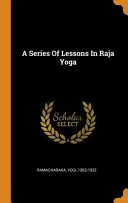
A Series of Lessons in Raja Yoga
 76
76

A Series of Lessons in Raja Yoga
Ramacharaka Yogi's "A Series of Lessons in Raja Yoga" presents a clear, albeit dated, exposition of yogic philosophy for Western minds of the early 20th century. The author's strength lies in his systematic breakdown of complex concepts into digestible lessons, particularly evident in his treatment of the "three planes of consciousness." However, the work's primary limitation is its inherent cultural context; some explanations feel filtered through a Western lens, potentially simplifying or reinterpreting concepts for an unfamiliar audience. The discussion on "The Will" in Lesson IV, while emphasizing mental control, could be seen as overly didactic by modern practitioners. Nevertheless, the book provides a valuable historical snapshot and a foundational understanding of Raja Yoga's mental discipline.
This text serves as a foundational, if historically specific, guide to yogic mind training.
📝 Description
76
Published posthumously, Ramacharaka Yogi's 1903 book details Raja Yoga's mental discipline for self-realization.
A Series of Lessons in Raja Yoga presents a systematic method for understanding and practicing the Raja Yoga path. It focuses on mental control, concentration, and meditation, guiding the reader toward spiritual insight. The book breaks down these complex ideas into accessible lessons, aiming to equip individuals with the tools for self-mastery and inner peace.
This work is for those interested in yoga's philosophical and mental aspects, moving beyond physical exercises. It speaks to students of Eastern thought, meditation practitioners, and anyone seeking to develop consciousness through disciplined practice. The lessons address the mind's nature, thought control, and the stages of concentration, meditation, and deep absorption (samadhi).
Ramacharaka also touches upon the energetic system, including chakras, and the potential development of subtle abilities as a result of dedicated yogic practice. These concepts are framed for comprehension by a Western audience of the early 20th century.
This text emerged from the late 19th and early 20th-century Western engagement with Indian spiritual traditions. It reflects the period's interest in comparative religion and esoteric studies, aligning with the efforts to introduce Vedanta and yoga to a Western readership. The book was part of a broader cultural movement that explored Eastern philosophies, influenced by figures who translated and popularized these teachings.
💡 Why Read This Book?
• Gain a foundational understanding of Raja Yoga's mental discipline, as presented in the early 20th century, by studying the author's structured "Lessons" on concentration and meditation. • Explore the concept of "The Will" and its role in controlling the mind, a key focus within Lesson IV, offering practical applications for mental fortitude. • Understand the historical flow of yogic philosophy to the West by engaging with a text that emerged during the period of increasing interest in Eastern thought, contextualized by figures like Swami Vivekananda.
⭐ Reader Reviews
Honest opinions from readers who have explored this book.
❓ Frequently Asked Questions
When was "A Series of Lessons in Raja Yoga" first published and is it still relevant?
The work was first published in 2018, but its content originates from the early 20th century. While the language and some interpretations are rooted in that era, its core teachings on mental discipline and the philosophy of Raja Yoga remain relevant for students of esoteric traditions.
What is Raja Yoga according to Ramacharaka Yogi?
According to Ramacharaka Yogi, Raja Yoga is the "Royal Path" of yoga focused on the control and mastery of the mind through concentration, meditation, and ethical living, ultimately leading to self-realization.
Is this book suitable for absolute beginners in yoga?
The book is suitable for beginners interested in the philosophical and mental aspects of yoga, rather than the physical (asana) practice. It requires a willingness to engage with abstract concepts and mental exercises.
What does the book say about the chakras?
The book touches upon the subtle body and the chakras as centers of psychic energy, explaining their connection to different states of consciousness and their role in advanced yogic development.
Why is this book in the public domain?
The work is in the public domain in the United States because its copyright has expired or was not renewed. This allows for free distribution and reproduction, making it accessible to a wider audience.
What is the author's background?
Ramacharaka Yogi was a pen name used by William Walker Atkinson (1862-1932), a prolific writer on New Thought and Eastern philosophies, who played a significant role in popularizing these ideas in the West.
🔮 Key Themes & Symbolism
Mental Discipline and Control
The core of Raja Yoga as presented here lies in the systematic cultivation of mental control. The lessons guide the practitioner through stages of concentration, moving from external focus to internal awareness. This involves understanding the nature of thought, learning to direct attention intentionally, and quieting the "chatter" of the mind. The work emphasizes that true mastery begins with mastering one's own thoughts and perceptions, a fundamental principle in many esoteric traditions seeking higher consciousness.
The Yogi's Will
Central to the practice is the development and application of the Yogi's Will. This is not mere desire but a focused, directed force of consciousness capable of overcoming mental inertia and external distractions. The book details how the will is strengthened through consistent practice, becoming the instrument through which deeper states of meditation and awareness are achieved. This concept aligns with esoteric ideas of focused intention as a creative and transformative power.
Subtle Body and Consciousness
Ramacharaka Yogi introduces concepts of the subtle body, including the chakras and their energetic functions, as integral to understanding human consciousness. These centers are presented not just as metaphysical constructs but as vital components influencing mental states and spiritual development. The lessons suggest that by working with these subtle energies, practitioners can unlock latent potentials and achieve states of higher awareness, connecting the physical and the spiritual realms.
Self-Realization
The ultimate aim articulated throughout the lessons is self-realization – the understanding of one's true nature beyond the limitations of the ego and the physical senses. This is presented as the culmination of disciplined yogic practice. The journey involves transcending ordinary consciousness to perceive the underlying unity of existence. This goal is a common thread in many philosophical and mystical paths aiming for spiritual liberation.
💬 Memorable Quotes
Direct passages from the work, attributed to the author.
“The development of the Will is the first and most important step in the direction of attaining the higher powers of the mind.”
— This statement highlights the foundational role of willpower in yogic practice. It suggests that before one can achieve advanced mental states or psychic abilities, the capacity to direct and control one's mental faculties must be systematically cultivated.
“Concentration is the power of the mind to hold its attention upon one subject.”
— This defines concentration as a fundamental skill in Raja Yoga. It emphasizes the active, directed nature of attention, distinguishing it from passive observation. Mastering this ability is presented as crucial for progressing through the stages of yogic development.
“Thought is the great force of the universe.”
— This interpretation emphasizes the power attributed to thought within the yogic framework. It suggests that thoughts are not merely internal mental events but possess a tangible energetic quality that shapes reality and influences the practitioner's world.
“The mind is a tool, and like any tool, it must be learned how to be used.”
— This analogy underscores the practical, skill-based approach to mental development in Raja Yoga. It frames the mind not as an innate, fully functional entity, but as a faculty that requires deliberate training and skillful application to be effective.
💡 Key Ideas
Editorial paraphrase of the work's core concepts — not direct quotes.
The Yogi learns to distinguish between the Real and the Unreal.
This paraphrased concept speaks to the discriminative wisdom (viveka) central to yogic philosophy. It implies that through practice, one can discern eternal truths from transient illusions, leading to a more authentic understanding of existence.
🌙 Esoteric Significance
Tradition
This work fits within the Western esoteric tradition's engagement with Eastern spirituality, particularly drawing from the Hatha and Raja Yoga branches of Hinduism. It can be seen as a product of the Theosophical era's attempt to bridge Eastern and Western mystical thought. While rooted in classical Indian yoga, its presentation is filtered through a lens aimed at Western understanding, emphasizing mental discipline and practical application, aligning with the pragmatic approach often found in Western occultism.
Symbolism
The book touches upon the subtle energetic centers known as chakras, often depicted as lotuses within the subtle body. These are symbolic of spiritual awakening and the progression of consciousness. The concept of "The Will" also functions symbolically, representing the focused, directed spiritual power that a practitioner seeks to master, moving beyond the passive flow of ordinary thought.
Modern Relevance
Contemporary practitioners of mindfulness, meditation, and various forms of yoga continue to draw upon the foundational principles of mental discipline outlined in this text. Modern teachers of Raja Yoga and Vedanta often reference such early works to trace the historical transmission of these teachings to the West. Its systematic approach remains a valuable resource for those seeking structured guidance in contemplative practices.
👥 Who Should Read This Book
• Aspiring practitioners of Raja Yoga seeking a structured, lesson-based introduction to the philosophy and mental techniques. • Students of comparative religion and esoteric history interested in the early 20th-century Western reception of Indian spiritual traditions. • Individuals focused on developing mental concentration and self-discipline for personal or spiritual growth, regardless of their prior experience with yoga.
📜 Historical Context
Ramacharaka Yogi's "A Series of Lessons in Raja Yoga" emerged during a period of intense Western interest in Eastern philosophies, particularly following Swami Vivekananda's impactful lectures at the 1893 Parliament of Religions in Chicago. The late 19th and early 20th centuries saw a surge in the popularity of movements like Theosophy, which sought to synthesize Western esoteric traditions with Eastern spiritual insights. This book reflects that milieu, presenting Raja Yoga in a format accessible to a Western readership unfamiliar with its intricacies. It shares intellectual space with other contemporary works exploring mental sciences and spiritual development, such as those by William Walker Atkinson himself (under various pseudonyms) and early translations of Hindu scriptures. The work's reception was part of a broader trend of comparative religion and esoteric studies, though it faced competition from more direct translations and philosophical schools like Vedanta.
📔 Journal Prompts
The Yogi's Will in daily decision-making.
Analyzing the distinction between "Real" and "Unreal" in personal experience.
Practicing concentration on a single object for five minutes.
The role of thought as a "force" in shaping personal reality.
How the mind functions as a "tool" needing refinement.
🗂️ Glossary
Raja Yoga
The "Royal Path" of yoga, focusing on mental control, meditation, and self-discipline to achieve spiritual realization. It is distinct from Hatha Yoga's emphasis on physical postures.
Concentration (Dharana)
The yogic practice of focusing the mind's attention on a single point or object, holding it without wavering.
Meditation (Dhyana)
The sustained flow of concentration, leading to a deeper state of contemplation and absorption in the object of focus.
Samadhi
A state of profound meditative absorption or "blissful contemplation," often considered the ultimate goal of Raja Yoga, signifying union with the divine or ultimate reality.
Will
In this context, the trained, directed mental faculty used for control and focus, distinguished from mere desire or impulse.
Chakras
Centers of subtle energy within the body, according to yogic and tantric traditions, influencing physical, mental, and spiritual states.
Psychic Powers
Latent abilities of the mind, often considered byproducts of advanced yogic practice, such as telepathy or clairvoyance.