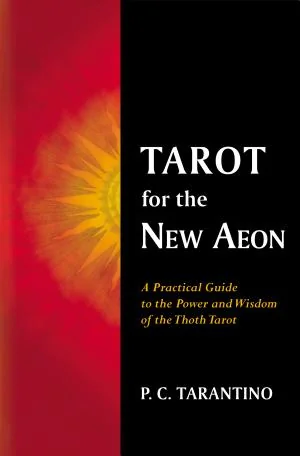
Tarot for the New Aeon
 83
83

Tarot for the New Aeon
P. C. Tarantino’s "Tarot for the New Aeon" arrives with a clear intention: to position the tarot as an essential guide for contemporary existence. The work’s strength lies in its insistent focus on the cards as a practical, psychological instrument, a far cry from dusty, deterministic fortune-telling manuals. Tarantino’s interpretation of the Fool as embracing the unknown with intentionality, rather than simply stumbling into it, provides a robust starting point for a modern reading. However, the book occasionally leans into a generalized New Age parlance, which, while accessible, sometimes dilutes the sharpness of its core thesis. The section discussing the court cards as archetypal personality facets offers a particularly cogent application, moving beyond simple identification to active integration. Ultimately, Tarantino’s effort succeeds in reframing tarot for a generation grappling with existential uncertainty, offering a grounded, albeit sometimes broadly painted, perspective.
📝 Description
83
Published in 2007, P. C. Tarantino's Tarot for the New Aeon reinterprets the cards for the 21st century.
Tarot for the New Aeon, by P. C. Tarantino, was first published in 2007. The book positions the tarot as a tool for personal development and spiritual orientation suitable for the early 21st century. Tarantino presents the deck as a dynamic system that can be adapted to contemporary psychological and esoteric concerns, moving beyond traditional interpretations.
This work is for readers who wish to incorporate tarot into their lives for self-reflection and conscious living. It suits those who approach esoteric studies with a critical yet open mind, seeking practical applications of ancient symbolism. The book is particularly relevant for students of modern occultism and personal growth.
Tarantino frames the 78-card deck as a symbolic language capable of illuminating personal challenges and potentials. He focuses on the 'New Aeon' concept, suggesting a shift in consciousness that requires new approaches to ancient wisdom traditions. The tarot, he argues, is central to this evolving understanding.
Tarot for the New Aeon emerged in 2007 during a time of growing interest in applied esotericism and the intersection of spiritual practices with psychological well-being. The early 21st century saw the rise of online communities and accessible occult literature, a context Tarantino's work addresses. His book offers an updated perspective on tarot, building on the work of earlier figures who modernized its study, such as Aleister Crowley and Dion Fortune.
💡 Why Read This Book?
• Understand the tarot as a personal compass for decision-making, offering guidance beyond simple prediction. You will learn to see the cards as a flexible symbolic language for self-discovery. • Engage with an esoteric system updated for the 21st century, moving past archaic interpretations. This book helps you connect ancient wisdom to modern psychological and spiritual needs. • Develop a practice of living with intention, using the tarot to illuminate your path and align your actions with your inner compass. You will gain tools for conscious living.
⭐ Reader Reviews
Honest opinions from readers who have explored this book.
❓ Frequently Asked Questions
What is the "New Aeon" referred to in the book's title?
The "New Aeon" concept, often linked to the influence of the astrological Age of Aquarius, signifies a perceived shift in human consciousness and spiritual paradigms. Tarantino uses it to frame the tarot as a tool relevant to contemporary esoteric and personal development needs.
Is "Tarot for the New Aeon" suitable for complete beginners?
Yes, the book is designed to be accessible to those new to tarot, providing a solid foundation. It explains core concepts and offers practical applications that can be understood and implemented by newcomers.
Does the book focus on specific tarot decks or traditions?
While the book is primarily based on the Rider-Waite-Smith tradition, its focus is on the underlying principles and symbolic language of the tarot. It encourages readers to adapt its teachings to their preferred decks.
What distinguishes P. C. Tarantino's approach from other tarot books?
Tarantino's approach emphasizes the tarot as a 'spirit compass' for intentional living and psychological integration, rather than solely a predictive tool. The work was published in 2007, positioning it as a modern interpretation.
Can "Tarot for the New Aeon" be used for divination or psychological insight?
The book advocates for a dual approach, using the tarot for both psychological insight and as a guide for conscious decision-making. It sees divination not as foretelling fate, but as understanding potentials.
🔮 Key Themes & Symbolism
Tarot as a Spirit Compass
This theme positions the 78-card tarot deck not as a passive oracle of fate, but as an active, dynamic tool for personal orientation. Tarantino suggests the cards can provide direction and clarity, akin to a compass, for navigating life's choices and challenges. The work encourages readers to engage with the symbolic language of the tarot to understand their inner landscape and external circumstances, fostering a sense of agency and conscious living in the early 21st century.
Living with Intention
Central to Tarantino's philosophy is the concept of intentionality. The book posits that by understanding the archetypal patterns and energies represented by the tarot cards, individuals can make more deliberate choices. This theme moves beyond mere prediction, focusing instead on how tarot can illuminate potential pathways and guide actions towards desired outcomes. It's about actively shaping one's reality through mindful engagement with the symbolic system, as explored in the book's 2007 publication context.
Esoteric Adaptation for the 21st Century
Tarot for the New Aeon addresses the perceived need for ancient wisdom traditions to evolve with contemporary consciousness. The 'New Aeon' suggests a shift in thinking, demanding updated interpretations of esoteric tools like the tarot. Tarantino seeks to bridge the gap between traditional occultism, as developed by figures like Aleister Crowley, and the psychological and spiritual inquiries of the modern era, making the tarot relevant and accessible.
The Tarot as a Mirror of Consciousness
This theme interprets the tarot cards as symbolic reflections of the human psyche and collective consciousness. Rather than external pronouncements, the cards reveal inner states, potentials, and psychological dynamics. The book encourages readers to see the tarot as a sophisticated system for self-exploration, mapping the terrain of the mind and spirit, and facilitating personal growth through introspection and self-awareness.
💬 Memorable Quotes
Direct passages from the work, attributed to the author.
“The tarot is a spirit compass for every aspect of living.”
— This core metaphor suggests the tarot provides directional guidance and clarity for daily life. It frames the cards not as predictive tools, but as active instruments for self-awareness and conscious decision-making.
“It's the perfect companion to living with intention.”
— This highlights the book's emphasis on deliberate action and conscious choice. The tarot, in this view, enhances one's ability to live purposefully by informative inner motivations and external possibilities.
“The work explores the tarot as a dynamic system adaptable to modern concerns.”
— This interpretation emphasizes the book's departure from static, traditional tarot readings. It suggests Tarantino views the cards as a living symbolic language, capable of addressing contemporary psychological and spiritual issues.
“The Court Cards represent archetypal facets of personality that can be integrated.”
— This interpretation shifts the focus from static personality types to dynamic psychological elements. It suggests the King, Queen, Knight, and Page symbolize aspects of the self that can be consciously understood and incorporated into one's being.
💡 Key Ideas
Editorial paraphrase of the work's core concepts — not direct quotes.
Understanding the Fool's journey allows for embracing the unknown with awareness.
This conceptual paraphrase focuses on a key archetype. It reframes the Fool not as blind chance, but as a conscious leap of faith, integral to personal growth and navigating new phases of life.
🌙 Esoteric Significance
Tradition
The work primarily engages with the Western Esoteric Tradition, specifically the lineage influenced by the Rider-Waite-Smith tarot deck and its symbolic interpretations. It draws upon Hermetic principles of correspondence and the Qabalistic Tree of Life, though often implicitly, framing them within a modern psychological and self-development context. Tarantino departs from purely divinatory or strictly occult applications, emphasizing the tarot as a tool for conscious evolution and personal integration, aligning with emergent trends in 21st-century spirituality.
Symbolism
Key symbols explored include the Fool's journey, representing the initiation into life's experiences with open awareness, and the Court Cards, interpreted as dynamic archetypal aspects of the personality rather than fixed roles. The Major Arcana, as a whole, is presented as a map of spiritual development and psychological maturation. The Minor Arcana are discussed in terms of their elemental correspondences and how they detail the unfolding of life's mundane and spiritual events.
Modern Relevance
Contemporary practitioners of Jungian psychology, transpersonal psychology, and self-help movements find resonance in Tarantino's emphasis on archetypes and personal integration. The book's approach aligns with modern mindfulness practices and the desire for actionable esoteric tools. Thinkers and communities focused on applied mysticism and conscious living, particularly those active online since the mid-2000s, often reference this work for its accessible yet profound reinterpretation of tarot for the 'New Aeon'.
👥 Who Should Read This Book
• Individuals seeking practical esoteric tools for self-understanding and life navigation: This book offers a framework for using the tarot as a 'spirit compass,' moving beyond prediction to conscious guidance. • Students of modern occultism and psychology: Those interested in how ancient symbols like those in the tarot can be applied to contemporary psychological theories and spiritual development will find value. • Tarot readers looking to deepen their practice: Readers familiar with tarot may gain a fresh perspective on interpreting cards for personal growth and intentional living.
📜 Historical Context
Published in 2007, "Tarot for the New Aeon" arrived at a crucial juncture for esoteric literature. The internet had democratized access to spiritual knowledge, and a growing population sought practical applications for mystical traditions. This era saw a surge in psychologically-oriented occultism, influenced by figures like Carl Jung, whose work on archetypes found fertile ground in tarot symbolism. Tarantino's book fits within this trend, offering a modern lens on a practice long shaped by figures like Arthur Edward Waite and Aleister Crowley, who had already modernized the tarot in the early 20th century. The early 2000s were characterized by a blend of online spiritual communities and a desire for tangible, personal tools for self-discovery, a space Tarantino's work aimed to fill by positioning tarot as a vital 'spirit compass'.
📔 Journal Prompts
How does the 'spirit compass' metaphor apply to a recent decision you made?
Which archetypal aspect of the Court Cards do you most identify with currently?
In what way does the Fool's journey reflect your current life path?
How can living with intention be enhanced by reflecting on the Major Arcana?
What shifts in consciousness might the 'New Aeon' imply for your personal practice?
🗂️ Glossary
New Aeon
A concept referring to a perceived new era of human consciousness and spiritual development, often associated with astrological ages like Aquarius. Tarantino uses it to frame the tarot's relevance for contemporary times.
Spirit Compass
A metaphor used by Tarantino to describe the tarot's function as a tool for providing guidance, direction, and clarity in life's journey, emphasizing conscious choice over predetermined fate.
Intentional Living
A philosophy and practice of consciously directing one's life choices and actions towards specific goals and values, rather than passively reacting to circumstances.
Archetypes
Universal, primordial images and patterns of thought or imagery derived from the collective unconscious, as proposed by Carl Jung. Tarantino applies this concept to the tarot cards, particularly the Court Cards.
Divination
The practice of seeking knowledge of the future or the unknown by supernatural means. Tarantino reinterprets this for the tarot, focusing on potential and insight rather than fixed prediction.
Major Arcana
The 22 trump cards of the tarot deck, typically representing significant life lessons, spiritual stages, or major events in a person's life journey.
Court Cards
The four face cards (King, Queen, Knight, Page) within each suit of the tarot deck, often interpreted as representing people, personality types, or aspects of the self.
This book appears in 1 collection
🔮 Readers Also Liked
Browse all →

From the “Tarot” Collection
View all →
More Free Occult Philosophy Books
View all →