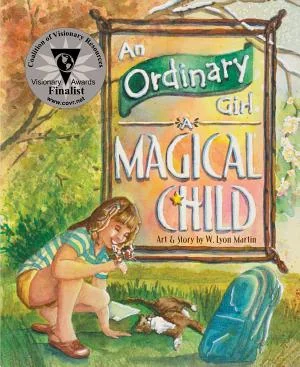
An Ordinary Girl, a Magical Child
 78
78

An Ordinary Girl, a Magical Child
W. Lyon Martin’s "An Ordinary Girl, a Magical Child" attempts to demystify Wicca through a story, a commendable but challenging approach. The narrative featuring Rabbit and her Pagan family offers a gentle onboarding for newcomers, particularly when explaining the Sabbats like Beltane. However, the book occasionally strains to balance narrative flow with detailed exposition, sometimes resulting in explanations that feel a touch didactic rather than organically woven into the story. A strength lies in its portrayal of a supportive, nature-attuned family environment, which provides a positive lens on Pagan life. A limitation is the broadness of its scope; while it introduces many facets of Wicca, it necessarily lacks the depth required for advanced study. The description of spellcraft, for instance, remains at a foundational level. Ultimately, it serves as a warm, if somewhat simplified, invitation to explore Wiccan perspectives.
📝 Description
78
W. Lyon Martin's 2008 book, An Ordinary Girl, a Magical Child, uses a child's perspective to introduce Wicca.
An Ordinary Girl, a Magical Child, published in 2008, introduces Wicca through the story of a young girl named Rabbit. The book follows Rabbit and her family as they learn about Pagan beliefs and practices. Martin details the core ideas of the Wiccan faith, how magic functions within the tradition, and important rituals and seasonal celebrations. The narrative style is designed to make the religion understandable for newcomers.
This book is for people curious about Wicca and Paganism who want an introduction presented in a story. Readers who enjoy learning through narratives rather than academic texts will find it appealing. Those interested in modern Pagan traditions, family spirituality, or the fundamentals of magical practice from a specific cultural viewpoint will find this work relevant. It offers a gentle way to begin learning about the subject.
Published in 2008, Martin's work appears during a time when Neopagan religions were becoming more visible. Wicca, established in the mid-20th century, influenced many modern Pagan paths. Martin's book presents a contemporary view of this tradition, which has evolved from earlier forms. It connects to older folk magic and nature based spiritualities.
💡 Why Read This Book?
• Gain an understanding of Wiccan festivals like Samhain, presented through the narrative of Rabbit's family, offering a unique perspective on how seasonal changes are celebrated spiritually. • Learn about the concept of immanent divinity as depicted in the book, illustrating how Wicca views the sacred within the natural world, distinct from transcendent deities. • Discover practical applications of ritual magic within a family context, as shown through the story, providing concrete examples of how magic can be integrated into daily life.
⭐ Reader Reviews
Honest opinions from readers who have explored this book.
❓ Frequently Asked Questions
What is Wicca presented as in 'An Ordinary Girl, a Magical Child'?
The book introduces Wicca as a nature-based, spiritual path emphasizing the divine within the world and the cyclical nature of life, celebrated through rituals and holidays.
Who is Rabbit and what is her role in the book?
Rabbit is the young protagonist whose experiences guide the reader through the family's Pagan life and Wiccan practices, making the concepts relatable for a younger or novice audience.
What are some key Wiccan holidays mentioned?
The book covers major Wiccan festivals, known as the Sabbats, likely including celebrations like Samhain, Yule, and Beltane, as part of its exploration of the Pagan year.
Does the book explain Wiccan magic?
Yes, 'An Ordinary Girl, a Magical Child' explains how Wiccans practice magic, focusing on intention, natural energies, and ritual, presented through the story's unfolding events.
Is this book suitable for absolute beginners to Paganism?
Absolutely. Its narrative structure and focus on a child's perspective are designed to introduce fundamental Wiccan beliefs and practices to those with no prior knowledge.
What is the publication year of 'An Ordinary Girl, a Magical Child'?
The book was first published in 2008, reflecting a period of growing interest in Neopaganism and alternative spiritualities.
🔮 Key Themes & Symbolism
Family Spirituality
The work centers on Rabbit's Pagan family, illustrating how Wiccan beliefs and practices are integrated into domestic life. It showcases a nurturing environment where spirituality is a shared experience, passed down through generations. This theme highlights the importance of community and connection within the tradition, moving beyond individualistic spiritual pursuits to emphasize the role of family in upholding and transmitting beliefs and rituals like the seasonal festivals.
Nature-Based Spirituality
A core concept explored is the immanent divinity found within the natural world. The book emphasizes the interconnectedness of all living things and the sacredness of the Earth. This is depicted through the family's reverence for seasons, celestial bodies, and natural elements. The narrative likely connects the cycles of nature to spiritual understanding, presenting a worldview where the divine is not separate but present in the physical environment, a key tenet of many Pagan paths.
Introduction to Ritual
The book serves as an introduction to Wiccan rituals and holidays, framing them within the context of Rabbit's experiences. It explains the purpose and structure of practices such as celebrating the Sabbats (seasonal festivals) and potentially Esbats (lunar cycles). The narrative approach aims to clarify these ceremonies, showing them as meaningful ways to connect with the divine, nature, and the community, rather than obscure or frightening practices.
The Practice of Magic
W. Lyon Martin's work addresses the concept of magic as understood within Wicca, moving away from sensationalized portrayals. It likely explains magic as the focused use of natural energies and intention to effect change, often tied to spiritual growth and well-being. Through Rabbit's story, the book may illustrate simple magical workings or the underlying principles, emphasizing ethical considerations and personal responsibility inherent in such practices.
💬 Memorable Quotes
Direct passages from the work, attributed to the author.
“The world is full of magic, you just have to know where to look.”
— This statement expresses the book's premise: that the sacred and magical are not separate from everyday life but are inherent in the natural world and accessible through awareness and practice.
“The Goddess and God are in the trees, the wind, and the stars.”
— This interpretation highlights the Wiccan concept of immanent divinity, suggesting that the divine is not a distant entity but is present and active within the natural environment, a central theme in the book.
“Magic is about intention and understanding the energies around us.”
— This concept introduces the book's explanation of magic, portraying it as a skillful application of focus and natural forces, rather than an arbitrary or supernatural phenomenon.
“Our family honors the turning of the year together.”
— This phrase reflects the theme of family spirituality, showing how collective participation in seasonal celebrations strengthens familial bonds and shared religious identity within a Pagan household.
💡 Key Ideas
Editorial paraphrase of the work's core concepts — not direct quotes.
Celebrating the seasons helps us remember our connection to the Earth.
This paraphrased idea emphasizes the role of festivals like the Sabbats in Wiccan practice, serving as markers for appreciating and reinforcing the spiritual bond between humans and the natural cycles.
🌙 Esoteric Significance
Tradition
This work situates itself within the broader stream of modern Western Esotericism, specifically as an introduction to Wicca, a prominent Neopagan religion. While not strictly Hermetic or Kabbalistic, Wicca shares roots in ceremonial magic and folk traditions, influenced by figures like Aleister Crowley and Dion Fortune, albeit often reinterpreted. Martin's book departs from the more complex theological or philosophical texts often found in esoteric libraries, opting for a narrative that emphasizes accessible practice and belief, making it a gateway text rather than a deep dive into arcane doctrines.
Symbolism
Key symbols likely explored include the Pentacle, representing the five elements and connection to Earth, and the Horned God and Triple Goddess, embodying divine masculine and feminine principles often associated with nature and fertility. The cyclical nature of the year, marked by the eight Sabbats (festivals), is also a significant symbolic framework, representing life, death, and rebirth. These symbols are presented not as abstract concepts but as integral to the lived experience of Rabbit and her family.
Modern Relevance
Works like Martin's continue to be relevant for contemporary spiritual seekers drawn to nature-based religions and accessible introductions to witchcraft and Paganism. They serve as entry points for individuals exploring paths distinct from mainstream monotheistic religions. Contemporary Pagan communities often utilize such narrative introductions to educate newcomers or curious individuals, fostering understanding and potentially encouraging engagement with organized or solitary practice. The emphasis on immanent divinity and ecological spirituality aligns with growing modern concerns.
👥 Who Should Read This Book
• Aspiring students of Wicca and Neopaganism seeking an introductory narrative that explains core beliefs and practices. • Parents or educators interested in exploring nature-based spirituality and family-friendly approaches to religious education. • Readers curious about contemporary witchcraft and folk magic traditions who prefer learning through relatable stories over academic texts.
📜 Historical Context
Published in 2008, W. Lyon Martin's "An Ordinary Girl, a Magical Child" emerged during a period when Neopaganism, including Wicca, had moved from fringe to more visible cultural spaces. Following the foundational work of figures like Gerald Gardner in the mid-20th century and the subsequent popularization by authors like Scott Cunningham, Martin's book reflects a more established and diverse Wiccan landscape. It arrived at a time when comparative religion studies were increasingly acknowledging Wicca as a legitimate spiritual tradition, though it still faced public misunderstanding and occasional skepticism. Unlike more academic or historical accounts, Martin's narrative approach aimed to bridge this gap for a general audience, presenting Wicca in a positive, accessible light, contrasting with earlier, often sensationalized, media portrayals.
📔 Journal Prompts
Rabbit's family and their celebration of the Sabbats.
The concept of immanent divinity in nature.
Wiccan magic as presented through the narrative.
Understanding the role of the Goddess and God.
Personal reflections on seasonal cycles and spiritual connection.
🗂️ Glossary
Wicca
A contemporary Pagan religion that often emphasizes reverence for nature, the divine in both male and female forms (God and Goddess), and the practice of magic.
Pagan
A broad term for polytheistic or earth-centered religions originating from ancient traditions, often encompassing Wicca and other nature-based spiritual paths.
Sabbats
The eight seasonal festivals celebrated by Wiccans and many other Pagans, marking significant points in the solar year, such as Samhain, Yule, and Beltane.
Immanent Divinity
The belief that the divine is present within the physical world and all of creation, rather than being transcendent or separate from it.
Magic
In Wicca, the practice of consciously directing natural energies and intentions to bring about desired change, often through ritual and focused will.
Rabbit
The young protagonist of the book, whose perspective serves as the reader's guide into the world of her Pagan family and their spiritual practices.
Esbats
Gatherings or rituals held in observance of the full moon, often complementing the celebration of the solar-based Sabbats in Wiccan practice.
This book appears in 1 collection
🔮 Readers Also Liked
Browse all →








From the “Wicca” Collection
View all →





More Free Occult Philosophy Books
View all →