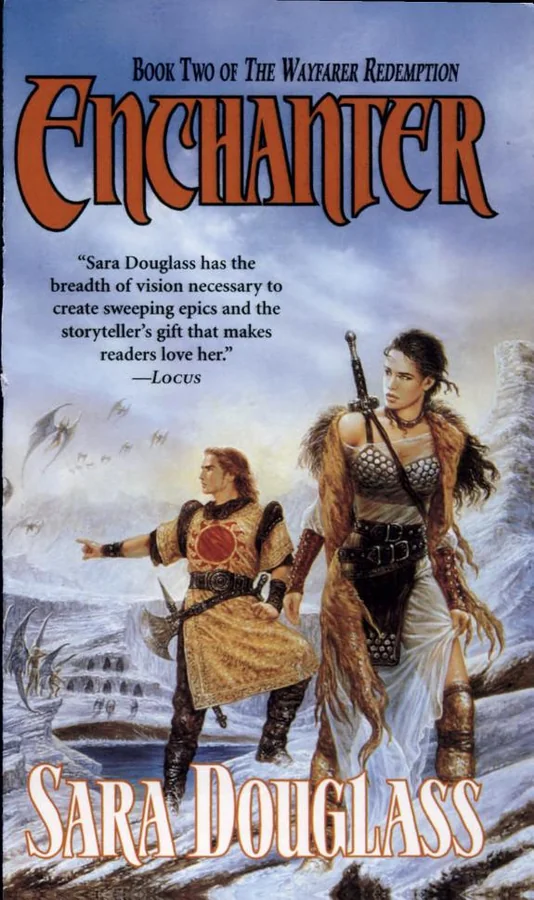
Enchanter
 76
76

Enchanter
Sara Douglass's Enchanter returns readers to the world forged in The Wayfarer Redemption, immediately picking up the pace from its predecessor. The narrative thrust is undeniable, propelling characters through significant plot developments. Douglass demonstrates a keen ability to orchestrate large-scale conflict, particularly evident in the depiction of the struggle against the antagonistic forces. However, the reliance on the established lore means that newcomers will find themselves adrift; this is strictly for those already immersed. A specific strength lies in the portrayal of the protagonist's internal conflict regarding their fated path, a common trope handled with adequate gravity. A limitation, however, is the occasional feeling of narrative expediency, where certain resolutions feel more convenient than earned. The depiction of the celestial conflict, a recurring motif, is particularly vivid, though at times it can overshadow the more intimate character moments. Ultimately, Enchanter serves its purpose as a bridge, delivering plot momentum for existing fans.
📝 Description
76
Enchanter, published in 2002, continues Sara Douglass's The Wayfarer Redemption saga.
This novel is a direct sequel, demanding familiarity with The Wayfarer Redemption's characters and plot to be fully understood. It expands upon the established world and its ongoing conflicts, maintaining an epic scope. Readers who have committed to Douglass's world will find their investment rewarded here.
Enchanter is crafted for those invested in the preceding narrative. It will appeal to readers who appreciate complex fantasy stories tinged with mythological or quasi-religious elements. Those who enjoy authors like Guy Gavriel Kay or Jacqueline Carey, blending historical settings with fantasy, might connect with Douglass's distinct approach. The book serves those looking to conclude a specific literary arc.
Published in 2002, Enchanter arrived as epic fantasy was solidifying its cultural presence. Though not tied to a specific historical event, its narrative structure and themes reflect a trend in speculative fiction that drew from mythology, ancient history, and complex moral frameworks. The novel's examination of power, destiny, and the supernatural connects it to a long storytelling tradition, reinterpreted through the lens of modern fantasy.
💡 Why Read This Book?
• Understand the continuation of the conflict initiated in The Wayfarer Redemption, grasping the specific stakes for characters like Axis and Star, which are central to the 2002 narrative. • Explore the consequences of wielding immense power, a core theme exemplified by Axis's struggle with his destiny, offering a direct look at the costs of leadership. • Witness the unfolding of a grand, mythologically-tinged conflict, as Douglass depicts the struggle against the opposing forces, providing a concrete example of spiritual warfare in fantasy.
⭐ Reader Reviews
Honest opinions from readers who have explored this book.
❓ Frequently Asked Questions
Is Enchanter a standalone novel?
No, Enchanter is the direct sequel to Sara Douglass's The Wayfarer Redemption. It was first published in 2002 and continues the story and characters from the earlier book.
What are the main themes in Enchanter?
The novel explores themes of destiny, leadership, the nature of good versus evil, and the personal cost of wielding great power. It delves into spiritual conflict and the choices characters make under pressure.
Who are the main characters in Enchanter?
Key characters include Axis and Star, who continue their journey and face significant challenges. Their development and their roles in the overarching conflict are central to the plot.
What esoteric or mythological elements are present?
The book features a grand, mythologically-inspired conflict, touching on spiritual warfare and the battle between opposing forces. It examines archetypal struggles for power and destiny.
When was Enchanter originally published?
Enchanter was first published on April 15, 2002, following the release of The Wayfarer Redemption.
Does Enchanter require reading The Wayfarer Redemption first?
Yes, it is highly recommended. Enchanter is a direct continuation and assumes the reader is familiar with the characters, world, and plot established in its predecessor.
🔮 Key Themes & Symbolism
The Weight of Destiny
Enchanter places its characters, particularly Axis, under immense pressure from a predetermined fate. The narrative explores the internal struggle against this destiny, questioning free will versus predestination. It examines how individuals react when their lives seem dictated by forces beyond their control, and the moral compromises they might make to either fulfill or defy their perceived path. This theme is central to understanding the character arcs and the overarching spiritual conflict.
Spiritual Warfare and Cosmic Balance
The novel depicts a conflict that transcends the purely physical, involving spiritual or metaphysical dimensions. The battle between opposing forces is not merely terrestrial but cosmic, reflecting ancient archetypes of light versus darkness. Douglass uses this framework to explore the nature of evil, the resilience of good, and the delicate balance that must be maintained. The consequences of this war ripple through the lives of all involved, highlighting the interconnectedness of the spiritual and material realms.
Leadership and Sacrifice
Characters in Enchanter are often thrust into positions of leadership, burdened by the responsibility for others. The narrative scrutinizes the personal cost of such roles, emphasizing the sacrifices required to protect a people or uphold a cause. It questions the effectiveness of power and the ethical considerations that leaders must face, particularly when faced with impossible choices. The novel illustrates that true leadership often involves profound personal loss and unwavering commitment.
The Nature of Power
Douglass examines different forms of power—magical, political, and spiritual—and their corrupting or transformative potential. The acquisition and use of power are depicted with their inherent dangers and temptations. Characters grapple with controlling their abilities and resisting the allure of unchecked authority. The narrative suggests that true strength lies not just in wielding power, but in understanding its limits and using it with wisdom and restraint, often through difficult ethical considerations.
💬 Memorable Quotes
Direct passages from the work, attributed to the author.
“Star saw the elements of ancient battles in the sky, a war that had never truly ended.”
— This interpretation speaks to the cosmic scale of the conflict within the novel. It suggests that the present struggles are part of a larger, ongoing spiritual war, drawing parallels to mythological and archetypal conflicts.
“To lead was to stand alone, even when surrounded by allies.”
— This concept captures the isolation and burden of command. It reflects the idea that ultimate responsibility for decisions rests with the leader, regardless of the support they receive from others.
“The greatest enchantments are not those of spellcraft, but of will.”
— This interpretation posits that true power and influence stem from inner strength and determination rather than mere magical ability. It suggests that willpower is the most potent force for shaping reality.
“Every choice, no matter how small, sent ripples through the collection of fate.”
— This reflects the interconnectedness of actions and consequences within the narrative's universe. It underscores the idea that even seemingly insignificant decisions can have far-reaching effects on the larger destiny.
💡 Key Ideas
Editorial paraphrase of the work's core concepts — not direct quotes.
The path laid before him was a chain, each link a choice he could not avoid.
This paraphrased concept highlights the central theme of destiny versus free will that plagues the protagonist, Axis. It emphasizes the unavoidable nature of his fated journey and the constant moral calculus involved in his decisions.
🌙 Esoteric Significance
Tradition
Enchanter draws heavily from Western esoteric traditions, particularly those concerned with archetypal conflicts and spiritual warfare. It echoes Gnostic themes of cosmic struggle between light and darkness, and Hermetic concepts of correspondence between the macrocosm and microcosm. The narrative's focus on destiny, chosen ones, and the manipulation of fate aligns with certain mystical interpretations of divine will and human agency found within these lineages.
Symbolism
The novel utilizes potent symbols such as the 'chain' of destiny, representing inescapable fate and the interconnectedness of events. The 'collection of fate' itself is a recurring motif, suggesting a preordained pattern that characters navigate or resist. Celestial imagery, representing cosmic battles and divine intervention, also plays a significant role, symbolizing the larger spiritual forces at play beyond the human realm.
Modern Relevance
Contemporary authors exploring complex fantasy narratives with deep mythological roots, such as N.K. Jemisin or S.A. Chakraborty, echo the thematic concerns found in Enchanter. Its exploration of spiritual conflict and the burden of destiny continues to resonate with readers interested in modern interpretations of ancient myths and esoteric concepts, particularly within the subgenres of epic and mythic fantasy.
👥 Who Should Read This Book
• Devoted fans of Sara Douglass's The Wayfarer Redemption seeking the continuation of Axis and Star's narrative arc. • Readers of epic fantasy who appreciate intricate world-building and a grand, mythologically-inspired conflict. • Those interested in exploring themes of destiny, leadership, and spiritual warfare within a fictional context.
📜 Historical Context
Published in 2002, Enchanter emerged in a literary landscape where epic fantasy continued its robust expansion, building on foundations laid by authors like J.R.R. Tolkien and Ursula K. Le Guin. Sara Douglass's work, particularly this sequel to The Wayfarer Redemption, engaged with a trend of fantasy that sought to imbue its narratives with a sense of mythic weight and complex moral ambiguity, moving beyond simpler good-versus-evil dichotomies. While specific contemporaneous reception details for Enchanter are not widely documented, the novel entered a market alongside works by authors like George R.R. Martin and Brandon Sanderson, who were also exploring darker, more intricate fantasy worlds. Douglass's contribution can be seen as part of a broader movement within the genre that aimed for greater thematic depth and character psychological realism, often drawing inspiration from ancient lore and religious texts, differentiating itself from the more light-hearted or adventure-focused fantasy prevalent in earlier decades.
📔 Journal Prompts
Axis's struggle with his fated path: does external destiny negate personal choice?
The symbolism of the celestial conflict: how do cosmic battles reflect earthly ones?
The isolation of leadership: when is sacrifice a necessary component of command?
The nature of 'enchantment': is willpower a more potent force than magic?
The ripples of choice: how do small actions impact larger destinies in the narrative?
🗂️ Glossary
The Wayfarer Redemption
The preceding novel in the series, establishing the world, characters, and core conflicts that Enchanter continues.
Axis
A central protagonist in the series, burdened by a significant destiny and often wrestling with the choices he must make.
Star
A key character accompanying Axis, whose journey and development are integral to the unfolding narrative.
Spiritual Warfare
A conflict that transcends the physical, involving metaphysical or divine forces battling for dominance, often influencing the material world.
Destiny
The predetermined course of events, often seen as an inescapable fate that characters must confront or fulfill.
Enchantment
In the context of the book, this can refer to magical spells but also to the power of will and influence over events.
Collection of Fate
A metaphorical representation of the interconnectedness of all events and lives, suggesting a grand, woven design of destiny.
This book appears in 1 collection
🔮 Readers Also Liked
Browse all →







From the “Prophecy” Collection
View all →

More Free Occult Philosophy Books
View all →