You're a Bad Man, Mr. Gum!
 84
84

You're a Bad Man, Mr. Gum!
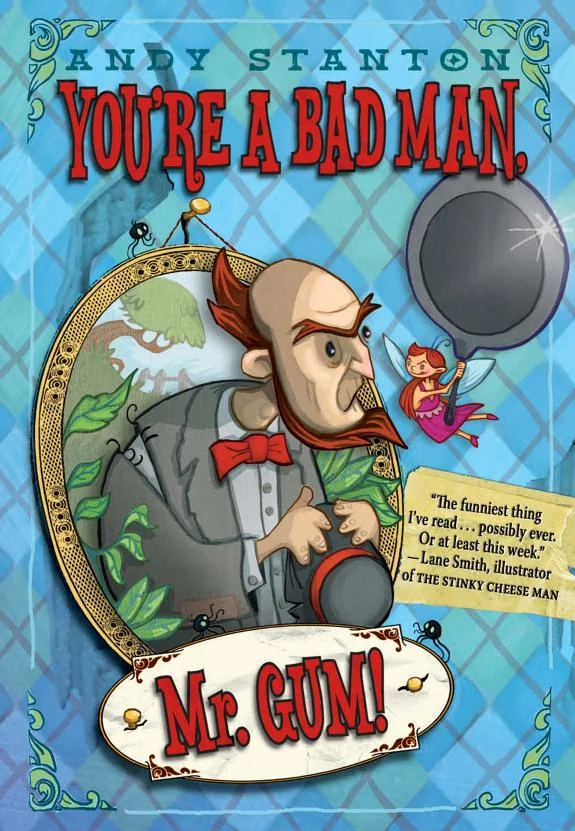
Stanton’s "You're a Bad Man, Mr. Gum!" is a masterclass in controlled chaos, presenting a villain so thoroughly unpleasant he becomes a perverse sort of hero. The initial premise—Polly defending Jake the dog from Mr. Gum’s garden-destroying wrath—is simple enough, but it’s the sheer, unadulterated meanness of Mr. Gum that elevates the work. His pronouncements and the town's general fear of him are rendered with a specific, almost theatrical malice. The inclusion of the "angry fairy" feels less like a magical deus ex machina and more like an extension of the book’s own peculiar logic, a fittingly bizarre antagonist for an equally bizarre protagonist. A minor limitation is the book's brevity; one wishes for more of Lamonic Bibber's peculiar inhabitants and their interactions. The passage describing Mr. Gum's utter disdain for anything pleasant, particularly Jake's very existence, encapsulates the book's charm. It’s a delightfully wicked tale that, in its own odd way, champions the underdog, or in this case, the dog. A triumphant, if grumpy, read.
📝 Description
84
Andy Stanton's 2008 picture book, "You're a Bad Man, Mr. Gum!", centers on a grumpy man's malice towards a dog.
Andy Stanton published "You're a Bad Man, Mr. Gum!" in 2008. The story pits the perpetually ill-tempered Mr. Gum against Polly, a young girl who defends the town's dog, Jake, from his mean-spirited antics. This children's book uses absurd humor and peculiar characters to create its narrative. Mr. Gum's relentless grumpiness is a central element, contrasted with Polly's bravery and her commitment to protecting Jake.
The book appeals to a young audience, roughly ages 5 to 8, but also engages adults who enjoy British humor and stories that play with conventional narrative structures. Its wordplay and unusual situations aim to make reading enjoyable for children. The characters are memorable, and the story relies on their distinct personalities.
Published in the late 2000s, the book appeared during a period when children's literature was becoming more open to complex themes and eccentric characters. It fits a pattern of books featuring less conventional figures, moving away from overly sweet stories. The book’s reception indicates a lasting interest in character focused tales.
While ostensibly a children's book, "You're a Bad Man, Mr. Gum!" can be viewed through an esoteric lens by considering its engagement with archetypal figures. Mr. Gum embodies the shadow self, the repressed anger and meanness that society often tries to ignore. Polly represents the innocent, yet courageous, force that confronts this darkness. The angry fairy, a seemingly minor character, hints at the hidden forces and unseen influences that can impact events, suggesting that even small elements hold power within the larger narrative structure. The book's humor arises from the exaggerated conflict between these opposing forces.
💡 Why Read This Book?
• You will learn to appreciate the power of the absurd in storytelling, as exemplified by the character of Mr. Gum and the inclusion of an angry fairy, offering a unique approach to conflict resolution. • You will discover the charm of specific, often peculiar, vocabulary, as seen in the book's glossary of terms like 'gob' and 'trouserface,' enhancing your understanding of playful language. • You will experience a narrative that champions bravery in the face of cantankerous authority, as Polly stands up to Mr. Gum, demonstrating that courage can be found even in simple acts of defense.
⭐ Reader Reviews
Honest opinions from readers who have explored this book.
❓ Frequently Asked Questions
What is the original publication year of 'You're a Bad Man, Mr. Gum!'?
The book 'You're a Bad Man, Mr. Gum!' was first published in March 2008, marking its initial release into the children's literature market.
Who are the main characters in 'You're a Bad Man, Mr. Gum!'?
The primary characters are Polly, a brave young girl; Mr. Gum, the mean antagonist; and Jake, a large dog adopted by the town of Lamonic Bibber.
What is Lamonic Bibber?
Lamonic Bibber is the fictional town where the events of 'You're a Bad Man, Mr. Gum!' take place, serving as the backdrop for the story's peculiar conflicts.
Does the book include a glossary?
Yes, 'You're a Bad Man, Mr. Gum!' includes a glossary of English terms, defining words such as 'gob' and 'trouserface' for young readers.
What is the central conflict of the story?
The central conflict involves Polly trying to protect Jake, the town dog, from the villainous Mr. Gum, who wants to poison him because Jake destroys his garden.
Are there any magical elements in 'You're a Bad Man, Mr. Gum!'?
Yes, the story features an angry fairy who lives in Mr. Gum's garden, adding a fantastical element to the narrative and Mr. Gum's motivations.
🔮 Key Themes & Symbolism
The Nature of Meanness
The book presents an exaggerated portrayal of meanness through Mr. Gum, who is characterized by his absolute disdain for happiness and his desire to inflict misery. This exploration serves as a humorous, yet clear, depiction of a character driven by malice. The narrative doesn't seek to redeem him but rather to showcase the absurdity of such extreme negativity. His actions, like poisoning Jake, highlight the destructive potential of unchecked ill-will, making him a memorable, if unpleasant, antagonist for young readers to understand.
Courage in the Face of Adversity
Polly embodies the theme of courage, standing up to the formidable and unpleasant Mr. Gum. Her bravery is not about physical strength but about moral conviction and a commitment to protecting Jake, the town's beloved dog. The narrative suggests that even a young child can make a difference when confronting injustice. This theme encourages young readers to consider their own capacity for bravery and to recognize the importance of defending what is right, even when faced with intimidating figures or situations.
The Peculiarities of Lamonic Bibber
The town of Lamonic Bibber itself is a character, a place where eccentricities like a town-wide adopted dog and an angry garden fairy are part of the fabric of life. This setting allows for a unique brand of humor and narrative. The acceptance of Jake, despite his garden-destroying habits, speaks to a community that tolerates oddities. The fairy's presence adds a layer of the fantastical, suggesting that the world is stranger than it appears, and that even the most mundane settings can hide extraordinary elements.
The Role of the Underdog
Jake, the large dog, functions as the 'underdog' in this narrative. Despite his destructive tendencies towards Mr. Gum's garden, he is beloved by the town. The story champions Jake's right to exist and be protected, contrasting his simple nature with Mr. Gum's complex and malicious motivations. This theme subtly teaches about empathy and understanding, showing that even those who cause minor problems deserve protection from extreme cruelty. Jake's plight drives the central conflict and highlights the contrast between genuine affection and petty vengeance.
💬 Memorable Quotes
Direct passages from the work, attributed to the author.
“Mr. Gum hated everything. Especially Jake.”
— This concise statement captures Mr. Gum's core character: an entity defined by his pervasive negativity and specific animosity towards the town's dog, Jake. It sets the stage for the conflict and highlights the unreasonable nature of his malice.
“Polly was a brave little girl.”
— This simple declaration establishes Polly's defining trait and her role as the protagonist who will confront Mr. Gum. It primes the reader to expect her to act with courage against the antagonist's wickedness.
“An angry fairy lived in Mr. Gum's garden.”
— This introduces a fantastical element that adds to the peculiar atmosphere of Lamonic Bibber and Mr. Gum's domain. It suggests that the garden itself holds a peculiar power or resentment, mirroring Mr. Gum's own disposition.
“Jake kept destroying Mr. Gum's garden.”
— This is the inciting incident that fuels Mr. Gum's hatred and his desire to poison Jake. It presents the core problem that Polly must address, grounding the fantastical elements in a relatable, albeit humorous, domestic conflict.
“Includes a glossary of such English terms as gob and trouserface.”
— This highlights the book's playful engagement with language, offering young readers new and slightly silly words. It signals that the book values wordplay and encourages linguistic exploration alongside its narrative.
🌙 Esoteric Significance
Tradition
While "You're a Bad Man, Mr. Gum!" is ostensibly a children's book, its exaggerated characters and peculiar logic can be viewed through an absurdist lens, a philosophical stance that sometimes intersects with esoteric thought by questioning conventional reality. The stark, almost archetypal representation of good (Polly) and pure, unadulterated ill-will (Mr. Gum) can be seen as a simplified Gnostic duality, where the material world (Mr. Gum's garden, his possessions) is the source of suffering, and a higher principle (Polly's courage, the fairy's intervention) seeks to disrupt this negativity.
Symbolism
The character of Mr. Gum can be interpreted as a symbol of the Shadow Self, the repressed, negative aspects of the psyche that manifest as destructive impulses. His garden, a place he fiercely protects yet which is constantly threatened, symbolizes his inner turmoil and his futile attempts to control external forces that reflect his internal chaos. The 'angry fairy' might represent an elemental force or a suppressed aspect of nature, agitated by Mr. Gum's own unpleasantness and the disruption to the natural order he represents.
Modern Relevance
Contemporary thinkers exploring the psychology of negativity and the power of absurdism in art might find "You're a Bad Man, Mr. Gum!" a useful, albeit lighthearted, case study. Its unapologetic portrayal of a deeply unlikeable character speaks to modern narratives that challenge traditional notions of likeability and heroism. Furthermore, its success highlights the enduring appeal of distinct authorial voice and unconventional storytelling in a media-saturated world, influencing creators who seek to break from established norms in children's and even adult fiction.
👥 Who Should Read This Book
• Young readers aged 5-8 who are developing their reading skills and enjoy humor, especially those who appreciate characters that are a bit mischievous or unconventional. • Parents and educators looking for engaging picture books that offer opportunities for discussions about emotions, bravery, and dealing with difficult personalities. • Fans of British children's literature and absurdist humor who appreciate witty wordplay and eccentric characters that subvert typical narrative expectations.
📜 Historical Context
Published in March 2008, "You're a Bad Man, Mr. Gum!" emerged during a period when children's literature was increasingly open to more eccentric and even slightly dark humor. The late 2000s saw a growing appreciation for characters who defied simple categorization, moving beyond purely heroic or villainous archetypes. This book fits into a lineage of British children's books that embrace the absurd and the comically unpleasant, reminiscent of authors like Roald Dahl, though with its own distinct, frenetic energy. It was published by Scholastic, a major player in children's publishing, indicating a commercial appetite for such unconventional narratives. While not facing overt censorship, its embrace of a truly nasty protagonist might have been a point of discussion in some more conservative educational circles, contrasting with the prevailing trend towards positive messaging. The book's success, however, demonstrated that children responded enthusiastically to its unique brand of humor and its unapologetically grumpy central figure.
📔 Journal Prompts
Mr. Gum's garden, a site of contention, invites reflection on protective impulses.
Polly's confrontation with Mr. Gum prompts consideration of everyday acts of courage.
The presence of the angry fairy suggests exploring the unseen forces that shape our environment.
Jake's role as the town's beloved, yet destructive, dog raises questions about tolerance and consequence.
The book's unique glossary terms encourage an exploration of language's playful potential.
🗂️ Glossary
Gob
A slang term for a person's mouth, often used humorously or disparagingly. In the context of the book, it contributes to the slightly rough and comical tone.
Trouserface
A humorous, invented insult suggesting someone has a face resembling trousers, implying an unattractive or foolish appearance. It exemplifies the book's playful and nonsensical vocabulary.
Lamonic Bibber
The fictional town where the story takes place. Its unusual name adds to the quirky and distinctive setting of the book.
Angry fairy
A magical being residing in Mr. Gum's garden, whose anger is a key element in the narrative. This adds a fantastical layer to the story's conflict.
Poisoning Jake
Mr. Gum's malevolent intent towards Jake, the dog. This is the central act of villainy that Polly attempts to prevent, driving the plot.
Destroying Mr. Gum's garden
The action performed by Jake that provokes Mr. Gum's extreme reaction. It serves as the catalyst for the story's main conflict.
Brave-hearted
Describes Polly's character, emphasizing her courage and determination in the face of Mr. Gum's meanness. It highlights her role as the story's moral protagonist.
This book appears in 1 collection
🔮 Readers Also Liked
Browse all →








From the “Fairies” Collection
View all →





More Free Occult Philosophy Books
View all →