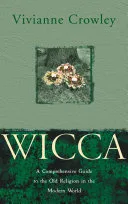
Wicca: A comprehensive guide to the Old Religion in the modern world
 78
78

Wicca: A comprehensive guide to the Old Religion in the modern world
Crowley's "Wicca" offers a refreshingly direct exposition of the Craft, eschewing sensationalism for clarity. Her explanation of the Wiccan Rede, "An it harm none, do what ye will," is particularly well-articulated, grounding the practice in personal ethics rather than arbitrary rules. The book's strength lies in its measured approach, presenting Wicca as a coherent spiritual system relevant to modern life. However, for readers already familiar with the basics, the comprehensive nature might feel slightly introductory, with less exploration of the deeper theological debates or diverse theological interpretations within contemporary Wicca. The passage detailing the casting of a circle, while clear, could benefit from a more expansive discussion of its psychological and energetic significance for the solitary practitioner. Overall, Crowley provides a solid, well-reasoned foundation for understanding the Old Religion.
📝 Description
78
Vivianne Crowley's 1996 book clarifies Wicca as a living tradition with ancient roots, not a recent invention.
Vivianne Crowley's "Wicca: A Comprehensive Guide to the Old Religion in the Modern World" distinguishes modern Wicca from sensationalized portrayals, presenting it as a spiritual path with ancient foundations. The book outlines core beliefs and practices, focusing on nature, personal accountability, and the immanent divine. It covers fundamental concepts, ethical guidelines, and common rituals for those interested in contemporary Wiccan observance. This work aims to provide a clear introduction for individuals curious about nature-based spirituality or seeking alternatives to mainstream faiths. It appeals to seekers who prioritize spiritual autonomy and a connection to the Earth and its cycles. Readers will find explanations of key ideas, ceremonies, and the community's ethical code. Crowley places modern Wicca within its historical context, acknowledging links to pre-Christian European paganism and the influence of 20th-century revivalist movements. The book discusses Wicca's lineage and development, including figures like Gerald Gardner and the rise of covens, while stressing its adaptation to present-day life. It offers a balanced view, separating historical influences from current interpretations and practices.
This book situates modern Wicca within the broader currents of Western Esotericism, specifically its Pagan revivalist branches. It addresses the attempts to reconstruct or reinterpret pre-Christian European religious traditions in the 20th century. Crowley's work engages with the lineage of figures like Gerald Gardner, who were instrumental in shaping contemporary Wicca, and examines its relationship to older forms of folk magic and nature veneration. The book clarifies how these elements are synthesized into a distinct spiritual path adapted for modern adherents, emphasizing personal experience and ethical responsibility.
💡 Why Read This Book?
• Learn the core ethical framework of Wicca, including the nuanced meaning of the Wiccan Rede ("An it harm none, do what ye will"), enabling a deeper understanding of personal responsibility in spiritual practice. • Grasp the significance of the Wheel of the Year, a central concept detailing the eight seasonal festivals, which offers a nature-based cyclical perspective on life and spirituality. • Understand the role and symbolism of the God and Goddess in Wiccan theology, providing insight into divine duality and its representation in natural forces.
⭐ Reader Reviews
Honest opinions from readers who have explored this book.
❓ Frequently Asked Questions
What is the origin of the term 'Wicca'?
The term 'Wicca' is derived from the Old English word for 'witch' or 'sorcerer.' Vivianne Crowley's work explores how this term came to be associated with the modern revival of the Old Religion, distinguishing it from historical witch trials.
Does Wicca involve worshipping Satan?
No, Wicca is a nature-based religion that venerates deities often understood as the God and Goddess. Crowley explicitly debunks the association with Satan, which is a concept rooted in Abrahamic traditions and has no place in Wiccan theology.
What are the main holidays or festivals in Wicca?
Wiccan practice often follows the Wheel of the Year, celebrating eight major festivals: the solstices, equinoxes, and four cross-quarter days (Samhain, Beltane, Lughnasadh, Imbolc). These mark significant points in the natural year.
Is Wicca a solitary practice or done in groups?
Wicca can be practiced both solitarily and within groups called covens. Crowley discusses the merits and structures of both approaches, catering to different individual needs and preferences for community or independent practice.
What is the role of magic in Wicca?
Magic is considered a natural part of the universe and a way to effect change in accordance with natural law. Crowley explains it as a skill that can be developed through focused will, visualization, and ritual, emphasizing ethical application.
When was Vivianne Crowley's 'Wicca' first published?
Vivianne Crowley's "Wicca: A Comprehensive Guide to the Old Religion in the Modern World" was first published on April 7, 2016, making it a contemporary resource for understanding this ancient spiritual path.
🔮 Key Themes & Symbolism
The God and Goddess
Crowley elucidates the central Wiccan concept of divine polarity, represented by the God and Goddess. This duality is not seen as opposing forces but as complementary aspects of the divine, mirroring the cycles of nature, life, death, and rebirth. The Goddess is often associated with the Moon, intuition, and the feminine principle, while the God embodies the Sun, vitality, and the masculine principle. Their union and interplay are fundamental to understanding the Wiccan worldview and its approach to creation and existence.
The Wheel of the Year
This theme explores the cyclical nature of time as observed in Wicca, marked by eight principal festivals. These include the solstices and equinoxes, along with cross-quarter days like Samhain and Beltane. Crowley details how these celebrations correspond to the Earth's seasonal progression and agricultural cycles, serving as focal points for ritual and spiritual reflection. Observing the Wheel fosters a deep connection to nature's rhythms and an appreciation for the ongoing processes of growth, decay, and renewal.
Ethics and Personal Responsibility
A central to Wiccan philosophy, as presented by Crowley, is the ethical directive known as the Wiccan Rede: "An it harm none, do what ye will." This principle underscores the importance of personal freedom coupled with a profound sense of responsibility for one's actions and their consequences. It guides practitioners to act with awareness and consideration, ensuring that their choices do not inflict harm upon themselves, others, or the environment, forming the basis of a compassionate and self-aware spiritual path.
The Practice of Magic
Crowley addresses magic not as supernatural manipulation but as a natural human faculty for focusing intention and will to effect change. The book outlines basic principles of ritual, spellcraft, and energy work within a Wiccan context. It emphasizes that magic is a tool for personal growth, healing, and harmonizing with natural forces, always within the bounds of the Rede. Understanding magic involves developing intuition, visualization, and a deep connection to the energetic currents of the universe.
💬 Memorable Quotes
Direct passages from the work, attributed to the author.
“Wicca is said to be the oldest religion in the world.”
— This statement, often used to introduce Wicca, highlights its claimed antiquity and deep roots in pre-Christian European traditions, positioning it as a continuous spiritual lineage.
“An it harm none, do what ye will.”
— This is the central ethical tenet of Wicca, emphasizing personal freedom and autonomy while simultaneously demanding responsibility for the consequences of one's actions towards all beings.
“The way of the Witch”
— This phrase expresses the spiritual path and lifestyle associated with Wicca, referring to the practices, beliefs, and worldview of its adherents.
“The Old Religion in the modern world”
— This signifies Wicca's connection to ancient pagan beliefs and practices while asserting its continued relevance and adaptability to contemporary society and spiritual needs.
“The Wheel of the Year”
— This refers to the annual cycle of eight seasonal festivals observed in Wicca, marking the Earth's turning and providing a framework for ritual and spiritual connection to nature's rhythms.
🌙 Esoteric Significance
Tradition
Wicca, as presented by Crowley, draws heavily from Western esoteric traditions, particularly those influenced by Romantic pagan revivals and the broader Neopagan movement. It aligns with a Hermetic sensibility in its emphasis on correspondences, the interconnectedness of all things, and the immanence of the divine within nature. While not strictly Kabbalistic or Gnostic, it shares a focus on divine immanence and personal gnosis, departing from the transcendent deity model of Abrahamic faiths.
Symbolism
Key symbols include the pentacle, representing the five elements (Earth, Air, Fire, Water, Spirit) and protection, often worn with the points upward. The Horned God and the Triple Goddess are central divine figures, symbolizing the divine masculine and feminine principles and their archetypal manifestations in nature. The Wheel of the Year, with its eight festivals, symbolizes the cyclical nature of life, death, and rebirth, and the Earth's journey through the seasons.
Modern Relevance
Crowley's work remains relevant to contemporary spiritual seekers interested in nature-based religions, earth-centered spirituality, and feminist theology. It provides a foundational text for individuals exploring Neopaganism, witchcraft, and alternative spiritual paths. Thinkers and practitioners focusing on ecospirituality, modern shamanism, and the integration of ancient wisdom traditions into daily life often draw upon the principles outlined in this guide.
👥 Who Should Read This Book
• Beginning students of Wicca and Neopaganism seeking a clear, non-sensationalized introduction to its core beliefs, ethics, and practices. • Individuals interested in comparative religion or esotericism who wish to understand a prominent modern nature-based spiritual path. • Those exploring personal spirituality and seeking frameworks that emphasize connection to nature, personal responsibility, and divine immanence.
📜 Historical Context
Vivianne Crowley's "Wicca" emerged in a landscape significantly shaped by the mid-20th century Wiccan revival. Figures like Gerald Gardner, who established the first widely recognized Gardnerian Wiccan coven in the 1950s, laid crucial groundwork. Crowley's work, first published in 2016, builds upon this legacy while addressing contemporary seekers. The book implicitly engages with the ongoing discourse surrounding the historical accuracy of Wicca's claimed lineage to ancient paganism, a topic debated by scholars and practitioners alike. While not directly engaging with specific criticisms from historians, Crowley's focus on the *modern* practice and its philosophical underpinnings positions the book as a guide for contemporary adherents, distinct from purely academic historical treatises. It navigates the space between the spiritual claims of the religion and its observable manifestations in the 21st century, acknowledging the influence of figures like Gardner without being solely beholden to early 20th-century interpretations.
📔 Journal Prompts
The Wiccan Rede's directive: 'An it harm none, do what ye will.'
The symbolism of the Horned God and the Triple Goddess in your life.
Reflecting on the Wheel of the Year and its alignment with your personal experiences.
Your understanding of magic as a natural force within the universe.
The concept of divine polarity and its presence in the natural world.
🗂️ Glossary
Wiccan Rede
The primary ethical code in Wicca, famously summarized as 'An it harm none, do what ye will.' It emphasizes personal freedom and accountability for one's actions.
Wheel of the Year
The annual cycle of eight festivals celebrated in Wicca, corresponding to the solstices, equinoxes, and cross-quarter days, marking the Earth's seasonal changes.
Coven
A group of Wiccans who practice together, typically led by a High Priestess and/or High Priest. Covens vary in size and structure.
Pentacle
A five-pointed star, usually enclosed in a circle, symbolizing the five elements (Earth, Air, Fire, Water, Spirit) and used for protection or as a symbol of faith.
God and Goddess
The principal deities in many Wiccan traditions, representing divine masculine and feminine principles, often associated with the Sun and Moon respectively.
Athame
A ritual dagger, primarily used for directing energy and symbolizing the element of Fire or Air, not typically used for cutting physical objects.
Circle Casting
A ritual act of creating a sacred space, typically by visualizing and defining a circle, used for spellwork, meditation, or worship.

![Cruels effets de la vengeance du Cardinal de Richelieu, ou Histoire des diables de Loudun, de la possession des religieuses ursulines, et de la condamnation et du suplice [sic] d'Urbain Grandier, curé de la même ville. 1716: Iss 53](/img/thumb/cruels-effets-de-la-vengeance-du-cardinal-de-richelieu-ou-histoire-des-diables-de-loudun-de-la-possession-des-religieuses-ursulines-et-de-la-condamnation-et-du-suplice-sic-d-urbain-grandier-cur-de-la-.webp)