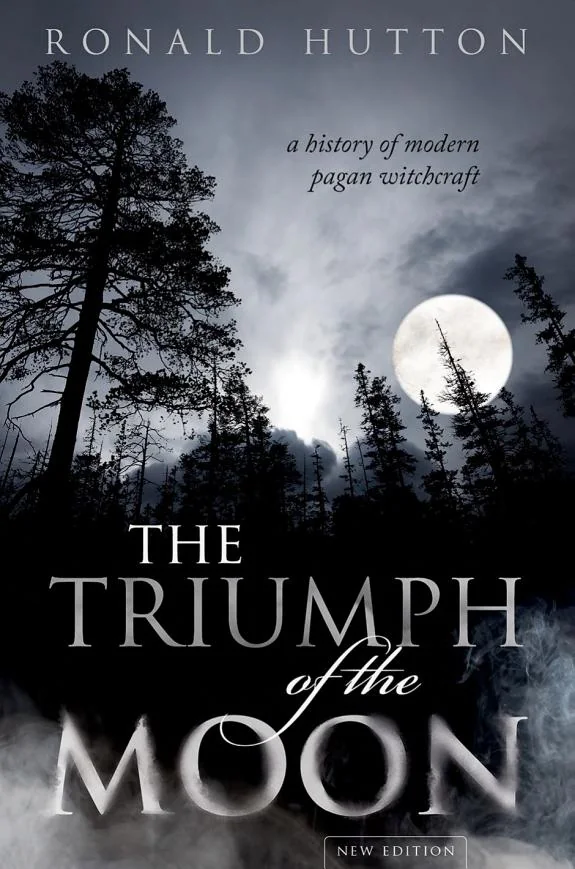
The Triumph of the Moon
 79
79

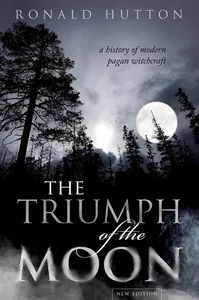
The Triumph of the Moon
Ronald Hutton’s *The Triumph of the Moon* is a foundational text for understanding the history of modern witchcraft, and its publication remains a significant event in esoteric scholarship. Hutton’s strength lies in his rigorous, evidence-based approach, effectively dismantling sensationalist myths that have long plagued the subject. He meticulously traces the lineage of Wicca, particularly through the work of Gerald Gardner, demonstrating its roots in early 20th-century occultism rather than ancient paganism. A particularly compelling section details the early covens and the gradual public emergence of Wicca, highlighting the challenges and transformations the movement underwent. While the book excels as a historical account, its engagement with the lived, spiritual experience of practitioners can sometimes feel secondary to the archival research. This is not a critique of its historical accuracy, but rather an observation of its focus. For instance, while the development of initiatory rites is thoroughly documented, the subjective meaning of these rites for individuals is less emphasized. Nevertheless, *The Triumph of the Moon* stands as an indispensable, authoritative history.
📝 Description
79
Ronald Hutton's 2019 book traces modern witchcraft from early 20th-century revivalism to contemporary practice.
Published in 2019, Ronald Hutton's *The Triumph of the Moon* provides a detailed historical account of Wicca and modern witchcraft in Britain. It moves past common misconceptions to investigate how these traditions developed from their early 20th-century beginnings into current practices. The book carefully follows the changes in beliefs, rituals, and group structures, giving a well-researched look at a spiritual movement often misunderstood.
Hutton bases his work on thorough research. He uses archival records, personal accounts, and academic studies to build a chronological narrative. This approach allows him to place the rise of modern witchcraft within the wider context of early 20th-century interest in esoteric ideas. The book examines how figures like Aleister Crowley and Gerald Gardner, central to the story, were part of a period seeking alternatives to industrial society and its perceived spiritual emptiness.
This book situates modern witchcraft within the broad sweep of Western esotericism, particularly the revivalist currents of the late 19th and early 20th centuries. It connects the emergence of Gardnerian Wicca and other pagan traditions to earlier occult revivals, folklore studies, and attempts to reconstruct or invent pre-Christian European religions. Hutton demonstrates how these movements drew on existing esoteric ideas while forging new spiritual paths distinct from established religions.
💡 Why Read This Book?
• Understand Wicca's genuine historical origins, moving beyond folklore to grasp its 20th-century emergence through figures like Gerald Gardner, as detailed in the book's extensive archival research. • Gain clarity on the concept of 'pagan revivalism' and how various groups in the early 1900s attempted to reconstruct or invent ancient spiritual practices, a key focus of Hutton's analysis. • Appreciate the social and intellectual currents of early 20th-century Britain that fostered esoteric movements, offering context for how Wicca and witchcraft developed distinct identities.
⭐ Reader Reviews
Honest opinions from readers who have explored this book.
❓ Frequently Asked Questions
Is 'The Triumph of the Moon' an academic study or a practitioner's guide?
Ronald Hutton's work is primarily an academic and historical study. It rigorously examines the origins and development of Wicca and modern witchcraft based on extensive research, rather than offering practical instructions for practitioners.
When was 'The Triumph of the Moon' first published?
The book was first published in 2019, making it a relatively recent comprehensive historical survey of modern witchcraft in Britain.
Does the book support the idea that Wicca is an ancient religion?
No, Hutton meticulously argues against the notion of Wicca as an unbroken ancient tradition. He demonstrates its relatively recent origins in the 20th century, largely influenced by figures like Gerald Gardner and the broader esoteric revival.
What historical period does 'The Triumph of the Moon' cover?
The book covers the historical development of Wicca and modern witchcraft primarily in Britain, from their earliest roots in the early 20th century up to the time of its publication in 2019.
Who is Ronald Hutton and what is his expertise?
Ronald Hutton is a prominent British historian specializing in the history of paganism and the occult. His academic work is known for its meticulous research and critical analysis of historical sources related to these subjects.
Are there specific individuals from history discussed in 'The Triumph of the Moon'?
Yes, the book extensively discusses key figures in the development of modern witchcraft, most notably Gerald Gardner, often considered the father of Wicca, and Aleister Crowley, whose influence on esoteric thought is also explored.
🔮 Key Themes & Symbolism
Modern Origins of Wicca
Hutton critically examines the widely held belief that Wicca is an ancient religion that survived through centuries. Instead, he presents compelling evidence tracing its genesis to the mid-20th century, primarily through the work of Gerald Gardner. The book details how Gardner's rituals and organizational structures, though drawing inspiration from earlier occult traditions and folklore, constituted a novel religious creation rather than a direct revival of pre-Christian paganism. This theme challenges romanticized notions and grounds the understanding of Wicca in verifiable historical development and documented practices from the 1940s and 1950s.
Pagan Revivalism and Esotericism
The book situates the emergence of modern witchcraft within the broader context of early 20th-century pagan revivalism and esoteric currents. It explores various attempts by individuals and groups to reconstruct or reinvent pre-Christian European religions, often influenced by romanticism, folklore studies, and occult philosophies. Hutton differentiates between these diverse revivalist efforts, highlighting how specific influences, such as ceremonial magic and the writings of figures like Aleister Crowley, contributed to the distinct forms that Wicca eventually took. This theme underscores the intellectual and spiritual milieu in which modern witchcraft was born.
The Role of Ritual and Coven Structure
A significant aspect of *The Triumph of the Moon* is its analysis of the development and function of ritual and coven structures in modern witchcraft. Hutton details how Gardnerian Wicca, for instance, established specific initiatory rites, hierarchies, and modes of practice that created a sense of lineage and community. The book explores how these formalized elements were crucial for the identity formation and transmission of witchcraft traditions. By examining the evolution of these practices, the work provides insight into the social dynamics and organizational strategies that enabled these movements to grow and persist.
Myth vs. History in Esoteric Traditions
This theme addresses the complex interplay between myth-making and historical documentation within esoteric traditions. Hutton confronts how narratives about ancient origins, magical lineage, and secret knowledge have been constructed and perpetuated by practitioners themselves. He meticulously separates verifiable historical facts from the lore and mythology that often surrounds witchcraft. The book serves as a model for critically evaluating esoteric claims, emphasizing the importance of empirical evidence and scholarly rigor in understanding the historical trajectory of movements like Wicca.
💬 Memorable Quotes
Direct passages from the work, attributed to the author.
“Wicca, in the form in which it was first widely known, was a creation of the 20th century.”
— This statement expresses Hutton's central thesis: that Wicca, contrary to popular belief or practitioner claims, is a modern invention rather than an ancient survival. It highlights the book's focus on historical reconstruction based on evidence from the 20th century.
“Gerald Gardner's Book of Shadows was not a rediscovered ancient text, but a compilation and adaptation.”
— This interpretation points to Hutton's analysis of the foundational texts of Wicca, suggesting they were actively constructed by Gardner, drawing from various sources, rather than being direct transmissions of ancient rites. It underscores the book's critical approach to authenticity claims.
“The witch craze of the early modern period bears little relation to the origins of modern witchcraft.”
— This highlights Hutton's differentiation between historical witch hunts and the subsequent development of modern Wicca. It argues against a direct lineage, emphasizing that contemporary witchcraft traditions do not stem from the accused witches of earlier centuries.
“Folklore and romanticism played a significant role in shaping early pagan revivalist ideas.”
— This interpretation suggests that the book explores how idealized notions of ancient paganism, often derived from folklore and romantic literature, influenced the foundational concepts and aspirations of those seeking to revive pagan practices in the 20th century.
💡 Key Ideas
Editorial paraphrase of the work's core concepts — not direct quotes.
The public emergence of Wicca in the 1950s was met with both fascination and fear.
This paraphrased concept reflects the societal reception of early Wicca. It points to the book's examination of how the nascent movement navigated public perception, dealing with sensationalism and misrepresentation while gradually establishing its presence.
🌙 Esoteric Significance
Tradition
This work primarily engages with the Western Esoteric Tradition, specifically concerning modern pagan and Wiccan movements. While not strictly adhering to a single lineage like Hermeticism or Kabbalah, it analyzes how these broader esoteric currents influenced the reconstruction and invention of pagan practices. Hutton's approach departs from traditional esoteric scholarship by applying rigorous historical methodology, often challenging the self-mythologizing narratives within these traditions. It fits within the academic study of modern spirituality, providing a historical anchor for movements that often claim ancient roots.
Symbolism
The book implicitly touches upon the symbolism of the Moon within Wicca, reflecting its association with the divine feminine, cycles of nature, and the night. While not a deep dive into esoteric symbolism, it acknowledges how symbols like the pentagram, often used in Wiccan ritual, were adopted and reinterpreted from earlier magical traditions. The concept of the 'coven' itself functions as a symbolic unit, representing community, initiation, and the transmission of sacred knowledge within the modern witchcraft milieu.
Modern Relevance
Contemporary scholars of religion, particularly those studying new religious movements and Neopaganism, frequently cite Hutton's work as a foundational text. Practitioners of Wicca and various forms of modern witchcraft continue to rely on *The Triumph of the Moon* for historical context and validation of their traditions' development. Thinkers exploring the history of counter-cultures, alternative spiritualities, and the impact of historical revisionism on identity formation find value in its methodology and conclusions.
👥 Who Should Read This Book
• Students of religious history and comparative religion seeking an authoritative, evidence-based account of Wicca's origins and evolution. • Practitioners of Wicca and modern witchcraft interested in understanding the historical context and development of their traditions beyond popular myths. • General readers fascinated by the history of esoteric movements, occultism, and alternative spiritualities in 20th-century Britain.
📜 Historical Context
Published in 2019, *The Triumph of the Moon* emerged in an era where scholarly interest in modern paganism and esotericism had matured considerably. Ronald Hutton, a leading historian in the field, wrote this book decades after his key work *The Pagan Religions of the British Isles* (1991), allowing for a more focused and detailed examination of Wicca. The intellectual currents of the late 20th and early 21st centuries emphasized critical analysis of religious movements and a move away from romanticized notions of ancient survivals. Hutton's work engaged directly with earlier scholarship, including that of scholars like Tansy E. R. Davies and scholars associated with the study of occultism, offering a definitive, evidence-based narrative. While not facing overt censorship, the subject matter had long been prone to sensationalism and misinterpretation, making Hutton's rigorously researched account a vital corrective. His meticulous tracing of Gardnerian Wicca’s development, from its post-WWII origins through to the late 20th century, provided a crucial counterpoint to more mythologically-driven accounts.
📔 Journal Prompts
The documented practices of early covens in the 1950s.
Gerald Gardner's specific contributions to Wiccan ritual structure.
The concept of 'pagan revivalism' as presented in the text.
Hutton's distinction between historical witch hunts and modern witchcraft.
The influence of Aleister Crowley on early 20th-century esoteric thought.
🗂️ Glossary
Wicca
A modern, nature-based religion that emerged in Britain in the mid-20th century, largely through the work of Gerald Gardner. It typically involves rituals, covens, and a reverence for nature and deities.
Gardnerian Wicca
The specific tradition of Wicca founded by Gerald Gardner, characterized by its initiatory structure, Book of Shadows, and emphasis on ritual magic. It formed the basis for many subsequent Wiccan traditions.
Coven
A group of witches, traditionally numbering thirteen, who meet for ritual purposes. In Gardnerian Wicca, it signifies a formal structure for initiation and practice.
Pagan Revivalism
A broad term encompassing various attempts throughout history, particularly in the 19th and 20th centuries, to reconstruct or reinvent pre-Christian European religious traditions.
Esotericism
Systems of thought and practice focused on hidden knowledge or spiritual insight, often involving initiation, symbolism, and mystical experiences. Includes traditions like Hermeticism, Kabbalah, and Theosophy.
Book of Shadows
A personal or coven grimoire containing rituals, spells, and magical information. In Gardnerian Wicca, it refers to a specific text compiled by Gerald Gardner, adapted by subsequent leaders.
Aleister Crowley
A highly influential British occultist, ceremonial magician, and poet who founded the religion of Thelema. His writings and practices significantly impacted the broader esoteric range of the 20th century.
🔮 Readers Also Liked
Browse all →




![Practicae novae imperialis Saxonicae rerum criminalium pars I.[-III.] ... Editio quarta correctior, ... 1658: Iss 198](/img/thumb/practicae-novae-imperialis-saxonicae-rerum-criminalium-pars-i-iii-editio-quarta-correctior-1658-iss-198-carpzov-benedict-1595-1666.webp)


![CIA Reading Room cia-rdp75-00149r000200590003-6: PROTECTING [PRIVACY AND FREEDOM]](/img/thumb/cia-reading-room-cia-rdp75-00149r000200590003-6-protecting-privacy-and-freedom-cia-reading-room.webp)
More by Ronald Hutton
All books →




More Free Witchcraft & Paganism Books
View all →