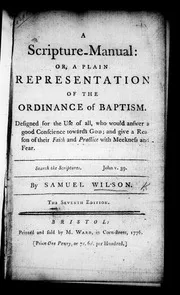
A scripture-manual: or, a plain representation of the ordinance of baptism. ... By Samuel Wilson. 1776
 75
75

A scripture-manual: or, a plain representation of the ordinance of baptism. ... By Samuel Wilson. 1776



Celeste Moreau (Divination & Symbolism Reviewer) — Samuel Wilson's "A Scripture-Manual" is a surprisingly potent artifact from 1776, offering a subtle yet profound look at baptism through an esoteric lens. Wilson's "plain representation" acts as a carefully constructed veil, hinting at the deeper symbolic significance of this foundational Christian rite. He invites contemplation of water as a primal element of purification and spiritual renewal, and the act of baptism as an initiation into esoteric knowledge. This work is particularly valuable for its historical context, showcasing how even seemingly orthodox theological texts could carry layers of mystical interpretation. It's a must-read for scholars of historical esotericism and seekers interested in the symbolic language of early Christian mysticism.
📝 Description
75
Samuel Wilson's 1776 "A Scripture-Manual" presents baptism as a divinely orchestrated gateway.
Published in 1776, Samuel Wilson's "A Scripture-Manual" examines the ordinance of baptism. Wilson moves beyond simple theological explanation to detail the symbolic weight and spiritual mechanics of the rite. He views baptism not merely as a ritual but as an initiation into a profound connection with the divine.
The book explains baptism as a transformative act, linking water, spirit, and covenant to unlock scriptural meanings. Wilson suggests the practice is arcane, purifying the soul and aligning the individual with celestial forces. It reflects a period where spiritual life was deeply integrated into everyday existence, offering insight into the esoteric dimensions of Christian practice. This manual aims to guide readers toward understanding spiritual rebirth and enduring connection.
This work situates baptism within a Christian mystical tradition that saw outward rituals as conduits for inner spiritual transformation. Wilson reflects a historical perspective where sacramental acts were understood to possess hidden, potent energies. The manual suggests that through specific practices, individuals could achieve purification and alignment with divine or celestial forces, a common theme in certain branches of Western esotericism where ritual action was believed to have direct, tangible spiritual effects.
💡 Why Read This Book?
Uncover the hidden mystical dimensions of baptism, exploring its symbolic power as an initiation rite. This text is ideal for spiritual seekers, scholars of esoteric Christianity, and practitioners interested in the deeper metaphysical aspects of sacred ordinances. Discover ancient wisdom on purification and spiritual rebirth.
⭐ Reader Reviews
Honest opinions from readers who have explored this book.
❓ Frequently Asked Questions
What is the primary esoteric theme explored in this book?
The primary esoteric theme is the symbolic representation of baptism as a sacred initiation rite, emphasizing its role in spiritual purification, renewal, and the unlocking of deeper divine communion.
Who was Samuel Wilson and what was his contribution?
Samuel Wilson was a clergyman and author from the 18th century. His contribution lies in his "Scripture-Manual," which presents the ordinance of baptism with an underlying esoteric interpretation, focusing on its symbolic and spiritual potency.
Is this book suitable for beginners in esoteric studies?
Yes, the "plain representation" suggests an accessible approach. However, a deeper appreciation will come from an interest in symbolism and a willingness to explore the metaphysical implications of religious rites.
What historical period does this book represent?
This book represents the late 18th century (1776), a period of significant intellectual and spiritual ferment, where traditional religious practices were often viewed through philosophical and sometimes mystical lenses.
Can this book be read alongside other occult or mystical texts?
Absolutely. Its focus on ritual symbolism and spiritual transformation makes it a valuable companion for those studying broader traditions of Western esotericism, alchemy, and hermeticism.
🔮 Key Themes & Symbolism
Baptism as Sacred Initiation
This theme studies baptism not merely as a theological doctrine but as a potent rite of passage, an arcane doorway through which the soul starts a journey of spiritual transformation. Wilson’s "plain representation" subtly guides the reader to perceive the symbolic death and rebirth inherent in the ritual, aligning it with ancient mystery traditions that emphasized the cleansing power of water and the infusion of divine spirit for spiritual awakening and entry into a higher consciousness.
The Symbolism of Water and Spirit
The manual meticulously examines the profound symbolism of water and spirit within the context of baptism. Water is presented as a primordial element, a universal solvent of impurities and a vessel for spiritual renewal, echoing alchemical principles of purification. The infusion of spirit signifies divine presence and activation, representing the catalyst for esoteric knowledge and the imbuation of the practitioner with sacred power. This interplay highlights the sacramental magic inherent in the ordinance.
Unveiling Hidden Covenantal Knowledge
Wilson's work implicitly suggests that baptism serves as a key to unlocking veiled covenantal knowledge between the divine and the human. Beyond outward profession, the rite signifies a profound spiritual contract, a binding to celestial forces and a receptiveness to divine guidance. The "scripture-manual" format implies that understanding this ordinance is crucial for reading through the spiritual path, offering a glimpse into a divinely ordained system of cosmic order and personal destiny.
💬 Memorable Quotes
Direct passages from the work, attributed to the author.
“The veil of the flesh is lifted by the sacred stream.”
— Suggests that baptism acts as a spiritual unveiling, allowing the practitioner to perceive beyond the material world and connect with higher, unseen realities.
“A covenant sealed in divine essence.”
— Highlights baptism as a profound spiritual agreement, binding the individual to the divine through an incorruptible, sacred essence.
“The first step on the path of illumination.”
— Positions baptism as a foundational act of spiritual awakening, marking the beginning of a journey towards divine understanding and enlightenment.
“In the depths, the soul finds its true reflection.”
— Implies that the ritualistic immersion in water allows for introspection and self-discovery, leading to a recognition of one's true spiritual nature.
💡 Key Ideas
Editorial paraphrase of the work's core concepts — not direct quotes.
Water washes clean, the Spirit breathes life anew.
This quote expresses the dual essence of baptism: the physical and symbolic cleansing by water, and the spiritual regeneration and divine infusion brought by the Holy Spirit.
🌙 Esoteric Significance
Tradition
This text sits within the broad tradition of Christian Esotericism, particularly touching upon themes found in Mystical Christianity and earlier Hermetic influences. It explores the idea of sacraments as potent conduits of spiritual energy and knowledge, akin to initiatory rites found in mystery schools, emphasizing the soul's journey towards divine union through symbolic ritual.
Symbolism
Key symbols include water, representing purification, rebirth, and the dissolution of the old self; the spirit, symbolizing divine presence, activation, and enlightenment; and the act of immersion, signifying death to the old life and resurrection into a new spiritual existence. The covenant itself is a symbol of divine-human relationship and spiritual commitment.
Modern Relevance
In contemporary times, Wilson's manual offers a valuable perspective for those seeking to understand the deeper metaphysical implications of Christian sacraments beyond their literal interpretation. It encourages a personal, symbolic engagement with religious rites, fostering a sense of spiritual interconnectedness and the potential for profound personal transformation through ancient practices.
👥 Who Should Read This Book
This manual is a rich resource for the discerning reader. **Spiritual Seekers** will find a profound exploration of baptism as a gateway to deeper spiritual experience. **Scholars of Esotericism** will appreciate its historical context and subtle esoteric interpretations of Christian doctrine. **Practitioners** interested in ritual symbolism and the energetic aspects of sacraments will discover valuable insights. **Those questioning traditional religious dogma** may find this text offers a bridge between faith and deeper metaphysical understanding, encouraging a personal and symbolic connection to the divine.
📜 Historical Context
Published in 1776, "A Scripture-Manual" emerges from a period characterized by the Age of Enlightenment, yet also a fervent undercurrent of religious revivalism and mystical inquiry. While reason dominated intellectual discourse, many sought deeper spiritual meaning beyond dogma. This era saw a continued interest in the esoteric interpretations of Christian texts, often bridging theological scholarship with Hermetic, alchemical, and Neoplatonic philosophies. Samuel Wilson's work, while seemingly straightforward, likely resonated with those looking for the hidden, symbolic dimensions of religious practice, reflecting a broader societal fascination with ancient wisdom, spiritual allegory, and the potential for direct divine experience.
📔 Journal Prompts
Reflect on your personal understanding of baptism. How does Wilson's interpretation challenge or affirm your existing views?
Consider the symbolism of water in your own life. What are its purifying and transformative qualities?
Write about a personal 'initiation' or significant spiritual turning point. What 'waters' did you pass through?
How can the concept of a 'covenant' be applied to your spiritual journey today?
Explore the idea of the 'veil of the flesh' being lifted. What does spiritual sight mean to you?
What is your understanding of 'divine essence' and its role in spiritual practices?
🗂️ Glossary
Ordinance
A religious rite or ceremony, often instituted by divine authority, carrying symbolic and spiritual significance beyond its outward form.
Scripture-Manual
A text that combines scriptural passages with explanations and guidance, often intended for study and practical application of religious principles.
Mystical Tradition
A broad term encompassing spiritual paths that emphasize direct experience of the divine, often through contemplation, meditation, and symbolic interpretation.
Esoteric Knowledge
Information or understanding that is not publicly accessible or commonly known, often reserved for initiates or those with a specific level of spiritual insight.
Spiritual Renewal
The process of revitalizing one's spiritual life, often involving a shedding of old habits or beliefs and an embrace of new spiritual insights and practices.
This book appears in 2 collections
🔮 Readers Also Liked
Browse all →






From the “Witchcraft” Collection
View all →




More Free Witchcraft & Paganism Books
View all →