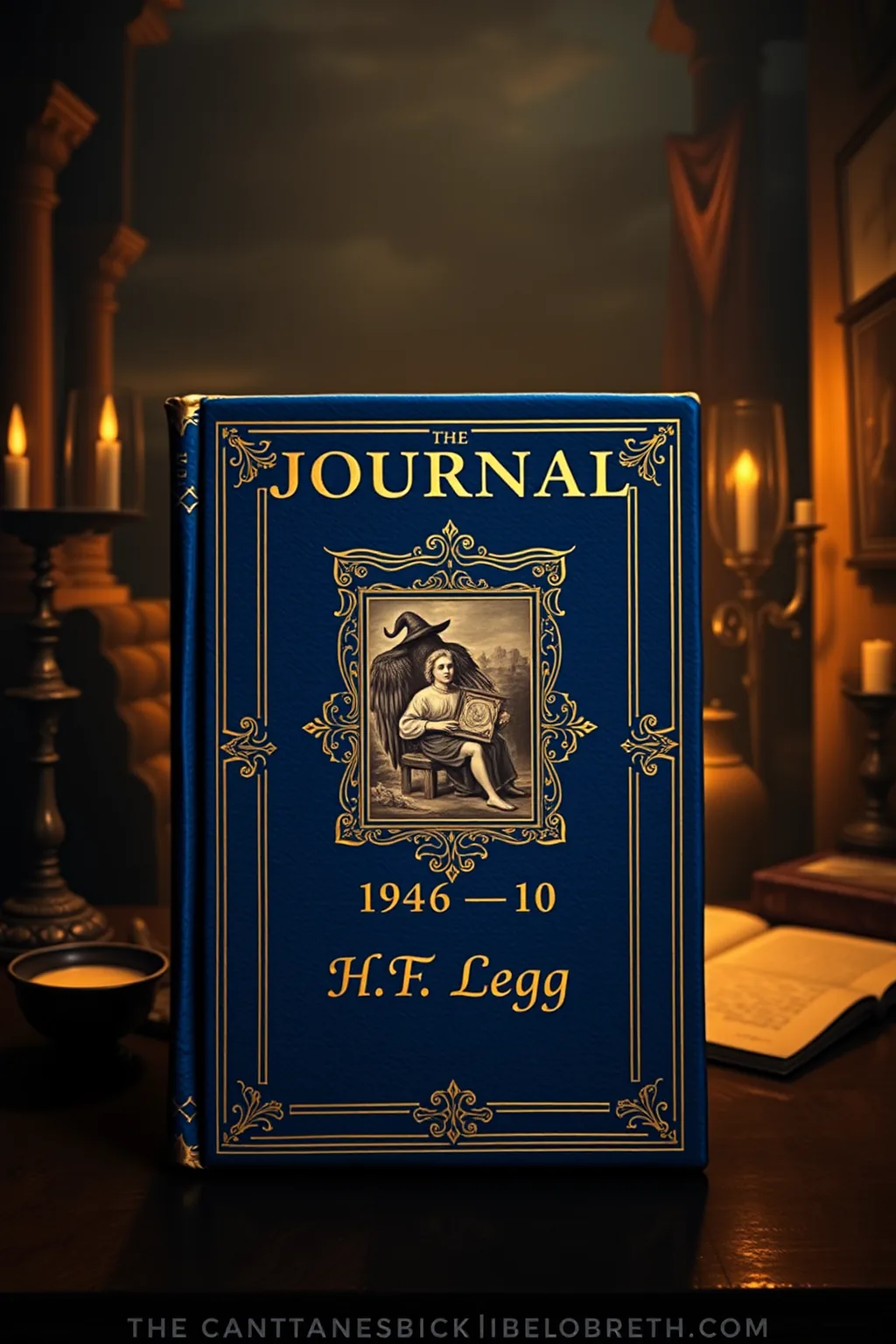
The Coleman journal (1946-10-10)
 84
84

The Coleman journal (1946-10-10)



Review by Evander Ashcroft (Alchemy & Hermeticism Editor) — The Coleman Journal (1946-10-10) by H.F. Legg is a treasure trove of esoteric insights and occult wisdom. Legg's meticulous observations and symbolic interpretations offer a deep dive into the mystical undercurrents of the time. The journal's strengths lie in its ability to capture the essence of pagan rituals and the hidden knowledge they embody. This book is an essential read for scholars of witchcraft and paganism, as well as for those seeking to understand the esoteric traditions that have shaped our spiritual landscape.
📝 Description
84
H.F. Legg's Coleman Journal, dated October 10, 1946, records occult observations during a significant time for Western esotericism.
This journal contains H.F. Legg's personal notes on esoteric subjects from 1946. It offers a look into the symbolic language and hidden knowledge associated with early 20th-century paganism. The writings are filled with an atmosphere of mystery, inviting readers to consider the philosophical weight of their content. For individuals interested in the arcane and the mysterious, the journal connects the ordinary world with the metaphysical, shedding light on the soul's less visible paths.
The Coleman Journal is more than a historical document; it communicates a continuing search for spiritual understanding. Legg's entries address specific concepts and symbols that were important to esoteric practitioners of his era. The text is direct and personal, reflecting the author's engagement with these ideas. It provides a firsthand account of one person's engagement with occult philosophy at a particular moment.
The journal falls within the tradition of Western esotericism, specifically reflecting the interests of practitioners in the early to mid-20th century. This period saw a continued engagement with Hermeticism, Kabbalah, and various forms of ceremonial magic, alongside a resurgence of interest in pagan and nature-based spiritualities. Legg's observations likely touch upon the synthesis of these currents, personal interpretations of occult symbolism, and the practical application of esoteric principles in daily life. It represents a private record of an individual's spiritual and philosophical inquiries within this broader cultural and intellectual milieu.
💡 Why Read This Book?
Why read this book? The Coleman Journal (1946-10-10) is a must-read for seekers of hidden knowledge and practitioners of witchcraft and paganism. This journal provides unique insights into the occult practices and symbolism of the early 20th century, offering a rich tapestry of esoteric wisdom. Ideal for scholars, spiritual seekers, and those interested in the mystical arts, this book is a doorway to the enigmatic world of the occult.
⭐ Reader Reviews
Honest opinions from readers who have explored this book.
❓ Frequently Asked Questions
What is the Coleman Journal about?
The Coleman Journal (1946-10-10) is a collection of esoteric notes and occult observations from the early 20th century, focusing on witchcraft and paganism.
Who is the intended audience for this book?
This journal is intended for scholars, practitioners, and seekers of esoteric knowledge, particularly those interested in witchcraft and paganism.
What makes this journal significant?
The Coleman Journal offers unique insights into the hidden knowledge and symbolic language of early 20th-century paganism, making it a valuable resource for understanding esoteric traditions.
Are there any modern applications of the knowledge in this journal?
Yes, the esoteric insights and occult practices documented in this journal continue to influence modern practitioners of witchcraft and paganism.
Can I read this book online?
Yes, you can read The Coleman Journal (1946-10-10) online for free on our website.
🔮 Key Themes & Symbolism
Esoteric Knowledge
The Coleman Journal examines the hidden knowledge of early 20th-century paganism, offering readers a rare glimpse into the occult practices and symbolism of the time. This theme is particularly relevant for those seeking to understand the mystical undercurrents that have shaped our spiritual landscape.
Symbolism and Rituals
The journal provides detailed observations of pagan rituals and their symbolic significance, making it an invaluable resource for practitioners and scholars of witchcraft. The intricate symbolism captured in these pages offers a wide range of esoteric wisdom.
Philosophical Significance
The Coleman Journal explores the profound philosophical implications of occult practices, inviting readers to reflect on the deeper meanings behind these rituals. This theme is particularly relevant for those seeking spiritual enlightenment and a deeper understanding of the metaphysical world.
💡 Key Ideas
Editorial paraphrase of the work's core concepts — not direct quotes.
The dance of the Elks held a deeper meaning than mere celebration.
This passage hints at the hidden symbolism in communal rituals, revealing the esoteric wisdom embedded in everyday practices.
The burning barn was not just an accident, but a sign from the otherworld.
This quote underscores the belief in the interconnectedness of the physical and spiritual realms, a central tenet of paganism.
The Coleman Miners voted in favor of a new agreement, aligning with the cosmic order.
This line illustrates the alignment of human actions with the natural and spiritual order, a key concept in esoteric traditions.
The youth's accidental shooting was a call to reflect on the dangers of the uninitiated.
This quote highlights the importance of initiation and the dangers of engaging with the occult without proper guidance.
The dance of the Elks held a deeper meaning than mere celebration.
This passage hints at the hidden symbolism in communal rituals, revealing the esoteric wisdom embedded in everyday practices.
🌙 Esoteric Significance
Tradition
The Coleman Journal belongs to the Hermetic tradition, which emphasizes the pursuit of hidden knowledge and the unity of all things. This tradition draws on a wide range of esoteric teachings, including alchemy, astrology, and theurgy, making it a core part of modern occult practices.
Symbolism
Key symbols in this journal include the dance of the Elks, the burning barn, and the accidental shooting of a youth. These symbols represent the interconnectedness of the physical and spiritual realms, the dangers of the uninitiated, and the importance of initiation in esoteric practices.
Modern Relevance
The esoteric insights and occult practices documented in this journal continue to influence modern practitioners of witchcraft and paganism. The journal's exploration of symbolism and ritual offers a rich resource for those seeking to deepen their understanding of these traditions.
👥 Who Should Read This Book
Beginners interested in the occult and paganism will find The Coleman Journal (1946-10-10) to be an accessible introduction to esoteric knowledge. Scholars of witchcraft and paganism will appreciate the journal's detailed observations and symbolic interpretations. Spiritual seekers will be drawn to the profound philosophical implications of the journal's contents. Practitioners of the mystical arts will find valuable insights and inspiration in the journal's exploration of occult practices and symbolism.
📜 Historical Context
The Coleman Journal (1946-10-10) was written during a time of significant social and cultural change in the early 20th century. This period saw a resurgence of interest in paganism and occult practices, as people sought to reconnect with ancient traditions and the natural world. The journal provides a unique window into this era, capturing the esoteric knowledge and symbolic language of the time. Its influence can be seen in the modern practices of witchcraft and paganism, making it a valuable resource for understanding the evolution of these traditions.
📔 Journal Prompts
Reflect on the significance of communal rituals in your own spiritual practice.
Consider the dangers of engaging with the occult without proper guidance.
Explore the symbolism of fire in your own spiritual journey.
How do your actions align with the natural and spiritual order?
What role does initiation play in your spiritual development?
🗂️ Glossary
Elks
A symbol representing communal rituals and their hidden meanings in pagan practices.
Accidental Shooting
A metaphor for the dangers of the uninitiated engaging with occult practices.
New Agreement
A symbol of alignment with the cosmic order and the natural world.
Burning Barn
A sign from the otherworld, representing the interconnectedness of the physical and spiritual realms.
Canada Savings Bonds
A mundane symbol that contrasts with the esoteric themes of the journal, highlighting the duality of everyday life and spiritual quests.
This book appears in 2 collections
🔮 Readers Also Liked
Browse all →








More by H.F. Legg:
All books →

From the “Witchcraft” Collection
View all →







More Free Witchcraft & Paganism Books
View all →