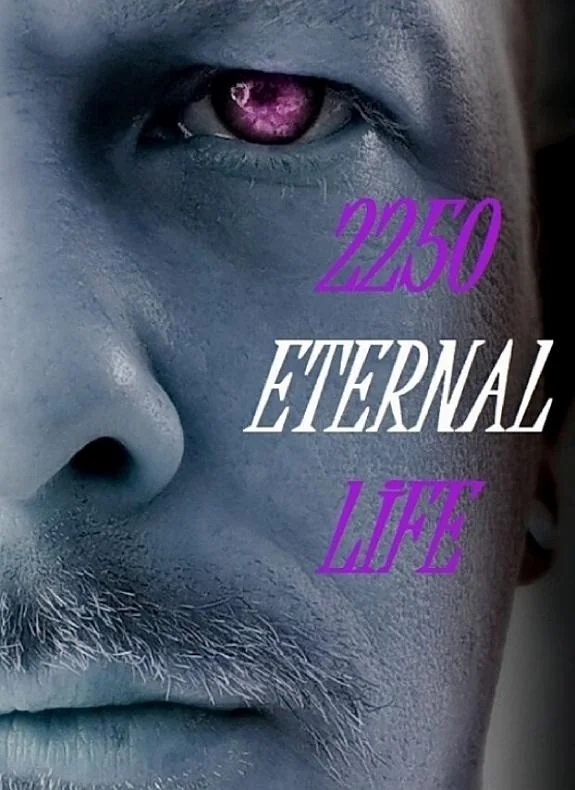
2250 Eternal Life
 74
74

2250 Eternal Life
Hannes Mühlböck's *2250 Eternal Life* offers a peculiar, yet compelling, perspective on the fabric of reality. The author's insistence on the interconnectedness of past, present, and future, presented not as a dry thesis but as a lived philosophical inquiry, is its primary strength. He successfully avoids dogmatism, framing his ideas as personal contemplations. However, the book’s strength is also its potential limitation; the deeply personal and often fragmented nature of the reflections can leave the reader adrift without a clear anchor. A particular passage discussing the fluidity of memory, where past experiences seem to bleed into present imaginings, highlights this. It's a work that demands patience and a willingness to engage with ambiguity. Ultimately, *2250 Eternal Life* provides a unique, if sometimes elusive, meditation on the nature of time and self.
📝 Description
74
Hannes Mühlböck's 2020 book, 2250 Eternal Life, questions the linear nature of time.
Published in 2020, 2250 Eternal Life is Hannes Mühlböck's personal reflection on time, existence, and potential future states. The book is structured as a collection of thoughts, personal experiences, and imaginative ideas rather than a straightforward narrative. Mühlböck proposes that past, present, and future are not separate but are deeply connected, suggesting a single field of consciousness or temporal experience.
The work appeals to readers interested in philosophical ideas about time and consciousness. It is suited for those who appreciate subjective explorations of existence that combine personal accounts with speculative concepts about what lies ahead. Readers who expect conventional story structures or scientific data may find its abstract quality challenging. It is best for those who enjoy reflective writing that prompts questions about the basic assumptions we hold about reality.
Published in 2020, 2250 Eternal Life appears during a period of renewed interest in consciousness studies and speculative philosophy. Its ideas on interconnectedness and subjective time resonate with interpretations of quantum physics and certain Eastern philosophies. The book's perspective aligns with non-dualistic thinking found in traditions influenced by thinkers like Alan Watts. The rise of digital platforms has also allowed personal philosophical works like this to reach audiences more directly.
💡 Why Read This Book?
• Gain a new perspective on the nature of time, moving beyond linear progression as explored in Mühlböck's concept of 'relative' past, present, and future. • Understand how personal experience and memory, as detailed in the book's reflections, can shape our perception of existence and potential futures. • Engage with speculative philosophy that questions conventional reality, offering a contemplative approach to the interconnectedness of all things.
⭐ Reader Reviews
Honest opinions from readers who have explored this book.
❓ Frequently Asked Questions
What is the core philosophy behind Hannes Mühlböck's '2250 Eternal Life'?
The book's core philosophy centers on the interconnectedness and relativity of past, present, and future. Mühlböck suggests these temporal states cannot exist independently, challenging linear perceptions of time.
Does '2250 Eternal Life' offer practical advice for the future?
While not a practical guide in the conventional sense, the book offers a philosophical framework for contemplating the future by reframing our understanding of time and existence based on personal reflection.
What is the significance of the year '2250' in the title?
The year '2250' in the title likely serves as a symbolic marker for a distant future, prompting contemplation on long-term temporal perspectives and the potential evolution of consciousness.
How does Mühlböck incorporate personal experiences into his philosophical ideas?
Mühlböck uses his own past experiences, fantasies, and wishful thinking as starting points for his philosophical inquiries, grounding abstract concepts in personal narrative and subjective reality.
Is '2250 Eternal Life' a work of fiction or philosophy?
It is best described as philosophical introspection presented through a narrative lens. While it contains elements of personal experience and imagination, its primary aim is to explore existential and temporal concepts.
What kind of reader would appreciate '2250 Eternal Life'?
Readers interested in subjective explorations of consciousness, time, and existence, who enjoy philosophical musings and personal reflections rather than empirical studies, would likely appreciate this work.
🔮 Key Themes & Symbolism
Relativity of Time
The book fundamentally challenges the linear perception of time. Mühlböck argues that past, present, and future are not isolated segments but are intrinsically linked and mutually dependent. This concept suggests a unified temporal field, where all moments exist concurrently or are accessible through consciousness. The author uses personal anecdotes and speculative thought experiments to illustrate how our perception of time is fluid and subjective, influenced by memory and anticipation, rather than an objective, unyielding progression.
Interconnectedness of Existence
Stemming from the relativity of time is the theme of interconnectedness. Mühlböck posits that nothing can exist in isolation; our lives, experiences, and even consciousness are interwoven with all other moments and states of being. This perspective blurs the lines between the internal world of thought and the external world of perceived reality. The author implies that understanding this interconnectedness is key to a more holistic view of existence and potentially, a form of eternal life through expanded consciousness.
Subjectivity of Reality
The work heavily emphasizes the subjective nature of reality, shaped by individual consciousness, memory, and imagination. Mühlböck shares personal reflections and fantasies, suggesting that these internal states are as real and influential as external events. The book encourages readers to consider their own lived experiences and mental landscapes as valid components of their reality, rather than mere byproducts of objective circumstances. This subjective lens is crucial for understanding the author's views on time and existence.
Future as a Conscious Construct
Rather than viewing the future as a predetermined path, Mühlböck presents it as a fluid construct influenced by present consciousness and past experiences. The title '2250 Eternal Life' itself serves as a prompt to consider distant futures and the potential for consciousness to transcend typical temporal limitations. The book invites contemplation on how our current thoughts and feelings contribute to shaping future realities, suggesting a co-creative relationship between the self and the unfolding of time.
💬 Memorable Quotes
Direct passages from the work, attributed to the author.
“Nichts davon kann meiner Meinung nach alleine existieren oder sozusagen 'solo' sein.”
— This statement expresses the book's core thesis on interconnectedness. It suggests that all aspects of existence – time, consciousness, experience – are fundamentally linked and cannot be understood in isolation. This challenges dualistic thinking and points towards a holistic view of reality.
“Zukunft, Vergangenheit und Gegenwart ist hierbei jedoch 'relativ' zu sehen.”
— This phrase directly addresses the central theme of temporal relativity. It posits that our conventional, linear understanding of past, present, and future is a limited perspective, and that these states are inherently fluid and interconnected, challenging our fundamental assumptions about time's passage.
“In dieser Geschichte werden viele Gedanken und auch Dinge aus meiner Vergangenheit bzw. erlebtes behandelt.”
— This highlights the autobiographical and introspective nature of the work. It indicates that the author uses personal history and lived experiences not just as examples, but as the very foundation upon which his philosophical speculations are built, grounding abstract ideas in personal reality.
“Teilweise natürlich auch Fantasien und Wunschdenken.”
— This admission acknowledges the speculative and imaginative elements within the book. It clarifies that the author's reflections are not presented as objective truths but include personal desires and fantasies, inviting readers to engage with the subjective aspects of reality and potential futures.
“Ich hoffe ich kann damit dem Einen oder der Anderen aus dem Herzen sprechen.”
— This expresses the author's intention for the book to connect with readers on an emotional and deeply personal level. It reveals a desire to share insights that might resonate with others' own inner experiences and existential inquiries.
🌙 Esoteric Significance
Tradition
The work draws loosely from perennial philosophy, emphasizing universal truths about consciousness and existence that transcend specific cultural or religious doctrines. While not strictly adhering to any single esoteric lineage like Hermeticism or Gnosticism, it shares with them a focus on subjective experience, the nature of reality, and the potential for expanded awareness. Its emphasis on the interconnectedness of all things and the relativity of time echoes concepts found in various mystical traditions, including certain interpretations of Buddhism and Advaita Vedanta.
Symbolism
The number '2250' itself can be interpreted symbolically, representing a distant future point that encourages contemplation beyond immediate concerns, possibly alluding to cycles of time or future evolutionary states. The concept of 'Eternal Life' transcends its literal religious meaning, symbolizing a state of expanded consciousness or timeless awareness. The author's use of personal memories and fantasies as building blocks for philosophical ideas symbolizes the potent role of individual consciousness in constructing perceived reality.
Modern Relevance
In contemporary esoteric circles, *2250 Eternal Life* speaks to a growing interest in subjective reality, consciousness studies, and non-linear time perception. Thinkers exploring topics like simulation theory, quantum consciousness, and the philosophical implications of artificial intelligence might find Mühlböck's ideas relevant. Its introspective and personal approach aligns with modern mindfulness practices and the increasing exploration of inner landscapes as a path to understanding the external world, resonating with individuals seeking meaning beyond materialistic paradigms.
👥 Who Should Read This Book
['• Readers interested in speculative philosophy and personal existential inquiry, who enjoy contemplating abstract concepts like time and consciousness.', '• Individuals drawn to subjective explorations of reality and the role of memory and imagination, seeking non-traditional perspectives on existence.', '• Seekers of esoteric or metaphysical ideas who appreciate a blend of personal narrative and philosophical reflection, moving beyond rigid doctrines.']
📜 Historical Context
Published in 2020, *2250 Eternal Life* emerged during a period of heightened global introspection, amplified by widespread societal shifts. The book's philosophical inquiries into the nature of time and consciousness align with contemporary trends in popular science writing, seen in works by authors like Carlo Rovelli exploring quantum physics and time. Mühlböck's exploration of subjective experience and interconnectedness can also be seen as echoing themes found in New Age spirituality and certain interpretations of Eastern philosophies that gained traction in the late 20th century. While not directly engaging with specific academic debates, the work taps into a broader cultural fascination with the limits of perception and the potential for consciousness to transcend ordinary reality. The book's self-published or independently released nature reflects a growing trend in the 2010s and 2020s, where authors bypass traditional publishing to disseminate personal philosophical or esoteric works directly to niche audiences online.
📔 Journal Prompts
The relativity of temporal states: How does your past influence your present perception?
Personal experiences as philosophical anchors: Reflect on a memory that shaped your view of reality.
The 'solo' existence: Consider instances where you felt truly isolated versus interconnected.
Fantasies and wishful thinking: How do these internal states contribute to your perceived future?
Subjective reality construction: Map the elements of your personal 'history' that define your present.
🗂️ Glossary
Relative Time
A concept suggesting that past, present, and future are not absolute but are interconnected and influenced by consciousness and perception, challenging linear temporal progression.
Interconnectedness
The philosophical idea that all elements of existence, including consciousness, experience, and time, are fundamentally linked and cannot be truly isolated or independent.
Subjective Reality
The understanding that an individual's perception of reality is shaped by their personal consciousness, memories, emotions, and imaginative processes.
Consciousness Construct
The idea that aspects of reality, particularly the future, are not predetermined but are actively shaped or co-created by the state of consciousness.
Wunschdenken
German for 'wishful thinking'; used in the book to describe desires and fantasies that influence perception and contemplation of reality and the future.
Solo Existence
Refers to the idea of something existing or being understood in complete isolation, which the author posits is impossible for aspects of existence like time or consciousness.
Eternal Life (as concept)
In the context of the book, not necessarily literal immortality, but a state of expanded consciousness or timeless awareness achieved through understanding the interconnectedness of existence.
This book appears in 1 collection
🔮 Readers Also Liked
Browse all →






From the “Eternal Life” Collection
View all →



More Free Occult Philosophy Books
View all →