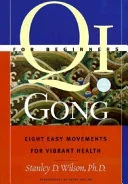
Qi Gong for Beginners
 82
82

Qi Gong for Beginners
Stanley D. Wilson's Qi Gong for Beginners offers a refreshingly direct approach to a practice often shrouded in mystique. The "Eight Silken Movements" are clearly delineated, making the core of the practice readily accessible. Its strength lies in its no-nonsense presentation, emphasizing the practical benefits of a short, daily routine. The assertion by C. Norman Shealy, M.D., Ph.D., that widespread adoption could halve healthcare costs is a bold claim, but it underscores the author's conviction in Qigong's potent, albeit often overlooked, therapeutic potential. A limitation, however, is the book's concise nature; while excellent for beginners, those seeking deeper theoretical explorations of qi circulation or advanced Qigong forms might find it somewhat superficial. The emphasis on achieving a "centered state" in just six minutes daily, though appealing, could also set an unrealistic expectation for some, as true mastery and profound energetic shifts often require more sustained dedication. Nevertheless, for an introduction that prioritizes actionable steps over esoteric jargon, this work provides a solid starting point.
📝 Description
82
Published in 1997, Qi Gong for Beginners offers accessible movement meditations from ancient Chinese traditions.
Stanley D. Wilson's 1997 book introduces fundamental Qigong practices for newcomers. It details specific exercises, such as the "Eight Silken Movements," intended to balance the body's vital energy, known as qi. The author designed the text for simplicity, making these techniques available to anyone regardless of prior experience. Wilson explains how regular practice can support healing and foster a sense of inner calm.
This book suits individuals looking for straightforward methods to reduce stress, improve physical health, and gain mental clarity. It is useful for those new to Qigong or meditation, and for people wanting a short, effective daily routine. Readers interested in holistic health and traditional Chinese wellness systems will find practical advice here. The book is particularly good for busy people who can commit just six minutes daily to self-care.
Qi Gong for Beginners emerged in 1997, a time when Western interest in Eastern practices like yoga and tai chi was growing. The book connects to the long history of Qigong within Chinese culture, where it has been used for centuries to cultivate and circulate vital energy (qi). This practice is rooted in Taoist principles and traditional Chinese medicine, aiming to harmonize the body, mind, and spirit. Wilson presents these ancient techniques as accessible tools for modern self-care and well-being.
💡 Why Read This Book?
• Gain practical instruction in the "Eight Silken Movements," a foundational Qigong sequence, enabling you to begin a daily movement meditation practice for energy cultivation. • Learn the concept of releasing "blocks to healing" through simple, low-impact exercises, offering a tangible method to address physical and mental stagnation. • Understand how dedicating as little as six minutes daily to these techniques, as advocated by Stanley D. Wilson, can contribute to achieving a "centered" state and enhancing overall well-being.
⭐ Reader Reviews
Honest opinions from readers who have explored this book.
❓ Frequently Asked Questions
What is Qi Gong and how does it differ from Tai Chi?
Qi Gong is an ancient Chinese practice involving gentle movements, breath control, and meditation to cultivate and balance vital energy (qi). While Tai Chi is a form of Qigong, it typically involves more complex, martial-art-inspired sequences, whereas Qigong encompasses a broader range of practices, including simpler exercises like the "Eight Silken Movements" presented in this book.
Can I really see health benefits in just six minutes a day?
The book suggests that even a brief daily practice, like the "Eight Silken Movements," can initiate positive changes by releasing energy blocks and promoting a centered state. While significant health transformations might require longer practice, the book's premise is that consistent, short sessions offer tangible benefits for beginners.
What are the 'Eight Silken Movements' mentioned in the book?
The "Eight Silken Movements" are a set of fundamental Qigong exercises detailed in Stanley D. Wilson's work. They are designed to be simple, low-impact, and effective for beginners to learn how to circulate qi, release tension, and foster a sense of inner harmony.
Is this book suitable for someone with no prior meditation or exercise experience?
Yes, the book is specifically designed for beginners. It provides clear instructions for accessible exercises like the "Eight Silken Movements," requiring no prior experience in meditation, Qigong, or strenuous physical activity.
What is 'qi' according to this book?
In Qi Gong for Beginners, 'qi' (often translated as vital energy or life force) is understood as the fundamental energy that animates all living things. The book teaches how to cultivate, balance, and direct this energy through specific movements and breathwork for improved health and well-being.
When was Qi Gong for Beginners first published?
Qi Gong for Beginners by Stanley D. Wilson was first published in 1997, reflecting the growing interest in holistic health practices during the late 20th century.
🔮 Key Themes & Symbolism
Qi Cultivation
The central theme is the cultivation and circulation of 'qi,' the vital life force. The book posits that by performing specific movements, such as the "Eight Silken Movements," practitioners can enhance their internal energy. This practice aims to create a smoother flow of qi throughout the body, addressing stagnation that can lead to physical and mental disharmony. It's presented as a method for self-healing and maintaining energetic equilibrium.
Movement Meditation
Qi Gong for Beginners frames Qigong as a form of movement meditation, distinct from purely static contemplation. The integration of gentle physical activity with mindful awareness and breath control is key. The emphasis is on the quality of movement—slow, deliberate, and internally focused—rather than physical exertion. This approach allows for a deep connection between mind and body, fostering present-moment awareness and reducing mental chatter.
Holistic Health
The work advocates for a holistic approach to well-being, suggesting that physical health is intrinsically linked to energetic and mental states. By practicing Qigong, individuals can address the root causes of ailments by balancing their qi, rather than just treating symptoms. The book implies that accessible practices, like the "Eight Silken Movements," can significantly impact overall health outcomes, potentially reducing reliance on conventional medical interventions.
Accessibility and Simplicity
A core tenet of the book is making potent ancient practices accessible to the modern individual. It champions short, daily routines – even just six minutes – as effective. The "Eight Silken Movements" are chosen for their simplicity and ease of learning, removing barriers for those new to Qigong or meditation. This focus on practicality ensures the techniques can be integrated into busy lifestyles.
💬 Memorable Quotes
Direct passages from the work, attributed to the author.
“If all Americans learned just the 'Eight Silken Movements' and practiced them daily, we could reduce health costs by 50 percent.”
— This powerful statement from C. Norman Shealy, M.D., Ph.D., highlights the immense perceived potential of Qigong for preventative health and well-being, suggesting its widespread adoption could yield significant societal benefits.
“An exercise program that can actually release blocks to healing and get you centered...in six minutes a day.”
— This captures the book's core promise: a highly efficient practice that addresses both physical and energetic blockages, leading to a state of inner balance achievable within a minimal daily time commitment.
“The simple, no impact, but very powerful...”
— This phrase describes the nature of the Qigong exercises presented, emphasizing their gentleness on the body ('no impact') while asserting their profound effectiveness ('very powerful'), making them suitable for a wide range of individuals.
“Qui Gong is one of the most important movement meditation techniques.”
— This assertion elevates Qigong beyond a simple exercise, positioning it as a crucial method for integrating mindful movement and meditation, vital for cultivating inner harmony and holistic health.
“The simple, no impact, but very powerful...”
— This phrase describes the nature of the Qigong exercises presented, emphasizing their gentleness on the body ('no impact') while asserting their profound effectiveness ('very powerful'), making them suitable for a wide range of individuals.
🌙 Esoteric Significance
Tradition
Qi Gong for Beginners draws heavily from the Taoist tradition of China, which emphasizes living in harmony with the natural order (the Tao). Within this lineage, Qigong practices are methods for cultivating and balancing the body's vital energy, or 'qi,' to promote longevity, health, and spiritual development. This work fits within the broader esoteric interest in energy work and mind-body integration that gained prominence in the West during the late 20th century, offering a practical, albeit simplified, entry into these ancient principles.
Symbolism
While not heavily laden with overt symbolism in the Western esoteric sense, the 'Eight Silken Movements' themselves function symbolically. They represent the dynamic interplay of forces – expansion and contraction, stillness and motion – inherent in the universe. The concept of 'qi' itself is a fundamental symbol of life force, invisible yet essential. Releasing 'blocks' symbolizes overcoming obstacles to natural flow, both physically and energetically, aligning the practitioner with principles of unimpeded vitality.
Modern Relevance
This book remains relevant today as interest in accessible, low-impact wellness practices continues to grow. Contemporary figures and schools focusing on somatic practices, mindfulness-based stress reduction, and functional movement often echo Qigong's principles. Practitioners like Wim Hof, while using different modalities, share the core Qigong tenet of consciously influencing one's physiology for health. Its accessible nature makes it a foundational text for modern seekers exploring energy work and mind-body connection outside traditional Western frameworks.
👥 Who Should Read This Book
• Individuals new to Qigong or meditation seeking straightforward, actionable techniques for stress reduction and improved physical well-being. • Busy professionals and students looking for effective, short daily practices (like the "Eight Silken Movements") that can be easily integrated into a demanding schedule. • Those interested in exploring foundational concepts of Traditional Chinese Medicine and energy cultivation from a practical, beginner-friendly perspective.
📜 Historical Context
Published in 1997, Stanley D. Wilson's Qi Gong for Beginners arrived during a significant cultural moment in the West. The late 20th century witnessed a surge of interest in Eastern philosophies and alternative health practices, partly as a reaction against the perceived limitations of purely biomedical approaches. Books on yoga, meditation, and martial arts forms like Tai Chi were becoming increasingly popular. Qigong, though less known than Tai Chi, began gaining traction as a distinct practice for health and well-being. Wilson's work emerged within this milieu, offering a simplified entry point to Qigong's energy cultivation principles. While influential figures like C. Norman Shealy, M.D., Ph.D. (Founder of the Shealy Institute) lent their endorsements, acknowledging Qigong's potential, the practice still existed somewhat on the fringes of mainstream wellness discourse, often discussed alongside other emerging holistic modalities.
📔 Journal Prompts
The "Eight Silken Movements" and their effect on your personal energy flow.
Releasing 'blocks to healing' through simple, daily practice.
Achieving a 'centered' state in six minutes: What does this feel like?
The concept of 'qi' as described in the book and your own lived experience.
Integrating Qigong into your daily routine for sustained well-being.
🗂️ Glossary
Qi
Often translated as vital energy, life force, or breath. In Qigong, it is the fundamental energy that animates all living things, which practitioners aim to cultivate and balance for health and vitality.
Eight Silken Movements
A foundational set of eight simple, low-impact Qigong exercises detailed in the book, designed for beginners to learn the basics of energy circulation and mindful movement.
Movement Meditation
A practice that integrates gentle physical movements with focused attention and breath control, aiming to cultivate a state of mindful awareness and energetic harmony.
Centered
A state of inner balance, calm, and focus achieved through practices like Qigong, where one feels grounded and present, free from excessive mental or emotional agitation.
Blocks to Healing
In the context of Qigong, these refer to energetic or physical obstructions that impede the natural flow of qi, potentially leading to illness or discomfort. Qigong exercises aim to release these blockages.
No Impact
Describes exercises that are gentle on the joints and body, involving minimal stress or jarring motions. This makes them suitable for people of all ages and fitness levels.
Holistic Health
An approach to well-being that considers the interconnectedness of the mind, body, and spirit, aiming for balance across all aspects of a person's life.
This book appears in 1 collection
🔮 Readers Also Liked
Browse all →









From the “Qi Gong” Collection
View all →



More Free Occult Philosophy Books
View all →