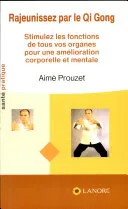
Rajeunissez par le Qi Gong
 75
75

Rajeunissez par le Qi Gong
Aimé Prouzet's "Rajeunissez par le Qi Gong" approaches the practice with a grounded perspective, avoiding hyperbole. The strength lies in its clear, methodical presentation of exercises, making complex movements understandable. A limitation, however, is its occasional reliance on terminology that might require prior familiarity with Chinese energetic concepts, though this is somewhat mitigated by the book's otherwise accessible tone. The section detailing the "Eight Brocades" (Ba Duan Jin) is particularly well-explained, offering precise instructions for each movement's energetic intent. While not a radical departure from existing Qi Gong literature, Prouzet’s work provides a solid, practical manual for rejuvenation seekers. It serves as a dependable resource for consistent practice.
📝 Description
75
Aimé Prouzet's Rajeunissez par le Qi Gong, published in 2006, guides readers in cultivating vital energy for well-being.
Published in 2006, Aimé Prouzet's Rajeunissez par le Qi Gong details Qi Gong practices designed for rejuvenation. The book explains exercises, breathing methods, and meditation techniques intended to balance the body, mind, and spirit. It aims to help individuals build vital energy, promoting better health and a longer life.
Prouzet's work is accessible to both newcomers to Eastern contemplative practices and experienced practitioners. It will appeal to those interested in holistic health, stress management, and achieving a more balanced way of life. Readers looking for straightforward methods to enhance physical vitality and mental focus will find practical advice within its pages.
Rajeunissez par le Qi Gong enters the discourse on traditional Chinese practices, a field that saw increased Western attention in the late 20th century and early 21st century. The book grounds itself in established Qi Gong principles while offering a modern interpretation. It emphasizes the concept of Qi, the vital life force, and its connection to physical, emotional, and spiritual health. The text explains how specific movements, postures, and mindful attention can lead to energetic balance and overall well-being.
💡 Why Read This Book?
• You will learn specific, step-by-step instructions for the "Eight Brocades" (Ba Duan Jin) Qi Gong sequence, a foundational practice for cultivating Qi, enabling you to begin a new routine immediately. • You will gain an understanding of the concept of Qi and its relationship to physical vitality and emotional balance, as explained in the context of early 21st-century interest in holistic health. • You will be able to identify and practice foundational Qi Gong breathing techniques as presented by Aimé Prouzet, offering a direct method for stress reduction and energy cultivation distinct from Western approaches.
⭐ Reader Reviews
Honest opinions from readers who have explored this book.
❓ Frequently Asked Questions
When was Rajeunissez par le Qi Gong first published?
Rajeunissez par le Qi Gong by Aimé Prouzet was first published on October 2, 2006, reflecting the growing interest in holistic health practices at the turn of the 21st century.
What is the primary focus of Aimé Prouzet's book on Qi Gong?
The primary focus is on Qi Gong practices specifically aimed at rejuvenation, detailing exercises and techniques to cultivate vital energy for enhanced well-being and longevity.
Is Rajeunissez par le Qi Gong suitable for beginners?
Yes, the book is designed for a broad audience, including beginners, offering clear explanations of movements and concepts crucial for understanding Qi Gong.
What specific Qi Gong forms are discussed in the book?
The book discusses foundational Qi Gong practices, including detailed instruction on the "Eight Brocades" (Ba Duan Jin), a well-known set of exercises for health and vitality.
Does the book explain the underlying philosophy of Qi Gong?
Yes, it explains the fundamental concept of Qi (vital life force) and its cultivation through various techniques, linking physical, emotional, and spiritual health.
What year did Aimé Prouzet's Qi Gong book first come out?
Aimé Prouzet's "Rajeunissez par le Qi Gong" was first released on October 2, 2006, a period marked by significant global engagement with traditional wellness systems.
🔮 Key Themes & Symbolism
Qi Cultivation for Vitality
The central theme revolves around the active cultivation of Qi, the vital life force. Prouzet guides readers through exercises designed not merely for physical movement but for internal energetic development. This focus aims to bolster the body's inherent capacity for healing and regeneration, addressing the root causes of fatigue and aging. The book emphasizes that consistent practice can lead to a tangible increase in personal vitality and resilience against life's stressors.
Holistic Health Integration
Prouzet posits that physical health is inseparable from mental and emotional well-being. Rajeunissez par le Qi Gong integrates these dimensions by presenting Qi Gong as a method to harmonize the entire being. The exercises are designed to release energetic blockages that can manifest as physical ailments or emotional distress, fostering a sense of inner peace and overall balance. This perspective aligns with early 21st-century trends in mind-body medicine.
Longevity and Rejuvenation
The pursuit of longevity and rejuvenation is a primary objective. The book details specific Qi Gong forms, such as the "Eight Brocades," which have historically been associated with promoting a longer, healthier life. Prouzet explains how these practices work on an energetic level to counteract the effects of aging and environmental stressors, offering a path towards sustained vitality and a youthful disposition well into later years.
Mindful Movement and Breath
Central to the practice outlined is the synergy between mindful movement and controlled breathing. Prouzet meticulously explains how to coordinate specific postures and flowing movements with precise respiratory techniques. This conscious connection between body and breath is presented as the key to unlocking Qi's potential, facilitating deeper relaxation, increased internal energy flow, and enhanced self-awareness.
💬 Memorable Quotes
Direct passages from the work, attributed to the author.
“The Eight Brocades offer a balanced approach to invigorating the entire system.”
— This statement underscores the comprehensive nature of the Ba Duan Jin exercises, suggesting they benefit multiple organ systems and energetic pathways, contributing to overall well-being.
“Cultivating internal stillness is the first step to external vitality.”
— This sentiment emphasizes the meditative aspect of Qi Gong, indicating that developing a calm and focused inner state is foundational for manifesting physical energy and health.
“Breathing is the bridge between the conscious mind and the body's vital force.”
— This interpretation emphasizes the crucial role of breathwork in Qi Gong, positioning controlled respiration as the direct link that allows conscious intention to influence and direct internal energy.
“Rejuvenation is not merely the absence of aging, but the presence of vibrant energy.”
— This notion reframes rejuvenation away from a simple anti-aging concept towards an active state of vitality and energetic abundance, achievable through dedicated practice.
💡 Key Ideas
Editorial paraphrase of the work's core concepts — not direct quotes.
The body's energy is a river; stagnation leads to decay, while flow ensures renewal.
This paraphrased concept highlights the core principle of Qi Gong: maintaining the free circulation of vital energy (Qi) is essential for health and preventing the decline associated with aging or illness.
🌙 Esoteric Significance
Tradition
The work aligns with the broad Taoist tradition of cultivating internal alchemy and vital energy (Qi). While not explicitly tied to a specific esoteric lineage like Hermeticism or Kabbalah, it draws heavily from the energetic principles fundamental to Traditional Chinese Medicine (TCM) and Taoist internal arts. Its focus on harmonizing body, mind, and spirit through specific practices places it within the larger umbrella of 'esoteric' practices that seek transformation and enhanced vitality beyond conventional understanding.
Symbolism
Key symbols include the concept of Qi itself, representing the animating life force flowing through all things, often visualized as subtle energy. The meridians are another crucial symbolic representation – unseen pathways within the body that channel Qi, analogous to rivers guiding water. Proper circulation through these meridians, as facilitated by Qi Gong, symbolizes health and balance, while blockages represent illness or stagnation.
Modern Relevance
Contemporary thinkers and practitioners in fields like somatic experiencing, trauma-informed care, and functional medicine often draw upon principles similar to those found in Qi Gong. The emphasis on breathwork, mindful movement, and interoception (awareness of internal bodily states) speaks to modern approaches to stress management, emotional regulation, and physical rehabilitation. Schools focusing on contemplative practices and holistic health continue to explore and adapt these ancient techniques.
👥 Who Should Read This Book
['• Individuals seeking practical, accessible methods for stress reduction and energy enhancement, who are interested in the physical and energetic benefits of mind-body practices.', '• Practitioners of other contemplative disciplines (e.g., Yoga, Tai Chi) looking to expand their understanding of energetic cultivation and explore foundational Qi Gong forms like the Eight Brocades.', '• Those interested in the principles of Traditional Chinese Medicine and how ancient practices can be applied to contemporary concerns of health, aging, and overall well-being.']
📜 Historical Context
Rajeunissez par le Qi Gong emerged in 2006, a time when Western interest in traditional Chinese medicine, including Qi Gong, had significantly matured beyond initial fads. This period saw a growing acceptance of mind-body practices within mainstream wellness discourse, partly influenced by figures like Deepak Chopra and the broader New Age movement, although Prouzet’s approach appears more directly rooted in traditional practice than New Age interpretations. The book contributed to a wave of publications aimed at making these ancient disciplines accessible to a global audience seeking alternatives to conventional healthcare. While Qi Gong's roots are ancient, its popularization in the late 20th century and early 21st century occurred alongside developments in fields like psychosomatic medicine and the study of bioenergetics, positioning Prouzet's work within a broader intellectual current exploring the intricate connection between consciousness and physical health.
📔 Journal Prompts
The flow of Qi as described by Prouzet.
Coordination of breath and movement in practice.
The concept of stagnation versus renewal.
Personal experience with the "Eight Brocades" sequence.
Integrating stillness with active cultivation.
🗂️ Glossary
Qi
The fundamental vital life force or energy that animates all living beings and the universe. In Qi Gong, it is cultivated through specific exercises and breathing techniques.
Ba Duan Jin
Literally 'Eight Brocades,' a foundational and widely practiced set of Qi Gong exercises known for promoting health, flexibility, and vital energy.
Meridians
Channels or pathways within the body through which Qi is believed to flow, connecting different organs and bodily systems. Harmonizing their flow is key to health.
Rejuvenation
The process of restoring youthfulness, vitality, and health, often achieved through practices that enhance the body's natural regenerative capacities.
Holistic Health
An approach to well-being that considers the interconnectedness of the physical, mental, emotional, and spiritual aspects of an individual.
Vitality
The state of being strong, energetic, and healthy; possessing a high degree of life force or animation.
Mind-Body Practice
Activities that bring together mental focus and physical movement to enhance physical health, mental clarity, and emotional balance.