Beware the Night
 74
74

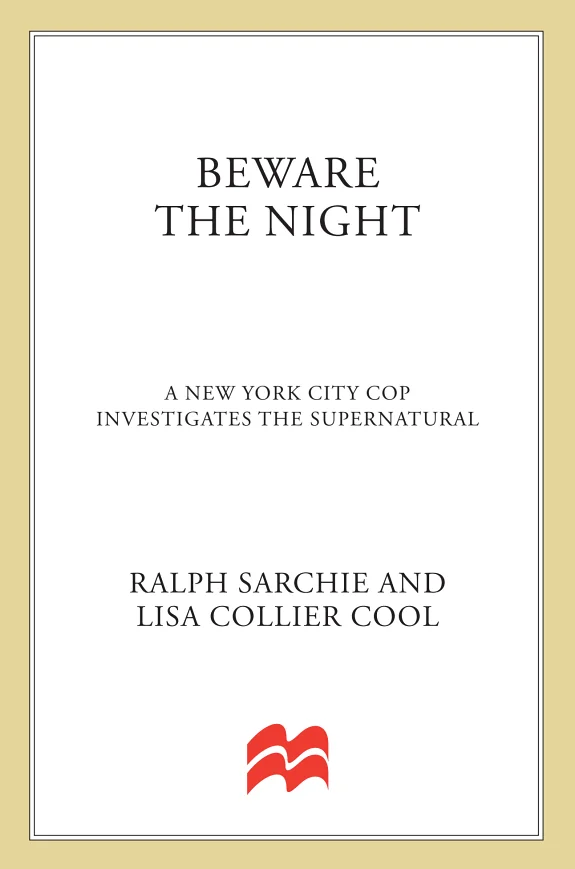
Beware the Night
Ralph Sarchie’s *Beware the Night* doesn't shy away from its sensational premise: a seasoned NYPD detective confronting literal demons. The strength of the book lies in its raw, unvarnished prose, which avoids the common pitfalls of overly dramatic spiritualist literature. Sarchie recounts his experiences with a matter-of-fact tone, detailing cases that went beyond the scope of ordinary criminal investigation. The description of the "infestation" case in chapter 3, where seemingly mundane events escalated into terrifying manifestations, is particularly effective in its build-up of dread. However, the book occasionally struggles with its dual identity; at times it feels like a police procedural, at others like a theological treatise, and the transition isn't always seamless. The lack of deeper exploration into the theological arguments, beyond Sarchie's personal beliefs and the practical application of rites, leaves the reader wanting more context for the rituals described. Despite these limitations, *Beware the Night* offers a disquieting glimpse into a world most prefer to ignore.
📝 Description
74
Ralph Sarchie, a former NYPD detective, details his encounters with demonic possession in Beware the Night.
Published in 2001, Beware the Night recounts the experiences of Ralph Sarchie, who spent sixteen years in the NYPD's special operations division. Sarchie writes about his direct involvement in cases he identified as demonic possession and his participation in exorcism rituals. The book presents unexplained phenomena and encounters with malevolent entities that challenged conventional law enforcement approaches. It is a firsthand account of what Sarchie describes as evil beyond ordinary human comprehension.
The book is for readers interested in the overlap between paranormal investigation and religious practices. It will attract those curious about the darker sides of human experience, unexplained events, and the theological aspects of spiritual conflict. Individuals looking for factual narratives of alleged supernatural encounters, particularly those involving demonic forces, will find Sarchie's story engaging. It also holds relevance for students of criminology and parapsychology.
Key concepts include spiritual warfare, the nature of evil, and the effectiveness of religious rites against malevolent forces. Sarchie discusses the indicators of demonic possession, the psychological and spiritual impact on those affected, and the role of faith and prayer in liberation. The work suggests that certain crimes and events defy rational explanation, pointing to supernatural causes. It also touches on the difficulties of reconciling these claims with standard police procedure.
Beware the Night connects to a long history of demonology and exorcism narratives, traditions that have existed across various cultures for centuries. While grounding these concepts in the practical environment of modern New York City police work, Sarchie's account taps into a persistent human interest in the supernatural and the forces perceived as malevolent. The book situates itself within a tradition that grapples with the boundaries of the known world and the potential for forces beyond empirical understanding to influence human affairs.
💡 Why Read This Book?
• Learn about the specific investigative techniques Ralph Sarchie employed as an NYPD detective when confronted with phenomena exceeding conventional explanation, as detailed in his accounts of cases from the late 20th century. • Understand the practical application of exorcism rites from the perspective of a law enforcement officer involved in the process, moving beyond theoretical discussions of spiritual warfare. • Gain insight into Sarchie's interpretation of seemingly inexplicable crimes, offering a unique lens through which to view the darker aspects of human experience and potential supernatural influences.
⭐ Reader Reviews
Honest opinions from readers who have explored this book.
❓ Frequently Asked Questions
What is the primary focus of Ralph Sarchie's work in Beware the Night?
The book primarily focuses on Ralph Sarchie's experiences as an NYPD detective investigating cases that he believes involve demonic possession and supernatural evil, detailing his involvement in exorcisms.
When was Beware the Night first published?
Beware the Night was first published on October 14, 2001.
Does the book contain actual photographs?
Yes, the original blurb indicates that the book includes photographs, likely related to the cases or evidence presented.
What makes Sarchie's perspective unique in this genre?
Sarchie's unique perspective stems from his background as a 16-year veteran of the NYPD, applying a law enforcement approach to investigations of alleged demonic activity.
What kind of 'unexplained evil' does Sarchie describe?
Sarchie describes encounters with malevolent entities and events that he and his partner found inexplicable by conventional means, often linking them to demonic possession and spiritual warfare.
Is this book suitable for skeptics?
The book presents Sarchie's firsthand accounts and beliefs, offering a perspective that challenges conventional explanations. Skeptics may find it interesting for its narrative and the author's unique position, though it is written from a believer's viewpoint.
🔮 Key Themes & Symbolism
Demonic Possession Investigations
The core of Beware the Night revolves around Sarchie's detailed accounts of investigating alleged cases of demonic possession. This theme explores the signs, symptoms, and manifestations he observed, moving beyond typical criminal profiling into the field of the supernatural. Sarchie emphasizes that these were not merely psychological disturbances but instances of malevolent spiritual influence requiring specific, often religiously-based, intervention. The work posits that conventional law enforcement methods are insufficient for understanding and resolving such profound disturbances.
Spiritual Warfare
Sarchie presents a worldview where human existence is a battleground for spiritual forces. This theme highlights the concept of 'spiritual warfare,' where demonic entities actively seek to harm, influence, or possess individuals. The book details the author's role not just as an investigator but as a participant in these battles, often alongside clergy performing exorcisms. It underscores the belief that faith, prayer, and specific religious rites are essential weapons in this unseen conflict.
The Unexplained in Law Enforcement
A significant aspect of Beware the Night is its focus on cases that defied rational explanation within the context of Sarchie's police work. The book argues that certain crimes and phenomena are beyond the purview of standard investigative procedures, suggesting a need to consider supernatural causation. This theme challenges the reader to acknowledge the limits of empirical science and conventional logic when confronted with extreme manifestations of evil or spiritual disturbance.
Nature of Evil
The book grapples with the fundamental nature of evil, presenting it not just as human depravity but as an active, intelligent, and malevolent force. Sarchie's experiences lead him to believe in a tangible entity responsible for immense suffering. This theme explores the theological and philosophical implications of such an entity, its motives, and its impact on individuals and society, as witnessed through Sarchie's direct encounters.
💬 Memorable Quotes
Direct passages from the work, attributed to the author.
“This is for people who have been through the fire.”
— This statement suggests the book is not for the casual reader but for those who have directly experienced or are deeply familiar with intense suffering, trauma, or potentially paranormal/spiritual crises.
“The evil I encountered was not of this world.”
— This interpretation emphasizes Sarchie's conviction that the phenomena he investigated transcended human capacity or conventional understanding, pointing towards a supernatural or demonic origin for the disturbances.
“We were called in when the police couldn't explain it.”
— This highlights the unique niche Sarchie occupied; his involvement typically began where standard police investigations reached their inexplicable limits, indicating a focus on cases with alleged supernatural elements.
“The devil is real and he's trying to destroy us.”
— This conveys Sarchie's core belief and the underlying message of the book: a literal, active demonic presence poses a significant threat to humanity, necessitating spiritual vigilance and defense.
“It was more than just a crime; it was a spiritual attack.”
— This phrase illustrates the book's central argument that certain events are not merely criminal acts but manifestations of a broader spiritual conflict, requiring a different kind of understanding and response.
🌙 Esoteric Significance
Tradition
While not explicitly aligning with a single esoteric lineage, Sarchie's work intersects with the Catholic tradition of demonology and exorcism, which has a long history of documented practice and theological underpinning. It also shares common ground with broader Western occult traditions that explore the existence and manipulation of spiritual entities and forces, particularly those focused on protection and banishing rituals.
Symbolism
The 'night' in the title itself serves as a potent symbol, representing darkness, the unknown, and the dominion of malevolent forces. The concept of 'possession' symbolizes the ultimate violation of self, where an individual's free will and identity are usurped by an external, destructive entity. The act of 'exorcism' represents a ritualistic reclaiming of spiritual territory and the assertion of divine authority over demonic influence.
Modern Relevance
Sarchie's work continues to be relevant for contemporary practitioners of deliverance ministry and those involved in spiritual warfare within various religious and neo-occult circles. It informs discussions on the nature of evil and the efficacy of ritualistic practices in confronting perceived malevolent entities, finding resonance with modern paranormal investigation groups and individuals exploring the boundaries of consciousness and reality.
👥 Who Should Read This Book
• Law enforcement professionals and private investigators interested in case studies that extend beyond conventional criminal behavior into alleged paranormal or supernatural phenomena. • Students of comparative religion, theology, and demonology seeking firsthand accounts of exorcism practices and beliefs from a non-clerical perspective. • Readers fascinated by the intersection of the occult, true crime, and personal testimony, particularly those exploring the concept of spiritual warfare and the nature of evil.
📜 Historical Context
Published in 2001, *Beware the Night* entered a cultural landscape increasingly fascinated with the paranormal, post-9/11 anxieties, and the enduring appeal of true crime. Its author, Ralph Sarchie, a decorated NYPD detective, brought a unique perspective—grounding supernatural claims in the practical, often gritty, realities of law enforcement in New York City. This contrasted with more academic or purely sensationalist explorations of demonology prevalent at the time. The book arrived during a period where figures like Geraldo Rivera had previously explored exorcism on television, indicating a public appetite for such subjects, yet Sarchie's insider police perspective offered a novel angle. While it didn't face explicit censorship, its subject matter pushed boundaries for a police memoir, potentially raising eyebrows within law enforcement circles. Its reception was largely shaped by its sensational claims, aligning it with a broader resurgence of interest in spiritual warfare narratives.
📔 Journal Prompts
The manifestation of 'inhuman evil' Sarchie encountered.
The specific challenges of investigating demonic possession as a police officer.
The role of faith in Sarchie's approach to seemingly inexplicable cases.
The concept of spiritual warfare as described in the text.
The boundaries between criminal investigation and spiritual intervention.
🗂️ Glossary
Demonic Possession
The alleged state of being controlled by a demon or evil spirit, characterized by supernatural phenomena and disturbances beyond normal human behavior.
Exorcism
A religious rite, often performed by clergy, intended to expel a demon or evil spirit from a person, place, or object.
Spiritual Warfare
The belief that human life is a battle between forces of good and evil, requiring individuals and communities to actively combat malevolent spiritual influences.
Infestation
In the context of the book, this refers to a place or object being afflicted by demonic presence or activity, distinct from direct possession of a person.
Malevolent Entities
Beings or forces believed to be inherently evil and actively seeking to cause harm, suffering, or destruction.
Supernatural Phenomena
Events or occurrences that are believed to be beyond the scope of natural law and scientific explanation, often attributed to divine or demonic intervention.
NYPD
Acronym for the New York City Police Department, the law enforcement agency where author Ralph Sarchie served for sixteen years.
This book appears in 1 collection
🔮 Readers Also Liked
Browse all →








From the “Exorcism” Collection
View all →





More Free Occult Philosophy Books
View all →