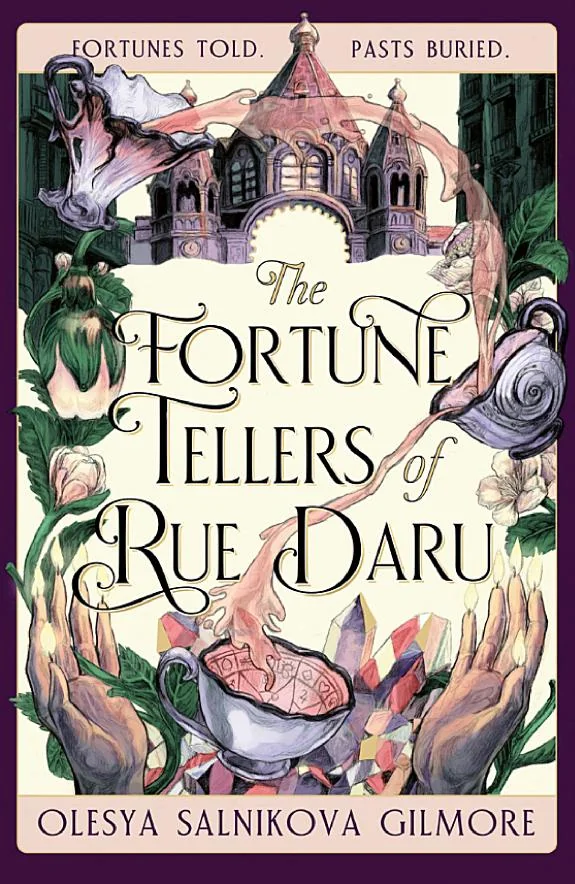
The Fortune Tellers of Rue Daru
 79
79

The Fortune Tellers of Rue Daru
Olesya Salnikova Gilmore’s "The Fortune Tellers of Rue Daru" is an atmospheric dive into the Parisian occult scene of the 1920s. The novel’s strength lies in its palpable sense of place; the gaslight, the smoky salons, the hushed whispers of prophecy—all are rendered with a keen, gothic sensibility. Gilmore masterfully crafts a protagonist whose internal struggles with self-trust mirror the external dangers she faces in discerning genuine spiritual insight from calculated deception. However, the pacing occasionally falters, with some plot threads feeling less developed than the central mystery. The concept of "echoes" of the past, as described in Chapter 5, is particularly compelling, suggesting that past traumas can manifest as tangible psychic disturbances. Ultimately, this is a sophisticated mystery that uses the supernatural not as a gimmick, but as a lens for exploring human vulnerability and the search for truth.
📝 Description
79
Olesya Salnikova Gilmore's 2023 novel plunges readers into 1920s Paris, where fortune-telling is a dangerous profession.
The Fortune Tellers of Rue Daru is set in 1920s Paris, a city where the practice of fortune-telling is more than a novelty; it is a perilous occupation. The story follows a clairvoyant who must confront the dark histories of her clients and her own veiled past. The narrative weaves together threads of genuine psychic talent with calculated deception, all within a society fascinated by the supernatural.
This novel is for readers who enjoy historical fiction interwoven with mystery and occult elements. Those drawn to a gothic atmosphere, complex character psychology, and stories that question perception and trust will find it engaging. It speaks to an interest in the interwar period's fascination with spiritualism and esoteric practices, especially among Paris's artistic and intellectual communities.
The novel taps into the interwar period's widespread interest in spiritualism and the occult, a phenomenon amplified by the aftermath of World War I. Many sought solace and answers through séances and psychic readings, reflecting a broader cultural search for meaning beyond the material. This atmosphere of esoteric inquiry, particularly in intellectual centers like Paris, forms the backdrop for the story's examination of psychic abilities and the human desire to understand the unknown.
💡 Why Read This Book?
• Gain insight into the practical application of clairvoyance as depicted in 1920s Paris, offering a unique perspective beyond theoretical occultism. • Explore the psychological weight of precognition and self-doubt through the protagonist's specific struggles with discerning truth on Rue Daru. • Understand the historical milieu of post-WWI spiritualism and its appeal, as evidenced by the novel's setting and the societal context it portrays.
⭐ Reader Reviews
Honest opinions from readers who have explored this book.
❓ Frequently Asked Questions
What is the primary setting for 'The Fortune Tellers of Rue Daru'?
The novel is set in Paris during the 1920s, specifically focusing on the atmospheric streets and salons where fortune-telling and spiritualism were prevalent.
Who is the author of 'The Fortune Tellers of Rue Daru'?
The author is Olesya Salnikova Gilmore, also known for her work 'The Haunting of Moscow House'.
What historical period does the book explore?
It delves into the interwar period of the 1920s, a time of significant societal change and a fascination with the occult following World War I.
What are the main themes explored in the novel?
The book examines themes of trust, self-discovery, the nature of psychic ability, hidden pasts, and the societal interest in spiritualism.
Is 'The Fortune Tellers of Rue Daru' a standalone novel?
Yes, while it shares a similar atmospheric tone with other works by the author, it functions as a standalone narrative focused on its Parisian setting and characters.
What kind of protagonist does the book feature?
The protagonist is a fearless fortune teller in 1920s Paris who must use her powers to uncover truths about her clients and herself.
🔮 Key Themes & Symbolism
The Burden of Foresight
The novel studies the psychological toll of possessing precognitive abilities, especially when those visions are tied to dangerous secrets or personal trauma. The protagonist's struggle isn't just with seeing the future, but with the responsibility and isolation that comes with such knowledge. The work explores how foresight can become a burden, forcing the seer to confront uncomfortable truths about humanity and themselves, often leading to a profound sense of self-doubt or the necessity of extreme caution in their interactions.
Parisian Esotericism in the 1920s
The book vividly reconstructs the atmosphere of 1920s Paris, a hub for artistic innovation and a period of intense interest in spiritualism and esoteric practices. It showcases how fortune-telling and divination were integrated into the social fabric, from intimate salons to more clandestine gatherings. This theme contextualizes the protagonist's work within a specific historical moment where the veil between the mundane and the mystical was perceived as thinner, influenced by post-war anxieties and a search for meaning.
Trust and Deception
Fundamentally, the narrative is a study in discerning truth amidst layers of deception. The protagonist must navigate a world where her abilities are both sought after and potentially exploited. This theme extends to interpersonal relationships, questioning who can be trusted when appearances are fluid and hidden motives are common. The novel uses the psychic's perspective to highlight the universal challenge of authentic connection in a world often characterized by artifice and self-preservation.
The Elements of the Past
A significant element is the exploration of how past events, personal histories, and inherited traumas continue to influence the present. The fortune teller's gifts often manifest as an awareness of these 'echoes,' revealing that the past is never truly gone but lingers, shaping destinies and creating patterns. This concept provides a gothic undercurrent, suggesting that unresolved history can manifest in tangible, often unsettling ways, impacting individuals and their futures.
💬 Memorable Quotes
Direct passages from the work, attributed to the author.
“The whispers of the cards spoke of shadows, but the true darkness lay in the silences between their pronouncements.”
— This highlights the novel's focus on the unsaid and the hidden motives behind outward appearances. It suggests that a fortune teller's skill involves not just interpreting direct omens but understanding the unspoken truths and veiled intentions of those seeking guidance.
“Rue Daru was a street where futures were bought and sold, but rarely understood.”
— This statement captures the essence of the novel's setting and its critique of superficial engagement with divination. It implies that while many sought fortune-telling, few grasped the wide implications or the true nature of the forces at play.
“Her gift was a mirror, reflecting back not just what was to come, but what had already been.”
— This interpretation of the protagonist's abilities suggests that precognition is intertwined with an awareness of the past. It frames psychic insight as a holistic perception that connects future possibilities with the lingering impact of prior events and experiences.
💡 Key Ideas
Editorial paraphrase of the work's core concepts — not direct quotes.
To read another's future, one must first confront the smudged ink of one's own past.
This paraphrased concept emphasizes the protagonist's internal journey. It posits that genuine insight into others' destinies is contingent upon self-awareness and the resolution of one's own personal history and psychological complexities.
In the gaslight of Paris, every shadow held a secret, and every reader a potential deceiver.
This quote expresses the pervasive atmosphere of mystery and mistrust in the novel. It underscores the danger inherent in the protagonist's profession, where distinguishing genuine psychic insight from deliberate manipulation is a constant challenge.
🌙 Esoteric Significance
Tradition
This work draws implicitly from the Hermetic tradition's emphasis on the principle of "As Above, So Below," suggesting a connection between the macrocosm and microcosm, and the individual's destiny. It also echoes elements of modern spiritualism's focus on mediumship and channeling, but grounds these practices within a more psychological and character-driven narrative. Unlike more didactic esoteric texts, Gilmore's novel uses these concepts as narrative devices to explore themes of self-discovery and the human condition.
Symbolism
The tarot cards, a central motif, symbolize the archetypal forces and potential pathways of life, acting as a conduit for the protagonist's precognitive insights. Mirrors represent self-reflection and the revelation of hidden truths, often reflecting not just the present but also the past or future. The gaslight and shadows of Paris symbolize the duality of knowledge and ignorance, clarity and obscurity, highlighting the perilous nature of seeking truth in a world rife with deception.
Modern Relevance
Contemporary practitioners of divination, tarot readers, and those interested in psychological astrology might find resonance in the novel's portrayal of the seer's internal landscape. The work's exploration of inherited trauma and its psychic manifestations connects with modern therapeutic approaches that acknowledge the impact of ancestral patterns. Furthermore, its nuanced depiction of the interplay between intuition and rational discernment remains relevant for anyone navigating complex personal or societal issues today.
👥 Who Should Read This Book
• Aspiring occult investigators and historical mystery enthusiasts who appreciate atmospheric settings and complex character arcs. • Readers interested in the history of spiritualism and esoteric movements in early 20th-century Europe, particularly Paris. • Individuals drawn to gothic literature and psychological thrillers that explore themes of self-discovery, trust, and the burden of unique abilities.
📜 Historical Context
The Fortune Tellers of Rue Daru is steeped in the milieu of 1920s Paris, a period characterized by artistic ferment and a pervasive interest in spiritualism and the occult. Following the devastation of World War I, many sought solace and answers beyond conventional means, leading to a surge in séances, mediumship, and esoteric studies. This era saw figures like Arthur Conan Doyle championing spiritualism, while artists and intellectuals explored altered states of consciousness and alternative belief systems. The novel situates itself within this cultural landscape, where the rationalist leanings of movements like Surrealism coexisted with a deep fascination for the unseen. The work acknowledges a societal yearning for connection and meaning that the material world, post-war, struggled to provide. This fascination with the arcane was not without its critics, with many prominent scientists and skeptics actively debunking spiritualist claims, creating a societal tension that the novel implicitly reflects.
📔 Journal Prompts
The protagonist’s reliance on divination tools like tarot cards; how might such methods clarify personal dilemmas?
Rue Daru as a nexus of hidden pasts; what personal histories shape your present perceptions?
The tension between genuine psychic insight and calculated deception; how do you discern truth in relationships?
The concept of inherited trauma as psychic echoes; explore a pattern you observe in your family history.
Self-trust versus external validation; when is relying on one's inner voice crucial?
🗂️ Glossary
Precognition
The ability to perceive or know future events before they happen, often experienced as visions, feelings, or intuitive insights.
Spiritualism
A religious movement prominent in the 19th and 20th centuries that asserted the possibility of communicating with the spirits of the dead.
Gothic Novel
A genre characterized by elements of horror, death, and romance, often featuring dark, mysterious settings and a brooding atmosphere.
Esotericism
Belief systems and practices that are concerned with the inner, spiritual life and often involve secret or hidden knowledge accessible only to initiates.
Divination
The practice of seeking knowledge of the future or the unknown by supernatural means, such as through tarot cards, astrology, or other symbolic systems.
Elements of the Past
A thematic concept in the novel referring to how past events, traumas, or histories continue to influence the present and manifest in observable ways.
Rue Daru
A specific Parisian street that serves as a central setting, symbolizing a place where fortune-telling and the occult are practiced and secrets are exchanged.
This book appears in 1 collection
🔮 Readers Also Liked
Browse all →








From the “Aura Reading” Collection
View all →









More Free Occult Philosophy Books
View all →