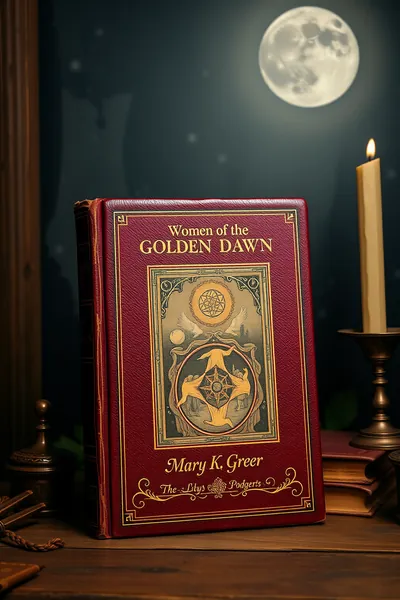
First Drawings
 71
71

First Drawings
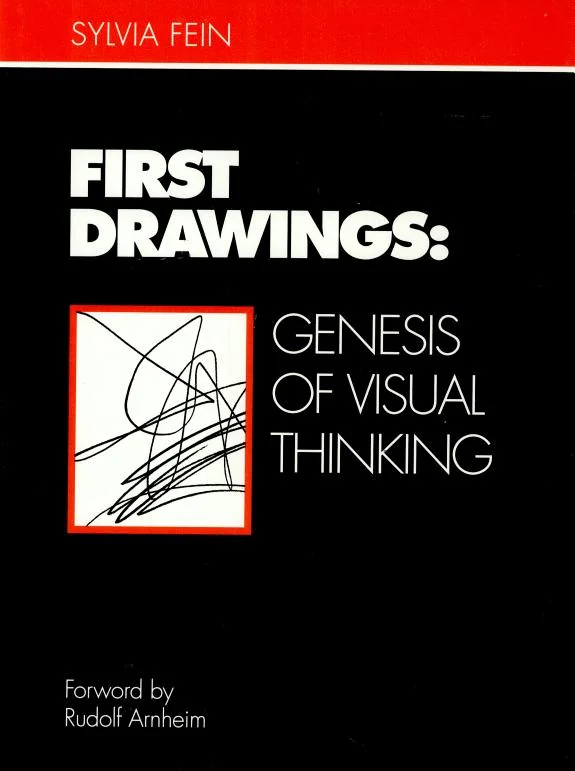
Sylvia Fein's *First Drawings* presents a compelling visual argument for a universal substratum in human art. The sheer breadth of examples, spanning millennia and continents, is its primary strength, offering a powerful demonstration of recurring motifs. Fein's meticulous cataloging of forms like spirals, cross-hatching, and stylized figures across prehistoric cave art, tribal artifacts, and children's drawings is remarkable. However, the book sometimes leans into presenting these recurrences as self-evident explanations without fully developing the theoretical underpinnings of *why* these patterns appear. While the visual evidence is persuasive, a deeper engagement with the symbolic or psychological frameworks these patterns might inhabit would have elevated the analysis further. For instance, her discussion of the prevalence of the eye motif could benefit from more explicit connections to its symbolic weight across cultures. Despite this, *First Drawings* remains a vital resource for anyone studying the foundational elements of visual language.
📝 Description
71
Sylvia Fein's 1993 book *First Drawings* analyzes universal visual patterns in human art.
Sylvia Fein's *First Drawings*, published in 1993, is a visual study of recurring archetypes found in human artistic creation. The book presents a wide range of visual examples, from ancient cave paintings to modern abstract works and children's drawings. Fein argues that these common motifs suggest a shared visual language embedded in the human psyche, rather than random occurrences.
This work is relevant for artists, designers, art historians, and psychologists interested in the origins of visual expression. It offers a framework for understanding symbolic connections across different cultures and time periods. Students of comparative mythology, anthropology, and consciousness may find its perspective useful. Jungian psychology students, in particular, will recognize themes related to the collective unconscious.
Sylvia Fein's research in *First Drawings* aligns with a tradition of exploring universal symbolism, akin to scholars like Mircea Eliade and Joseph Campbell, but approached through visual patterns. Her work implicitly connects with Carl Jung's concept of archetypes and the collective unconscious, focusing on visual manifestations rather than purely psychological theory. By identifying fundamental forms like spirals, circles, and figures across diverse human creations, Fein suggests a deep, inherent visual grammar predating conscious cultural development. This approach offers a unique lens on the shared psychological underpinnings of human expression.
💡 Why Read This Book?
• Gain a new framework for understanding visual patterns by examining Fein's analysis of recurring motifs like spirals and concentric circles, as seen in examples from prehistoric art to modern works. • Explore the concept of a universal visual language, as detailed through Fein's extensive catalog of human artistic output from diverse cultures and time periods. • Appreciate the deep connections between seemingly disparate art forms, learning how prehistoric cave paintings and children's art share fundamental design elements, as demonstrated by Fein's comparative approach.
⭐ Reader Reviews
Honest opinions from readers who have explored this book.
❓ Frequently Asked Questions
When was Sylvia Fein's *First Drawings* first published?
Sylvia Fein's *First Drawings* was first published in 1993. The book presents a visual study of recurring motifs in human art across different eras and cultures.
What kind of art does *First Drawings* analyze?
*First Drawings* analyzes a wide spectrum of human art, including prehistoric cave paintings, tribal art, children's art, and modern art, to identify common design elements.
What is the main argument of *First Drawings*?
The book's central argument is that certain basic patterns and motifs reappear consistently across different cultures and historical periods, suggesting a universal visual language.
Who would benefit from reading *First Drawings*?
Artists, art historians, psychologists, anthropologists, and anyone interested in the origins of visual expression and the deep connections within human creativity would find this book valuable.
Does *First Drawings* explore the psychological reasons for these recurring art motifs?
While the book presents extensive visual evidence for recurring motifs, its primary focus is on cataloging and demonstrating these patterns rather than deeply exploring their psychological origins, though it invites such consideration.
What specific examples of recurring motifs are discussed in *First Drawings*?
The book showcases numerous recurring motifs, including spirals, concentric circles, branching forms, eye-like symbols, and stylized representations of humans and animals across various art forms.
🔮 Key Themes & Symbolism
Universal Visual Language
The book posits the existence of a fundamental, shared visual language inherent to humanity. Fein illustrates this through the recurring appearance of specific forms—spirals, concentric circles, eyes, branching patterns—across diverse cultures and time periods. This concept suggests that our innate ways of perceiving and representing the world are deeply interconnected, transcending geographical and temporal divides. The implication is that these visual elements are not learned in isolation but emerge from a collective, perhaps subconscious, wellspring of human expression.
Archetypal Motifs in Art
Fein meticulously documents how archetypal visual motifs manifest independently in prehistoric cave art, tribal artifacts, children's drawings, and modern abstract compositions. This recurring presence of certain forms, such as the stylized human figure or animal representations, points towards underlying psychological structures or universal human experiences that find expression through art. The book provides a visual foundation for understanding how these basic symbolic elements serve as building blocks for more complex artistic and cultural expressions.
The Unity of Art History
By highlighting the commonalities between seemingly disparate art forms—from ancient petroglyphs to contemporary paintings—Fein argues for a fundamental unity in human artistic endeavor. The book challenges the notion of art evolving in isolated traditions, instead presenting a case for continuous, cross-cultural resonance of visual ideas. This perspective offers a way to see historical art not as a series of disconnected movements but as variations on enduring themes and visual structures.
Pattern Recognition in Perception
The visual analysis in *First Drawings* implicitly explores how the human mind is wired for pattern recognition. Fein's cataloging of recurring visual elements suggests that our perceptual systems actively seek out and organize information into familiar shapes and forms. This inclination towards identifying patterns, whether conscious or unconscious, shapes our artistic output and our interpretation of visual stimuli, linking biology and artistic expression.
💬 Memorable Quotes
Direct passages from the work, attributed to the author.
“Certain basic patterns reappear, time and again, all over the world.”
— This core statement expresses Fein's thesis: that a universal visual vocabulary exists, evidenced by the consistent appearance of specific motifs across human artistic endeavors globally.
“Why do prehistoric art, tribal art, child art and modern art have so many design elements in common?”
— This question frames the central inquiry of the book, highlighting the surprising visual links between art forms separated by vast gulfs of time, culture, and developmental stage.
“The study is a visual ride through the primary motifs of human art.”
— This describes the book's methodology and experience, emphasizing its visual nature and its focus on foundational, recurring artistic elements as its primary subject matter.
“Examples show how certain basic patterns reappear.”
— This highlights the evidential basis of Fein's argument, underscoring that her conclusions are drawn directly from the comparative analysis of visual examples presented within the text.
“This study is a visual ride through the primary motifs of human art.”
— This phrase sets the expectation for an immersive, visual exploration rather than a purely theoretical treatise, inviting the reader to engage directly with the depicted forms.
🌙 Esoteric Significance
Tradition
While *First Drawings* does not align strictly with a single esoteric tradition like Hermeticism or Gnosticism, its exploration of universal symbols and archetypal forms speaks to Theosophical and Jungian psychological currents. The book’s focus on recurring motifs suggests a collective unconscious or a universal spiritual blueprint that finds expression visually, a concept explored in various esoteric philosophies that posit underlying unity in diverse phenomena.
Symbolism
The book highlights symbols like the spiral, which in many esoteric traditions represents cosmic evolution, spiritual journey, or the unfolding of consciousness. Concentric circles often symbolize wholeness, the divine center, or the cyclical nature of existence. The recurring motif of the eye can represent divine omniscience, inner vision, or the portal to other realms, linking visual form to profound metaphysical concepts.
Modern Relevance
Contemporary thinkers in fields like transpersonal psychology and archetypal studies continue to draw upon the visual evidence presented in *First Drawings*. The book's insights are relevant to modern art therapy, the study of visual communication, and the search for universal meaning in an increasingly fragmented world. Its focus on innate visual structures informs contemporary discussions about consciousness and creativity.
👥 Who Should Read This Book
• Artists and designers seeking to understand the fundamental visual archetypes that have shaped human creativity across history. • Students of comparative mythology and anthropology interested in the visual manifestations of universal symbols and patterns. • Psychologists and philosophers exploring the concepts of the collective unconscious and the deep structure of human perception and expression.
📜 Historical Context
Sylvia Fein’s *First Drawings*, first published in 1993, emerged in an era increasingly interested in visual culture and interdisciplinary studies. While figures like Joseph Campbell had popularized the study of universal myths and symbols in the preceding decades, Fein’s approach was distinctively visual and empirical, focusing on pattern recognition across art forms. Her work implicitly engaged with the burgeoning field of archetypal psychology, influenced by Carl Jung’s theories of the collective unconscious, though Fein’s analysis remained grounded in visual evidence rather than explicit psychological interpretation. The book’s emphasis on inherent visual structures can be seen as a counterpoint to postmodernist deconstructions that often emphasized cultural specificity and difference. While not a mainstream art historical text, *First Drawings* found its audience among those exploring deeper connections in human expression, predating widespread digital analysis of visual patterns.
📔 Journal Prompts
The prevalence of spirals and concentric circles in diverse art forms.
Your personal recognition of recurring motifs in visual media.
The concept of a shared visual language across cultures and time.
The representation of the human figure in prehistoric versus modern art.
Connections between visual patterns and innate psychological structures.
🗂️ Glossary
Motif
A recurring element, theme, or symbol in a work of art or literature. In *First Drawings*, motifs refer to specific visual forms that appear repeatedly across different cultures and time periods.
Archetype
A universal, inherited pattern of thought or imagery derived from the collective unconscious, as proposed by Carl Jung. Fein's work identifies visual manifestations that can be interpreted as archetypal.
Prehistoric Art
Art created by humans during the period before written records. This includes cave paintings, petroglyphs, and sculptures from ancient civilizations.
Tribal Art
Art produced by indigenous peoples from various cultures around the world, often characterized by symbolic meaning and connection to ritual or community life.
Collective Unconscious
A concept in Jungian psychology referring to a shared reservoir of experiences and images inherited from our ancestors that influences human behavior and understanding.
Visual Language
The system of communication through the use of visual elements. Fein explores the idea of a universal visual language based on recurring patterns and symbols.
Paleolithic Art
Art from the Upper Paleolithic period (roughly 40,000 to 10,000 BCE), characterized by cave paintings (e.g., Lascaux, Altamira) and portable sculptures.
This book appears in 1 collection
🔮 Readers Also Liked
Browse all →









From the “Visualization” Collection
View all →







More Free Occult Philosophy Books
View all →