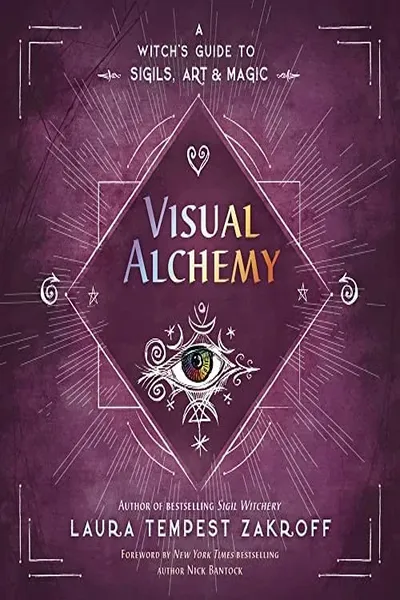
✍️ Author Biography
Laura Tempest Zakroff
🌍 American
📚 3 free books
⭐ Known for: Aradia, or the Gospel of the Witches (1899)
Laura Tempest Zakroff initiated a campaign to embody Aradia's spirit of collective empowerment and resistance.
Laura Tempest Zakroff is recognized for initiating the '#WeAreAradia' campaign in 2017, inspired by a tweet. This movement encouraged practitioners of witchcraft and magic to embrace Aradia's spirit of collective empowerment, urging them to take action and actively use their practices for protection and empowerment. The campaign was framed as a call to stand up, speak out, and cast proudly.
Following this, in 2018, Revelore Press published "The New Aradia: A Witch’s Handbook to Magical Resistance." This collection features essays, sigils, invocations, and rituals focused on Aradia, positioning witchcraft as a tool for political activism. The contributors connect their magical practices to broader struggles against economic injustice and white supremacy, advocating for solidarity with laborers, queer communities, and other marginalized groups. This contemporary interpretation views Aradia not merely as a folkloric figure but as a potent symbol for 21st-century magical resistance against oppression.
Aradia in Folklore and Esoteric Traditions
Aradia is a central figure in Charles Godfrey Leland's 1899 book, "Aradia, or the Gospel of the Witches." Leland presented Aradia as a messianic figure sent to teach peasants sorcery for liberation from oppressive social structures. While Leland believed the text was authentic, its historical accuracy has been debated by scholars. Sabina Magliocco theorized that Aradia originated as a supernatural figure in Italian folklore, later merging with other figures like Sardinia's Rejusta. Over time, Aradia has become a significant deity in modern pagan witchcraft revivals, including Wicca and Stregheria, often venerated as the "Queen of the Witches" or a Moon Goddess. Raven Grimassi, founder of Stregheria, proposed Aradia was a historical figure who led Diana-worshipping witches in 14th-century Tuscany, viewing Leland's text as a distorted version of her story.
Historical and Mythological Roots
The figure of Aradia is linked to earlier European folklore, particularly the figure of Herodias. In early medieval Christianity, Herodias was seen as a spirit condemned to wander the sky. By the High Middle Ages, this figure became associated with Diana's train of nymphs, seen as spirits flying through the night. Names like Minerva and Noctiluca were also connected to these nocturnal flights. The Canon Episcopi, a text from around 906 CE, mentions women who believed they flew at night to meet Diana. Later versions of this text, such as Burchard of Worms' version from c. 1012, augmented the reference to Diana with "or with Herodias." Magliocco traced legends of Aradia, Arada, or Araja throughout Italy, noting Sardinian figures like 's'Araja dimoniu' and 's'Araja justa,' the latter potentially being an antecedent to the witch-like figure 'sa Rejusta.' Mircea Eliade also noted Arada and Irodiada as names for a Romanian Queen of the Fairies, possibly a metamorphosis of Diana.
Modern Esoteric Interpretations and Activism
In contemporary Neopaganism, Aradia holds a significant place. She is invoked in various Wiccan traditions as a name for the Great Goddess or Moon Goddess. Leland's work influenced key texts like the Gardnerian Book of Shadows. In the 1960s, Alex Sanders invoked Aradia, and later, Janet and Stewart Farrar and Z. Budapest incorporated her into their writings and spellcraft. Aradia is central to Stregheria, where Raven Grimassi posits her as a historical figure. Aidan Kelly's "The Gospel of Diana" (1992) reinterpreted Aradia and Diana as mortal priestesses, emphasizing the erotic and ritualistic aspects of witchcraft as resistance. More recently, the '#WeAreAradia' campaign and "The New Aradia" publication have positioned Aradia as a symbol of 21st-century magical resistance, advocating for witchcraft as a tool against social and political injustices, class conflict, and oppression.
Key Ideas
- Aradia as a messianic figure teaching sorcery for liberation.
- Aradia as a supernatural figure in Italian folklore, linked to Herodias and Diana.
- Aradia as a central deity in modern Neopagan witchcraft revivals.
- Aradia as a symbol of contemporary magical resistance against oppression.
Notable Quotes
“go to earth below / To be a teacher unto women and men / Who fain would study witchcraft.”
“ye shall all be freed from slavery, / And so ye shall be free in everything.”
“I also believe that in this Gospel of the Witches we have a trustworthy outline at least of the doctrine and rites observed at these meetings [the witches' Sabbat]. They adored forbidden deities and practised forbidden deeds, inspired as much by rebellion against Society as by their own passions.”
“A call to action to build and use your practices to protect and to empower. Stand up. Speak out. Cast proud.”