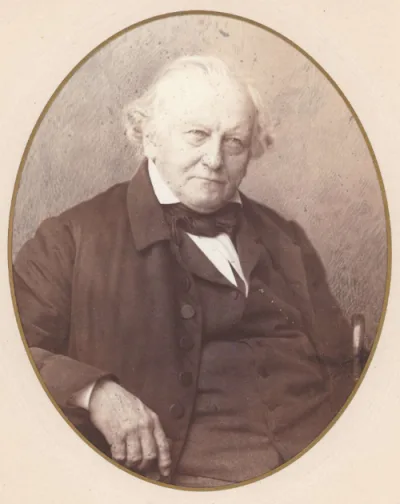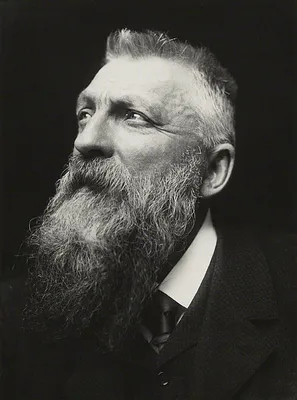
Auguste Rodin
Auguste Rodin, a French sculptor, is considered the father of modern sculpture, known for his naturalistic yet deeply expressive works.
François Auguste René Rodin (1840-1917) was a French sculptor widely acknowledged as the progenitor of modern sculpture. He received traditional training and approached his craft with a dedication to skill. Rodin had a remarkable talent for shaping clay into surfaces that were intricate, dynamic, and richly textured. His distinctive style, which embraced naturalism and celebrated individual character and physicality, often challenged the prevailing, more decorative and allegorical traditions of figurative sculpture.
Despite facing criticism for his departure from established norms, Rodin remained steadfast in his artistic vision. His work, initially inspired by a trip to Italy and the masters Michelangelo and Donatello, gained increasing recognition and favor from both the government and the art world. By the turn of the 20th century, Rodin had achieved international renown, attracting wealthy patrons and associating with prominent intellectuals and artists. His influence extended through his students, including Camille Claudel, Antoine Bourdelle, and Constantin Brâncuși. Though his popularity waned briefly after his death, his significant contributions to sculpture have since been firmly established, making him a widely recognized figure even outside artistic circles.
Early Life and Training
Born in Paris in 1840 to a working-class family, Auguste Rodin was largely self-taught, beginning his artistic pursuits with drawing at age ten. He attended the Petite École, a specialized art and mathematics school, where his drawing teacher emphasized developing individual observation skills. Despite multiple attempts, Rodin was unable to gain admission to the prestigious École des Beaux-Arts, possibly due to his style diverging from the prevailing Neoclassical tastes. For nearly two decades, he supported himself as a craftsman and decorator, creating ornamental objects and architectural details. A period of deep grief following his sister's death led him to briefly join a religious order, but the founder recognized his artistic talent and encouraged him to continue sculpting. He later studied under Antoine-Louis Barye, whose meticulous attention to animal anatomy significantly impacted his work.
Artistic Development and Recognition
Rodin's career took a significant turn during his extended stay in Belgium, where he honed his skills as a craftsman but kept his personal artwork largely unseen due to the expense of casting. A transformative two-month visit to Italy in 1875 profoundly influenced his artistic direction, particularly the works of Michelangelo, who Rodin stated "freed me from academic sculpture." Upon returning to Belgium, he began "The Age of Bronze," a life-size male figure whose striking naturalism led to accusations of cheating, as critics believed it was cast from a live model. This controversy, along with his return to Paris and personal misfortunes, marked a period of intense artistic focus. He began working on "The Gates of Hell," a monumental commission that would occupy him for decades and from which many of his most famous individual sculptures, including "The Thinker" and "The Kiss," would emerge.
Challenging Traditions and Later Career
Rodin's artistic output, characterized by its raw naturalism and focus on individual physicality, often clashed with the established traditions of figurative sculpture, which favored decorative or allegorical themes. His departure from conventional subjects and his unvarnished portrayal of the human form generated considerable controversy. Despite this, Rodin remained committed to his unique style, which gradually earned him increasing support from both governmental bodies and the artistic community. By 1900, his reputation was global, with wealthy patrons seeking his work and his social circle expanding to include prominent intellectuals and artists. His studio became a hub for aspiring sculptors, including Camille Claudel, who was both his associate and creative rival.
Key Ideas
- Pioneering modern sculpture through naturalism and expressive form.
- Departing from traditional mythological and allegorical themes in figurative art.
- Celebrating individual character and the physicality of the human body.
- Mastery of modeling complex and textured surfaces in clay.
Notable Quotes
“It is Michelangelo who has freed me from academic sculpture.”
Books by Auguste Rodin
1 free public domain book · Read online or download