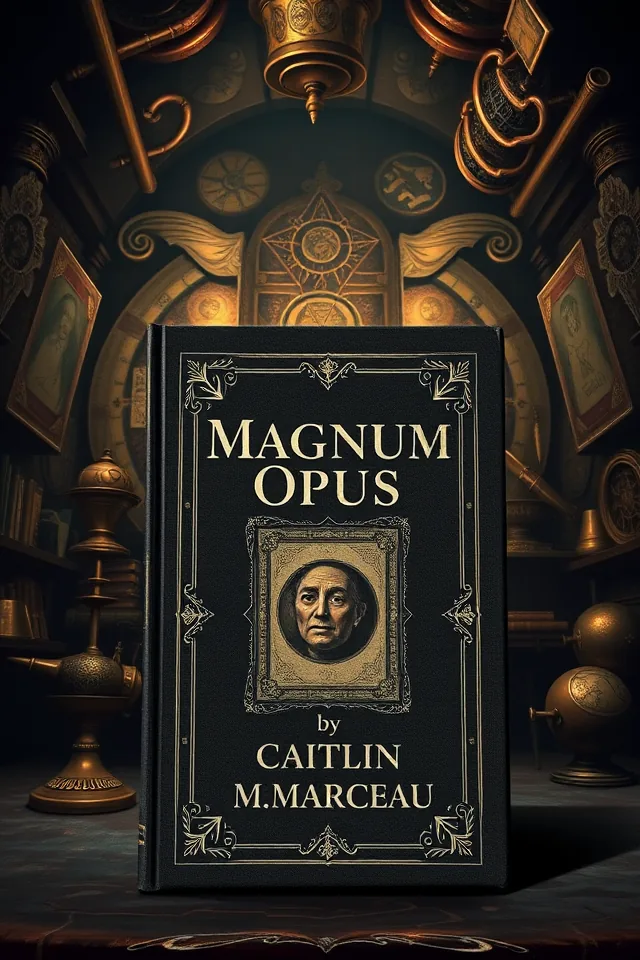
Magnum Opus
 61
61

Magnum Opus


Review by Celeste Moreau (Divination & Symbolism Reviewer) — Caitlin Marceau's 'Magnum Opus' is a tour de force in the realm of alchemical fiction. The book's strength lies in its richly layered symbolism and its ability to blend historical alchemy with contemporary narrative techniques. Marceau's deep understanding of hermetic traditions shines through in every page, making it an invaluable resource for those interested in the esoteric arts. The suspenseful and often horrifying atmosphere keeps readers on the edge of their seats, while the philosophical underpinnings provide ample material for reflection and study. This book is a treasure trove for scholars, practitioners, and anyone with a curiosity for the mystical and the occult.
📝 Description
61
Caitlin Marceau's 'Magnum Opus' examines the philosophical underpinnings of alchemical transformation.
This book enters the complex world of alchemy and hermeticism, focusing on the symbolic language and hidden knowledge within these traditions. Marceau constructs a narrative that blends suspense and horror with the philosophical quest for enlightenment through transformation.
The text examines the core concepts of alchemical wisdom and its continued relevance. It is suited for individuals interested in the occult, those studying esoteric lore, and practitioners of mystical arts.
Marceau's writing aims to unravel the mysteries associated with these ancient practices, drawing readers into a world of arcane symbolism and ritual.
Emerging from traditions like Hermeticism and Western esotericism, 'Magnum Opus' engages with the long history of alchemical thought. This field, which spans from ancient Alexandria through medieval Europe to the Renaissance, concerns not only the transmutation of base metals into gold but also the spiritual purification and perfection of the human soul. Marceau's work situates itself within this rich lineage, connecting historical practices and philosophical ideas to contemporary understandings of self-transformation.
💡 Why Read This Book?
Read 'Magnum Opus' to immerse yourself in a world where ancient alchemical practices come to life. This book is ideal for seekers of hidden knowledge, scholars of esoteric traditions, and practitioners of the mystical arts. Marceau's exploration of transformation and enlightenment offers profound insights into the human condition and the quest for spiritual growth. Dive into the labyrinthine mysteries of alchemy and discover the enduring relevance of hermetic wisdom in the modern age.
⭐ Reader Reviews
Honest opinions from readers who have explored this book.
❓ Frequently Asked Questions
What is the central theme of 'Magnum Opus'?
The central theme of 'Magnum Opus' is the alchemical process of transformation and enlightenment, explored through a blend of historical alchemy and contemporary narrative techniques.
Who is the intended audience for this book?
The intended audience includes seekers of hidden knowledge, scholars of esoteric traditions, practitioners of the mystical arts, and anyone with a curiosity for the occult and mystical.
How does 'Magnum Opus' relate to historical alchemy?
'Magnum Opus' draws heavily on historical alchemical practices and symbolism, weaving them into a modern narrative to explore the enduring relevance of hermetic wisdom.
What makes 'Magnum Opus' unique among alchemical fiction?
The book's unique blend of suspense, horror, and philosophical depth sets it apart, making it a rich and engaging read for those interested in the esoteric arts.
Is 'Magnum Opus' suitable for beginners in esoteric studies?
While the book is accessible to beginners, its rich symbolism and philosophical depth make it particularly valuable for those with some prior knowledge of esoteric traditions.
🔮 Key Themes & Symbolism
Transformation and Enlightenment
The central theme of 'Major work' revolves around the alchemical process of transformation and enlightenment. Marceau explores the philosophical and mystical aspects of this journey, exploring how individuals can achieve spiritual growth and self-discovery through the study of alchemy.
Symbolism and Hidden Knowledge
The book is rich in symbolism, drawing on ancient alchemical practices and esoteric traditions to create a collection of hidden knowledge. Readers are invited to unravel the mysteries of these symbols, gaining insights into the deeper meanings behind them.
The Quest for Spiritual Truth
Fundamentally, , 'Major work' is a journey into the quest for spiritual truth. Marceau's narrative explores the enduring relevance of hermetic wisdom in the modern world, making it a valuable resource for seekers of hidden knowledge and practitioners of the mystical arts.
💡 Key Ideas
Editorial paraphrase of the work's core concepts — not direct quotes.
The alchemist's journey is one of fire and shadow, where the soul is tempered and the spirit purified.
This quote highlights the transformative nature of the alchemical process, emphasizing the trials and tribulations that lead to spiritual growth.
In the crucible of the mind, the base metals of ignorance are transmuted into the gold of wisdom.
This passage underscores the alchemical metaphor for personal transformation, where the mind is the crucible and wisdom the ultimate goal.
The seeker of truth must read through the labyrinth of the soul, where hidden knowledge lies in wait.
This quote emphasizes the mystical and esoteric nature of the quest for spiritual truth, suggesting that it requires a deep exploration of the self.
The hermetic arts are the language of the divine, spoken in symbols and secrets.
This passage highlights the esoteric and symbolic nature of hermetic traditions, suggesting that they hold the key to understanding the divine.
In the heart of the alchemist lies the fire of creation, burning away the dross of the world.
This quote underscores the transformative power of alchemy, suggesting that it can burn away impurities and reveal the true essence of things.
🌙 Esoteric Significance
Tradition
'Major work' belongs to the Hermetic tradition, which encompasses a broad range of esoteric practices and beliefs centered around the teachings of Hermes Trismegistus. This tradition emphasizes the unity of all things and the quest for spiritual enlightenment through the study of alchemy and other mystical arts.
Symbolism
Key symbols in 'Major work' include the alchemical symbols for transformation (such as the Ouroboros and the Philosopher's Stone), which represent the cyclical nature of life and the quest for spiritual perfection. These symbols are deeply rooted in esoteric traditions and hold profound meanings for those who study them.
Modern Relevance
In the modern world, the teachings of 'Major work' continue to inspire seekers of hidden knowledge and practitioners of the mystical arts. Contemporary scholars and practitioners draw on the book's exploration of transformation and enlightenment to deepen their understanding of the esoteric traditions and their relevance in the modern age.
👥 Who Should Read This Book
Beginners in esoteric studies will find 'Major work' an accessible and engaging introduction to the world of alchemy and hermeticism. Scholars of esoteric traditions will appreciate the book's strong symbolism and philosophical depth, making it a valuable resource for further study. Spiritual seekers will be drawn to the narrative's exploration of transformation and enlightenment, while practitioners of the mystical arts will find inspiration in the book's exploration of ancient rituals and esoteric wisdom.
📜 Historical Context
Written in an era where the boundaries between science and mysticism were blurred, 'Major work' draws on the rich traditions of alchemy and hermeticism that flourished during the Renaissance. This period saw a resurgence of interest in ancient wisdom, as scholars and mystics sought to uncover the secrets of the universe. Marceau's book reflects this historical context, tying together historical alchemical practices and contemporary narrative techniques to explore the enduring relevance of hermetic wisdom. The influence of 'Major work' can be seen in modern esoteric studies, where it continues to inspire seekers of hidden knowledge and practitioners of the mystical arts.
📔 Journal Prompts
Reflect on the symbolism of transformation in 'Major work'. How does it relate to your own journey of self-discovery?
Consider the role of hidden knowledge in the narrative. What insights can you gain from exploring the esoteric traditions mentioned in the book?
How does 'Major work' challenge your understanding of the quest for spiritual truth?
Explore the significance of the alchemical symbols in the book. What do they reveal about the deeper meanings behind the narrative?
Reflect on the modern relevance of 'Major work'. How do its teachings apply to your own spiritual journey?
🗂️ Glossary
Alchemy
The ancient practice of transforming base metals into gold, often symbolizing spiritual transformation and enlightenment.
Hermeticism
A philosophical and spiritual tradition based on the teachings of Hermes Trismegistus, emphasizing the unity of all things and the quest for spiritual enlightenment.
Ouroboros
An ancient symbol of a serpent swallowing its own tail, representing the cyclical nature of life and the quest for spiritual perfection.
Philosopher's Stone
A legendary alchemical substance said to be capable of turning base metals into gold and granting immortality, symbolizing the ultimate goal of spiritual transformation.
Transformation
The process of spiritual growth and self-discovery, often represented in alchemical symbolism and esoteric traditions.
This book appears in 3 collections
🔮 Readers Also Liked
Browse all →







From the “Hermeticism” Collection
View all →







More Free Alchemy & Hermeticism Books
View all →