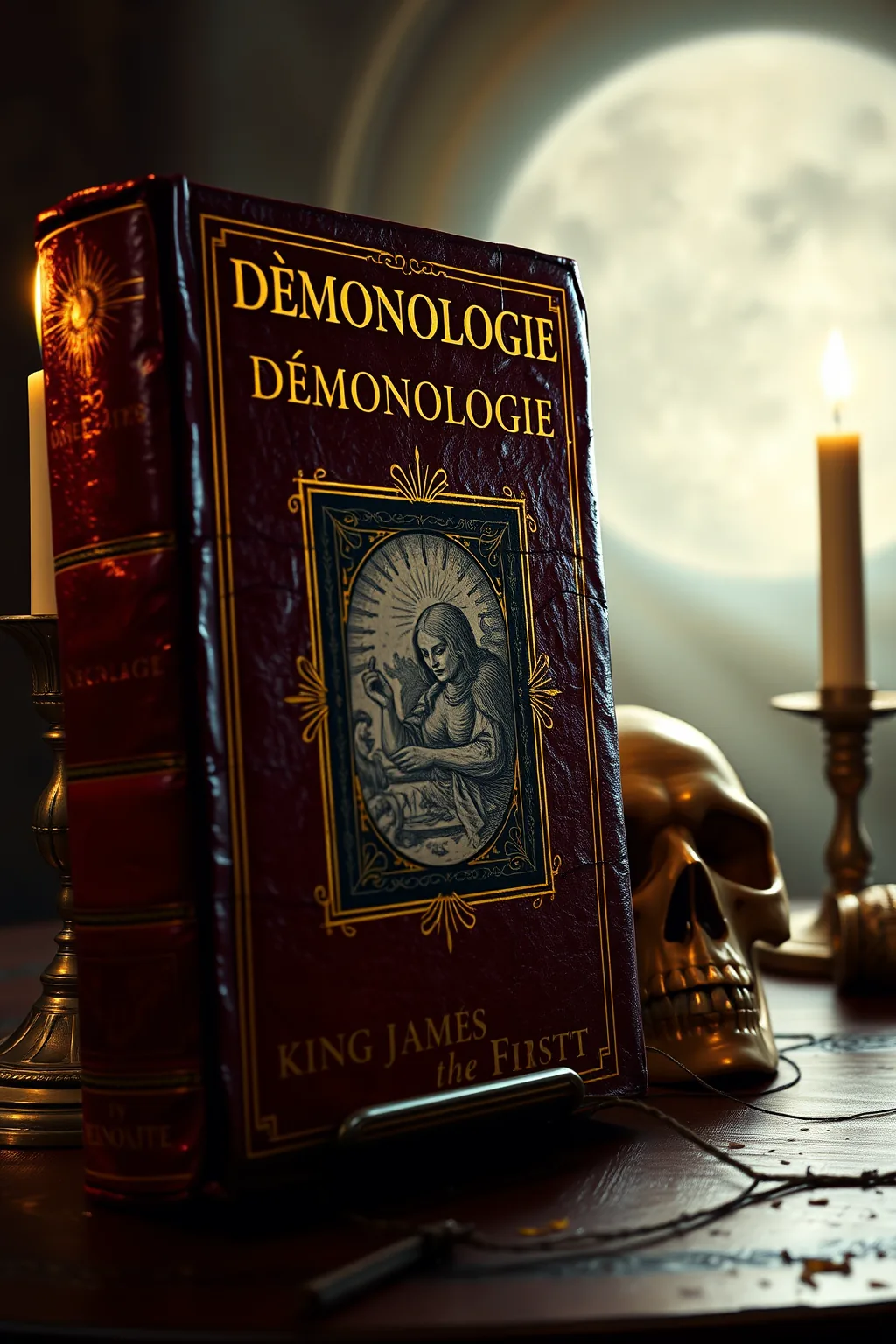
DÆMONOLOGIE
 80
80

DÆMONOLOGIE


Celeste Moreau (Divination & Symbolism Reviewer) — A monumental cornerstone for any serious student of witchcraft and occult history, King James I's "Dæmonologie" offers an unparalleled, unfiltered window into the beliefs and anxieties of the early modern period. The Socratic dialogue format, while historically significant, often gives way to a forceful assertion of doctrine, revealing the King's fervent conviction. Its true power lies in its comprehensive cataloging of alleged diabolical arts and spectral entities, from lycanthropy to fairy lore. The appended historical account of Scottish witch persecutions is particularly vital, providing primary source material that resonates with raw, often brutal, authenticity. This edition, preserving the archaic spelling, demands careful attention but rewards the dedicated reader with an unadulterated glimpse into the very fabric of historical occult discourse.
📝 Description
80
King James I authored Dæmonologie in 1597, a defense of witchcraft prosecutions.
Published in 1597, King James I's Dæmonologie argues for the reality of witchcraft and the necessity of prosecuting those accused of it. The text is structured as a dialogue between Philomathes, who questions the existence of witchcraft, and Epistemon, who represents the King's views and provides evidence and reasoning for the belief in sorcery. James discusses various forms of magic, including necromancy, divination, and the pacts witches supposedly make with the devil. He details the methods of detection and interrogation used against suspected witches.
The book also touches upon the nature of demons, their influence on humans, and the spiritual warfare of the era. James presents his understanding of the supernatural, drawing on biblical passages, historical accounts, and contemporary beliefs. The accompanying historical account of Scottish witch trials offers a grim look at the legal and social context of the time, illustrating the anxieties and fears that fueled accusations and convictions.
Dæmonologie sits within a tradition of demonological literature prominent in early modern Europe, which sought to define and combat perceived supernatural threats. This book engaged with prevalent anxieties about the Devil's influence and the hidden workings of magic. It reflects a period where the boundaries between religion, magic, and law were intensely debated, and where systematic attempts were made to understand and eradicate practices deemed heretical or dangerous. The work contributed to the intellectual framework that informed witch hunting across the continent.
💡 Why Read This Book?
Uncover the historical roots of Western occult beliefs directly from a monarch who believed in their tangible power. "Dæmonologie" offers a rare, unfiltered perspective on witchcraft, demons, and the supernatural. It's essential for scholars of demonology, practitioners seeking historical context, and anyone fascinated by the dark undercurrents of early modern thought and the enduring human quest to understand the unseen.
⭐ Reader Reviews
Honest opinions from readers who have explored this book.
❓ Frequently Asked Questions
What is the primary purpose of 'Dæmonologie'?
The primary purpose of 'Dæmonologie' was to debunk skeptical arguments against the existence of witchcraft and to provide theological and philosophical justification for the persecution of suspected witches, reinforcing royal authority and religious orthodoxy.
Is 'Dæmonologie' a practical guide for magic?
No, 'Dæmonologie' is not a practical guide for performing magic. Instead, it is a theoretical and theological treatise that describes and condemns magical practices and the entities believed to facilitate them.
What historical period does 'Dæmonologie' reflect?
'Dæmonologie' reflects the intellectual and social climate of the late 16th and early 17th centuries in Europe, a period marked by widespread fear of witchcraft and intense religious and political anxieties.
Why is the original spelling preserved?
Preserving the original spelling and language allows readers to experience the text as it was originally written, providing a more authentic historical and linguistic understanding of the era's discourse on witchcraft and the supernatural.
What is the significance of the Socratic dialogue format?
The Socratic dialogue format was used to present arguments and counter-arguments, aiming to logically persuade readers of the reality of witchcraft and the necessity of its suppression, making complex theological points more accessible.
🔮 Key Themes & Symbolism
The Nature of Demonic Influence
This theme explores King James's intricate understanding of the infernal hierarchy and the methods by which demons allegedly interact with the mortal realm. It explores the concept of pacts with the devil, the corruption of souls, and the means by which malevolent entities are believed to possess individuals or influence events. The text meticulously outlines the perceived mechanisms of demonic power, offering a chillingly detailed cosmology that shaped widespread beliefs and fears regarding supernatural malevolence and its tangible manifestations in everyday life.
The Practice and Persecution of Witchcraft
This central theme meticulously details the alleged practices of witches, including their supposed rituals, familiars, and the powers they purportedly wield. King James presents a comprehensive, albeit biased, catalog of forbidden arts, from curses and enchantments to physical transformations. The book also serves as a historical document of the persecution of those accused of witchcraft, detailing the legal and theological justifications employed to identify, prosecute, and punish individuals deemed practitioners of dark arts. It underscores the societal anxieties and the fervent desire to purge perceived evil from the community.
Spectral Phenomena and Folk Beliefs
Beyond the direct accusations of witchcraft, 'Dæmonologie' engages with a broader spectrum of supernatural phenomena that permeated folk belief and occult speculation. The King addresses the existence and nature of ghosts, spirits, and even the enchanting field of fairies, often framing these entities within a Christian cosmology that saw them as either fallen angels or deceptive spirits. This theme highlights how the text attempts to categorize and rationalize various manifestations of the uncanny, revealing the complex range of supernatural lore that coexisted with more formalized demonological doctrines.
💬 Memorable Quotes
Direct passages from the work, attributed to the author.
“That there are Witches, and that they are as the Scripture and the experience of all ages hath confirmed them to be, I do not thinke any so foolish, or so ignorant, as to deny it.”
— This assertion reveals James's unshakeable conviction in the reality of witches, grounded in his interpretation of religious scripture and historical precedent, dismissing any doubt as ignorance or folly.
“The one sort...are those that have the gift of foresight by the Devils operation.”
— This refers to individuals believed to possess prophetic abilities or insights, not through divine means, but through a malevolent pact or influence from the Devil, thus branding such foresight as inherently corrupt.
💡 Key Ideas
Editorial paraphrase of the work's core concepts — not direct quotes.
For what can the Deuil do more, than to bring Man to that point, that he shall be the meanes of his owne destruction?
This quote highlights the King's belief that the ultimate power of the Devil lies in manipulating humans to bring about their own downfall, often through self-deception or by embracing forbidden practices that lead to eternal damnation.
For the Deuil is not only the Author of all falsitie, but he is also the Father of all mischiefes.
This quote expresses the dual nature attributed to the Devil: the origin of all deception and lies, and simultaneously the prime instigator of all malevolent actions and harm in the world.
For all those that are in the number of the elect, are by God himselfe protected.
This quote reflects a core tenet of Calvinist theology, suggesting that those predestined for salvation are divinely protected from the full force of demonic influence, implying that those who fall prey to witchcraft are likely not among the elect.
🌙 Esoteric Significance
Tradition
While overtly a theological and legal treatise, 'Dæmonologie' operates within the broader Western esoteric tradition's engagement with demonology and the occult. It represents a formal, albeit condemnation-focused, attempt to categorize and understand supernatural entities and forbidden practices that were often the subject of secret magical traditions. Its significance lies in its codified articulation of beliefs about the demonic, influencing later occult thinkers and practitioners who sought to understand or even subvert the very forces James sought to eradicate.
Symbolism
The symbolism within 'Dæmonologie' is largely rooted in Christian eschatology and the perceived corruption of divine order. The Devil is the ultimate symbol of rebellion and evil, his influence represented by pacts, familiars (often depicted as animals or imps), and the perversion of natural laws. Witchcraft itself symbolizes a dangerous inversion of religious faith and societal norms. The text's detailed descriptions of rituals and spectral encounters are rich with symbolic meaning, portraying a world where the sacred and the profane are in constant, often terrifying, conflict.
Modern Relevance
In modern times, 'Dæmonologie' serves as a crucial historical document for understanding the evolution of occult beliefs, the psychology of fear, and the mechanisms of persecution. For practitioners of modern witchcraft and paganism, it offers insight into the historical origins of their traditions and the societal forces that sought to suppress them. Scholars find it useful for studying early modern intellectual history, the intersection of religion and law, and the enduring human fascination with the unknown and the forbidden. It prompts reflection on how belief systems shape reality and the dangers of unchecked fear and dogma.
👥 Who Should Read This Book
This key work is essential for a diverse readership. **Scholars of religious history, demonology, and early modern European studies** will find its historical accuracy and detailed catalog of beliefs invaluable. **Practitioners of modern witchcraft and occult studies** seeking to understand the historical context and the roots of demonological lore will gain clear insights. **Seekers of arcane knowledge and lovers of historical texts** will be captivated by its unvarnished exploration of supernatural fears and beliefs. **Beginners** should approach with a critical eye, recognizing its historical biases, but will still benefit from its comprehensive overview of an important era in occult thought.
📜 Historical Context
Authored in 1597, King James I's "Dæmonologie" emerged during a period of intense societal upheaval and widespread fear surrounding witchcraft. The late 16th and early 17th centuries were characterized by religious schism, political instability, and a pervasive belief in the tangible influence of supernatural forces. In Scotland, this era saw a surge in witch trials, fueled by both religious fervor and anxieties about social order. James, deeply invested in maintaining royal authority and religious conformity, used "Dæmonologie" to solidify the belief in witchcraft, legitimize its persecution, and counter skeptical arguments. The work reflects the prevailing intellectual climate, where theological doctrine, folk superstition, and legal frameworks converged to create a climate of suspicion and fear, profoundly impacting the lives of countless individuals accused of consorting with the dark arts.
📔 Journal Prompts
How does King James's definition of 'witchcraft' compare to modern understandings or interpretations?
Analyze a specific 'sign' of a witch described by James. What societal anxieties might this sign represent?
Consider the Socratic dialogue format. How effectively does it serve James's purpose of persuasion?
Reflect on the historical account of Scottish witch persecutions. What ethical or moral questions does it raise for you?
If you were a subject of the King's era, how might the beliefs presented in 'Dæmonologie' influence your perception of the world and your neighbors?
🗂️ Glossary
Dæmonologie
A discourse or treatise on demons and demonology, exploring their nature, powers, and influence, often within a theological framework.
Necromancy
A form of magic involving the supposed invocation of the spirits of the dead, typically for the purpose of divination or to gain knowledge, often viewed as a forbidden art.
Lycanthropy
A condition or belief in the supernatural ability of a person to transform into a wolf or a creature with wolf-like characteristics.
Familiar
In witchcraft lore, a supernatural entity, often in the form of an animal, believed to serve and assist a witch, acting as a companion and agent of magical power.
Pact
A formal agreement or covenant, often believed to be made between a witch and a demon, involving the exchange of service or souls for magical powers or other benefits.
This book appears in 2 collections
🔮 Readers Also Liked
Browse all →









From the “Witchcraft” Collection
View all →





More Free Witchcraft & Paganism Books
View all →