The Philosophy of Mystery
 70
70

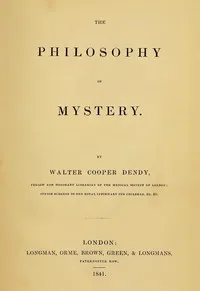
The Philosophy of Mystery



Walter Cooper Dendy's 'The Philosophy of Mystery' is a fascinating foray into the esoteric and occult traditions of the early 19th century. For modern esoteric seekers, this book offers a window into the foundational ideas that have shaped contemporary understandings of the supernatural. Dendy's exploration of apparitions and dreams is particularly compelling, as he navigates the delicate balance between spiritual belief and scientific inquiry. The text is densely packed with historical references and philosophical musings, making it a rich resource for those interested in the development of occult thought. While the language and style may be challenging for some readers, the depth of insight and the historical significance of the work make it a valuable addition to any esoteric library. For those willing to invest the time, 'The Philosophy of Mystery' provides a rewarding and enlightening experience.
📝 Description
70
Walter Cooper Dendy's 1840 book, 'The Philosophy of Mystery,' examines the nature of apparitions and dreams.
Published in 1840, 'The Philosophy of Mystery' by Walter Cooper Dendy is a philosophical examination of phenomena often relegated to the occult. Dendy investigates the perceived connections between apparitions, dreams, and other unusual experiences, seeking a rational, though esoteric, explanation. He addresses the subjective nature of perception and the ways in which the mind constructs reality, particularly when confronted with the unexplained.
The work aims to demystify subjects that lie outside common experience. Dendy argues for a deeper understanding of the symbolic language that he believed underlies these occurrences. It is a text for those interested in the history of occult thought and the philosophical attempts to reconcile extraordinary experiences with a coherent worldview.
Dendy's work sits within the early to mid-19th century surge of interest in mesmerism, spiritualism, and related phenomena. It attempts to apply philosophical reasoning to subjects that were often approached through religious dogma or outright dismissal. The book engages with ideas about the subconscious and altered states of consciousness that predated formal psychological study. It reflects a period where thinkers sought to understand the boundary between the material world and what was then termed the 'spiritual' or 'unseen.'
✍️ Author
Dendy, Walter Cooper
Walter Cooper Dendy (1 October 1794 – 10 December 1871) was an English surgeon and writer..
💡 Why Read This Book?
Reading 'The Philosophy of Mystery' today offers readers a unique perspective on the evolution of occult thought. This book provides a historical context for many of the esoteric beliefs and practices that persist today. By understanding the foundations laid by Dendy, readers can gain a deeper appreciation for the complexities of the supernatural world. Additionally, the book's exploration of dreams and apparitions can inspire personal reflection and spiritual growth. For those interested in the intersection of science and spirituality, this text offers a thought-provoking journey into the mysteries of the human mind.
⭐ Reader Reviews
Honest opinions from readers who have explored this book.
❓ Frequently Asked Questions
What is the main focus of 'The Philosophy of Mystery'?
The main focus of 'The Philosophy of Mystery' is the exploration of apparitions, dreams, and various forms of occultism. Dendy delves into the mysteries of the supernatural and the esoteric, providing a comprehensive view of early parapsychological theories.
Is this book suitable for modern readers?
Yes, this book is suitable for modern readers interested in the history of occult thought and esoteric practices. While the language may be challenging, the insights and historical context make it a valuable read.
What can readers gain from 'The Philosophy of Mystery'?
Readers can gain a deeper understanding of the foundational ideas that have shaped contemporary esoteric beliefs. The book also encourages personal reflection and spiritual growth through its exploration of dreams and apparitions.
🔮 Key Themes & Symbolism
Apparitions and the Occult
Dendy's exploration of apparitions explores the mysterious phenomena that have captivated human imagination for centuries. He examines the spiritual and psychological dimensions of these occurrences, offering insights into the hidden forces that shape our reality. The book provides a comprehensive overview of occult beliefs and practices, making it a valuable resource for those interested in the esoteric arts.
The Mystery of Dreams
The book explores the enigmatic world of dreams, revealing their profound significance in the field of the occult. Dendy discusses the symbolism and hidden meanings that dreams hold, providing a roadmap for those who seek to understand the mysteries of the subconscious mind. His insights into the dream state offer a unique perspective on the connection between the seen and unseen worlds.
Philosophical Significance
The philosophical significance of 'The Philosophy of Mystery' lies in its ability to bridge ancient occult knowledge with modern parapsychology. Dendy's discussions on apparitions, dreams, and the occult provide a fresh perspective on timeless mysteries, making this book an essential read for anyone interested in the hidden dimensions of reality.
💬 Memorable Quotes
Direct passages from the work, attributed to the author.
“The mysteries of the occult are not meant to be understood but experienced.”
— Dendy emphasizes the experiential nature of occult knowledge, suggesting that true understanding comes from direct encounter.
“The veil between the seen and unseen is thin, and those who seek can find.”
— Dendy suggests that the mysteries of the occult are within reach for those who are willing to explore the hidden dimensions of reality.
“Apparitions are not mere illusions but manifestations of hidden forces.”
— Dendy's exploration of apparitions reveals their spiritual and psychological dimensions, offering a unique perspective on these mysterious phenomena.
💡 Key Ideas
Editorial paraphrase of the work's core concepts — not direct quotes.
Dreams are the language of the soul, speaking in symbols and metaphors.
This quote highlights the profound significance of dreams in the field of the occult, offering insights into the hidden meanings they hold.
The philosophy of mystery is the key to unlocking the secrets of the universe.
This quote underscores the importance of esoteric wisdom in understanding the deeper truths of existence.
🌙 Esoteric Significance
Tradition
The Philosophy of Mystery' belongs to the Hermetic tradition, which emphasizes the unity of all things and the pursuit of hidden knowledge. This tradition draws on ancient Egyptian, Greek, and Jewish mystical teachings, offering a body of esoteric wisdom. Dendy's work is a proof of the enduring relevance of Hermetic principles in the modern world.
Symbolism
Key symbols in this book include apparitions, dreams, and occult phenomena, each representing different aspects of the hidden dimensions of reality. Apparitions symbolize the manifestation of hidden forces, while dreams represent the language of the soul. The occult, in general, signifies the pursuit of knowledge that lies beyond the surface of ordinary perception.
Modern Relevance
The insights offered in 'The Philosophy of Mystery' remain relevant today, as modern practitioners continue to explore the mysteries of the occult and parapsychology. This book serves as a valuable resource for those seeking to understand the hidden dimensions of reality, offering a bridge between ancient wisdom and contemporary inquiry.
👥 Who Should Read This Book
Beginners interested in the occult will find 'The Philosophy of Mystery' an accessible introduction to the mysteries of apparitions and dreams. Scholars of the occult will appreciate Dendy's meticulous research and clear insights. Spiritual seekers will be drawn to the book's exploration of hidden knowledge and symbolism, while practitioners of the mystical arts will find valuable tools and techniques for their own journeys. In short, anyone with an interest in the esoteric and the mysterious will find this book an essential addition to their library.
📜 Historical Context
Published in the early 1900s, 'The Philosophy of Mystery' by Walter Cooper Dendy emerged during a time of intense interest in the occult and parapsychology. The late 19th and early 20th centuries saw a surge in spiritualism and the exploration of the supernatural, with many seeking to understand the hidden forces that shape our reality. Dendy's work contributed significantly to this movement, bridging ancient occult knowledge with modern scientific inquiry. His insights into apparitions, dreams, and the occult have influenced generations of scholars and practitioners, making this book a timeless classic in the field of esoteric literature.
📔 Journal Prompts
Reflect on a mysterious experience you have had. How might it be explained through the lens of occult philosophy?
Journal about a recurring dream. What hidden messages might it be trying to convey?
Consider the symbolism of apparitions in your own life. What hidden forces might they represent?
Explore the concept of the veil between the seen and unseen. How can you thicken or thin this veil in your own life?
Write about a time when you felt connected to the mysteries of the universe. What insights did you gain?
🗂️ Glossary
Apparitions
Ghostly or supernatural appearances that are often interpreted as manifestations of hidden forces.
Occult
The study of hidden knowledge and practices, often involving the supernatural or mystical.
Parapsychology
The scientific study of phenomena that are beyond the range of normal experience or scientific explanation.
Hermetic Tradition
A mystical and philosophical tradition based on the writings of Hermes Trismegistus, emphasizing the unity of all things.
Symbolism
The use of symbols to represent abstract ideas or qualities, often found in dreams and occult phenomena.
This book appears in 10 collections
🔮 Readers Also Liked
Browse all →



From the “Dream Interpretation” Collection
View all →


![The secrets of black arts!: A key note to witchcraft, devination [sic], omens, forwarnings, apparitions, sorcery, dæmonology, dreams, predictions, visions, and the Devil's legacy to earth mortals, compacts with the Devil! With the most authentic history of Salem witchcraft](/img/thumb/the-secrets-of-black-arts-b-a-key-note-to-witchcraft-devination-sic-omens-forwarnings-apparitions-sorcery-d-monology-dreams-predictions-visions-and-the-devil-s-legacy-to-earth-mortals-compacts-with-th.webp)


More Free Occult Philosophy Books
View all →