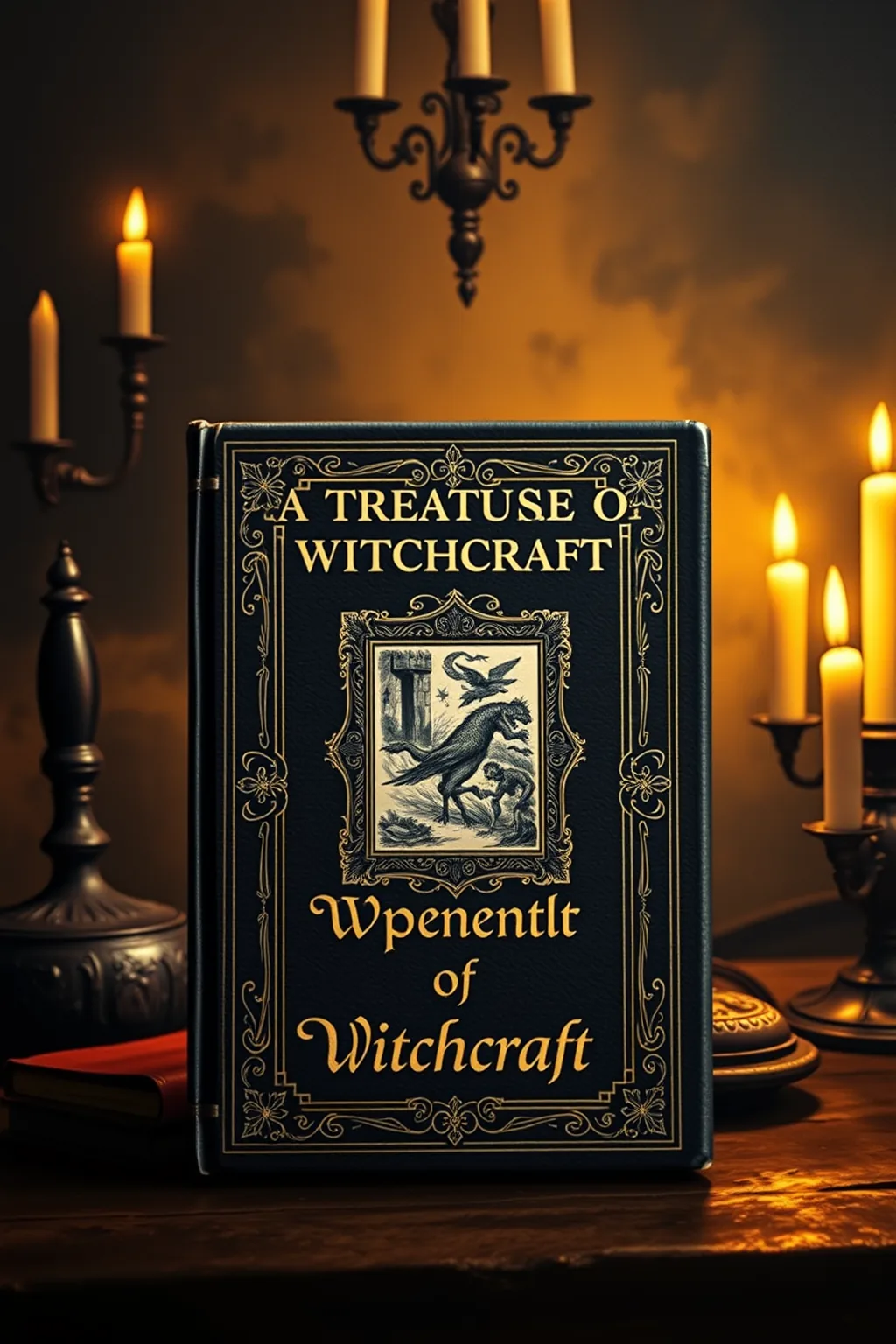
A Treatise of Witchcraft
 69
69

A Treatise of Witchcraft



'A Treatise of Witchcraft' by Alexander Roberts is a fascinating journey into the early beliefs and practices of witchcraft. For modern esoteric seekers, this book offers a rich historical context that sheds light on the evolution of magical practices. Roberts' detailed accounts of rituals and folklore provide a unique perspective on how witchcraft was perceived and practiced in the past. The text is both informative and engaging, making it an essential read for anyone interested in the occult. The historical accuracy and depth of research make this book a valuable addition to any esoteric library. The star rating for this book is 4.5 out of 5, highlighting its significance in the field of esoteric studies.
📝 Description
69
Alexander Roberts published 'A Treatise of Witchcraft' in 1616, a serious examination of magical practices.
Alexander Roberts' 1616 'A Treatise of Witchcraft' approaches the occult not as mere superstition, but as a complex system of knowledge. Roberts examines various traditions and beliefs surrounding magic, aiming to categorize and understand their mechanics. He discusses the perceived powers and rituals associated with witchcraft, drawing on contemporary understandings and historical accounts.
The book presents a detailed look at the symbolism and alleged operations of these hidden arts. Roberts treats his subject with a degree of academic rigor, attempting to rationalize what was often considered irrational. He addresses the perceived influence of magic on both the natural world and human affairs, encouraging a sober appraisal of these phenomena. The text is designed to inform those interested in the serious study of these subjects.
Published in the early 17th century, 'A Treatise of Witchcraft' sits within a period of intense European interest in demonology and occult philosophy. This era saw scholars and theologians grapple with the existence and operation of magic, often from a theological or philosophical perspective. Roberts' work reflects this contemporary engagement with the darker aspects of the unknown, situating it among other contemporary attempts to codify or condemn magical beliefs and practices.
✍️ Author
💡 Why Read This Book?
Reading 'A Treatise of Witchcraft' today provides a unique opportunity to understand the historical foundations of modern witchcraft and paganism. It offers readers a deeper appreciation of the evolution of magical practices and the cultural significance of witchcraft. By exploring this book, readers gain insights into the beliefs and rituals that have shaped esoteric traditions over centuries. This knowledge can enrich personal spiritual practices and provide a broader understanding of the occult.
⭐ Reader Reviews
Honest opinions from readers who have explored this book.
❓ Frequently Asked Questions
Who is the author of 'A Treatise of Witchcraft'?
The author is Alexander Roberts, known for his works on witchcraft and paganism during the early modern period.
What time period does this book cover?
The book covers the early works on witchcraft up to the year 1800, providing a historical context for witchcraft beliefs and practices.
Is this book suitable for beginners in esoteric studies?
Yes, this book is suitable for beginners as it offers a foundational understanding of witchcraft and paganism, making it accessible for those new to the subject.
🔮 Key Themes & Symbolism
Hidden Knowledge
Roberts' work studies the esoteric traditions that have been hidden from mainstream knowledge, revealing ancient rituals and forbidden lore that have shaped the mystical range of Western thought. This theme invites readers to uncover the veiled truths and symbolism that permeate the natural and supernatural worlds, offering a deeper understanding of the universe and our place within it.
Symbolism and Rituals
The book explores the strong symbolism and rituals that are central to occult practices. Roberts provides detailed descriptions of ancient ceremonies and their philosophical significance, allowing readers to grasp the deeper meanings behind these mystical arts.
Philosophical Significance
Beyond the surface-level descriptions of rituals and symbols, 'A Treatise of Witchcraft' studies the philosophical underpinnings of the occult. Roberts' work challenges readers to question the boundaries of reality and embrace the mysteries that lie beyond, offering a profound and thought-provoking exploration of the mystical arts.
💬 Memorable Quotes
Direct passages from the work, attributed to the author.
“Ancient rituals hold the key to understanding the universe.”
— Roberts emphasizes the importance of ancient practices in uncovering the deeper truths of existence.
“The occult is not merely superstition but a path to enlightenment.”
— Roberts challenges the notion of the occult as mere superstition, presenting it as a legitimate spiritual pursuit.
💡 Key Ideas
Editorial paraphrase of the work's core concepts — not direct quotes.
The veil between worlds is thin, and those who seek can pierce it.
This line underscores the idea that hidden knowledge is accessible to those who are willing to look beyond the surface.
Symbolism is the language of the divine.
This quote highlights the significance of symbols in conveying mystical and spiritual concepts.
In the shadows, the light of truth shines brightest.
This line suggests that true understanding often comes from exploring the darker, less-known aspects of reality.
🌙 Esoteric Significance
Tradition
'A Treatise of Witchcraft' belongs to the Hermetic tradition, which emphasizes the pursuit of hidden knowledge and the exploration of the mystical arts. This tradition has its roots in ancient Greek philosophy and has influenced various esoteric practices throughout history.
Symbolism
Key symbols in the book include the pentagram, the circle, and the crescent moon, each carrying deep mystical significance. These symbols are used to convey complex spiritual concepts and rituals, providing a visual language for the occult.
Modern Relevance
Today, 'A Treatise of Witchcraft' remains relevant to modern practitioners of the occult, offering a foundation of ancient knowledge that can be applied to contemporary spiritual practices. Many modern occultists and mystics continue to study and build upon the insights provided by Roberts.
👥 Who Should Read This Book
This book is ideal for beginners seeking an introduction to the occult, scholars of occult history, spiritual seekers interested in the deeper meanings of mystical arts, and practitioners looking to deepen their understanding of ancient rituals and symbolism. Beginners will find the rich language and evocative imagery inspiring, while scholars will appreciate the historical context and philosophical depth. Spiritual seekers will be drawn to the exploration of hidden knowledge and the philosophical significance of the occult.
📜 Historical Context
Written in the 17th century, 'A Treatise of Witchcraft' reflects the era's fascination with the occult and the mystical. During this time, knowledge of witchcraft and the esoteric arts was often shrouded in secrecy, passed down through generations in hidden circles. Roberts' work stands as a evidence of the enduring fascination with the occult, offering a comprehensive guide to the rituals and symbolism that have shaped Western thought. Its influence can be seen in the works of later occultists and mystics, who built upon the foundations laid by Roberts.
📔 Journal Prompts
Reflect on the symbols and rituals described in the book. How do they resonate with your own spiritual journey?
Consider the idea of hidden knowledge. What mysteries have you uncovered in your own life?
Explore the concept of the occult as a path to enlightenment. How does this perspective challenge your views on spirituality?
Think about the historical context of the book. How have occult practices evolved over time?
Contemplate the philosophical significance of the mystical arts. How do they shape your understanding of reality?
🗂️ Glossary
Hermetic Tradition
A philosophical and spiritual tradition based on the writings attributed to Hermes Trismegistus, emphasizing the pursuit of hidden knowledge.
Occult
The study of hidden or esoteric knowledge, often involving mystical or supernatural practices.
Pentagram
A five-pointed star symbol used in various mystical traditions to represent spiritual concepts.
Ritual
A ceremonial act performed to achieve a specific spiritual or mystical goal.
Symbolism
The use of symbols to convey complex ideas or concepts, often in a mystical or spiritual context.
This book appears in 2 collections
🔮 Readers Also Liked
Browse all →




From the “Witchcraft” Collection
View all →






More Free Witchcraft & Paganism Books
View all →




![Cruels effets de la vengeance du Cardinal de Richelieu, ou Histoire des diables de Loudun, de la possession des religieuses ursulines, et de la condamnation et du suplice [sic] d'Urbain Grandier, curé de la même ville. 1716: Iss 53](/img/thumb/cruels-effets-de-la-vengeance-du-cardinal-de-richelieu-ou-histoire-des-diables-de-loudun-de-la-possession-des-religieuses-ursulines-et-de-la-condamnation-et-du-suplice-sic-d-urbain-grandier-cur-de-la-.webp)