Dasgupta, S.N.
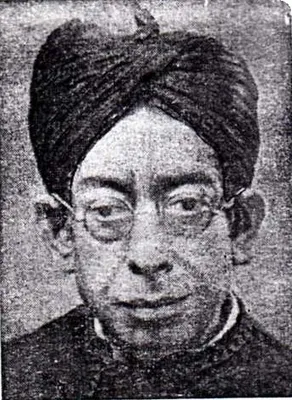
Surendranath Dasgupta was a prominent Indian scholar of Sanskrit and Indian philosophy, known for his monumental History of Indian Philosophy.
Surendranath Dasgupta (1887-1952) was a distinguished Indian scholar specializing in Sanskrit and Indian philosophy. Born in Bengal, he pursued higher education in Calcutta, earning master's degrees in Sanskrit and Western philosophy. His academic journey included doctoral studies in Indian philosophy and a significant period of research in Europe, particularly at Cambridge University under J.M.E. McTaggart. Dasgupta's intellectual prowess was recognized through numerous accolades and invitations to international philosophical congresses, where he engaged in robust debates and lectured extensively. He held professorial positions at various Indian institutions, including Presidency College and the University of Calcutta, and served as principal of Sanskrit College. His academic career was marked by a profound dedication to systematically documenting and analyzing the vast landscape of Indian philosophical thought, primarily through his magnum opus, A History of Indian Philosophy.
Academic Journey and European Sojourn
Surendranath Dasgupta's academic path began in Bengal, where he studied at Ripon College and Sanskrit College in Calcutta, obtaining honors in Sanskrit and later a master's degree. He further expanded his intellectual horizons by earning a second master's degree in Western philosophy from the University of Calcutta. His scholarly pursuits led him to earn a Griffith Prize and a doctorate in Indian philosophy. A pivotal phase in his career involved a research tour in Europe, generously supported by Maharaja Sir Manindra Chandra Nandy. In England, he distinguished himself as a research student at Cambridge under the guidance of Dr. J.M.E. McTaggart, contributing significantly to the Cambridge University Press's publication of the first volume of his seminal work, A History of Indian Philosophy. His intellectual contributions were further recognized through appointments as a lecturer at Cambridge and participation in prominent philosophical societies.
Contributions to Indian Philosophy
Dasgupta's most significant contribution is his multi-volume 'A History of Indian Philosophy,' an ambitious undertaking to systematically present the development of Indian thought from its original sources. This work, written in English, aimed to provide an exhaustive survey of various philosophical schools, delving into unpublished manuscripts and original texts in Sanskrit, Pali, and Prakrit. He revised his initial plan of a single volume to accommodate the vastness of the material, ultimately producing a series that meticulously traced the historical and critical evolution of Indian philosophical traditions. His dedication involved immense scholarly effort and drudgery to unearth and present these rich philosophical treasures. His own philosophical stance was known as the Theory of Dependent Emergence.
Intellectual Engagement and Legacy
Renowned for his sharp intellect, Dasgupta was a formidable debater, earning a reputation as an "almost invincible controversialist." He fearlessly challenged established scholars and philosophers, including Benedetto Croce and Louis de La Vallée-Poussin, often pointing out perceived errors in their arguments. His intellectual engagements extended to prominent societies like the Aristotelian Society in London and the Moral Science Club in Cambridge. His influence was recognized by leading thinkers who viewed him not merely as a student but as a colleague. Dasgupta's legacy includes his extensive writings and the impact he had on his students, such as the noted scholar Mircea Eliade. He also held significant academic positions, including King George V Professor of Mental and Moral Science at the University of Calcutta.
Key Ideas
- Theory of Dependent Emergence
Books by Dasgupta, S.N.
0 free public domain books · Read online or download