Walter Scott
Walter Scott was a Scottish poet, novelist, and historian who significantly influenced European literature and established the historical novel genre.
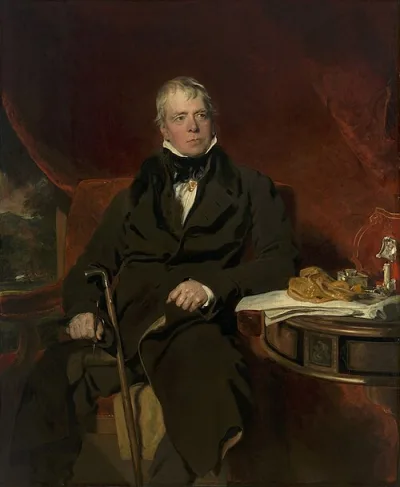
Sir Walter Scott was a prolific Scottish writer, poet, and historian born in 1771. He is widely recognized for his Waverley novels, which achieved immense popularity across Europe for nearly a century, and for his narrative poems like Marmion and The Lady of the Lake. Scott's work profoundly impacted both European and American literary traditions, and he is credited with establishing the historical novel as a significant literary genre, deeply intertwined with European Romanticism. Beyond his literary achievements, Scott was also an advocate and legal administrator, holding positions such as Clerk of Session and Sheriff-Depute of Selkirkshire. He was an active figure in Edinburgh society, involved with institutions like the Highland Society and serving as president of the Royal Society of Edinburgh.
Scott's early life was marked by a childhood bout of polio that left him with a limp, influencing his experiences and later his writing. He spent time in the rural Scottish Borders, where he absorbed local tales and legends that would later feature in his works. His education included classical studies at the University of Edinburgh and an apprenticeship in law. Scott's literary career was spurred by the 1790s enthusiasm for German literature, leading him to translate German poems and later to collect and edit traditional Scottish ballads. His marriage to Charlotte Charpentier in 1797 marked the beginning of his family life, and he balanced his legal work with his burgeoning writing career, eventually moving to estates like Ashestiel.
Literary Influence and Historical Novel Genre
Walter Scott's literary output, particularly his Waverley novels published between 1814 and 1831, established him as a major figure in European literature. These novels were exceptionally popular for an extended period, shaping the reading tastes of a continent. His narrative poems, such as Marmion (1808) and The Lady of the Lake (1810), also garnered significant acclaim. Scott's extensive knowledge of history, combined with his literary skill, enabled him to pioneer and popularize the historical novel genre. This genre became a key exemplar of European Romanticism, blending historical settings with fictional narratives. His influence extended broadly, shaping literary trends in both Europe and America.
Early Life and Personal Influences
Born in Edinburgh in 1771, Walter Scott's early life was significantly shaped by a childhood illness that resulted in a permanent limp. This physical challenge led him to spend time in the Scottish Borders, where he was exposed to traditional tales and local legends from his aunt. These early experiences and the oral traditions he encountered would later inform the rich tapestry of his written works. His education was rigorous, including classical studies at the University of Edinburgh and legal training, preparing him for a dual career as a writer and a legal administrator. His personal life included a marriage to Charlotte Charpentier and raising a family, while he navigated the demands of his professional and literary pursuits.
Legal Career and Societal Involvement
In addition to his literary endeavors, Walter Scott pursued a career in law and legal administration. He worked as a Clerk of Session and served as Sheriff-Depute of Selkirkshire, integrating his writing and editing with his daily professional responsibilities. Scott was also a notable figure within Edinburgh's establishment, aligning with Tory circles. He actively participated in various societies, including the Highland Society, and held leadership positions such as president of the Royal Society of Edinburgh and vice president of the Society of Antiquaries of Scotland. This combination of legal practice, societal engagement, and literary creation defined much of his adult life.
Key Ideas
- Pioneering the historical novel genre
- Influence on European and American literature
- Integration of Scottish folklore and history in writing