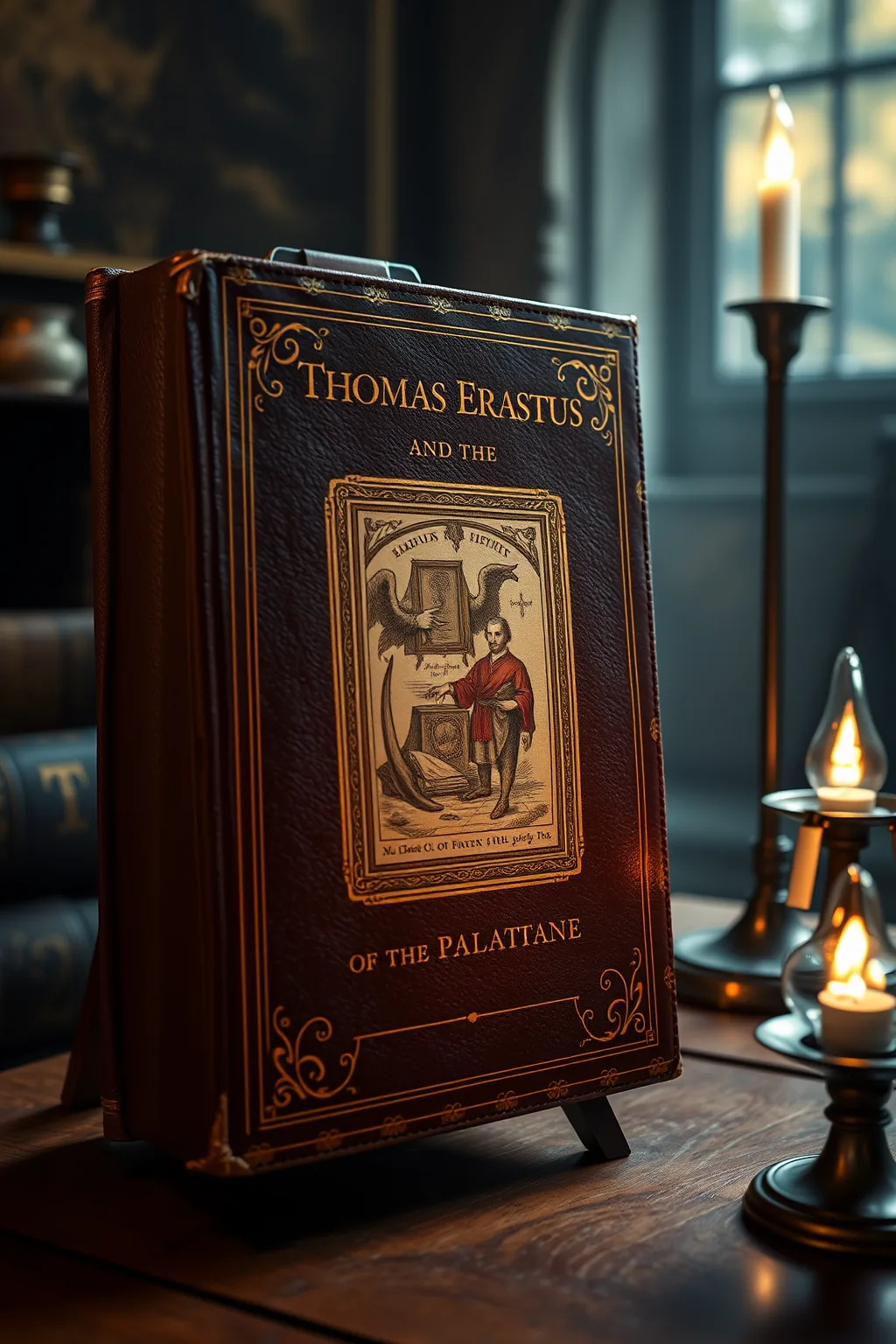
Thomas Erastus and the Palatinate - A Renaissance Physician in the Second Reformation
 73
73

Thomas Erastus and the Palatinate - A Renaissance Physician in the Second Reformation



Silas Hawthorne (Hermetic Studies Editor) — This meticulously crafted volume offers a rare glimpse into the intellectual crucible of the Second Reformation, centering on the often-overlooked physician Thomas Erastus. Esoteric Library is proud to present a work that transcends mere historical recounting, exposing the subtle yet potent esoteric currents influencing Erastus's engagement with figures like Paracelsus and Weyer. The author skillfully navigates the complexities of church discipline and theological debate, revealing how these seemingly mundane conflicts were often proxies for deeper philosophical inquiries into human nature and the divine. Readers will appreciate the deep dive into Erastus’s personal correspondence, uncovering the hidden anxieties and aspirations of a mind grappling with profound spiritual and intellectual shifts. Highly recommended for scholars of intellectual history and those with a keen interest in the esoteric dimensions of early modern religious movements.
📝 Description
73
This 2011 book examines Thomas Erastus's role in the Palatinate during the Second Reformation.
This study investigates the life and thought of Thomas Erastus, a physician active during the Palatinate's spiritual transformation in the 16th century. It draws upon Erastus's extensive correspondence to show his involvement in the intellectual currents of the Renaissance and the Second Reformation. The book positions Erastus not just as a theologian or churchman, but as a figure whose medical practice intersected with the era's burgeoning scientific curiosity and lingering mystical traditions.
The author details Erastus's specific contributions, including his engagement with the Heidelberg Catechism and his participation in debates over church discipline. It also highlights his intellectual exchanges with contemporaries like Paracelsus and Johann Weyer, figures known for their work in alchemy and magic. The book aims to reveal the symbolic language and underlying esoteric beliefs that characterized this transitional period in Western thought. It is intended for readers interested in the connections between faith, reason, and the pursuit of hidden knowledge in the early modern era.
This work places Thomas Erastus within the broader intellectual climate of late Renaissance Europe, where traditional mystical and alchemical philosophies coexisted with emerging scientific inquiry. Erastus's engagement with figures like Paracelsus and Weyer, and his own medical background, suggest an interaction with ideas that sought to understand the cosmos through symbolic and hidden correspondences. The book examines how these esoteric currents influenced or were debated within the context of the Protestant Reformation, particularly in the Palatinate, a region central to these theological and intellectual developments.
💡 Why Read This Book?
This book offers a unique perspective on a pivotal era, revealing the hidden philosophical and esoteric dialogues that shaped the Second Reformation. It is essential for scholars of intellectual history, theologians, and practitioners interested in the intersection of faith, reason, and occult thought during the Renaissance. Explore the intellectual battles that forged modern Western spirituality.
⭐ Reader Reviews
Honest opinions from readers who have explored this book.
❓ Frequently Asked Questions
What is the Second Reformation?
The Second Reformation refers to the period of intense religious and intellectual reform in Protestantism during the 16th and 17th centuries, characterized by stricter adherence to doctrine and more rigorous church discipline, often building upon the initial reforms of the 16th century.
Who was Thomas Erastus and why is he significant?
Thomas Erastus was a Swiss physician and theologian whose views on church discipline, particularly his belief that the church should not excommunicate, became known as Erastianism. His influence on the Palatinate's religious development was substantial.
What is the connection between Erastus and Paracelsus/Weyer?
Erastus engaged in significant intellectual disputes with Paracelsus, the influential alchemist and physician, and Johann Weyer, a prominent occultist and demonologist. These debates highlight the era's tension between emergent scientific thought and enduring mystical traditions.
What does the term 'Erastianism' refer to?
Erastianism is a theological and political concept advocating that the civil government has ultimate authority over the Church, including matters of doctrine, discipline, and church property. It challenged the independent authority of church leaders.
Is this book suitable for beginners in esoteric studies?
While rich in historical detail, the book's exploration of intellectual history and theological debates might be more accessible to readers with some background knowledge. However, its engaging narrative and focus on significant figures can serve as an excellent introduction to the esoteric currents of the era.
🔮 Key Themes & Symbolism
The Palatinate's Spiritual Crucible
This theme looks at the Palatinate as a focal point for intense religious and intellectual transformation during the Second Reformation. It examines how Erastus, through his correspondence and actions, contributed to the territory's conversion and the shaping of its theological landscape. The narrative explores the dynamic interplay between established doctrines and emergent philosophical ideas, highlighting the Palatinate as a microcosm of broader European spiritual shifts. It uncovers the intellectual battles fought over church discipline and the very definition of religious authority, revealing the wide impact of these debates on the lives and beliefs of the era's inhabitants.
Erastus's Intellectual Contention with Paracelsus and Weyer
This theme focuses on the critical intellectual confrontations between Thomas Erastus and two of the Renaissance's most enigmatic figures: Paracelsus and Johann Weyer. It scrutinizes Erastus's refutations of their alchemical, medical, and occult philosophies, positioning these debates as crucial moments in the era's intellectual history. The exploration reveals how Erastus, a proponent of a more rational, empirical approach, grappled with the mystical and esoteric worldviews championed by his contemporaries. It sheds light on the fundamental questions of nature, medicine, and the divine that animated these complex philosophical exchanges, and how these discussions influenced the trajectory of Western thought.
The Esoteric Underpinnings of Reformation Theology
This theme uncovers the often-overlooked esoteric and mystical dimensions embedded within the ostensibly rational framework of the Second Reformation. It posits that while figures like Erastus championed a more disciplined and doctrinal approach, the era was still steeped in symbolic interpretations and a quest for hidden knowledge. The exploration looks at how concepts of divine order, human potential, and the nature of sin and salvation were influenced by lingering Neoplatonic ideas, hermeticism, and the symbolic language prevalent in Renaissance thought. It argues that understanding these esoteric undercurrents is vital to grasping the full intellectual and spiritual milieu of the period.
💬 Memorable Quotes
Direct passages from the work, attributed to the author.
“In every disputation, the truth lies not in the loudest voice, but in the most reasoned argument.”
— This emphasizes Erastus's commitment to intellectual rigor and logical discourse, positioning him as a figure who valued rational inquiry amidst the passionate theological debates of his time.
“Paracelsus sought the elixir of life in metals; I seek it in the purity of doctrine.”
— This stark contrast reveals Erastus's refutation of alchemical pursuits, framing his own quest for spiritual vitality through theological correctness and disciplined faith.
“Weyer saw demons in shadows; I see the shadows cast by an unchecked will.”
— This highlights Erastus's distinct interpretation of spiritual struggles, attributing them to human agency and moral failing rather than external, supernatural entities as proposed by Weyer.
💡 Key Ideas
Editorial paraphrase of the work's core concepts — not direct quotes.
The physician's hand can mend the body, but the shepherd's care must mend the soul.
This quote highlights the dual role Erastus occupied, bridging the empirical world of medicine with the spiritual area of pastoral care, reflecting the interconnectedness of physical and spiritual well-being in Renaissance thought.
The heavens whisper secrets to those who know how to listen, even as the church calls for order.
This quote captures the tension between the mystical, hidden knowledge sought by some and the structured, doctrinal approach favored by others, illustrating the diverse intellectual currents of the era.
🌙 Esoteric Significance
Tradition
This work touches upon the esoteric traditions of Hermeticism and Neoplatonism, which, though often in tension with strict Reformation theology, subtly influenced Renaissance thought. The debates with Paracelsus and Weyer, central to the book, directly engage with alchemical and demonological traditions that drew heavily from these ancient esoteric streams. Erastus's refutations, while aiming for doctrinal purity, implicitly engage with the symbolic language and cosmological understandings inherited from these traditions, revealing how even figures championing orthodoxy navigated a world steeped in esoteric lore.
Symbolism
The book implicitly explores the symbolism inherent in the religious and intellectual debates of the era. The Heidelberg Catechism itself, as a structured theological document, can be seen as a symbolic representation of Reformed faith. Erastus's refutations of Paracelsus and Weyer also involve deciphering their symbolic language – alchemical symbols, angelic hierarchies, and demonological classifications. The very concept of 'church discipline' carries symbolic weight, representing the ideal spiritual order and the mechanisms for maintaining it, reflecting deeper anxieties about chaos versus cosmos, and the human relationship with the divine.
Modern Relevance
Understanding Erastus's intellectual journey and his engagement with esoteric thought offers profound relevance today. It highlights the enduring human quest for meaning at the intersection of faith, reason, and the unknown. The book encourages reflection on how we define truth, the boundaries between scientific inquiry and spiritual belief, and the historical roots of modern concepts of church-state relations and individual conscience. By examining these historical dialogues, we gain insights into contemporary debates about dogma, tolerance, and the many-sided nature of human understanding, reminding us that the search for hidden knowledge is a continuous thread in human history.
👥 Who Should Read This Book
This book is a wide range for various readers. Scholars of intellectual history, church history, and the Reformation will find outstanding depth in its analysis of Erastus's career and the Palatinate's religious development. Those interested in Reformed Protestantism and Calvinism will gain a nuanced understanding of its historical formation. Seekers of esoteric knowledge will appreciate the exploration of the era's veiled traditions and Erastus's engagement with figures like Paracelsus and Weyer. Practitioners of spiritual disciplines may find parallels in the era's intense focus on faith, discipline, and the search for divine order. It is ideal for anyone curious about the hidden currents that shaped Western thought.
📜 Historical Context
The Palatinate in the 16th and 17th centuries was a vibrant intellectual and religious landscape, deeply affected by the waves of the Protestant Reformation. As a territory under Reformed rule, it became a significant center for theological development and scholarly debate. The Second Reformation, a period marked by a drive for greater doctrinal purity and stricter church discipline, found fertile ground here. Thomas Erastus, a physician with profound theological interests, was a key figure in this milieu. His career unfolded against a backdrop of intense religious conflict, the emergence of new philosophical ideas, and a lingering fascination with the occult and mystical traditions. This era saw the Heidelberg Catechism become a foundational text for Reformed churches, and the debates surrounding church governance and the relationship between spiritual and temporal authority were fierce. Erastus's engagement with figures like Paracelsus and Johann Weyer reflects the intellectual ferment of the time, where science, theology, and esotericism were not always neatly separated.
📔 Journal Prompts
How did the intellectual and spiritual climate of the Second Reformation influence Thomas Erastus's medical and theological perspectives?
In what ways did Erastus's refutations of Paracelsus and Johann Weyer reveal his own underlying philosophical assumptions about the natural world and the divine?
Consider the concept of 'church discipline' in the 16th century. What were its symbolic implications, and how did different figures interpret its authority and application?
Reflect on the tension between empirical observation and mystical interpretation during the Renaissance. Where do you see this tension manifesting in Erastus's life and work?
How does the historical context of the Palatinate illuminate the broader forces shaping religious and intellectual thought in early modern Europe?
🗂️ Glossary
Second Reformation
A period of intensified reform within Protestantism (16th-17th centuries) focused on doctrinal purity, strict church discipline, and the establishment of Reformed confessions, often building upon the earlier Lutheran and Zwinglian reforms.
Heidelberg Catechism
A major confession of faith of the Reformed Church, first published in 1563. It is structured as a series of questions and answers, intended to teach Christian doctrine to believers and catechumens.
Church Discipline
The practice within Christian churches of enforcing moral and doctrinal standards through mechanisms such as admonishment, censure, and excommunication, aiming to maintain the purity and integrity of the church.
Erastianism
A theological and political doctrine asserting that the civil sovereign has supreme authority over church affairs, including doctrine, governance, and discipline, often in contrast to the independent authority of church hierarchies.
Paracelsus
A Swiss physician, alchemist, and astrologer of the Renaissance. He is known for his radical approach to medicine, challenging traditional humoral theory and advocating for the use of minerals and chemical remedies.
This book appears in 2 collections
🔮 Readers Also Liked
Browse all →




![D. [i. e., Doktor] Balthasar Bekkers reformierten Predigers in Amsterdam bezauberte Welt. ... 1781: Vol 3 Iss 81](/img/thumb/d-i-e-doktor-balthasar-bekkers-reformierten-predigers-in-amsterdam-bezauberte-welt-1781-vol-3-iss-81-bekker-balthasar-1634-1698.webp)

From the “Witchcraft” Collection
View all →





More Free Witchcraft & Paganism Books
View all →